
BuddhistCatholicContemplativeEvangelicalGeneral ChristianHinduJewishLatter-day SaintMuslimNew VisionsProgressive Christian
Beliefs
- Buddhist
- Catholic
- Contemplative
- Evangelical
- General Christian
- Hindu
- Jewish
- Latter-day Saint
- More Voices
- Muslim
- New Visions
- Pagan
- Progressive Christian
Topics
- Religion News
- Food and Religion
- Sports and Religion
- Religious Art
- Religious Music and Entertainment
- Religious Events
- History and Religion
- Style and Religion
- Politics and Religion
- Women in Religion
- Recreation Outdoors and Religion
- Business Finance and Religion
- Careers Workplace and Religion
- Education and Religion
- Family Parenting and Religion
- Health Fitness and Religion
- Home and Religion
- Relationships and Religion
- Technology and Religion
- Travel and Religion
Columnists
- Buddhist Columnists
- Business Finance and Religion Columnists
- Careers Workplace and Religion Columnists
- Catholic Columnists
- Contemplative Columnists
- Education and Religion Columnists
- Evangelists Columnists
- Family Parenting and Religion Columnists
- General Christian Columnists
- Health Fitness and Religion Columnists
- Hindu Columnists
- History and Religion Columnists
- Home and Religion Columnists
- Jewish Columnists
- More Voices Columnists
- Latter Day Columnists
- Muslim Columnists
- New Visions Columnists
- Nonreligious Columnists
- Pagan Columnists
- Politics and Religion Columnists
- Progressive Columnists
- Recreation Outdoors and Religion Columnists
- Relationships and Religion Columnists
- Religion News Columnists
- Religious Art Columnists
- Religious Events Columnists
- Religious Music and Entertainment Columnists
- Sports and Religion Columnists
- Style and Religion Columnists
- Technology and Religion Columnists
- Travel and Religion Columnists
- Women in Religion Columnists
Resource Library
- 2026 Calendar
- Library of World Religions
- The 100 Most Holy Places on Earth
- Patheos Answers
- Podcasts
- Videos
- Faith Leaders Database
- Anglican Episcopalian
- Bahai
- Baptist
- Buddhism
- Christianity
- Confucianism
- Eastern Orthodoxy
- Hinduism
- Holiness and Pentecostal
- ISKCON
- Islam
- Judaism
- Lutheran
- Methodist
- The Church of Jesus Christ of Latter-day Saints
- New Age
- Paganism
- Presbytarian and Reformed
- Protestantism
- Religion Behind the Scenes
- Roman Catholic
- Scientology
- Shia Islam
- Sikhism
- Sufism
- Sunni Islam
- Taoism
- Zen
- See all religions
Research Tools
 Ad-Free & Subscriber Log-In Subscription Support
Follow Patheos 

- Trending:
- Advent
- |
- Forgiveness
- |
- Thanksgiving
- |
- Election
- |
- Seasonal Holidays
- |
- Marriage
 Catholic Authenticity
-
Categories
- Home
- Catholic
- Identities are Forged by Violence
Identities are Forged by Violence
Last updated on: October 30, 2015 at 2:26 pm by Melinda Selmys
Identities are Forged by Violence 2015-10-30T14:26:30-04:00 Melinda Selmys
Patheos Explore the world's faith through different perspectives on religion and spirituality! Patheos has the views of the prevalent religions and spiritualities of the world.
Let’s talk about identity. Why? Because it constantly comes up in my FaceBook feed via the interminable (and frankly exhausting) “never say gay” debates. One of the more recent permutations involved an attempt to come up with a new Catholic euphamism for “gay” since “person with a same-sex attraction” is unweildy, “homosexual” suggests that there is more than one sexual orientation and, of course, “gay” is a political term that’s opposed to the gospel. The gospel being more or less conterminous with the Culture Wars, as we all know.
Okay, so snark aside, I think the fundamental problem in the debate over whether Christians can adopt LGBTQ identities is that the word “identity” is being defined in two completely different ways by people on the two different sides of the debate. And, just to make things fun, these two different understandings of identity are based in two very different approaches to understanding the human person.
The first group, those who say that a gay identity is not compatible with identity in Christ, seem to be mapping the very modern word “identity” onto an older set of traditional philosophical categories: “nature,” “essence,” “being.” Within this framework, identity is ontologized. This is understandable. Frankly, within the gay movement there’s a lot of pop essentialism from sloganeers who throw around terms like “my true self” and “who I am” without even stopping to think about the ontological implications of the words. I suspect <shock horror> that in some cases, the propagandists may not even be aware that ontology is a thing.
The second group tend to understand identities as socially constructed categories which have relatively little to do with natures or essences. This is kind of the default usage in postmodern discourses, where metaphysical, cosmological and ontological considerations are generally subordinated to political, existential, and phenomenological concerns. Since the concept of identity is largely rooted in contemporary ways of thinking, I believe there’s a reasonably strong case for decoupling it from ideas like essence and nature. But hey, I’m not actually a believer in prescriptive linguistics so people can use the word how they like.
Still, definitions matter if we want to actually talk to one another, rather than past one another, so I think it’s important to explain what exactly I mean when I use the word “identity.” I’m not saying others have to use it in the same way, just that if someone wants to critique my choice to identify as queer, then their critique has to take into account what I mean by the word “identity.”
I take it more or less for granted that identites are social constructs – that when we claim an identity, we’re basically claiming a relationship of solidarity or unity with another person or group of people. This means that we tend to identify with characteristics within ourselves that situate us socially, but not with characteristics that are socially neutral. So, for example, if a white person has a ruddy complexion they’re probably not going to see that as an important identity which sets them apart from paler people. But most black people definitely identify as black.
Clearly there’s no ontological category, no nature or essence, which allows us to draw an objective line between black people and white people. What there is, is a history, a culture, a shared experience, a whole complex web of socio-political relations which we refer to as “race.” The fact that these categories are, in some sense, fundamentally based on arbitrary distinctions doesn’t make them a fiction. Nor, for that matter, does the fact that these are socially constructed realities mean that people can just opt out.
More importantly, the fact that identities are socially constructed does not, in any way, suggest that they are chosen. We don’t just use identity categories to navigate our own self-constructs, picking and choosing the ones we like as we wind our way through life. Our identities are almost invariably categories imposed on us from without.
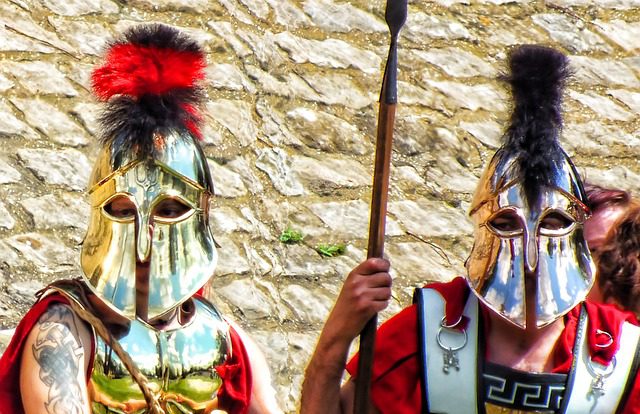
Marshal McLuhan put this point very pithily: “Identities are forged by violence.” I’m not sure that this is true in an absolute sense, but it is definitely a very astute observation. For example, the Greeks were not Greeks until the Persians attacked them – before that, they were Athenians, Boeotians, Eretrians, Argives. The cultural and linguistic materials for a common identity were there, but they had not yet been galvanized into a common Hellenic identity. The famous Spartan battle slogan “Freedom of the Greeks!” could never have rallied so much enthusiasm if the Persian war had not preceded the Pelopenesian.
When we form an identity, what basically happens is that some set of socially neutral characteristics becomes socially charged – usually through practices of violence or exclusion. A dominant or powerful group chooses to consolidate its own position by othering some particular set of people. This can be a geographically separated group, or it can be a subset of the original population.
At this point members of the othered group don’t have a lot of choice. Solidarity becomes a mechanism of survival. In the case of the LGBTQ community, it’s not that a whole lot of men and women woke up one morning and decided to form a sinister pink cabal. Rather, it’s that the nascent science of psychology defined the homosexual as an other, and a campaign of violent intervention arose to eradicate these others through a combination of therapeutic and punitive means.
Prior to this point sodomy may have been a socially excluded act – but the mere desire to commit it did not set a person in a category apart. A “sodomite” was a kind of criminal or sinner, defined not by desire but by act. A “homosexual” on the other hand, was a distinct and disordered species of person defined by a common pathology. Gay identity as we understand it today was thus produced by the very mechanisms that (perversely) many conservative Christians still promulgate as means of ‘curing’ gays.
This historical process of othering made the modern gay and lesbian communities – and it can’t simply be dismantled by fiat. Coming up with terminology like “person with a same-sex attraction” doesn’t actually cause those attractions to return to a socially neutral state. Especially not when this terminology is used only within an institution that continues to promote a politics of exclusion – not only for people who transgress its behavioural norms but also for those who have same-sex desires.
So I am queer. Not because I choose an identity that is contrary to the Gospel, but because I have been labelled in this way, categorized by a society that opted to define me as other on the basis of an unchosen aspect of my experience. I can’t actually opt out. I can pretend. I can adopt a euphemism. I can hide in the closet. I can try to pass. But all of these choices ultimately just serve to internalize the politics of exclusion and their painful fruit.
There is no terminological solution to this problem. There is no magic word that will alter hundreds of years of history, or eradicate a complex edifice of social relations, hostilities and accomodations. In so far as Christians have the power to do anything to restore LBGTQ people to a pure and integral identity in Christ, it is by the slow and patient dismantling of practices that construe us as other – not by quibbling over what words we are allowed to use to refer to our exclusion.
Image credit: pixabay
Previous Post

October 28, 2015
Rage Against the Biblical Gender Machine
Next Post
October 30, 2015 Stoics Have More Fun!
Browse Our Archives
Select a Category Abuse Beauty Charity Chastity Current Events Faith Family Feminism Fiction Humility Humour Identity Justice Perseverence Philosophy Poverty Sexuality trauma Uncategorized Virtues Wombats
Select a Month February 2020 November 2019 October 2019 August 2019 July 2019 June 2019 May 2019 April 2019 March 2019 February 2019 October 2018 September 2018 August 2018 July 2018 June 2018 May 2018 April 2018 March 2018 February 2018 January 2018 December 2017 November 2017 October 2017 September 2017 August 2017 July 2017 June 2017 May 2017 April 2017 March 2017 February 2017 January 2017 December 2016 November 2016 October 2016 September 2016 August 2016 July 2016 June 2016 May 2016 April 2016 March 2016 February 2016 January 2016 December 2015 November 2015 October 2015 September 2015 August 2015 July 2015 June 2015
Follow Us!
TAKE THE
Religious Wisdom Quiz
Who lost his strength when his hair was cut?
Select your answer to see how you score.
Absalom David Elijah Samson
Books by This Author Books by Melinda Selmys
Support this
Column


Related posts from Catholic Authenticity
Is Diversity Training to Blame for the Rise...
TRENDING AT PATHEOS Catholic

How Discretion Guides Us Away From Extremes
Prudence is an important virtue for all of us. While we should...

Bad Survey Questions Distort Eucharistic Theology
It seems to be the newest thing: someone conducts a bad survey...

If Baptism Washes Away Sin, Why Do Catholics...
The seven sacraments stand as the foundation of Catholic ecclesial life. The...

The Power of Setting a Good Example
Remember last August when the Chicago White Sox hosted a "Pope Hat...

A Catholic Critique of Biblical Unitarianism
If the statistics are to be believed, Unitarianism is rising worldwide. Although...

How Grandma Tourism Helps Grandparents Live Their Vocation
Grandma, The New Travel Influencer What started as a nostalgia-inspired social media...
view all Catholic blogs
Ad-Free & Subscriber Log-In Subscription Support
- About Us
- 2026 Calendar
- Videos
- Podcasts
- Library of World Religions
- Faith In Media Tracker
- Advertise With Us
- Write for Us
- Privacy Policy
- Terms of Service
- Do Not Sell My Data
- Contact Us
- Radiant Digital
- Manage Newsletter Subscriptions
- Unsubscribe From Notifications
- Sitemap
Copyright 2008-2026, Patheos, part of the Radiant Digital network of media brands. All rights reserved.
Subscription Support Ad-Free & Subscriber Log-In
Follow Patheos