
BuddhistCatholicContemplativeEvangelicalGeneral ChristianHinduJewishLatter-day SaintMuslimNew VisionsProgressive Christian
Beliefs
- Buddhist
- Catholic
- Contemplative
- Evangelical
- General Christian
- Hindu
- Jewish
- Latter-day Saint
- More Voices
- Muslim
- New Visions
- Pagan
- Progressive Christian
Topics
- Religion News
- Food and Religion
- Sports and Religion
- Religious Art
- Religious Music and Entertainment
- Religious Events
- History and Religion
- Style and Religion
- Politics and Religion
- Women in Religion
- Recreation Outdoors and Religion
- Business Finance and Religion
- Careers Workplace and Religion
- Education and Religion
- Family Parenting and Religion
- Health Fitness and Religion
- Home and Religion
- Relationships and Religion
- Technology and Religion
- Travel and Religion
Columnists
- Buddhist Columnists
- Business Finance and Religion Columnists
- Careers Workplace and Religion Columnists
- Catholic Columnists
- Contemplative Columnists
- Education and Religion Columnists
- Evangelists Columnists
- Family Parenting and Religion Columnists
- General Christian Columnists
- Health Fitness and Religion Columnists
- Hindu Columnists
- History and Religion Columnists
- Home and Religion Columnists
- Jewish Columnists
- More Voices Columnists
- Latter Day Columnists
- Muslim Columnists
- New Visions Columnists
- Nonreligious Columnists
- Pagan Columnists
- Politics and Religion Columnists
- Progressive Columnists
- Recreation Outdoors and Religion Columnists
- Relationships and Religion Columnists
- Religion News Columnists
- Religious Art Columnists
- Religious Events Columnists
- Religious Music and Entertainment Columnists
- Sports and Religion Columnists
- Style and Religion Columnists
- Technology and Religion Columnists
- Travel and Religion Columnists
- Women in Religion Columnists
Resource Library
- 2026 Calendar
- Library of World Religions
- The 100 Most Holy Places on Earth
- Patheos Answers
- Podcasts
- Videos
- Faith Leaders Database
- Anglican Episcopalian
- Bahai
- Baptist
- Buddhism
- Christianity
- Confucianism
- Eastern Orthodoxy
- Hinduism
- Holiness and Pentecostal
- ISKCON
- Islam
- Judaism
- Lutheran
- Methodist
- The Church of Jesus Christ of Latter-day Saints
- New Age
- Paganism
- Presbytarian and Reformed
- Protestantism
- Religion Behind the Scenes
- Roman Catholic
- Scientology
- Shia Islam
- Sikhism
- Sufism
- Sunni Islam
- Taoism
- Zen
- See all religions
Research Tools
 Ad-Free & Subscriber Log-In Subscription Support
Ad-Free & Subscriber Log-In Subscription Support
Follow Patheos 

- Trending:
- Forgiveness
- |
- Marriage
- |
- Consciousness
- |
- Death Penalty
- |
- Election
- |
- Halloween
 Catholic Authenticity
-
Categories
- Home
- Catholic
- And For What We Have Failed to Do: On Syria’s Refugees
And For What We Have Failed to Do: On Syria’s Refugees
Last updated on: September 10, 2015 at 8:53 pm by Melinda Selmys
And For What We Have Failed to Do: On Syria’s Refugees 2015-09-10T20:53:37-04:00 Melinda Selmys
Patheos Explore the world's faith through different perspectives on religion and spirituality! Patheos has the views of the prevalent religions and spiritualities of the world.
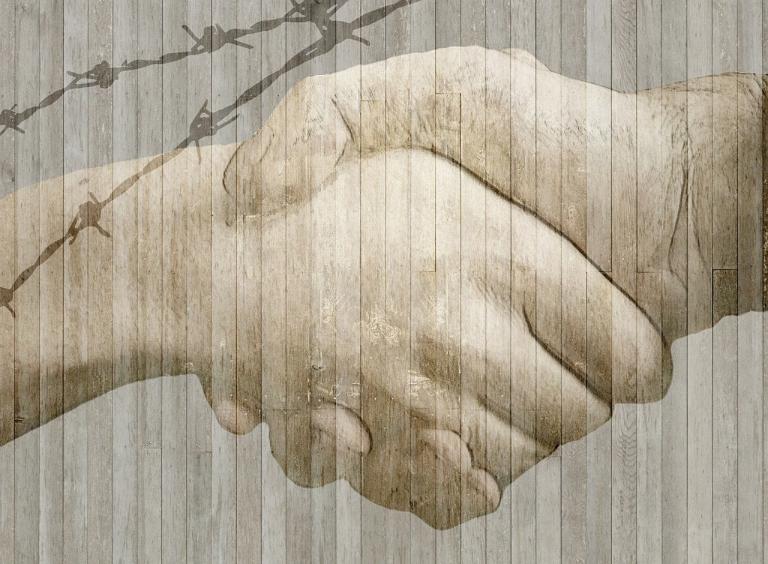
By now, we’ve probably all seen the tragic photographs of 3 yr old Aylan Kurdi laying dead on a Turkish beach. There have been a few posts up around the internet sharing the photographs with a certain amount of very black gallows humour “Finally, a poster-child for Syria’s refugees.” I know that there are people out there who disapprove of the use of photographic images, but the truth really is that people don’t respond emotionally to statistics and facts the same way that they respond to a picture. Sometimes we need to see the consequences of our actions, or inactions, before we really understand what it is that we’ve done and what it is that we’ve failed to do.
It’s particularly poignant for me, because this family was trying to come to my country. It’s easy to say that the problem is with Europe, with European Islamophobia, and with European nations that use the excuse of fearing for their cultural identities to avoid offering humanitarian aid. But the fact is that this particular little boy had an aunt in Canada who had been trying for several years to sponsor him and his family to come here.
That’s not to say that there isn’t a problem with Islamophobia in Europe, or that wealthy European nations shouldn’t be doing more — rather it’s to say that this is an international issue, one that implicates our countries here in North America as much as it implicates our allies in Europe. It’s a problem that requires a coherent and concerted international response. As Pope Francis put it in 2014, “Migration movements…are on such a scale that only a systematic and active cooperation between States and international organizations can be capable of regulating and managing such movements effectively. For migration affects everyone, not only because of the extent of the phenomenon, but also because of “the social, economic, political, cultural and religious problems it raises, and the dramatic challenges it poses to nations and the international community” (Caritas in Veritate,, 62).”
We all need to work to help these people to find a place of safety.
As I read Aylan’s story, and the story of his family, I can’t help but think of the stories that my husband’s grandmother used to tell of the hardships that her family endured when they were fleeing Lithuania at the end of World War II. She had a small daughter at the time, and gave birth to my father-in-law in a German DP camp. It wasn’t easy — but she and her family survived. A lot of her relatives who didn’t make it out before the Soviets recaptured Lithuania did not.
In the aftermath of the war Europe was awash with refugees. The conflict had displaced huge numbers of people, and an international response was required. My husband’s močiutė (Lithuanian for grandmother) ended up in Canada. My mother-in-law’s father ended up in Brazil. They started off in the same Lithuanian village.
This is within living memory. Our responsibility to care for those who are cast out of their homes by conflict and war is immediate — but when we become accustomed to the idea that we live in a safe, developed, peaceful part of the world we can easily forget that it’s not really very long ago that Europe itself was a bloodbath, and that the people seeking help were white, European Christians.
It’s also easy to forget that these refugees became a part of our culture here in Canada and the US. In my case, neither my husband nor any of my children would exist today if my husband’s people hadn’t been welcomed. The Syrian refugees aren’t just inconvenient bodies, a political problem — they’re future citizens. If we allow them to be.
Shamefully, there are those who argue that they are rejecting Muslim refugees, specifically, in order to maintain a Christian identity in the West. For these, I repeat the words of Pope Francis — words which have again taken on a “particular significance.”
Today this takes on a particular significance. In fact, in an age of such vast movements of migration, large numbers of people are leaving their homelands, with a suitcase full of fears and desires, to undertake a hopeful and dangerous trip in search of more humane living conditions. Often, however, such migration gives rise to suspicion and hostility, even in ecclesial communities, prior to any knowledge of the migrants’ lives or their stories of persecution and destitution. In such cases, suspicion and prejudice conflict with the biblical commandment of welcoming with respect and solidarity the stranger in need.
On the other hand, we sense in our conscience the call to touch human misery, and to put into practice the commandment of love that Jesus left us when he identified himself with the stranger, with the one who suffers, with all the innocent victims of violence and exploitation. Because of the weakness of our nature, however, “we are tempted to be that kind of Christian who keeps the Lord’s wounds at arm’s length” (Evangelii Gaudium, 270).
Let us work and pray, therefore, to embrace the Lord’s wounded, to welcome Christ in the guise of the homeless, the dispossessed, the refugee, recognizing that before God we are all of us homeless, poor and in desperate need of refuge.
Photo Credit: Pixabay
Previous Post

September 2, 2015
Currently on my reading shelf
Next Post

September 5, 2015 A Pastoral Challenge: 10 Arguments About Gay Identity
Browse Our Archives
Select a Category Abuse Beauty Charity Chastity Current Events Faith Family Feminism Fiction Humility Humour Identity Justice Perseverence Philosophy Poverty Sexuality trauma Uncategorized Virtues Wombats
Select a Month February 2020 November 2019 October 2019 August 2019 July 2019 June 2019 May 2019 April 2019 March 2019 February 2019 October 2018 September 2018 August 2018 July 2018 June 2018 May 2018 April 2018 March 2018 February 2018 January 2018 December 2017 November 2017 October 2017 September 2017 August 2017 July 2017 June 2017 May 2017 April 2017 March 2017 February 2017 January 2017 December 2016 November 2016 October 2016 September 2016 August 2016 July 2016 June 2016 May 2016 April 2016 March 2016 February 2016 January 2016 December 2015 November 2015 October 2015 September 2015 August 2015 July 2015 June 2015
Follow Us!
TAKE THE
Religious Wisdom Quiz
I asked for wisdom above all else, and God granted me riches and honor as well. Who am I?
Select your answer to see how you score.
Solomon Hezekiah Josiah David
Books by This Author Books by Melinda Selmys
Support this
Column


Related posts from Catholic Authenticity
A Tale of Two Priests: On Authority
Is It A Sin to be Scandalized by...
Humanae Vitae, What Have You Wrought?

TRENDING AT PATHEOS Catholic

Rejecting Doom: Christian Hope And Human Action
Christianity is a religion of hope. We are to have hope and...

It’s What Comes From Within Which Matters
One of the most difficult things for us to understand is why...

Why I Choose the Eucharist Over the Sermon
Choose the Eucharist, Not the Sermon What are we supposed to get...

5 Design Elements Found in Spiritually Rooted Homes
Putting Spirituality Into Home Decor Our homes are more than our living...

Credo: A Story of God Told with the...
About 10 years ago, I began to imagine a personal "Credo" that...

The Anatomy of Divine Revelation in Catholic Thought
The claim that God has made Himself known to human beings is...
view all Catholic blogs
Ad-Free & Subscriber Log-In Subscription Support
- About Us
- 2026 Calendar
- Videos
- Podcasts
- Library of World Religions
- Faith In Media Tracker
- Advertise With Us
- Write for Us
- Privacy Policy
- Terms of Service
- Do Not Sell My Data
- Contact Us
- Radiant Digital
- Manage Newsletter Subscriptions
- Unsubscribe From Notifications
- Sitemap
Copyright 2008-2026, Patheos. All rights reserved.
Subscription Support Ad-Free & Subscriber Log-In
Follow Patheos