
BuddhistCatholicContemplativeEvangelicalGeneral ChristianHinduJewishLatter-day SaintMuslimNew VisionsProgressive Christian
Beliefs
- Buddhist
- Catholic
- Contemplative
- Evangelical
- General Christian
- Hindu
- Jewish
- Latter-day Saint
- More Voices
- Muslim
- New Visions
- Pagan
- Progressive Christian
Topics
- Religion News
- Food and Religion
- Sports and Religion
- Religious Art
- Religious Music and Entertainment
- Religious Events
- History and Religion
- Style and Religion
- Politics and Religion
- Women in Religion
- Recreation Outdoors and Religion
- Business Finance and Religion
- Careers Workplace and Religion
- Education and Religion
- Family Parenting and Religion
- Health Fitness and Religion
- Home and Religion
- Relationships and Religion
- Technology and Religion
- Travel and Religion
Columnists
- Buddhist Columnists
- Business Finance and Religion Columnists
- Careers Workplace and Religion Columnists
- Catholic Columnists
- Contemplative Columnists
- Education and Religion Columnists
- Evangelists Columnists
- Family Parenting and Religion Columnists
- General Christian Columnists
- Health Fitness and Religion Columnists
- Hindu Columnists
- History and Religion Columnists
- Home and Religion Columnists
- Jewish Columnists
- More Voices Columnists
- Latter Day Columnists
- Muslim Columnists
- New Visions Columnists
- Nonreligious Columnists
- Pagan Columnists
- Politics and Religion Columnists
- Progressive Columnists
- Recreation Outdoors and Religion Columnists
- Relationships and Religion Columnists
- Religion News Columnists
- Religious Art Columnists
- Religious Events Columnists
- Religious Music and Entertainment Columnists
- Sports and Religion Columnists
- Style and Religion Columnists
- Technology and Religion Columnists
- Travel and Religion Columnists
- Women in Religion Columnists
Resource Library
- 2026 Calendar
- Library of World Religions
- The 100 Most Holy Places on Earth
- Patheos Answers
- Podcasts
- Videos
- Faith Leaders Database
- Anglican Episcopalian
- Bahai
- Baptist
- Buddhism
- Christianity
- Confucianism
- Eastern Orthodoxy
- Hinduism
- Holiness and Pentecostal
- ISKCON
- Islam
- Judaism
- Lutheran
- Methodist
- The Church of Jesus Christ of Latter-day Saints
- New Age
- Paganism
- Presbytarian and Reformed
- Protestantism
- Religion Behind the Scenes
- Roman Catholic
- Scientology
- Shia Islam
- Sikhism
- Sufism
- Sunni Islam
- Taoism
- Zen
- See all religions
Research Tools
 Ad-Free & Subscriber Log-In Subscription Support
Ad-Free & Subscriber Log-In Subscription Support
Follow Patheos 

- Trending:
- Forgiveness
- |
- Marriage
- |
- Consciousness
- |
- Death Penalty
- |
- Election
- |
- Halloween
 Catholic Authenticity
-
Categories
- Home
- Catholic
- Holy Moral Relativism Batman!
Holy Moral Relativism Batman!
Last updated on: September 18, 2015 at 4:46 pm by Melinda Selmys
Holy Moral Relativism Batman! 2015-09-18T16:46:02-04:00 Melinda Selmys
Patheos Explore the world's faith through different perspectives on religion and spirituality! Patheos has the views of the prevalent religions and spiritualities of the world.

Way back at the height of the Enlightenment there was a test administered which “proved” that women are less rational than men. The test involved offering people moral situations which were supposed to be straightforward, and then asking whether the person involved had acted morally or not. One of the questions involved a man stealing some food. Male respondents consistently answered these questions “correctly,” with a simple “yes” or “no” whereas the women often said “It depends,” or suggested that more information was needed. Clearly the women were muddle-headed and couldn’t tell right from wrong. At least, that’s the conclusion drawn by the (male) researchers administering the study.
Actually, the women were right. It’s not that they weren’t thinking clearly, but that they were refusing to think in the simplistic, reductionist terms demanded by the test. This isn’t a comment on gender, but rather a comment on the inadequacy of the kind of deontological morality that was in vogue in 18th Century Prussia – and which would have been drilled into the heads of male schoolchildren from a young age. The women, quite instinctively, distinguished between moral agents, moral acts, and moral principles whereas the men had been trained to collapse their ideas into a rigid, one-size-fits all system of ethics in which the only thing that mattered was the abstract nature of the principle at stake.
Contemporary moral relativism is, to a certain extent, an overreaction against this kind of reductionistic moralism. Basically, the belief that all true moral maxims could be universalized, and that actions could be easily judged without reference to their context, produced a lot of very ugly fruit. Misogyny, colonialism, racism, and elitism all flourished in the Enlightenment soil, fertilized by the belief that anyone who failed to come to the same moral conclusions as an educated European gentleman was naturally “irrational” and thus “inferior.” (Ayn Rand’s objectivism is, of course, the same kind of overt ethical snobbery translated into a 20th C American industrialist paradigm.)
Eventually, the cracks in this system began to show and slowly the people who had been oppressed by the ideals of modernism began to insist on their dignity. In the aftermath, any claim of moral objectivity or ethical absolutism became immediately suspect: we had been down this road before. It had led us into the horrors of social Darwinism, eugenics and “ethnic cleansing.” A pure cultural relativism, which refuses to impose any external scheme of judgement on other peoples or their values seemed like the only safe way to avoid repeating such excesses.
Such relativism is, of course, unsustainable: we can’t pass judgement on the values of 18th Century Prussia without asserting some kind of objective moral framework against which those values fail to measure up. But that doesn’t mean that we can wholly dismiss the relativist’s critique, or that we should content ourselves with the obvious, and often somewhat smug, refutations of relativism as a hard moral philosophy.
At its heart, relativism appeals because it reintroduces a number of genuine moral truths into ethical discourse. It recognizes that morality does not take place in a vacuum, on a tabula rasa, or in the realm of pure reason. It acknowledges that morality itself is a part of our incarnational reality, and that it must conform itself to the varied circumstances and situations of embodied human life. Just as human nature itself is capable of a functionally infinite number of instantiations and permutations, so too are the Divine and natural laws.
What this means, in practice, is that although principles are constant and absolute across different social and individual contexts the actual application of those principles must be conditioned by the circumstances of the act and the intentions of the agent. The introduction of these latter two factors does not represent a watering down or a dissolution of the timeless moral tradition, but rather a retrieval of something that was lost in early modernity.
The moderns, in their enthusiasm to do away with a theistic God, craved a kind of objectivity that could be situated in relation to the human person without reference to a Divine judge. God could scrutinize the hearts of men and tease out the innumerable extenuating factors and cultural conditions that might influence the morality of a billion disparate acts. He was capable of balancing the scales of justice just as He was capable of numbering the stars. Enlightenment Man was not. Classical and Medieval ethics, which had insisted that the Right Act must be performed at the Right Time, in the Right Way, for the Right Reasons, were simply too unwieldy to meet the needs of the Brave New Modern World. It was therefore necessary to scale ethics back to something simpler, something that could be grasped in its entirely by a human mind.
Unfortunately, many “conservative” Christians seem unaware of the degree to which problematic Enlightenment ideals have infiltrated Christian intellectual culture. In their zeal to avoid the incursion of problematic postmodern ideals they end up rejecting valid postmodern critiques which are aimed not at the Christian tradition, but at the cancerous entrails of modernity. The result is a largely fruitless tug-of-war between equally erroneous systems of thought, the adherents of which look with contempt on their interlocutors for missing the “obvious” truths that form the bedrock of their own philosophy.
A more responsible approach (and this is, in fact, the approach taken by the Vatican) involves discerning a middle way that avoids both the Scylla of simplistic absolutism and the Charybdis of hard relativism. It includes a willingness to engage in complex moral debate and discernment, to apply the truth in a way that respects individual conscience and social conditions, and to enter into fruitful and respectful dialogue with those who are in error. It demands an equal portion of fidelity to the teaching and humility before the truth. A recognition that Truth is not something which we possess, but rather someone who possesses us.
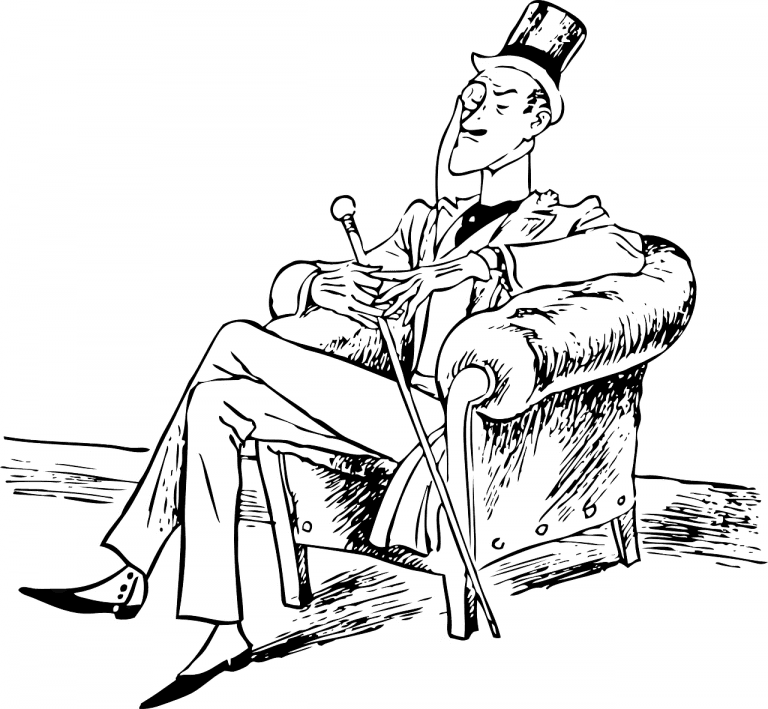
Photo credit: Pixabay
Previous Post

August 2, 2015
The Ideal of Sodom
Next Post

August 4, 2015 Planned Parenthood: Wait a Second. Isn't That An Oxymoron?
Browse Our Archives
Select a Category Abuse Beauty Charity Chastity Current Events Faith Family Feminism Fiction Humility Humour Identity Justice Perseverence Philosophy Poverty Sexuality trauma Uncategorized Virtues Wombats
Select a Month February 2020 November 2019 October 2019 August 2019 July 2019 June 2019 May 2019 April 2019 March 2019 February 2019 October 2018 September 2018 August 2018 July 2018 June 2018 May 2018 April 2018 March 2018 February 2018 January 2018 December 2017 November 2017 October 2017 September 2017 August 2017 July 2017 June 2017 May 2017 April 2017 March 2017 February 2017 January 2017 December 2016 November 2016 October 2016 September 2016 August 2016 July 2016 June 2016 May 2016 April 2016 March 2016 February 2016 January 2016 December 2015 November 2015 October 2015 September 2015 August 2015 July 2015 June 2015
Follow Us!
TAKE THE
Religious Wisdom Quiz
I am a seller of purple cloth from Thyatira. My heart was opened to respond to Paul's message, and I became the first European convert. Who am I?
Select your answer to see how you score.
Phoebe Mary Lydia Priscilla
Books by This Author Books by Melinda Selmys
Support this
Column


Related posts from Catholic Authenticity

The Power of Negative Thinking: On Trauma and...

The Seductive Illusion of Objectivity

Is It A Sin to be Scandalized by...
TRENDING AT PATHEOS Catholic

Rejecting Doom: Christian Hope And Human Action
Christianity is a religion of hope. We are to have hope and...

It’s What Comes From Within Which Matters
One of the most difficult things for us to understand is why...

Why I Choose the Eucharist Over the Sermon
Choose the Eucharist, Not the Sermon What are we supposed to get...

5 Design Elements Found in Spiritually Rooted Homes
Putting Spirituality Into Home Decor Our homes are more than our living...

Credo: A Story of God Told with the...
About 10 years ago, I began to imagine a personal "Credo" that...

The Anatomy of Divine Revelation in Catholic Thought
The claim that God has made Himself known to human beings is...
view all Catholic blogs
Ad-Free & Subscriber Log-In Subscription Support
- About Us
- 2026 Calendar
- Videos
- Podcasts
- Library of World Religions
- Faith In Media Tracker
- Advertise With Us
- Write for Us
- Privacy Policy
- Terms of Service
- Do Not Sell My Data
- Contact Us
- Radiant Digital
- Manage Newsletter Subscriptions
- Unsubscribe From Notifications
- Sitemap
Copyright 2008-2026, Patheos. All rights reserved.
Subscription Support Ad-Free & Subscriber Log-In
Follow Patheos