
BuddhistCatholicContemplativeEvangelicalGeneral ChristianHinduJewishLatter-day SaintMuslimNew VisionsProgressive Christian
Beliefs
- Buddhist
- Catholic
- Contemplative
- Evangelical
- General Christian
- Hindu
- Jewish
- Latter-day Saint
- More Voices
- Muslim
- New Visions
- Pagan
- Progressive Christian
Topics
- Religion News
- Food and Religion
- Sports and Religion
- Religious Art
- Religious Music and Entertainment
- Religious Events
- History and Religion
- Style and Religion
- Politics and Religion
- Women in Religion
- Recreation Outdoors and Religion
- Business Finance and Religion
- Careers Workplace and Religion
- Education and Religion
- Family Parenting and Religion
- Health Fitness and Religion
- Home and Religion
- Relationships and Religion
- Technology and Religion
- Travel and Religion
Columnists
- Buddhist Columnists
- Business Finance and Religion Columnists
- Careers Workplace and Religion Columnists
- Catholic Columnists
- Contemplative Columnists
- Education and Religion Columnists
- Evangelists Columnists
- Family Parenting and Religion Columnists
- General Christian Columnists
- Health Fitness and Religion Columnists
- Hindu Columnists
- History and Religion Columnists
- Home and Religion Columnists
- Jewish Columnists
- More Voices Columnists
- Latter Day Columnists
- Muslim Columnists
- New Visions Columnists
- Nonreligious Columnists
- Pagan Columnists
- Politics and Religion Columnists
- Progressive Columnists
- Recreation Outdoors and Religion Columnists
- Relationships and Religion Columnists
- Religion News Columnists
- Religious Art Columnists
- Religious Events Columnists
- Religious Music and Entertainment Columnists
- Sports and Religion Columnists
- Style and Religion Columnists
- Technology and Religion Columnists
- Travel and Religion Columnists
- Women in Religion Columnists
Resource Library
- 2026 Calendar
- Library of World Religions
- The 100 Most Holy Places on Earth
- Patheos Answers
- Podcasts
- Videos
- Faith Leaders Database
- Anglican Episcopalian
- Bahai
- Baptist
- Buddhism
- Christianity
- Confucianism
- Eastern Orthodoxy
- Hinduism
- Holiness and Pentecostal
- ISKCON
- Islam
- Judaism
- Lutheran
- Methodist
- The Church of Jesus Christ of Latter-day Saints
- New Age
- Paganism
- Presbytarian and Reformed
- Protestantism
- Religion Behind the Scenes
- Roman Catholic
- Scientology
- Shia Islam
- Sikhism
- Sufism
- Sunni Islam
- Taoism
- Zen
- See all religions
Research Tools
 Ad-Free & Subscriber Log-In Subscription Support
Ad-Free & Subscriber Log-In Subscription Support
Follow Patheos 

- Trending:
- Forgiveness
- |
- Marriage
- |
- Consciousness
- |
- Death Penalty
- |
- Election
- |
- Halloween
 Catholic Authenticity
-
Categories
- Home
- Catholic
- Vanity, Vanity
Vanity, Vanity
Last updated on: September 18, 2015 at 3:13 pm by Melinda Selmys
Vanity, Vanity 2015-09-18T15:13:33-04:00 Melinda Selmys
Patheos Explore the world's faith through different perspectives on religion and spirituality! Patheos has the views of the prevalent religions and spiritualities of the world.
The greatest danger that money poses is that it ceases to have anything to do with the value of goods at all, and becomes a way of measuring the value of a human life. Why do people abort their children? Often, it is because they feel they don’t have enough money to support a child. Why are the elderly abandoned in warehouse-style hospital wards, lonely and ignored while they wait in quiet desperation for death? Because they are “useless,” no longer able to financially contribute to the world.
Even those who are not personally responsible for macroeconomic injustices will be influenced by the fact that they live in a society whose economy flourishes in the soil of injustice. “A theory that makes profit the exclusive norm and ultimate end of economic activity is morally unacceptable. The disordered desire for money cannot but produce perverse effects. It is one of the causes of the many conflicts which disturb the social order” (Gaudium et Spes). When wealth is divorced from the genuine value of real goods, this divorce produces a whole wealth of microeconomic perversions. In consumer capitalism, money becomes the abstract form of a cultural fantasy of perpetual growth, endlessly increasing profit, and the infinite multiplication of goods. This fantasy is acted out not only on Wall Street, but also in the lives of individuals. It is not wealth but the fantasy of wealth, not value but the appearance of value that becomes important. This fuels the need not only for more and more consumer goods, but also for consumer goods that confer status and identity on the person who owns them — what social thinkers frequently refer to as “conspicuous consumption.”
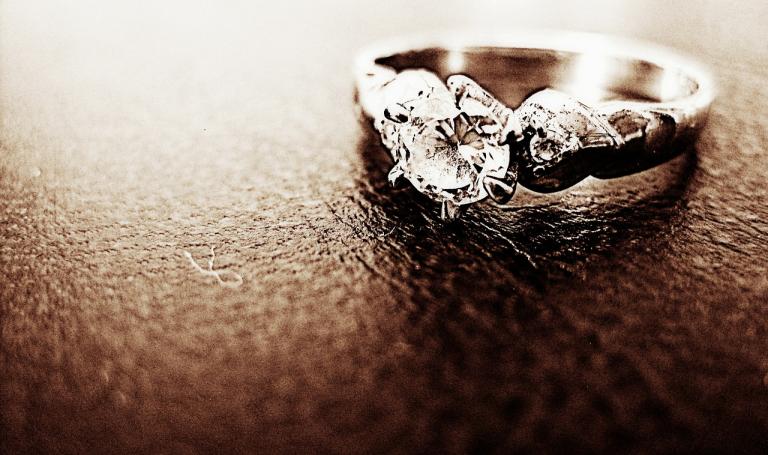
Conspicuous consumption takes a number of different forms. Thorstein Veblen observed that some goods are perceived to be of greater value simply because their price is high. Diamonds are a good example: they are actually a fairly common stone, but because De Beers has monopolistic control over the supply they have been able to create artificial scarcity and keep the prices high. The value of a diamond is almost entirely a product of its price; it is not especially attractive compared to other gems, and it is not particularly rare. A woman wants to receive a diamond because it ostentatiously demonstrates that her lover or husband was willing and able to spend a lot of money to buy her a piece of jewellery. This is why one of the primary pleasures associated with owning a diamond is showing it off to others. Fancy cars, designer clothing, and expensive watches are other common examples of “Veblen goods.”
Philosopher Jean Baudrillard made a similar observation about the use of material goods as symbols of immaterial values. He noted that any given material object has two different kinds of value: it has a use value (the amount of utility which can be derived from the good), and it has a sign value (a value based on what the object means to the person who owns it.) Advertisers constantly attempt to increase the amount that people will pay for products by infusing them with artificial sign value. Emotional branding, for example, is the practice of using images to link a product with a positive emotional state, so that people will unthinkingly purchase the product when they crave the emotion. Baudrillard points out that this is not entirely unsuccessful. Although a pair of shoes cannot offer real self-confidence, they may be able to give a person the illusion or simulation of self-confidence. Over time, as real spiritual goods are replaced with their simulations, people come to doubt the value of the genuine goods, and even to believe that the simulacra are the real thing.
In the present age, one of the immaterial values which material things are often called on to signify is identity. Marshal McLuhan described the world today as “not a global village, but a global theater.” Television creates a culture in which people often have stronger relationships with artificial characters than with other human beings and in which role models are very often people who are themselves playing a role. Identities are no longer rooted in families or in communities, and the anonymity of city life creates a need to create and maintain identities which are immediately visible and which declare themselves through concrete symbols. Consumer goods become the tribal signs by which people with similar interests and attitudes recognize and identify one another. In many sub-cultures, the outward signs of wealth, success, or fashion are essential to defining oneself as an insider, and even in “counter-cultural” circles, it is often necessary to live in the right neighbourhood, to eat from the right grocery stores, and to participate in the consumption of niche-marketed goods.
When people buy their identities on the free market the result is always self-consciousness and anxiety. The loss of the ability to participate in consumption literally involves a loss of the sense of self. In this context, people will do anything to secure the ability to maintain their consumer identities and avoid the stigmatization and loss of a sense of personal value associated with poverty.
Conspicuous consumption is not only a good way to make oneself poor fast, it is also immoral: “Countless millions are starving, countless families are destitute, countless men are steeped in ignorance; countless people need schools, hospitals, and homes worthy of the name. In such circumstances, we cannot tolerate public and private expenditures of a wasteful nature; we cannot but condemn lavish displays of wealth by nations or individuals” (Populorum Progressio).
Excerpted from Slave of Two Masters
Photo credit: Pixabay
Previous Post

July 22, 2015
Money, Money
Next Post
July 22, 2015 Ills That Need The Knife
Browse Our Archives
Select a Category Abuse Beauty Charity Chastity Current Events Faith Family Feminism Fiction Humility Humour Identity Justice Perseverence Philosophy Poverty Sexuality trauma Uncategorized Virtues Wombats
Select a Month February 2020 November 2019 October 2019 August 2019 July 2019 June 2019 May 2019 April 2019 March 2019 February 2019 October 2018 September 2018 August 2018 July 2018 June 2018 May 2018 April 2018 March 2018 February 2018 January 2018 December 2017 November 2017 October 2017 September 2017 August 2017 July 2017 June 2017 May 2017 April 2017 March 2017 February 2017 January 2017 December 2016 November 2016 October 2016 September 2016 August 2016 July 2016 June 2016 May 2016 April 2016 March 2016 February 2016 January 2016 December 2015 November 2015 October 2015 September 2015 August 2015 July 2015 June 2015
Follow Us!
TAKE THE
Religious Wisdom Quiz
What does "Pentateuch" mean?
Select your answer to see how you score.
Five Scrolls God's Law Sacred Teachings Holy Writings
Books by This Author Books by Melinda Selmys
Support this
Column


Related posts from Catholic Authenticity

Is It A Sin to be Scandalized by...

Privilege Does Not Mean You Are Bad

TRENDING AT PATHEOS Catholic

Rejecting Doom: Christian Hope And Human Action
Christianity is a religion of hope. We are to have hope and...

It’s What Comes From Within Which Matters
One of the most difficult things for us to understand is why...

Why I Choose the Eucharist Over the Sermon
Choose the Eucharist, Not the Sermon What are we supposed to get...

5 Design Elements Found in Spiritually Rooted Homes
Putting Spirituality Into Home Decor Our homes are more than our living...

Credo: A Story of God Told with the...
About 10 years ago, I began to imagine a personal "Credo" that...

The Anatomy of Divine Revelation in Catholic Thought
The claim that God has made Himself known to human beings is...
view all Catholic blogs
Ad-Free & Subscriber Log-In Subscription Support
- About Us
- 2026 Calendar
- Videos
- Podcasts
- Library of World Religions
- Faith In Media Tracker
- Advertise With Us
- Write for Us
- Privacy Policy
- Terms of Service
- Do Not Sell My Data
- Contact Us
- Radiant Digital
- Manage Newsletter Subscriptions
- Unsubscribe From Notifications
- Sitemap
Copyright 2008-2026, Patheos. All rights reserved.
Subscription Support Ad-Free & Subscriber Log-In
Follow Patheos