
BuddhistCatholicContemplativeEvangelicalGeneral ChristianHinduJewishLatter-day SaintMuslimNew VisionsProgressive Christian
Beliefs
- Buddhist
- Catholic
- Contemplative
- Evangelical
- General Christian
- Hindu
- Jewish
- Latter-day Saint
- More Voices
- Muslim
- New Visions
- Pagan
- Progressive Christian
Topics
- Religion News
- Food and Religion
- Sports and Religion
- Religious Art
- Religious Music and Entertainment
- Religious Events
- History and Religion
- Style and Religion
- Politics and Religion
- Women in Religion
- Recreation Outdoors and Religion
- Business Finance and Religion
- Careers Workplace and Religion
- Education and Religion
- Family Parenting and Religion
- Health Fitness and Religion
- Home and Religion
- Relationships and Religion
- Technology and Religion
- Travel and Religion
Columnists
- Buddhist Columnists
- Business Finance and Religion Columnists
- Careers Workplace and Religion Columnists
- Catholic Columnists
- Contemplative Columnists
- Education and Religion Columnists
- Evangelists Columnists
- Family Parenting and Religion Columnists
- General Christian Columnists
- Health Fitness and Religion Columnists
- Hindu Columnists
- History and Religion Columnists
- Home and Religion Columnists
- Jewish Columnists
- More Voices Columnists
- Latter Day Columnists
- Muslim Columnists
- New Visions Columnists
- Nonreligious Columnists
- Pagan Columnists
- Politics and Religion Columnists
- Progressive Columnists
- Recreation Outdoors and Religion Columnists
- Relationships and Religion Columnists
- Religion News Columnists
- Religious Art Columnists
- Religious Events Columnists
- Religious Music and Entertainment Columnists
- Sports and Religion Columnists
- Style and Religion Columnists
- Technology and Religion Columnists
- Travel and Religion Columnists
- Women in Religion Columnists
Resource Library
- 2026 Calendar
- Library of World Religions
- The 100 Most Holy Places on Earth
- Patheos Answers
- Podcasts
- Videos
- Faith Leaders Database
- Anglican Episcopalian
- Bahai
- Baptist
- Buddhism
- Christianity
- Confucianism
- Eastern Orthodoxy
- Hinduism
- Holiness and Pentecostal
- ISKCON
- Islam
- Judaism
- Lutheran
- Methodist
- The Church of Jesus Christ of Latter-day Saints
- New Age
- Paganism
- Presbytarian and Reformed
- Protestantism
- Religion Behind the Scenes
- Roman Catholic
- Scientology
- Shia Islam
- Sikhism
- Sufism
- Sunni Islam
- Taoism
- Zen
- See all religions
Research Tools
 Ad-Free & Subscriber Log-In Subscription Support
Ad-Free & Subscriber Log-In Subscription Support
Follow Patheos 

- Trending:
- Forgiveness
- |
- Marriage
- |
- Consciousness
- |
- Death Penalty
- |
- Election
- |
- Halloween
 Catholic Authenticity
-
Categories
- Home
- Catholic
- Understanding Gender Dysphoria: I review Mark Yarhouse’s new book
Understanding Gender Dysphoria: I review Mark Yarhouse’s new book
Last updated on: July 3, 2015 at 10:12 pm by Melinda Selmys
Understanding Gender Dysphoria: I review Mark Yarhouse’s new book 2015-07-03T22:12:46-04:00 Melinda Selmys
Patheos Explore the world's faith through different perspectives on religion and spirituality! Patheos has the views of the prevalent religions and spiritualities of the world.
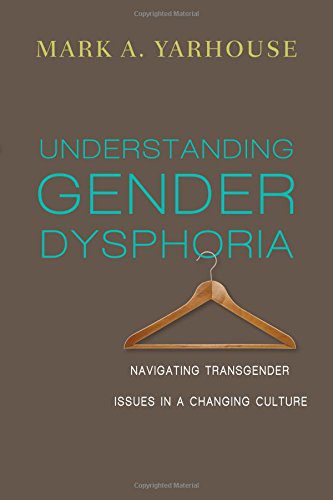
Over the past year, I’ve had a number of people ask me for good Christian resources aimed at helping pastors, parents and Christians with gender dysphoria to navigate the difficult questions about gender identity that we face in the postmodern world. In all cases I’ve smiled sadly, shrugged my shoulders, and said, “Well…there is a book being written about this. It’s good. But unfortunately, it hasn’t been released yet.
That book is now available. Mark Yarhouse’s Understanding Gender Dysphoria: Navigating Transgender Issues in a Changing Culture is a book that has the potential to change the conversation surrounding transgender, genderqueer and gender non-conforming people and our role in the church. Mark writes from a fairly conservative evangelical perspective, but there is one critical difference between his approach and the approach I usually see from conservative writers: Mark has actually listened to trans people with a view to understanding, and his goal is to help churches provide pastoral care to a group that has traditionally been stigmatized and marginalized.
A lot of the concerns that Mark voices echo my own. For example, he talks about the problem of marginalized groups having their stories written or told for them by more dominant groups, and then goes on to analyze how this happens in both the Christian and the secular world. I think it’s a very pertinent point. On the one hand, there is a very strong risk that people (young people especially) who are experiencing gender dysphoria in a Christian context will feel like they have to conform to gender expectations or that their trans experiences are an affront to the created order. On the other hand, there is a risk of people being railroaded into a narrow kind of transgender narrative in which hormones, surgery and legal change of identity are the only means of living authentically.
Yarhouse suggests that if Christians want to minister effectively trans people, one of the approaches that we should consider is helping people to navigate gender dysphoria by exploring alternatives to both of these narratives. He offers three different frameworks that might be considered, and provides an honest discussion of the strengths and weaknesses of these different paradigms. Instead of telling people how they need to identify, what treatment they ought to seek and how they ought to conceive of their experience, he instead offers a toolkit to provide folks with a greater range of options.
Mark also offers a lot of advice for how Christian communities can improve their ministerial approaches to trans people. He illustrates his points in simple, accessible ways like this flow chart, describing two different approaches to ministry:
“Behave –> Believe –> Belong”
“Belong –> Believe –> Become.”
Mark suggests that many Christian communities close their doors to trans people because they functionally practice the first model, and he suggests that the second model is more evangelical in the sense that it has a greater capacity to actually evangelize.
Now, I don’t want to give the impression that I agree with Mark on everything. There are some places where I would have been more critical of traditional Christian approaches to gender, and where I would more strongly emphasize the harm that can be done. I suspect that some trans readers will find this book frustrating because it approaches transgender expression, especially surgical and hormonal interventions, with a great deal of caution. I suspect that some Christian readers will find the book objectionable because it approaches those same topics with openness, and without condemnation. A lot of people would probably prefer a book that was more polemical and less even handed.
Yet it is to those folks, especially, that I would recommend this book. I’m not saying that you need to read it and agree. I’m saying that if you want to be able to actually understand both sides of the issue, whether you’re on the left or the right this book will give you something to think about – and it will do so with humility, insight, and respect.
Bonus!: You can listen to Mark and I discuss gender dysphoria and trans issues with Zach Perkins on the latest episode of the Theologues podcast.
Previous Post

July 3, 2015
NFP Wurkt Fur Mee!
Next Post

July 3, 2015 St. Thomas the Skeptic
Browse Our Archives
Select a Category Abuse Beauty Charity Chastity Current Events Faith Family Feminism Fiction Humility Humour Identity Justice Perseverence Philosophy Poverty Sexuality trauma Uncategorized Virtues Wombats
Select a Month February 2020 November 2019 October 2019 August 2019 July 2019 June 2019 May 2019 April 2019 March 2019 February 2019 October 2018 September 2018 August 2018 July 2018 June 2018 May 2018 April 2018 March 2018 February 2018 January 2018 December 2017 November 2017 October 2017 September 2017 August 2017 July 2017 June 2017 May 2017 April 2017 March 2017 February 2017 January 2017 December 2016 November 2016 October 2016 September 2016 August 2016 July 2016 June 2016 May 2016 April 2016 March 2016 February 2016 January 2016 December 2015 November 2015 October 2015 September 2015 August 2015 July 2015 June 2015
Follow Us!
TAKE THE
Religious Wisdom Quiz
True or False: Peter preached the first sermon after Pentecost, leading to 3,000 conversions.
Select your answer to see how you score.
FALSE TRUE
Books by This Author Books by Melinda Selmys
Support this
Column


Related posts from Catholic Authenticity

Sex Positive: How I Learned To Stop Worrying...


A Biblical Account of Toxic Femininity

TRENDING AT PATHEOS Catholic

Rejecting Doom: Christian Hope And Human Action
Christianity is a religion of hope. We are to have hope and...

It’s What Comes From Within Which Matters
One of the most difficult things for us to understand is why...

Why I Choose the Eucharist Over the Sermon
Choose the Eucharist, Not the Sermon What are we supposed to get...

5 Design Elements Found in Spiritually Rooted Homes
Putting Spirituality Into Home Decor Our homes are more than our living...

Credo: A Story of God Told with the...
About 10 years ago, I began to imagine a personal "Credo" that...

The Anatomy of Divine Revelation in Catholic Thought
The claim that God has made Himself known to human beings is...
view all Catholic blogs
Ad-Free & Subscriber Log-In Subscription Support
- About Us
- 2026 Calendar
- Videos
- Podcasts
- Library of World Religions
- Faith In Media Tracker
- Advertise With Us
- Write for Us
- Privacy Policy
- Terms of Service
- Do Not Sell My Data
- Contact Us
- Radiant Digital
- Manage Newsletter Subscriptions
- Unsubscribe From Notifications
- Sitemap
Copyright 2008-2026, Patheos. All rights reserved.
Subscription Support Ad-Free & Subscriber Log-In
Follow Patheos