
BuddhistCatholicContemplativeEvangelicalGeneral ChristianHinduJewishLatter-day SaintMuslimNew VisionsProgressive Christian
Beliefs
- Buddhist
- Catholic
- Contemplative
- Evangelical
- General Christian
- Hindu
- Jewish
- Latter-day Saint
- More Voices
- Muslim
- New Visions
- Pagan
- Progressive Christian
Topics
- Religion News
- Food and Religion
- Sports and Religion
- Religious Art
- Religious Music and Entertainment
- Religious Events
- History and Religion
- Style and Religion
- Politics and Religion
- Women in Religion
- Recreation Outdoors and Religion
- Business Finance and Religion
- Careers Workplace and Religion
- Education and Religion
- Family Parenting and Religion
- Health Fitness and Religion
- Home and Religion
- Relationships and Religion
- Technology and Religion
- Travel and Religion
Columnists
- Buddhist Columnists
- Business Finance and Religion Columnists
- Careers Workplace and Religion Columnists
- Catholic Columnists
- Contemplative Columnists
- Education and Religion Columnists
- Evangelists Columnists
- Family Parenting and Religion Columnists
- General Christian Columnists
- Health Fitness and Religion Columnists
- Hindu Columnists
- History and Religion Columnists
- Home and Religion Columnists
- Jewish Columnists
- More Voices Columnists
- Latter Day Columnists
- Muslim Columnists
- New Visions Columnists
- Nonreligious Columnists
- Pagan Columnists
- Politics and Religion Columnists
- Progressive Columnists
- Recreation Outdoors and Religion Columnists
- Relationships and Religion Columnists
- Religion News Columnists
- Religious Art Columnists
- Religious Events Columnists
- Religious Music and Entertainment Columnists
- Sports and Religion Columnists
- Style and Religion Columnists
- Technology and Religion Columnists
- Travel and Religion Columnists
- Women in Religion Columnists
Resource Library
- 2026 Calendar
- Library of World Religions
- The 100 Most Holy Places on Earth
- Patheos Answers
- Podcasts
- Videos
- Faith Leaders Database
- Anglican Episcopalian
- Bahai
- Baptist
- Buddhism
- Christianity
- Confucianism
- Eastern Orthodoxy
- Hinduism
- Holiness and Pentecostal
- ISKCON
- Islam
- Judaism
- Lutheran
- Methodist
- The Church of Jesus Christ of Latter-day Saints
- New Age
- Paganism
- Presbytarian and Reformed
- Protestantism
- Religion Behind the Scenes
- Roman Catholic
- Scientology
- Shia Islam
- Sikhism
- Sufism
- Sunni Islam
- Taoism
- Zen
- See all religions
Research Tools
 Ad-Free & Subscriber Log-In Subscription Support
Ad-Free & Subscriber Log-In Subscription Support
Follow Patheos 

- Trending:
- Forgiveness
- |
- Marriage
- |
- Consciousness
- |
- Death Penalty
- |
- Election
- |
- Halloween
 Catholic Authenticity
-
Categories
- Home
- Catholic
- (Title Omitted for Nefarious Purposes)
(Title Omitted for Nefarious Purposes)
Last updated on: September 18, 2015 at 4:49 pm by Melinda Selmys
(Title Omitted for Nefarious Purposes) 2015-09-18T16:49:01-04:00 Melinda Selmys
Patheos Explore the world's faith through different perspectives on religion and spirituality! Patheos has the views of the prevalent religions and spiritualities of the world.
Art is not merely a matter of faithfully transcribed inspirations. There is also a large portion of the self that must enter into the work. The inspiration behind Michelangelo’s David is something from outside, something that he feels as being in the marble: “Every block of stone has a statue inside it and it is the task of the sculptor to discover it.” But we cannot explain David purely in terms of the block of stone; it is not difficult for the perceptive viewer, present or contemporaneous with the artist, to notice the sublimated homoeroticism in the exquisitely sculpted youth.
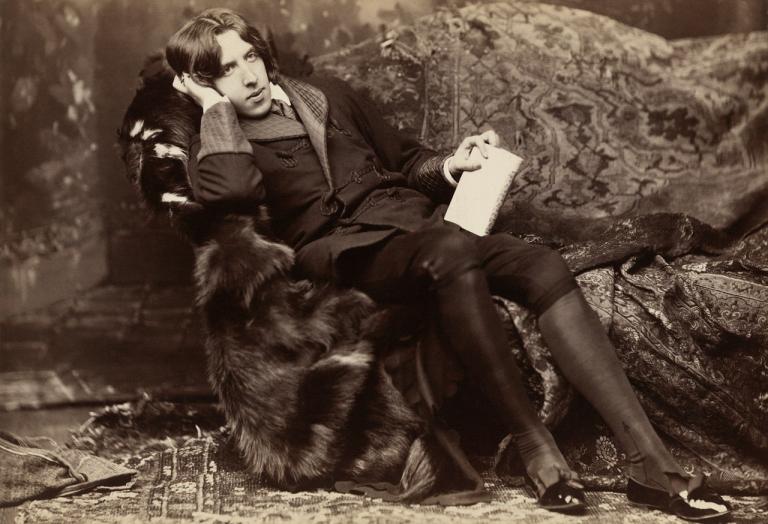
Oscar Wilde’s Dorian Grey is, in part, an exploration of this theme. Basil creates a portrait of young Dorian, but he is terrified to showcase it because he feels that he has put too much of himself into the painting. Again, the hidden secret is homoeroticism — and Wilde’s contemporaries were not slow to recognize Oscar in Basil, nor to deride Dorian Grey as a scandalous novel upon its publication.
The gay artist is not alone in hoping that his secrets will somehow, impossibly, stay in the closet. Every artist outs him/herself. Good art requires a marriage of inspiration and honesty: the artist must take this thing that is from outside, and make it personal. Many of the truths that need to be told are intensely uncomfortable. The artist who portrays darknesses with which (s)he is unfamiliar will always seem callow or superficial to those who actually understand. The allegedly Christian husband in Margret Atwood’s A Handmaid’s Tale does not ring true, he is a stereotype, a person that Atwood doesn’t understand, a man who could not possibly exist. He is no more convincing than the drug addict in a Church basement morality play, or The Peculiar Purple Pieman of Porcupine Peak (rat ta ta ta ta ta ta ta ta!)
The artist who portrays vices, dark secrets, shameful realities with which they are too familiar, on the other hand, courts the scandal mongers. Audiences are quick to associate the artist with the character – they say “As Shakespeare revealed, ‘Life is but a walking shadow…full of sound and fury signifying nothing’” Instead of, “As Macbeth said…” An artist who reveals the world of drug addicts is assumed to be a drug addict. An artist who writes from the perspective of a racist character is presumed racist. Even if you don’t actually suffer from these vices, if you portray them too well, too honestly – if you go too far in actually putting yourself into the shoes of another person and have genuine sympathy and compassion for their experience you are sure to end up accused of being in cahoots.
The reason for this is that most of the great artists actually do honestly portray their own vices. Byron didn’t merely dream up stories about Don Juan while sitting chastely at home with his wife and parakeet. Dostoevsky did not write The Gambler informed by years of quiet, disinterested research and interviews.
Photo credit: Pixabay
Previous Post

July 24, 2015
Breath and Shadow
Next Post

July 25, 2015 The Interior Life of Sheep
Browse Our Archives
Select a Category Abuse Beauty Charity Chastity Current Events Faith Family Feminism Fiction Humility Humour Identity Justice Perseverence Philosophy Poverty Sexuality trauma Uncategorized Virtues Wombats
Select a Month February 2020 November 2019 October 2019 August 2019 July 2019 June 2019 May 2019 April 2019 March 2019 February 2019 October 2018 September 2018 August 2018 July 2018 June 2018 May 2018 April 2018 March 2018 February 2018 January 2018 December 2017 November 2017 October 2017 September 2017 August 2017 July 2017 June 2017 May 2017 April 2017 March 2017 February 2017 January 2017 December 2016 November 2016 October 2016 September 2016 August 2016 July 2016 June 2016 May 2016 April 2016 March 2016 February 2016 January 2016 December 2015 November 2015 October 2015 September 2015 August 2015 July 2015 June 2015
Follow Us!
TAKE THE
Religious Wisdom Quiz
In the New Testament what is the last book?
Select your answer to see how you score.
Titus Matthew Luke Revelation
Books by This Author Books by Melinda Selmys
Support this
Column


Related posts from Catholic Authenticity
A Monstrous Monstrance, or Why Does Religion Suck?

Some Straight Talk on Catholic Homophobia

The Tree of Life, Epistemology, My NFP Book,...

TRENDING AT PATHEOS Catholic

Rejecting Doom: Christian Hope And Human Action
Christianity is a religion of hope. We are to have hope and...

It’s What Comes From Within Which Matters
One of the most difficult things for us to understand is why...

Why I Choose the Eucharist Over the Sermon
Choose the Eucharist, Not the Sermon What are we supposed to get...

5 Design Elements Found in Spiritually Rooted Homes
Putting Spirituality Into Home Decor Our homes are more than our living...

Credo: A Story of God Told with the...
About 10 years ago, I began to imagine a personal "Credo" that...

The Anatomy of Divine Revelation in Catholic Thought
The claim that God has made Himself known to human beings is...
view all Catholic blogs
Ad-Free & Subscriber Log-In Subscription Support
- About Us
- 2026 Calendar
- Videos
- Podcasts
- Library of World Religions
- Faith In Media Tracker
- Advertise With Us
- Write for Us
- Privacy Policy
- Terms of Service
- Do Not Sell My Data
- Contact Us
- Radiant Digital
- Manage Newsletter Subscriptions
- Unsubscribe From Notifications
- Sitemap
Copyright 2008-2026, Patheos. All rights reserved.
Subscription Support Ad-Free & Subscriber Log-In
Follow Patheos