
BuddhistCatholicContemplativeEvangelicalGeneral ChristianHinduJewishLatter-day SaintMuslimNew VisionsProgressive Christian
Beliefs
- Buddhist
- Catholic
- Contemplative
- Evangelical
- General Christian
- Hindu
- Jewish
- Latter-day Saint
- More Voices
- Muslim
- New Visions
- Pagan
- Progressive Christian
Topics
- Religion News
- Food and Religion
- Sports and Religion
- Religious Art
- Religious Music and Entertainment
- Religious Events
- History and Religion
- Style and Religion
- Politics and Religion
- Women in Religion
- Recreation Outdoors and Religion
- Business Finance and Religion
- Careers Workplace and Religion
- Education and Religion
- Family Parenting and Religion
- Health Fitness and Religion
- Home and Religion
- Relationships and Religion
- Technology and Religion
- Travel and Religion
Columnists
- Buddhist Columnists
- Business Finance and Religion Columnists
- Careers Workplace and Religion Columnists
- Catholic Columnists
- Contemplative Columnists
- Education and Religion Columnists
- Evangelists Columnists
- Family Parenting and Religion Columnists
- General Christian Columnists
- Health Fitness and Religion Columnists
- Hindu Columnists
- History and Religion Columnists
- Home and Religion Columnists
- Jewish Columnists
- More Voices Columnists
- Latter Day Columnists
- Muslim Columnists
- New Visions Columnists
- Nonreligious Columnists
- Pagan Columnists
- Politics and Religion Columnists
- Progressive Columnists
- Recreation Outdoors and Religion Columnists
- Relationships and Religion Columnists
- Religion News Columnists
- Religious Art Columnists
- Religious Events Columnists
- Religious Music and Entertainment Columnists
- Sports and Religion Columnists
- Style and Religion Columnists
- Technology and Religion Columnists
- Travel and Religion Columnists
- Women in Religion Columnists
Resource Library
- 2026 Calendar
- Library of World Religions
- The 100 Most Holy Places on Earth
- Patheos Answers
- Podcasts
- Videos
- Faith Leaders Database
- Anglican Episcopalian
- Bahai
- Baptist
- Buddhism
- Christianity
- Confucianism
- Eastern Orthodoxy
- Hinduism
- Holiness and Pentecostal
- ISKCON
- Islam
- Judaism
- Lutheran
- Methodist
- The Church of Jesus Christ of Latter-day Saints
- New Age
- Paganism
- Presbytarian and Reformed
- Protestantism
- Religion Behind the Scenes
- Roman Catholic
- Scientology
- Shia Islam
- Sikhism
- Sufism
- Sunni Islam
- Taoism
- Zen
- See all religions
Research Tools
 Ad-Free & Subscriber Log-In Subscription Support
Ad-Free & Subscriber Log-In Subscription Support
Follow Patheos 

- Trending:
- Forgiveness
- |
- Marriage
- |
- Consciousness
- |
- Death Penalty
- |
- Election
- |
- Halloween
 Catholic Authenticity
-
Categories
- Home
- Catholic
- Spiritual Friendship: I Review Wesley Hill’s Book
Spiritual Friendship: I Review Wesley Hill’s Book
Last updated on: July 11, 2015 at 5:28 pm by Melinda Selmys
Spiritual Friendship: I Review Wesley Hill’s Book 2015-07-11T17:28:57-04:00 Melinda Selmys
Patheos Explore the world's faith through different perspectives on religion and spirituality! Patheos has the views of the prevalent religions and spiritualities of the world.
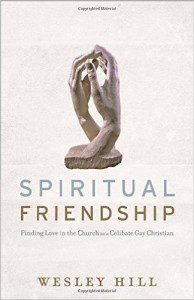
In the wake of the legalization of same-sex marriage, some Christians have started asking: how can we move forward from here? Some are still committed to the legal battle to overturn SSM, but most seem to be aware that a shift in footing is necessary. Lobbyists are increasingly putting their efforts into the protection of religious freedoms – in particular the protection of the freedom of churches not to perform same-sex weddings. There’s also been a lot more talk about trying to strengthen and better support traditional marriage (as in this post that I wrote shortly after Obergefell).
But what about the pastoral question? To Christians, gays and lesbians should not be seen primarily as a political problem. How do we welcome LGBTQ people into our churches? What options do we offer? How do we provide pastoral support without denying the traditional teaching on marriage and sexuality?
Those who are familiar with this issue probably already know that the “ex-gay” movement basically capsized a couple of years ago. Almost nobody believes anymore than you can change a person’s sexual orientation with therapy, and even folks who are in successful marriages with spouses of the opposite sex are increasingly open about the fact that they are still gay, and that straight marriage is really only an option for a small minority. Twelve step ministries may be helpful for some people, but they seem to finding it difficult to reach the younger generations who have grown up in a pro-gay culture.
Spiritual Friendship offers a different approach.
Dr. Wesley Hill is an Anglican who teaches biblical studies at Trinity School for Ministry. He is also a celibate gay man who believes in the traditional teaching on homosexuality. Spiritual Friendship is his second book that deals with homosexuality and the church (his first, Washed and Waiting, is fantastic and highly recommended.)
Wes’ basic argument is that one of the primary difficulties that the church faces both in fighting against gay marriage and in reaching out to the LGBTQ community, is that we have over-emphasized marriage to the exclusion, and sometimes detriment, of friendship. This book traces the history of Christian traditions surrounding friendship, discussing, amongst others, the writings of St. Aelred of Riveaulx, Dietrich Bonhoeffer, John Henry Newman, C. S. Lewis and Henri Nouwen. His goal is to trace a tradition of intense, emotional same-sex love which is expressed not through sex and marriage but through chaste friendship.
This book is not just written for gay people. Hill shows that the eclipse of traditional friendship preceded the eclipse of traditional marriage – and that it may have been an equal, though much quieter, disaster for Western culture. The loss of friendship, Hill argues, has profound implications for Christian community, for straight singles, and for married people, particularly married women who often find motherhood isolating and burdensome without a community of support. He also demonstrates how the cultural diminution of friendship as a recognized and dignified relationship creates a situation in which the “right to marriage” becomes synonymous with the right to love.
Spiritual Friendship is a beautiful, informative and often lyrical book which interweaves poignant personal reflections with lovely excerpts from a rich and largely neglected tradition. Hill offers practical ideas for how Christians can help build the kind of communities where Christians friendship can flourish, and where Christ’s claim that we will be to one another as sisters and brothers, mothers and fathers, can be made a reality. He also shows that this type of community in which bonds of friendship create the foundation for parish kinship can offer those who are unable to marry the opportunity to participate in family life without denying the Biblical tradition.
This book is smart and well-researched, yet also personable and approachable. Wesley’s prose stylistics are a joy to read: he is intelligent without being tedious or pedantic, and he uses his considerable knowledge of the subject matter to inform his audience without showing off. The inclusion of his own, sometimes painful struggles to realize the kind of love that he envisions allows the reader to truly understand both what friendship is, and why we need it so badly in the church today.
Most importantly, Wes provides a positive Christian response to the gay rights movement. Instead of focusing on fighting gay marriage, he offers an alternative way of understanding and providing for the needs of gay people within the church. The fact that he is, himself, living the kind of life that he envisions for others makes this a powerful testimonial, not just a pretty bit of naive theorizing.
So, buy the book. Read it. Share it with your friends. Discuss it in your small groups. Then get to work on building a Culture of Love within the church that invites care and friendship alongside marriage and life.
Also, check out the Spiritual Friendship web-site, a project which Wes co-founded with his friend, gay Catholic theologian Ron Belgau, as a place for traditional Christians to explore better approaches for LGBTQ folks in the church.

Next Post

July 14, 2015 Only YOU Can Stop Sexual Legalism!
Browse Our Archives
Select a Category Abuse Beauty Charity Chastity Current Events Faith Family Feminism Fiction Humility Humour Identity Justice Perseverence Philosophy Poverty Sexuality trauma Uncategorized Virtues Wombats
Select a Month February 2020 November 2019 October 2019 August 2019 July 2019 June 2019 May 2019 April 2019 March 2019 February 2019 October 2018 September 2018 August 2018 July 2018 June 2018 May 2018 April 2018 March 2018 February 2018 January 2018 December 2017 November 2017 October 2017 September 2017 August 2017 July 2017 June 2017 May 2017 April 2017 March 2017 February 2017 January 2017 December 2016 November 2016 October 2016 September 2016 August 2016 July 2016 June 2016 May 2016 April 2016 March 2016 February 2016 January 2016 December 2015 November 2015 October 2015 September 2015 August 2015 July 2015 June 2015
Follow Us!
TAKE THE
Religious Wisdom Quiz
What does "Bethany" mean in Hebrew?
Select your answer to see how you score.
House of affliction House of mercy House of stone House of bread
Books by This Author Books by Melinda Selmys
Support this
Column


Related posts from Catholic Authenticity

Sex Positive: How I Learned To Stop Worrying...


A Biblical Account of Toxic Femininity

TRENDING AT PATHEOS Catholic

Rejecting Doom: Christian Hope And Human Action
Christianity is a religion of hope. We are to have hope and...

It’s What Comes From Within Which Matters
One of the most difficult things for us to understand is why...

Why I Choose the Eucharist Over the Sermon
Choose the Eucharist, Not the Sermon What are we supposed to get...

5 Design Elements Found in Spiritually Rooted Homes
Putting Spirituality Into Home Decor Our homes are more than our living...

Credo: A Story of God Told with the...
About 10 years ago, I began to imagine a personal "Credo" that...

The Anatomy of Divine Revelation in Catholic Thought
The claim that God has made Himself known to human beings is...
view all Catholic blogs
Ad-Free & Subscriber Log-In Subscription Support
- About Us
- 2026 Calendar
- Videos
- Podcasts
- Library of World Religions
- Faith In Media Tracker
- Advertise With Us
- Write for Us
- Privacy Policy
- Terms of Service
- Do Not Sell My Data
- Contact Us
- Radiant Digital
- Manage Newsletter Subscriptions
- Unsubscribe From Notifications
- Sitemap
Copyright 2008-2026, Patheos. All rights reserved.
Subscription Support Ad-Free & Subscriber Log-In
Follow Patheos