
BuddhistCatholicContemplativeEvangelicalGeneral ChristianHinduJewishLatter-day SaintMuslimNew VisionsProgressive Christian
Beliefs
- Buddhist
- Catholic
- Contemplative
- Evangelical
- General Christian
- Hindu
- Jewish
- Latter-day Saint
- More Voices
- Muslim
- New Visions
- Pagan
- Progressive Christian
Topics
- Religion News
- Food and Religion
- Sports and Religion
- Religious Art
- Religious Music and Entertainment
- Religious Events
- History and Religion
- Style and Religion
- Politics and Religion
- Women in Religion
- Recreation Outdoors and Religion
- Business Finance and Religion
- Careers Workplace and Religion
- Education and Religion
- Family Parenting and Religion
- Health Fitness and Religion
- Home and Religion
- Relationships and Religion
- Technology and Religion
- Travel and Religion
Columnists
- Buddhist Columnists
- Business Finance and Religion Columnists
- Careers Workplace and Religion Columnists
- Catholic Columnists
- Contemplative Columnists
- Education and Religion Columnists
- Evangelists Columnists
- Family Parenting and Religion Columnists
- General Christian Columnists
- Health Fitness and Religion Columnists
- Hindu Columnists
- History and Religion Columnists
- Home and Religion Columnists
- Jewish Columnists
- More Voices Columnists
- Latter Day Columnists
- Muslim Columnists
- New Visions Columnists
- Nonreligious Columnists
- Pagan Columnists
- Politics and Religion Columnists
- Progressive Columnists
- Recreation Outdoors and Religion Columnists
- Relationships and Religion Columnists
- Religion News Columnists
- Religious Art Columnists
- Religious Events Columnists
- Religious Music and Entertainment Columnists
- Sports and Religion Columnists
- Style and Religion Columnists
- Technology and Religion Columnists
- Travel and Religion Columnists
- Women in Religion Columnists
Resource Library
- 2026 Calendar
- Library of World Religions
- The 100 Most Holy Places on Earth
- Patheos Answers
- Podcasts
- Videos
- Faith Leaders Database
- Anglican Episcopalian
- Bahai
- Baptist
- Buddhism
- Christianity
- Confucianism
- Eastern Orthodoxy
- Hinduism
- Holiness and Pentecostal
- ISKCON
- Islam
- Judaism
- Lutheran
- Methodist
- The Church of Jesus Christ of Latter-day Saints
- New Age
- Paganism
- Presbytarian and Reformed
- Protestantism
- Religion Behind the Scenes
- Roman Catholic
- Scientology
- Shia Islam
- Sikhism
- Sufism
- Sunni Islam
- Taoism
- Zen
- See all religions
Research Tools
 Ad-Free & Subscriber Log-In Subscription Support
Ad-Free & Subscriber Log-In Subscription Support
Follow Patheos 

- Trending:
- Forgiveness
- |
- Marriage
- |
- Consciousness
- |
- Death Penalty
- |
- Election
- |
- Halloween
 Catholic Authenticity
-
Categories
- Home
- Catholic
- Money, Money
Money, Money
Last updated on: September 18, 2015 at 3:13 pm by Melinda Selmys
Money, Money 2015-09-18T15:13:44-04:00 Melinda Selmys
Patheos Explore the world's faith through different perspectives on religion and spirituality! Patheos has the views of the prevalent religions and spiritualities of the world.
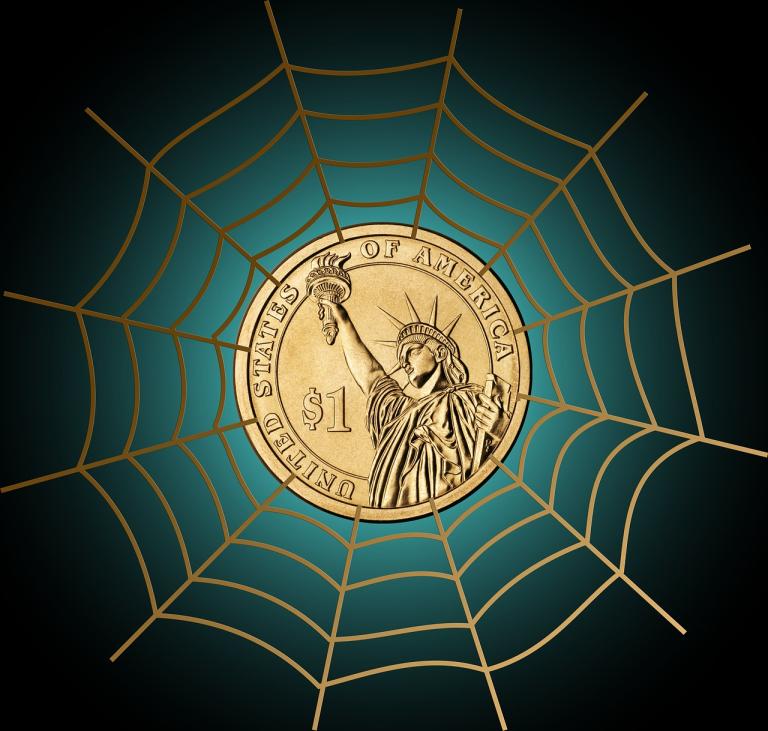
What is money? The obvious answer is that money is a means of exchange, a handy way of overcoming the inconveniences of the barter system. Originally, valuable goods were exchanged for equally valuable metals; gold weighed less than cattle, and its value was universally recognized, so it could be traded for anything. The sort of fiat money that we are familiar with today would have seemed alien, probably even frightening, to ancient man: on what basis would he have faith in the power of this token? Once he had given up his cow for a bit of colored paper, why would someone else be willing to take the paper in exchange for a cow?
Money is an abstraction of value. It is also a promise: implicit in the conversion of goods to money is the assurance that the abstraction can once more be made concrete. It is, in this way, similar to language: a word is both an abstraction of a concrete thing, and also a sign that points back towards that thing. Both words and money can be made to lie. If I say “There is plenty to eat in the cupboard,” and there is not plenty to eat, the words have been made to signify a reality that is not there. If someone’s life or freedom of action is dependent on the existence of the thing that is not there, then the lie assumes true moral gravity: it not only offends against truth, but also harms the person who believes the lie. If someone produces money that does not correspond to any genuine value, this is the financial equivalent of lying — and since money is generally used to vouchsafe the value of human labor and the ability to procure the means of survival, it is a grave lie indeed.
Financial gurus perennially point out that “rich people don’t work for their money; they make their money work for them.” What they mean is either one of two things:
Rich people buy up the means of production and charge other people for the right to use them.
Rich people lend their money at interest and make a profit from usury.
Both of these practices are problematic. The first violates the principle of private property because it tends to concentrate ownership in the hands of the few. “The right to private property, acquired or received in a just way, does not do away with the original gift of the earth to the whole of mankind. The universal destination of goods remains primordial, even if the promotion of the common good requires respect for the right to private property and its exercise” (CCC 2403). The Vatican is very clear in emphasizing that the right to private property is not a right to amass property at the expense of others, but rather a universal right which is best realized when the maximum possible number of people are enabled to share in ownership, for “every man has by nature the right to possess property as his own” (Rerum Novarum). This is a point that we will return to later.
Usury poses even greater problems. It is condemned in the Old Testament, particularly in relation to the poor: “If you lend money to any of my people, to any poor man among you, you must not play the usurer with him: you must not demand interest from him” (Exod 22:25). Until the Middle Ages, the Church forbade lending at interest, and today the Vatican continues to plead for the forgiveness of usurious debts which enslave individuals and nations.
Usury subtly changes the nature of money so that it ceases to express values that actually exist, and comes to express debt. It is a promise that something of value will come into being in the future. This kind of promise lacks integrity because it offers what it does not yet possess. A man who promises to bring his love back the heart of a dragon means that he will try to bring his love back the heart of a dragon, that he earnestly desires to do so, and will make an honest effort. It by no means ensures that a dragon’s heart will ever actually manifest on his lady’s table. It is a very different sort of promise than the promise to give himself lovingly to his lady for the rest of his life: a promise which he may make because he is already in possession of himself, and may certainly expect to continue in such self-possession until his death.
The condemnation of usury does not preclude speculative investment. The difference between usury and legitimate forms of investment is that the usurer is being paid for the use of his money, and he expects to get his money back, with interest, regardless of whether his debtor is able to pay. An investor joins his wealth to someone else’s project in the anticipation that the venture will succeed. He does not get a return on his investment, or even recoup his capital, unless his wealth is used to produce something of real value.
Usury on a private scale has caused countless social ills: indentured slavery, debtors prisons, and violent debt collections. On a public scale, it is catastrophic. The recent banker bail-outs are a case in point: the economic stability of the United States depended on the value of usurious loans which were made in bad faith. When it did not prove possible to redeem these debts, it was necessary to commit a universal robbery — to pay for the mistakes of the rich by taking money from the middle class and the poor. Such injustices are endemic to societies in which usury is the norm.
Excerpted from Slave of Two Masters
Photo credit: Pixabay
universal destination of goods
Previous Post

July 21, 2015
Canadians Screw Better
Next Post

July 22, 2015 Vanity, Vanity
Browse Our Archives
Select a Category Abuse Beauty Charity Chastity Current Events Faith Family Feminism Fiction Humility Humour Identity Justice Perseverence Philosophy Poverty Sexuality trauma Uncategorized Virtues Wombats
Select a Month February 2020 November 2019 October 2019 August 2019 July 2019 June 2019 May 2019 April 2019 March 2019 February 2019 October 2018 September 2018 August 2018 July 2018 June 2018 May 2018 April 2018 March 2018 February 2018 January 2018 December 2017 November 2017 October 2017 September 2017 August 2017 July 2017 June 2017 May 2017 April 2017 March 2017 February 2017 January 2017 December 2016 November 2016 October 2016 September 2016 August 2016 July 2016 June 2016 May 2016 April 2016 March 2016 February 2016 January 2016 December 2015 November 2015 October 2015 September 2015 August 2015 July 2015 June 2015
Follow Us!
TAKE THE
Religious Wisdom Quiz
I asked for wisdom above all else, and God granted me riches and honor as well. Who am I?
Select your answer to see how you score.
Solomon Hezekiah Josiah David
Books by This Author Books by Melinda Selmys
Support this
Column


Related posts from Catholic Authenticity

Is It A Sin to be Scandalized by...

Privilege Does Not Mean You Are Bad

TRENDING AT PATHEOS Catholic

Rejecting Doom: Christian Hope And Human Action
Christianity is a religion of hope. We are to have hope and...

It’s What Comes From Within Which Matters
One of the most difficult things for us to understand is why...

Why I Choose the Eucharist Over the Sermon
Choose the Eucharist, Not the Sermon What are we supposed to get...

5 Design Elements Found in Spiritually Rooted Homes
Putting Spirituality Into Home Decor Our homes are more than our living...

Credo: A Story of God Told with the...
About 10 years ago, I began to imagine a personal "Credo" that...

The Anatomy of Divine Revelation in Catholic Thought
The claim that God has made Himself known to human beings is...
view all Catholic blogs
Ad-Free & Subscriber Log-In Subscription Support
- About Us
- 2026 Calendar
- Videos
- Podcasts
- Library of World Religions
- Faith In Media Tracker
- Advertise With Us
- Write for Us
- Privacy Policy
- Terms of Service
- Do Not Sell My Data
- Contact Us
- Radiant Digital
- Manage Newsletter Subscriptions
- Unsubscribe From Notifications
- Sitemap
Copyright 2008-2026, Patheos. All rights reserved.
Subscription Support Ad-Free & Subscriber Log-In
Follow Patheos