
BuddhistCatholicContemplativeEvangelicalGeneral ChristianHinduJewishLatter-day SaintMuslimNew VisionsProgressive Christian
Beliefs
- Buddhist
- Catholic
- Contemplative
- Evangelical
- General Christian
- Hindu
- Jewish
- Latter-day Saint
- More Voices
- Muslim
- New Visions
- Pagan
- Progressive Christian
Topics
- Religion News
- Food and Religion
- Sports and Religion
- Religious Art
- Religious Music and Entertainment
- Religious Events
- History and Religion
- Style and Religion
- Politics and Religion
- Women in Religion
- Recreation Outdoors and Religion
- Business Finance and Religion
- Careers Workplace and Religion
- Education and Religion
- Family Parenting and Religion
- Health Fitness and Religion
- Home and Religion
- Relationships and Religion
- Technology and Religion
- Travel and Religion
Columnists
- Buddhist Columnists
- Business Finance and Religion Columnists
- Careers Workplace and Religion Columnists
- Catholic Columnists
- Contemplative Columnists
- Education and Religion Columnists
- Evangelists Columnists
- Family Parenting and Religion Columnists
- General Christian Columnists
- Health Fitness and Religion Columnists
- Hindu Columnists
- History and Religion Columnists
- Home and Religion Columnists
- Jewish Columnists
- More Voices Columnists
- Latter Day Columnists
- Muslim Columnists
- New Visions Columnists
- Nonreligious Columnists
- Pagan Columnists
- Politics and Religion Columnists
- Progressive Columnists
- Recreation Outdoors and Religion Columnists
- Relationships and Religion Columnists
- Religion News Columnists
- Religious Art Columnists
- Religious Events Columnists
- Religious Music and Entertainment Columnists
- Sports and Religion Columnists
- Style and Religion Columnists
- Technology and Religion Columnists
- Travel and Religion Columnists
- Women in Religion Columnists
Resource Library
- 2026 Calendar
- Library of World Religions
- The 100 Most Holy Places on Earth
- Patheos Answers
- Podcasts
- Videos
- Faith Leaders Database
- Anglican Episcopalian
- Bahai
- Baptist
- Buddhism
- Christianity
- Confucianism
- Eastern Orthodoxy
- Hinduism
- Holiness and Pentecostal
- ISKCON
- Islam
- Judaism
- Lutheran
- Methodist
- The Church of Jesus Christ of Latter-day Saints
- New Age
- Paganism
- Presbytarian and Reformed
- Protestantism
- Religion Behind the Scenes
- Roman Catholic
- Scientology
- Shia Islam
- Sikhism
- Sufism
- Sunni Islam
- Taoism
- Zen
- See all religions
Research Tools
 Ad-Free & Subscriber Log-In Subscription Support
Ad-Free & Subscriber Log-In Subscription Support
Follow Patheos 

- Trending:
- Forgiveness
- |
- Marriage
- |
- Consciousness
- |
- Death Penalty
- |
- Election
- |
- Halloween
 Catholic Authenticity
-
Categories
- Home
- Catholic
- Fiat Currency
Fiat Currency
Last updated on: September 18, 2015 at 2:34 pm by Melinda Selmys
Fiat Currency 2015-09-18T14:34:17-04:00 Melinda Selmys
Patheos Explore the world's faith through different perspectives on religion and spirituality! Patheos has the views of the prevalent religions and spiritualities of the world.
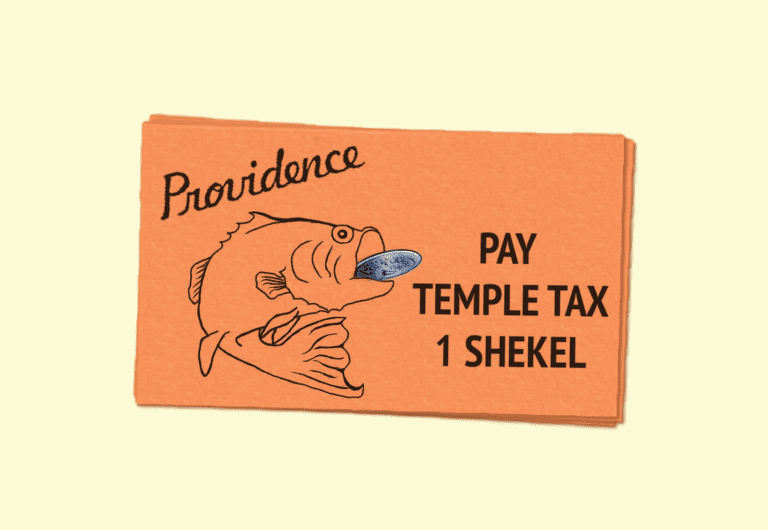
I don’t know what to do about money. As far as I can tell, it’s a totally malleable substance of no fixed value, and it’s remarkably responsive to spiritual realities. I try to budget, I try to be responsible, I don’t spend much. Sometimes, there is plenty of money, no extraordinary expenses, everything is sensibly budgeted for, and it remains almost impossible to make ends meet. Then a couple of months later, income will be low, there will be several unexpected expenses, the budgeting will look ghastly, and somehow, the money just won’t run out. The only pattern that I have been able to discover is that money is tight when I’m worried about money, and it’s free-flowing when I’m indifferent to it.
I’m not sure that money works this way for everyone. I’m assuming that some people have been given gifts of financial acuity and commercial prowess, and perhaps for those people money behaves more like it does in economics text books. I am not one of those people, and so far as I can tell, God does not intend for me to become one. Whenever I try to do it all myself, it’s a flop. Whenever I put it in His hands, it all works, and I don’t know how.
There is one story in the gospel that seems to partially explain this. Some men come from the Temple collecting the annual Temple tax. Neither Jesus nor St. Peter has any money, and St. Peter’s not sure what they’re going to do about it. Christ says: “Go to the lake and cast a hook; take the first fish that bites, open its mouth and there you will find a shekel; take it and give it to them for me and for you” (Matt 17:27). Neither Christ nor St. Peter have made any advance preparation or budgeted for the Temple tax, and they haven’t kept a bit of money in the bank in case they need it for a rainy day. They suddenly find themselves in need, so Christ sends Peter out to do his ordinary, day-to-day work. Peter works, and the money appears more or less miraculously, and that’s the end of the story.
God expects people to do the things that they are good at. He always provides the means to do those things, so long as He is asked. If I do my work diligently and faithfully, the money is there. If I spend my time worrying about the money and end up ignoring my actual duties and responsibilities in a flurry of fruitless anxiety, then the money will always be short.
I think that a lot of people who have no talent with money end up being poor and anxious for their entire lives because they feel that God expects them to practice a kind of financial acumen that they are not capable of achieving. It is like the story of the three servants: one is given five talents, another two, and the last one only one talent. The one who has not been blessed with much to begin with feels jilted: why were the other servants given so much more? Why was he only given one talent to invest? So, because he resents his position of poverty, he concludes that the master is unjust. He goes and buries his talent in the ground: after all, it’s only one stupid talent. How much of a return could he really be expected to get on that? When the master comes back, he’s not impressed; he has the one talent seized from the lazy servant, and the servant is cast into the outer darkness to weep and gnash his teeth (see Matt 25:14-30).
If the servant who was only given one talent had just gone out and been faithful with his one talent, then the master would have said, “Well done, good and faithful servant; you have shown you can be faithful in small things, I will trust you with greater; come and join in your master’s happiness” (Matt 25:21, 23). What does the servant do instead? He accuses the master: “I had heard you were a hard man, reaping where you have not sown and gathering where you have not scattered” (Matt 25:24). What is he saying? He’s saying that if only the master had given him more talents in the first place, he would have been able to get a return, but that the master didn’t give him enough for him to really be able to achieve anything — so he didn’t bother to try.
God expects people to make use of what He has actually given them, not to spend their lives ignoring their real talents and aptitudes out of mistaken feeling that they would be better able to succeed if only they had someone else’s abilities. From those to whom God has not given riches, He does not expect to receive a return on His investment of riches. From those to whom He has not given a talent for making and managing money, He does not expect a return on the making and managing of money. Yet woe to the person who has been given artistic talent, or a genius for mothering, or a green thumb, or a scientific intellect, and who has buried it in the ground because they resent not having been blessed with money.
Excerpted from Slave of Two Masters
Picture credit: Melinda Selmys
Previous Post

July 1, 2015
Gold Standard
Next Post

July 2, 2015 What is Art? (or What Pontius Pilate Asked John Keats)
Browse Our Archives
Select a Category Abuse Beauty Charity Chastity Current Events Faith Family Feminism Fiction Humility Humour Identity Justice Perseverence Philosophy Poverty Sexuality trauma Uncategorized Virtues Wombats
Select a Month February 2020 November 2019 October 2019 August 2019 July 2019 June 2019 May 2019 April 2019 March 2019 February 2019 October 2018 September 2018 August 2018 July 2018 June 2018 May 2018 April 2018 March 2018 February 2018 January 2018 December 2017 November 2017 October 2017 September 2017 August 2017 July 2017 June 2017 May 2017 April 2017 March 2017 February 2017 January 2017 December 2016 November 2016 October 2016 September 2016 August 2016 July 2016 June 2016 May 2016 April 2016 March 2016 February 2016 January 2016 December 2015 November 2015 October 2015 September 2015 August 2015 July 2015 June 2015
Follow Us!
TAKE THE
Religious Wisdom Quiz
Who cried out, "My God, my God, why have you forsaken me?" while dying?
Select your answer to see how you score.
David Paul Stephen Jesus
Books by This Author Books by Melinda Selmys
Support this
Column


Related posts from Catholic Authenticity

The Powerlessness of Prayer: On Detaching with Love

Is It A Sin to be Scandalized by...

Humanae Vitae, What Have You Wrought?

TRENDING AT PATHEOS Catholic

Rejecting Doom: Christian Hope And Human Action
Christianity is a religion of hope. We are to have hope and...

It’s What Comes From Within Which Matters
One of the most difficult things for us to understand is why...

Why I Choose the Eucharist Over the Sermon
Choose the Eucharist, Not the Sermon What are we supposed to get...

5 Design Elements Found in Spiritually Rooted Homes
Putting Spirituality Into Home Decor Our homes are more than our living...

Credo: A Story of God Told with the...
About 10 years ago, I began to imagine a personal "Credo" that...

The Anatomy of Divine Revelation in Catholic Thought
The claim that God has made Himself known to human beings is...
view all Catholic blogs
Ad-Free & Subscriber Log-In Subscription Support
- About Us
- 2026 Calendar
- Videos
- Podcasts
- Library of World Religions
- Faith In Media Tracker
- Advertise With Us
- Write for Us
- Privacy Policy
- Terms of Service
- Do Not Sell My Data
- Contact Us
- Radiant Digital
- Manage Newsletter Subscriptions
- Unsubscribe From Notifications
- Sitemap
Copyright 2008-2026, Patheos. All rights reserved.
Subscription Support Ad-Free & Subscriber Log-In
Follow Patheos