
BuddhistCatholicContemplativeEvangelicalGeneral ChristianHinduJewishLatter-day SaintMuslimNew VisionsProgressive Christian
Beliefs
- Buddhist
- Catholic
- Contemplative
- Evangelical
- General Christian
- Hindu
- Jewish
- Latter-day Saint
- More Voices
- Muslim
- New Visions
- Pagan
- Progressive Christian
Topics
- Religion News
- Food and Religion
- Sports and Religion
- Religious Art
- Religious Music and Entertainment
- Religious Events
- History and Religion
- Style and Religion
- Politics and Religion
- Women in Religion
- Recreation Outdoors and Religion
- Business Finance and Religion
- Careers Workplace and Religion
- Education and Religion
- Family Parenting and Religion
- Health Fitness and Religion
- Home and Religion
- Relationships and Religion
- Technology and Religion
- Travel and Religion
Columnists
- Buddhist Columnists
- Business Finance and Religion Columnists
- Careers Workplace and Religion Columnists
- Catholic Columnists
- Contemplative Columnists
- Education and Religion Columnists
- Evangelists Columnists
- Family Parenting and Religion Columnists
- General Christian Columnists
- Health Fitness and Religion Columnists
- Hindu Columnists
- History and Religion Columnists
- Home and Religion Columnists
- Jewish Columnists
- More Voices Columnists
- Latter Day Columnists
- Muslim Columnists
- New Visions Columnists
- Nonreligious Columnists
- Pagan Columnists
- Politics and Religion Columnists
- Progressive Columnists
- Recreation Outdoors and Religion Columnists
- Relationships and Religion Columnists
- Religion News Columnists
- Religious Art Columnists
- Religious Events Columnists
- Religious Music and Entertainment Columnists
- Sports and Religion Columnists
- Style and Religion Columnists
- Technology and Religion Columnists
- Travel and Religion Columnists
- Women in Religion Columnists
Resource Library
- 2026 Calendar
- Library of World Religions
- The 100 Most Holy Places on Earth
- Patheos Answers
- Podcasts
- Videos
- Faith Leaders Database
- Anglican Episcopalian
- Bahai
- Baptist
- Buddhism
- Christianity
- Confucianism
- Eastern Orthodoxy
- Hinduism
- Holiness and Pentecostal
- ISKCON
- Islam
- Judaism
- Lutheran
- Methodist
- The Church of Jesus Christ of Latter-day Saints
- New Age
- Paganism
- Presbytarian and Reformed
- Protestantism
- Religion Behind the Scenes
- Roman Catholic
- Scientology
- Shia Islam
- Sikhism
- Sufism
- Sunni Islam
- Taoism
- Zen
- See all religions
Research Tools
 Ad-Free & Subscriber Log-In Subscription Support
Ad-Free & Subscriber Log-In Subscription Support
Follow Patheos 

- Trending:
- Forgiveness
- |
- Marriage
- |
- Consciousness
- |
- Death Penalty
- |
- Election
- |
- Halloween
 Catholic Authenticity
-
Categories
- Home
- Catholic
- Damn you, Chunky Beef Stew! You’ve polarized society!
Damn you, Chunky Beef Stew! You’ve polarized society!
Last updated on: September 18, 2015 at 3:16 pm by Melinda Selmys
Damn you, Chunky Beef Stew! You’ve polarized society! 2015-09-18T15:16:52-04:00 Melinda Selmys
Patheos Explore the world's faith through different perspectives on religion and spirituality! Patheos has the views of the prevalent religions and spiritualities of the world.
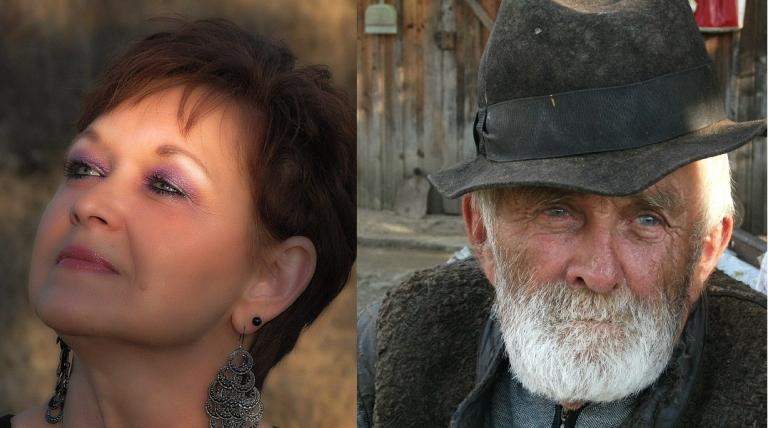
Be it noted: the text does not actually describe the real people in the images above. It’s just a rhetorical device.
Here are two portraits.
On the left: Yiwana is a lipstick lesbian who lives with her partner and her pet ferret in an urban flat. She works two jobs: she is a professional set-designer, and also works as a feminist burlesque dancer which allows her to transgressively deconstruct heteronormative gender-tropes in the sex industry. Yiwana would like to be ethnic, but she isn’t. She has taken on an unusual name of her own free will in order that employers reading her resume will subject her to the same kind of stigmatization as persons of other races. Yiwana believes in disabled rights, but she is also pro-euthanasia and supports a mother’s right to abort her child if the child is shown to be genetically imperfect in pre-natal tests. She votes Democrat, and attends local theatre group presentations where women speak through their sexual organs. When Yiwana is not practicing Yoga or communing with nature at the local botanical gardens, she can be found crusading for gay rights, minority rights, women’s rights, human rights, trans rights, and the rights of baby seals. She eats nothing but yoghurt, granola, and organic spelt bagels, and wears loose hemp blouses. In her next reincarnation, she is hoping to be a wombat.
On the right: Zeke lives in Arkansas with his wife, his four sons, and his guns. He’s a farmer, like his father before him, and volunteers as a functionary at his local Baptist congregation. Zeke don’t like it when them lawless Mexicans come blowing over the border. He believes in America: in freedom of speech, the right to bear arms, the constitution and the founding fathers. Zeke doesn’t pay income tax because he doesn’t believe in the socialist state. He is anti-abortion, and supports the troops where-ever they happen to be. He votes Republican, and he strenuously objects to the smut that is peddled in American theatres – it gives the first amendment a bad name. Zeke prays every day to Jesus to make his crops grow, and to keep the bank-man from coming to seize his farm. He is afraid of stinking homosexuals, the blacks, and the devil. Zeke can generally be found with a grass stem hanging from his lower lip, looking thoughtfully at the cows that will provide him with the primary staple of his all-American beef diet.
Which one of these people do you feel is most like you?
Unless you have your own reality TV show, you probably can’t recognize yourself in either of these descriptions. Even if you are, say, a lipstick lesbian who is frankly kind of obsessed with organic kefir at the moment, you probably don’t think that the first description is a very accurate portrait: it misses huge amounts of nuance, makes tonnes of stereotypical assumptions (which are still stereotypical even if they happen to be largely true…) and it unfairly caricatures feminist theatre. Right? And if you are a midwest farmer, even if you do really like “American Remains,” it really irks you that people assume you’re a racist just because you have an accent and an old confederate pistol (it’s a family heirloom — not a political statement.) Yet when we’re thinking about the left-right political continuum, we constantly make assumptions and rely on stereotypes to make judgements about the people who we disagree with. Folks on both sides of the ideological divide do it constantly, and it tends to shut down fruitful dialogue because if you’re arguing with a projection of a type that exists inside of your mind, rather than interacting with an actual human being, you inevitably end up talking past the person that you’re supposed to be talking with.
We all know this on some level, but we still mostly subscribe to the most pernicious and ubiquitous stereotype in American culture: the idea that people can be pegged as “left wing” or “right wing.” This causes people to make a whole bunch of assumptions that are ill-founded and frankly irrational. There is no reason, for example, why someone who is anti-abortion should also be in favour of unregulated free-market economics (arguably, these two positions are naturally more opposed than aligned.) There is no reason why someone who cares about the rights of the poor and marginalized should also reject all sexual mores and support a sexual ideology that results in record numbers of poor and marginalized single mothers with no fathers in sight. Strictly speaking, anyone with any common sense who doesn’t consume hideous quantities of mass media will probably eschew about half of everything that the right believes, and half of everything that the left believes, and accept the remaining fifty percent of both.Yet, as a result of big-tent politics and media manipulation, most people try to align themselves with one of the two predominate political ideologies, and often end up adopting a lot of beliefs that they would naturally find questionable in the process. We’re usually quick to pick out the ideology policing of our “opponents,” but are much slower to recognize that huge pressures exist within all communities to produce a single, conformable narrative and that there are a lot of different techniques by which people are subtly (or not so subtly) made to toe the party line or keep quiet about their opinions. Either you fly the correct ideological colours, or you risk being marginalized by the gatekeepers within your clique — even if, in fact, you represent the silent conviction of the majority of people within the camp.
The gospel, however, cannot be pegged as “liberal” or “conservative,” “left” or “right,” and Christians need to be very wary of allowing themselves to fall into these categories. If we allow our political affiliations to overshadow our theological tradition, we end up with a lot of nonsense — and a huge temptation to judge our religious leaders by the standards of the world. With Pope Francis, for example, we see this happening all the time: Catholics on the Left love him…until he mentions what the Church still believes about the family and sexuality. Catholics on the Right believe it’s important to be obedient to the Church… but are desperately casting around for reasons why it’s acceptable to ignore the practical teachings of Laudato Si. Like any good prophet, Francis is not merely hated by those who are popularly conceived of as “enemies of the faith,” he is also hated by those who imagine themselves to be the remnant of the true faithful.
Faith is not ideology. Catholics who find that they are scandalized by the Pope’s divergence from their own dearly held political beliefs need to go back and question those beliefs, and question them deeply, before concluding that the problem is with the Pope. We are not supposed to be believe in the Church because it confirms the values that we already subscribe to, but because it challenges us to honestly confront our own assumptions and preferences in the sincere pursuit of truth.
Post Script: My husband makes the observation that even though the left is supposed to champion the poor and the underprivileged, when they wish to negatively stereotype right-wingers they rely on stereotypes of poor, uneducated white people who have the superficial characteristics of the privileged classes while enjoying very little actual privilege. The right, on the other hand, is supposed to believe in the power of wealth, freedom and education to make the world a better place, but when they want to negatively stereotype left-wingers, they usually rely on caricatures of wealthy overeducated hipsters with too much freedom on their hands.
Photo credit: Pixabay
Previous Post

July 9, 2015
Casting Out The Unclean Spirit of Vain Contention
Next Post

July 11, 2015 Apocalyptophoria
Browse Our Archives
Select a Category Abuse Beauty Charity Chastity Current Events Faith Family Feminism Fiction Humility Humour Identity Justice Perseverence Philosophy Poverty Sexuality trauma Uncategorized Virtues Wombats
Select a Month February 2020 November 2019 October 2019 August 2019 July 2019 June 2019 May 2019 April 2019 March 2019 February 2019 October 2018 September 2018 August 2018 July 2018 June 2018 May 2018 April 2018 March 2018 February 2018 January 2018 December 2017 November 2017 October 2017 September 2017 August 2017 July 2017 June 2017 May 2017 April 2017 March 2017 February 2017 January 2017 December 2016 November 2016 October 2016 September 2016 August 2016 July 2016 June 2016 May 2016 April 2016 March 2016 February 2016 January 2016 December 2015 November 2015 October 2015 September 2015 August 2015 July 2015 June 2015
Follow Us!
TAKE THE
Religious Wisdom Quiz
What does "Sheol," often found in Psalms, mean?
Select your answer to see how you score.
Eternal light Above the mountain Blessing The grave or abode of the dead
Books by This Author Books by Melinda Selmys
Support this
Column


Related posts from Catholic Authenticity

28 Guaranteed Ways to Drive Any Man in...

5 Things I’m Obsessed With (Other Than Power)

Humanae Vitae, What Have You Wrought?
The Democratization of the Faith
TRENDING AT PATHEOS Catholic

Rejecting Doom: Christian Hope And Human Action
Christianity is a religion of hope. We are to have hope and...

It’s What Comes From Within Which Matters
One of the most difficult things for us to understand is why...

Why I Choose the Eucharist Over the Sermon
Choose the Eucharist, Not the Sermon What are we supposed to get...

5 Design Elements Found in Spiritually Rooted Homes
Putting Spirituality Into Home Decor Our homes are more than our living...

Credo: A Story of God Told with the...
About 10 years ago, I began to imagine a personal "Credo" that...

The Anatomy of Divine Revelation in Catholic Thought
The claim that God has made Himself known to human beings is...
view all Catholic blogs
Ad-Free & Subscriber Log-In Subscription Support
- About Us
- 2026 Calendar
- Videos
- Podcasts
- Library of World Religions
- Faith In Media Tracker
- Advertise With Us
- Write for Us
- Privacy Policy
- Terms of Service
- Do Not Sell My Data
- Contact Us
- Radiant Digital
- Manage Newsletter Subscriptions
- Unsubscribe From Notifications
- Sitemap
Copyright 2008-2026, Patheos. All rights reserved.
Subscription Support Ad-Free & Subscriber Log-In
Follow Patheos