
BuddhistCatholicContemplativeEvangelicalGeneral ChristianHinduJewishLatter-day SaintMuslimNew VisionsProgressive Christian
Beliefs
- Buddhist
- Catholic
- Contemplative
- Evangelical
- General Christian
- Hindu
- Jewish
- Latter-day Saint
- More Voices
- Muslim
- New Visions
- Pagan
- Progressive Christian
Topics
- Religion News
- Food and Religion
- Sports and Religion
- Religious Art
- Religious Music and Entertainment
- Religious Events
- History and Religion
- Style and Religion
- Politics and Religion
- Women in Religion
- Recreation Outdoors and Religion
- Business Finance and Religion
- Careers Workplace and Religion
- Education and Religion
- Family Parenting and Religion
- Health Fitness and Religion
- Home and Religion
- Relationships and Religion
- Technology and Religion
- Travel and Religion
Columnists
- Buddhist Columnists
- Business Finance and Religion Columnists
- Careers Workplace and Religion Columnists
- Catholic Columnists
- Contemplative Columnists
- Education and Religion Columnists
- Evangelists Columnists
- Family Parenting and Religion Columnists
- General Christian Columnists
- Health Fitness and Religion Columnists
- Hindu Columnists
- History and Religion Columnists
- Home and Religion Columnists
- Jewish Columnists
- More Voices Columnists
- Latter Day Columnists
- Muslim Columnists
- New Visions Columnists
- Nonreligious Columnists
- Pagan Columnists
- Politics and Religion Columnists
- Progressive Columnists
- Recreation Outdoors and Religion Columnists
- Relationships and Religion Columnists
- Religion News Columnists
- Religious Art Columnists
- Religious Events Columnists
- Religious Music and Entertainment Columnists
- Sports and Religion Columnists
- Style and Religion Columnists
- Technology and Religion Columnists
- Travel and Religion Columnists
- Women in Religion Columnists
Resource Library
- 2026 Calendar
- Library of World Religions
- The 100 Most Holy Places on Earth
- Patheos Answers
- Podcasts
- Videos
- Faith Leaders Database
- Anglican Episcopalian
- Bahai
- Baptist
- Buddhism
- Christianity
- Confucianism
- Eastern Orthodoxy
- Hinduism
- Holiness and Pentecostal
- ISKCON
- Islam
- Judaism
- Lutheran
- Methodist
- The Church of Jesus Christ of Latter-day Saints
- New Age
- Paganism
- Presbytarian and Reformed
- Protestantism
- Religion Behind the Scenes
- Roman Catholic
- Scientology
- Shia Islam
- Sikhism
- Sufism
- Sunni Islam
- Taoism
- Zen
- See all religions
Research Tools
 Ad-Free & Subscriber Log-In Subscription Support
Ad-Free & Subscriber Log-In Subscription Support
Follow Patheos 

- Trending:
- Forgiveness
- |
- Marriage
- |
- Consciousness
- |
- Death Penalty
- |
- Election
- |
- Halloween
 Caryn Riswold
- Home
- Progressive Christian
- #BlackLivesMatter in Barbershop’s Love Letter to Chicago
#BlackLivesMatter in Barbershop’s Love Letter to Chicago
Last updated on: May 2, 2016 at 1:12 pm by Caryn Riswold
#BlackLivesMatter in Barbershop’s Love Letter to Chicago 2016-05-02T13:12:38-06:00 Caryn Riswold
Patheos Explore the world's faith through different perspectives on religion and spirituality! Patheos has the views of the prevalent religions and spiritualities of the world.
I spent five formative years in my mid-twenties living in Hyde Park on the South Side, learning about racial divides and economic stratification in ways that only Chicago can teach.
And Barbershop: The Next Cut is above all else a love letter to Chicago.
The film finds Calvin’s barbershop sharing space with Angie’s beauty shop to save money and survive amidst continued economic vulnerability. Calvin (played by Ice Cube) locates their story squarely in the neighborhood: “The recession never left the South Side.” The film takes advantage of the gender-integrated space to play with issues like the time and money black women spend on hair, and the tendency to blame single women who seduce married men, rather than the men who break their vows with those women.
It also features conversations about race that question whether or not having a black president for eight years actually did any good for African Americans. In one impassioned speech, Rashad (played by Common), asks whether it saved Michael Brown or Tamir Rice, or whether it did any good for Eric Garner when his chokehold death was caught on video and still no one was held to account.
It’s one of the sharper moments of reality in the comedy.
Organizing the barbershop as a safe space with free cuts during a 48-hour weekend cease fire highlights the war zone mentality that led to the moniker Chiraq (and Spike Lee’s film of the same name last year).
Rather than directly take on the politics of guns, Barbershop relies on its characters and relationships to gently tease out both the pain and the hope enveloping the city. The side political story about a proposed enclosure that would essentially wall-in the neighborhood evokes images of a new kind of mass incarceration. Calvin and Jennifer come close to leaving their neighborhood behind in order to pluck their son out of daily interaction with gangs offering protection and cash.
Because sometimes escape seems to be the best option.
But there is no escape when it comes to white racist patriarchal obsession with guns.
There’s no escape when the capitalist empire expansion drives small businesses into the ground and replaces them with shelled out buildings to pass on the way to the suburban superstore.
There’s no escape when “making it” means leaving your community behind.
There’s no escape when you don’t have the options and resources to go somewhere else.
There’s no escape when that “somewhere else” is just as entrenched in white supremacist capitalism.
So what’s a barber to do? What are any of us to do?
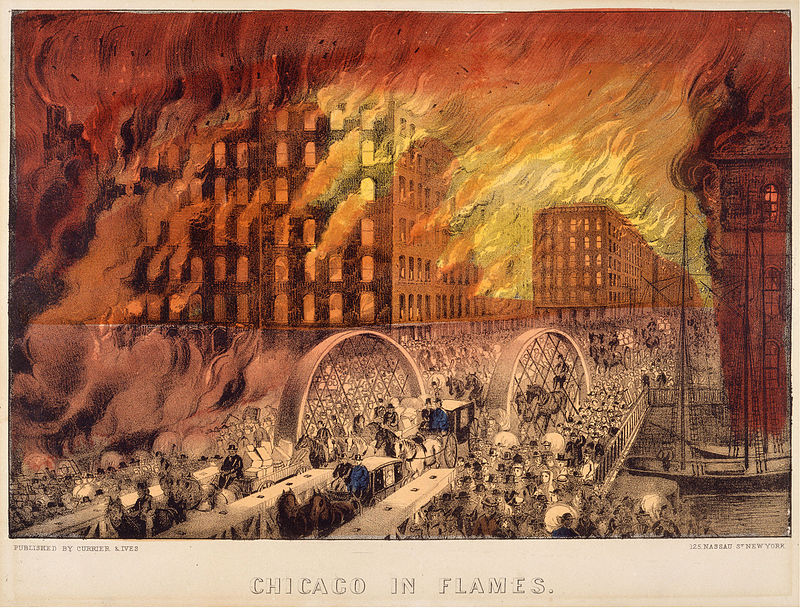 Don’t forget, this is Chicago we’re talking about. There are a lot of explanations offered for it being referred to as the Second City; one of them is the fact that the entire city burned down in 1871 and what we have today is, in fact, the second Chicago. As the Chicago Historical Society notes, after the fire raged over 3 square miles for several days:
“At least 300 people were dead, 100,000 people were homeless, and $200 million worth of property was destroyed. The entire central business district of Chicago was leveled. The fire was one of the most spectacular events of the nineteenth century, and it is recognized as a major milestone in the city’s history.”
Of course, it’s the resurrection story that Chicagoans love to tell. How parts of downtown were built on its own ashes, filling out the lakefront that we flock to today. How it provided a laboratory for some of the finest American architects to innovate, experiment, practice, and perfect their style. How the Water Tower survived. How it’s a testament to the spirit of the city that it emerged stronger than ever after such devastation.
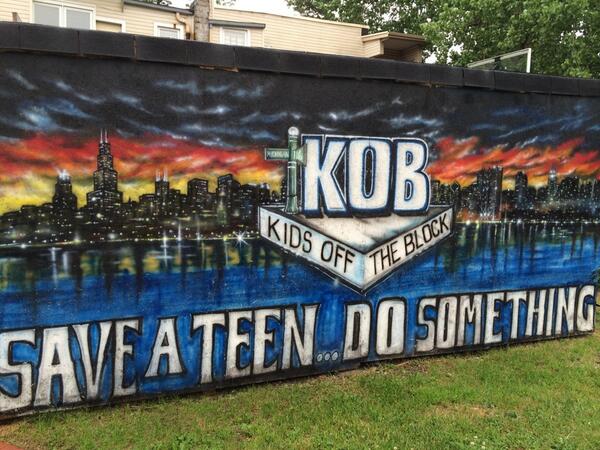 This is where Barbershop leaves viewers at the end. With the hope of dozens of neighborhood and grassroots organizations doing what they can, where they can. Sports teams, school groups, shops on the corner, parents and neighbors and business owners committing to rebuild one block at a time. I visited one of these organizations in the Roseland neighborhood, Kids Off The Block, a year and a half ago, and felt the despair captured by the memorial to victims of gun violence as well as the vibrant determination of founding director Diane Latiker. It’s a determination that faces this sharp point of despair and then finds points of hope that light a way forward.
Barbershop’s theme song is “Real People” for a reason.
Because they are the energy behind this city’s next resurrection.
Currier & Ives “Chicago in Flames” via wikimedia commons.

Previous Post

April 21, 2016
Prince Was My Third Tween Love (the naughty one)
Next Post
May 17, 2016 16 Questions About Feminism & Christianity Answered
Browse Our Archives
Select a Category Abortion At the Intersections Atheism Christianity Contraception Education Feminism Gender Getting Theological Honorable Mention Islam LGBT News Our Voices Race Uncategorized
Select a Month July 2017 June 2017 May 2017 March 2017 February 2017 January 2017 August 2016 July 2016 June 2016 May 2016 April 2016 March 2016 February 2016 January 2016 December 2015 November 2015 October 2015 September 2015 August 2015 July 2015 June 2015 May 2015 April 2015 March 2015 February 2015 January 2015 December 2014 November 2014 October 2014 September 2014 August 2014 July 2014 June 2014 May 2014 April 2014 March 2014 February 2014 January 2014 December 2013 November 2013 October 2013 September 2013 August 2013 July 2013 June 2013 May 2013 April 2013 March 2013 February 2013 January 2013 December 2012 November 2012 October 2012 September 2012 August 2012 July 2012
Follow Us!
TAKE THE
Religious Wisdom Quiz
Who said, "You intended to harm me, but God intended it for good"?
Select your answer to see how you score.
Joseph David Job Solomon
Related posts from Caryn Riswold

What I Won’t Write About Mary Daly for...

Freedom & the Racialized Body: Resonances with Luther...

Active in Love: The ELCA on Faith, Sexism,...

No Religious Exemption for Abuse
TRENDING AT PATHEOS Progressive Christian

What Being a Modern-Day Apostle Means to Me
In my last column, I discussed the ins and outs of modern-day...

Did Ancient China Once Worship the God of...
Across human history, a common thread weaves through the origins of the...

Love Your Neighbor – Including Earth-Kin: Lev. 19,...
God’s command to love your neighbor means acting in an ethical and...

Lead a Church Study of “Jesus and Lao...
Guest writer Jack Thomas (The Irreverent Reverend) reflects on leading his church...

Pastoral Wisdom for Responding to Sermon Pushback
Getting sermon pushback on your social justice sermon? Learn practical, Proverbs-based strategies...

Principles for Understanding the Apostolic Ministry Today
Whenever people discover that my formal ministry title is "apostle," as in...
view all Progressive Christian blogs
Ad-Free & Subscriber Log-In Subscription Support
- About Us
- 2026 Calendar
- Videos
- Podcasts
- Library of World Religions
- Faith In Media Tracker
- Advertise With Us
- Write for Us
- Privacy Policy
- Terms of Service
- Do Not Sell My Data
- Contact Us
- Radiant Digital
- Manage Newsletter Subscriptions
- Unsubscribe From Notifications
- Sitemap
Copyright 2008-2026, Patheos. All rights reserved.
Subscription Support Ad-Free & Subscriber Log-In
Follow Patheos