
BuddhistCatholicContemplativeEvangelicalGeneral ChristianHinduJewishLatter-day SaintMuslimNew VisionsProgressive Christian
Beliefs
- Buddhist
- Catholic
- Contemplative
- Evangelical
- General Christian
- Hindu
- Jewish
- Latter-day Saint
- More Voices
- Muslim
- New Visions
- Pagan
- Progressive Christian
Topics
- Religion News
- Food and Religion
- Sports and Religion
- Religious Art
- Religious Music and Entertainment
- Religious Events
- History and Religion
- Style and Religion
- Politics and Religion
- Women in Religion
- Recreation Outdoors and Religion
- Business Finance and Religion
- Careers Workplace and Religion
- Education and Religion
- Family Parenting and Religion
- Health Fitness and Religion
- Home and Religion
- Relationships and Religion
- Technology and Religion
- Travel and Religion
Columnists
- Buddhist Columnists
- Business Finance and Religion Columnists
- Careers Workplace and Religion Columnists
- Catholic Columnists
- Contemplative Columnists
- Education and Religion Columnists
- Evangelists Columnists
- Family Parenting and Religion Columnists
- General Christian Columnists
- Health Fitness and Religion Columnists
- Hindu Columnists
- History and Religion Columnists
- Home and Religion Columnists
- Jewish Columnists
- More Voices Columnists
- Latter Day Columnists
- Muslim Columnists
- New Visions Columnists
- Nonreligious Columnists
- Pagan Columnists
- Politics and Religion Columnists
- Progressive Columnists
- Recreation Outdoors and Religion Columnists
- Relationships and Religion Columnists
- Religion News Columnists
- Religious Art Columnists
- Religious Events Columnists
- Religious Music and Entertainment Columnists
- Sports and Religion Columnists
- Style and Religion Columnists
- Technology and Religion Columnists
- Travel and Religion Columnists
- Women in Religion Columnists
Resource Library
- 2026 Calendar
- Library of World Religions
- The 100 Most Holy Places on Earth
- Patheos Answers
- Podcasts
- Videos
- Faith Leaders Database
- Anglican Episcopalian
- Bahai
- Baptist
- Buddhism
- Christianity
- Confucianism
- Eastern Orthodoxy
- Hinduism
- Holiness and Pentecostal
- ISKCON
- Islam
- Judaism
- Lutheran
- Methodist
- The Church of Jesus Christ of Latter-day Saints
- New Age
- Paganism
- Presbytarian and Reformed
- Protestantism
- Religion Behind the Scenes
- Roman Catholic
- Scientology
- Shia Islam
- Sikhism
- Sufism
- Sunni Islam
- Taoism
- Zen
- See all religions
Research Tools
 Ad-Free & Subscriber Log-In Subscription Support
Ad-Free & Subscriber Log-In Subscription Support
Follow Patheos 

- Trending:
- Forgiveness
- |
- Marriage
- |
- Consciousness
- |
- Death Penalty
- |
- Election
- |
- Halloween
 Caryn Riswold
- Home
- Progressive Christian
- When Religious Freedom Only Protects Heteropatriarchy
When Religious Freedom Only Protects Heteropatriarchy
Last updated on: March 31, 2015 at 10:48 am by Caryn Riswold
When Religious Freedom Only Protects Heteropatriarchy 2015-03-31T10:48:59-06:00 Caryn Riswold
Patheos Explore the world's faith through different perspectives on religion and spirituality! Patheos has the views of the prevalent religions and spiritualities of the world.
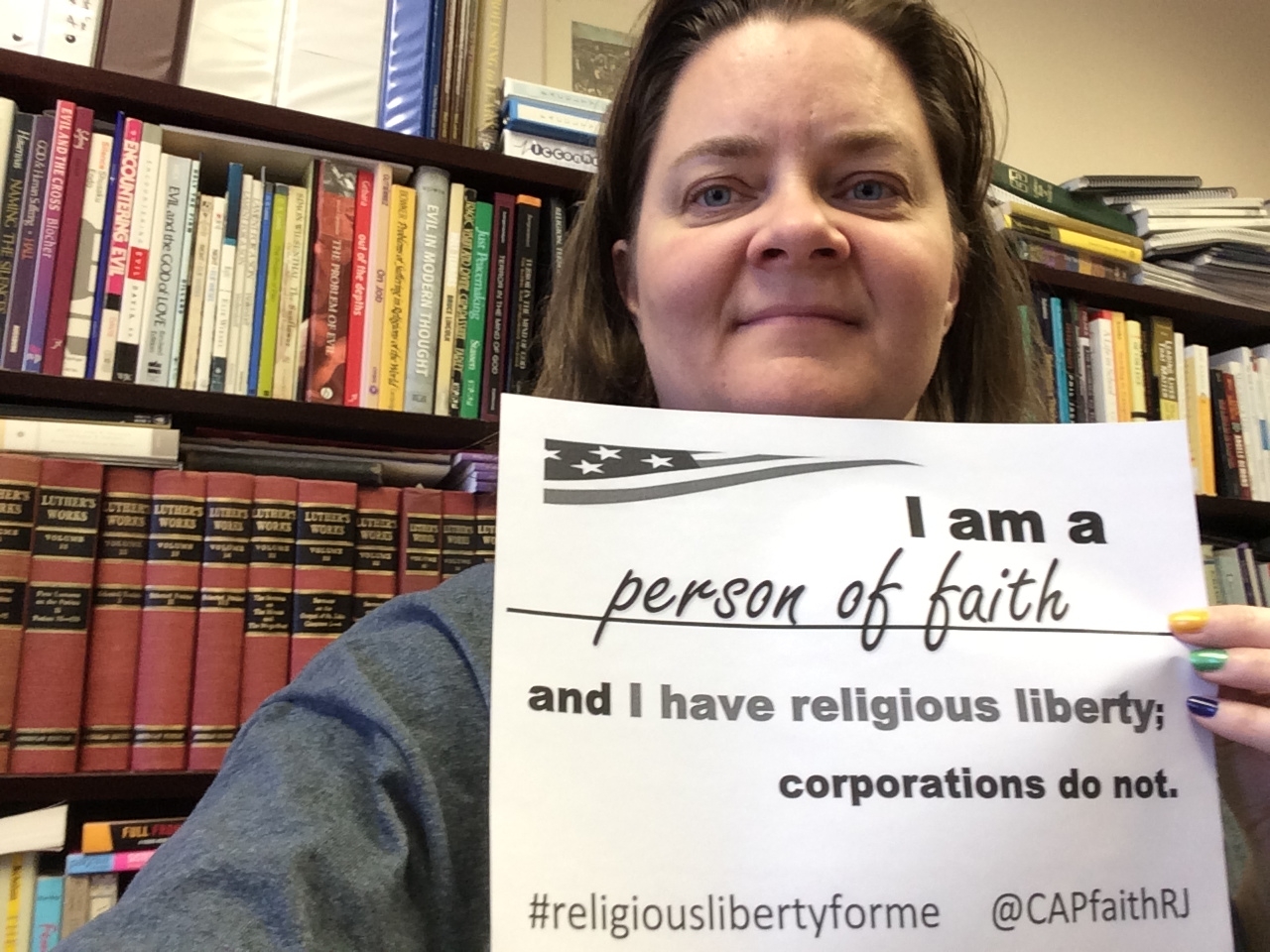 It’s not really religious freedom.
Conservative politicians have been on a roll for the past couple of years coopting the idea of religious freedom, itself an important element of our pluralistic democracy. The version they are trumpeting and carving into law, however, is anything but religious, free, pluralistic, or democratic. Indiana’s new law is only the most recent example of what has been made more possible by the terrible Supreme Court decisions in Citizens United and Hobby Lobby.
Even those decisions were not just about corporate personhood, which is an egregious enough concept.
They are about protecting a capitalist heteropatriarchy.
Back in 2012 I wrote that “The GOP war on women is entirely about protecting male power. Specifically, the power of white Christian men to create and control life as well as prevent women from exercising power.” I’ve had numerous opportunities since then to write about the various ways that religious freedom has been invoked in the efforts not only to control women’s access to healthcare but also limit marriage equality and the rights of trans* students to appropriate access in higher education.
Because what these things all have in common is that they empower those who are marginalized by patriarchy (women) and heteronormativity (gay men, lesbians, and trans people).*
Now, it’s 2015 and same-sex couple have the right to marry in the majority of states – 37 plus the District of Columbia – and the Supreme Court is once again going to render a decision that will have consequences nationwide. For most people, this is good news. A CNN/ORC poll in February 2015 showed that
“63% of Americans say that gays and lesbians have a constitutional right to marry and have their marriages recognized by the law as valid. That’s up from 49% in August 2010. Over that time, the share who see marriage as a constitutional right has climbed 15 points among Republicans to 42% and 19 points among Democrats to 75%.”
 The only people for whom this isn’t good news is those who are deeply invested in protecting a heteropatriarchal system that relies on the twin dominances of male power and heteronormativity. And those people are in a shrinking minority. These last gasp efforts that use religion for their own ends will not succeed. The governor of Indiana has been unable to make the case that his religious freedom law is like those at the federal level or in more than a dozen other states, in part because many of those states also have nondiscrimination laws in place that trump the religious freedom laws.
So let’s tell the truth. This law is not about protecting religious freedom. It’s about protecting heteropatriarchy. It is a public and legal manifestation of anxiety over the fact that heterosexual women, gay men, and lesbians have increased freedom and power not only in our culture, but in many religions as well. Heteropatriarchy would like to pretend that “religion” is on its side and its side alone. But it’s not. Just read the statements by any one of a number of religious leaders and organizations, like the Disciples of Christ (a denomination that declared it was reconsidering holding its General Assembly in Indiana if Governor Pence signed the law) and Valparaiso University (an independent Lutheran university where I taught for two years). VU’s President Mark Heckler in fact referenced the Christian Bible in his public statement:
“As Paul writes in Galatians 5, ‘For the whole law is summed in a single commandment, “You shall love your neighbor as yourself.” ‘ … I call upon our elected leaders and our governor not only to amend this legislation, but also to use this opportunity to advocate for the values held by all those who strive to make Indiana a welcoming and inclusive state.”
Attempts to claim religious freedom only on behalf of heteropatriarchal systems of oppression will fail. This is due only in part to the voices and presence of those of us who understand that our religious traditions are about inclusion and grace.
We will continue to point out the folly of any leader, religious or political, who seeks to claim otherwise.
Crowd image via wikimedia commons.

Previous Post

March 26, 2015
Vocation at the Intersection of Self & World
Next Post

April 14, 2015 Christian Privilege & the Religion Professor
Browse Our Archives
Select a Category Abortion At the Intersections Atheism Christianity Contraception Education Feminism Gender Getting Theological Honorable Mention Islam LGBT News Our Voices Race Uncategorized
Select a Month July 2017 June 2017 May 2017 March 2017 February 2017 January 2017 August 2016 July 2016 June 2016 May 2016 April 2016 March 2016 February 2016 January 2016 December 2015 November 2015 October 2015 September 2015 August 2015 July 2015 June 2015 May 2015 April 2015 March 2015 February 2015 January 2015 December 2014 November 2014 October 2014 September 2014 August 2014 July 2014 June 2014 May 2014 April 2014 March 2014 February 2014 January 2014 December 2013 November 2013 October 2013 September 2013 August 2013 July 2013 June 2013 May 2013 April 2013 March 2013 February 2013 January 2013 December 2012 November 2012 October 2012 September 2012 August 2012 July 2012
Follow Us!
TAKE THE
Religious Wisdom Quiz
Who was David's military commander and nephew?
Select your answer to see how you score.
Joab Abishai Ittai Benaiah
Related posts from Caryn Riswold

What I Won’t Write About Mary Daly for...

We Need To Dance at Each Other’s Weddings

Freedom & the Racialized Body: Resonances with Luther...

Active in Love: The ELCA on Faith, Sexism,...
TRENDING AT PATHEOS Progressive Christian

What Being a Modern-Day Apostle Means to Me
In my last column, I discussed the ins and outs of modern-day...

Did Ancient China Once Worship the God of...
Across human history, a common thread weaves through the origins of the...

Love Your Neighbor – Including Earth-Kin: Lev. 19,...
God’s command to love your neighbor means acting in an ethical and...

Lead a Church Study of “Jesus and Lao...
Guest writer Jack Thomas (The Irreverent Reverend) reflects on leading his church...

Pastoral Wisdom for Responding to Sermon Pushback
Getting sermon pushback on your social justice sermon? Learn practical, Proverbs-based strategies...

Principles for Understanding the Apostolic Ministry Today
Whenever people discover that my formal ministry title is "apostle," as in...
view all Progressive Christian blogs
Ad-Free & Subscriber Log-In Subscription Support
- About Us
- 2026 Calendar
- Videos
- Podcasts
- Library of World Religions
- Faith In Media Tracker
- Advertise With Us
- Write for Us
- Privacy Policy
- Terms of Service
- Do Not Sell My Data
- Contact Us
- Radiant Digital
- Manage Newsletter Subscriptions
- Unsubscribe From Notifications
- Sitemap
Copyright 2008-2026, Patheos. All rights reserved.
Subscription Support Ad-Free & Subscriber Log-In
Follow Patheos