
BuddhistCatholicContemplativeEvangelicalGeneral ChristianHinduJewishLatter-day SaintMuslimNew VisionsProgressive Christian
Beliefs
- Buddhist
- Catholic
- Contemplative
- Evangelical
- General Christian
- Hindu
- Jewish
- Latter-day Saint
- More Voices
- Muslim
- New Visions
- Pagan
- Progressive Christian
Topics
- Religion News
- Food and Religion
- Sports and Religion
- Religious Art
- Religious Music and Entertainment
- Religious Events
- History and Religion
- Style and Religion
- Politics and Religion
- Women in Religion
- Recreation Outdoors and Religion
- Business Finance and Religion
- Careers Workplace and Religion
- Education and Religion
- Family Parenting and Religion
- Health Fitness and Religion
- Home and Religion
- Relationships and Religion
- Technology and Religion
- Travel and Religion
Columnists
- Buddhist Columnists
- Business Finance and Religion Columnists
- Careers Workplace and Religion Columnists
- Catholic Columnists
- Contemplative Columnists
- Education and Religion Columnists
- Evangelists Columnists
- Family Parenting and Religion Columnists
- General Christian Columnists
- Health Fitness and Religion Columnists
- Hindu Columnists
- History and Religion Columnists
- Home and Religion Columnists
- Jewish Columnists
- More Voices Columnists
- Latter Day Columnists
- Muslim Columnists
- New Visions Columnists
- Nonreligious Columnists
- Pagan Columnists
- Politics and Religion Columnists
- Progressive Columnists
- Recreation Outdoors and Religion Columnists
- Relationships and Religion Columnists
- Religion News Columnists
- Religious Art Columnists
- Religious Events Columnists
- Religious Music and Entertainment Columnists
- Sports and Religion Columnists
- Style and Religion Columnists
- Technology and Religion Columnists
- Travel and Religion Columnists
- Women in Religion Columnists
Resource Library
- 2026 Calendar
- Library of World Religions
- The 100 Most Holy Places on Earth
- Patheos Answers
- Podcasts
- Videos
- Faith Leaders Database
- Anglican Episcopalian
- Bahai
- Baptist
- Buddhism
- Christianity
- Confucianism
- Eastern Orthodoxy
- Hinduism
- Holiness and Pentecostal
- ISKCON
- Islam
- Judaism
- Lutheran
- Methodist
- The Church of Jesus Christ of Latter-day Saints
- New Age
- Paganism
- Presbytarian and Reformed
- Protestantism
- Religion Behind the Scenes
- Roman Catholic
- Scientology
- Shia Islam
- Sikhism
- Sufism
- Sunni Islam
- Taoism
- Zen
- See all religions
Research Tools
 Ad-Free & Subscriber Log-In Subscription Support
Ad-Free & Subscriber Log-In Subscription Support
Follow Patheos 

- Trending:
- Forgiveness
- |
- Marriage
- |
- Consciousness
- |
- Death Penalty
- |
- Election
- |
- Halloween
 Caryn Riswold
- Home
- Progressive Christian
- For Damaged Girls
For Damaged Girls
Last updated on: February 3, 2015 at 10:34 am by Caryn Riswold
For Damaged Girls 2015-02-03T10:34:21-07:00 Caryn Riswold
Patheos Explore the world's faith through different perspectives on religion and spirituality! Patheos has the views of the prevalent religions and spiritualities of the world.
“No matter your age, you have rights to your own body.”
“Churches are a community, but your body is not community property.”
“You, and only you, have the ability to say yes or no for yourself.”
“Your feelings are valid: It’s OK to be who you are.”
“You are loved.”
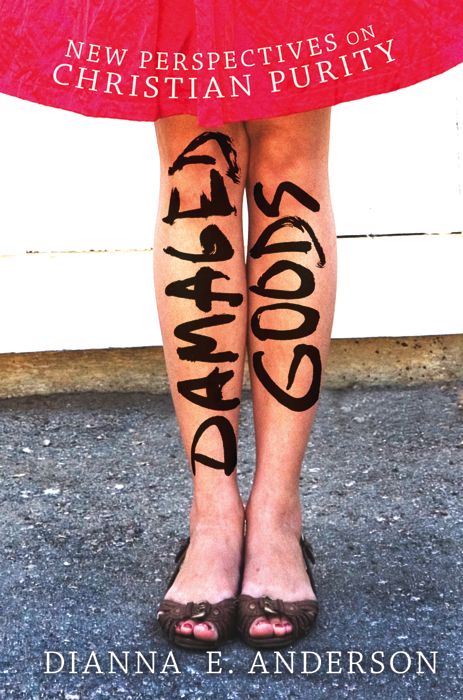
Dianna Anderson is crystal clear about who the reader of her new book, Damaged Goods: New Perspectives on Christian Purity, should be. Damaged girls … that is, anyone who has been damaged by the evangelical Christian purity culture that teaches girls to ignore their feelings, boys to ignore girls’ desires, and everyone to attach self-worth to virginity.
Weaving her own story of growing up and coming of age alongside interviews with other women and men who have navigated the minefield of sex-shaming that permeates a certain kind of Christian subculture, Anderson returns over and over again to messages like these. It seems she wishes she would have heard these things at age 10, or 14, or 17, or 20. The book is accessible, compelling, substantive as well as provocative. The author directly takes on key texts, authors, and leaders that continue to inform this subculture, including Joshua Harris, Mark Driscoll, and Eric and Leslie Ludy. Though I found her exclusion of Jessica Valenti’s book, The Purity Myth, from any citation or reference puzzling, it is understandable considering who the audience is. It isn’t young women who would read the author of Full Frontal Feminism. It is young women and young men who would read Dateable.
And this is what distinguishes Anderson’s work from that of Valenti and other feminist scholars who have taken on the rise of purity culture in recent decades. Church. In the first chapter, she says plainly, **“I love the Church, and I believe firmly that in teaching purity doctrines and promoting purity culture we have lost our way. We have forgotten justice and mercy in the name of legalism. We have deviated from a God of grace and love and mercy ….”**Anderson is calling out churches and Christian people who have perpetuated a culture of shame and dysfunction, inviting them to reconsider the very biblical texts they claim to base their teachings on in a chapter titled “Let’s Get Biblical,” as well as the myriad other activities and messages absorbed by young people in their midst.
Anderson is very clear about the consequences of this culture, both for individuals who are damaged by it, and for a culture that absorbs its messages about women and men. In a chapter on rape and sexual assault, she points out that:
“Purity culture often benefits from rape culture. In rape culture, women are punished for failure to behave properly. Purity culture punishes women for failure to perform femininity properly. The two form a mutually beneficial relationship, in which rape functions as a consequence for women who step outside the box of femininity.”
There’s a lot at stake here, and Anderson deftly points out not only this complex intersection, but also the ways that racism, ableism, and heterosexism are supported and reinforced by evangelical Christian purity culture.
The aspect of Anderson’s book that fascinates me the most is a personal one. I grew up in the same town she did, and we might have even gone to the same high school a little more than a decade apart. Yet I experienced almost none of what she describes of Christian purity culture. I attribute this to two things: generation and denomination. While Anderson came of age as an adolescent in the 1990s, I was a teen of the 1980s. While she grew up in a large Baptist congregation and attended a Baptist college, I grew up in the Evangelical Lutheran Church in America and attended a Lutheran college. Actually, that Baptist college and that Lutheran college are separated by only a few blocks. Oh sure, I remember having learned that it was good to wait to have sex until marriage or at least until you were in a meaningful relationship, but I experienced none of this evangelical purity subculture. For teens of my era, learning about sex was entirely shaped by the AIDS-panic-confusion of the Reagan era.
What this tells me is that the contours of a young person’s life are powerfully shaped by her immediate experiences of faith and family, as well as by the larger social, theological, and political currents swirling around them. What we do and say about sex in public, and especially in church, matters deeply to young people trying to figure it all out.
I’m pretty sure this is why Dianna Anderson wrote this book, for damaged girls. For all the girls who have told they are damaged because of their feelings and desires and actions, but in fact who have been damaged by the very community that purports to protect their honor.
Because, in the end, “God’s children are never ‘damaged goods.’”
Previous Post
January 21, 2015
Faith Leaders Issue Statement Opposing 20-Week Abortion Ban Bill
Next Post
February 8, 2015 Disciplining the Spirit With Jack Levison
Browse Our Archives
Select a Category Abortion At the Intersections Atheism Christianity Contraception Education Feminism Gender Getting Theological Honorable Mention Islam LGBT News Our Voices Race Uncategorized
Select a Month July 2017 June 2017 May 2017 March 2017 February 2017 January 2017 August 2016 July 2016 June 2016 May 2016 April 2016 March 2016 February 2016 January 2016 December 2015 November 2015 October 2015 September 2015 August 2015 July 2015 June 2015 May 2015 April 2015 March 2015 February 2015 January 2015 December 2014 November 2014 October 2014 September 2014 August 2014 July 2014 June 2014 May 2014 April 2014 March 2014 February 2014 January 2014 December 2013 November 2013 October 2013 September 2013 August 2013 July 2013 June 2013 May 2013 April 2013 March 2013 February 2013 January 2013 December 2012 November 2012 October 2012 September 2012 August 2012 July 2012
Follow Us!
TAKE THE
Religious Wisdom Quiz
True or False: Timothy was instructed to avoid godless chatter and opposing ideas of what is falsely called knowledge.
Select your answer to see how you score.
TRUE FALSE
Related posts from Caryn Riswold

What I Won’t Write About Mary Daly for...

We Need To Dance at Each Other’s Weddings

Freedom & the Racialized Body: Resonances with Luther...

Active in Love: The ELCA on Faith, Sexism,...
TRENDING AT PATHEOS Progressive Christian

What Being a Modern-Day Apostle Means to Me
In my last column, I discussed the ins and outs of modern-day...

Did Ancient China Once Worship the God of...
Across human history, a common thread weaves through the origins of the...

Love Your Neighbor – Including Earth-Kin: Lev. 19,...
God’s command to love your neighbor means acting in an ethical and...

Lead a Church Study of “Jesus and Lao...
Guest writer Jack Thomas (The Irreverent Reverend) reflects on leading his church...

Pastoral Wisdom for Responding to Sermon Pushback
Getting sermon pushback on your social justice sermon? Learn practical, Proverbs-based strategies...

Principles for Understanding the Apostolic Ministry Today
Whenever people discover that my formal ministry title is "apostle," as in...
view all Progressive Christian blogs
Ad-Free & Subscriber Log-In Subscription Support
- About Us
- 2026 Calendar
- Videos
- Podcasts
- Library of World Religions
- Faith In Media Tracker
- Advertise With Us
- Write for Us
- Privacy Policy
- Terms of Service
- Do Not Sell My Data
- Contact Us
- Radiant Digital
- Manage Newsletter Subscriptions
- Unsubscribe From Notifications
- Sitemap
Copyright 2008-2026, Patheos. All rights reserved.
Subscription Support Ad-Free & Subscriber Log-In
Follow Patheos