
BuddhistCatholicContemplativeEvangelicalGeneral ChristianHinduJewishLatter-day SaintMuslimNew VisionsProgressive Christian
Beliefs
- Buddhist
- Catholic
- Contemplative
- Evangelical
- General Christian
- Hindu
- Jewish
- Latter-day Saint
- More Voices
- Muslim
- New Visions
- Pagan
- Progressive Christian
Topics
- Religion News
- Food and Religion
- Sports and Religion
- Religious Art
- Religious Music and Entertainment
- Religious Events
- History and Religion
- Style and Religion
- Politics and Religion
- Women in Religion
- Recreation Outdoors and Religion
- Business Finance and Religion
- Careers Workplace and Religion
- Education and Religion
- Family Parenting and Religion
- Health Fitness and Religion
- Home and Religion
- Relationships and Religion
- Technology and Religion
- Travel and Religion
Columnists
- Buddhist Columnists
- Business Finance and Religion Columnists
- Careers Workplace and Religion Columnists
- Catholic Columnists
- Contemplative Columnists
- Education and Religion Columnists
- Evangelists Columnists
- Family Parenting and Religion Columnists
- General Christian Columnists
- Health Fitness and Religion Columnists
- Hindu Columnists
- History and Religion Columnists
- Home and Religion Columnists
- Jewish Columnists
- More Voices Columnists
- Latter Day Columnists
- Muslim Columnists
- New Visions Columnists
- Nonreligious Columnists
- Pagan Columnists
- Politics and Religion Columnists
- Progressive Columnists
- Recreation Outdoors and Religion Columnists
- Relationships and Religion Columnists
- Religion News Columnists
- Religious Art Columnists
- Religious Events Columnists
- Religious Music and Entertainment Columnists
- Sports and Religion Columnists
- Style and Religion Columnists
- Technology and Religion Columnists
- Travel and Religion Columnists
- Women in Religion Columnists
Resource Library
- 2026 Calendar
- Library of World Religions
- The 100 Most Holy Places on Earth
- Patheos Answers
- Podcasts
- Videos
- Faith Leaders Database
- Anglican Episcopalian
- Bahai
- Baptist
- Buddhism
- Christianity
- Confucianism
- Eastern Orthodoxy
- Hinduism
- Holiness and Pentecostal
- ISKCON
- Islam
- Judaism
- Lutheran
- Methodist
- The Church of Jesus Christ of Latter-day Saints
- New Age
- Paganism
- Presbytarian and Reformed
- Protestantism
- Religion Behind the Scenes
- Roman Catholic
- Scientology
- Shia Islam
- Sikhism
- Sufism
- Sunni Islam
- Taoism
- Zen
- See all religions
Research Tools
 Ad-Free & Subscriber Log-In Subscription Support
Ad-Free & Subscriber Log-In Subscription Support
Follow Patheos 

- Trending:
- Forgiveness
- |
- Marriage
- |
- Consciousness
- |
- Death Penalty
- |
- Election
- |
- Halloween
 Caryn Riswold
- Home
- Progressive Christian
- Just Because You Missed the Wave …
Just Because You Missed the Wave …
Last updated on: December 10, 2014 at 3:10 pm by Caryn Riswold
Just Because You Missed the Wave … 2014-12-10T15:10:16-07:00 Caryn Riswold
Patheos Explore the world's faith through different perspectives on religion and spirituality! Patheos has the views of the prevalent religions and spiritualities of the world.
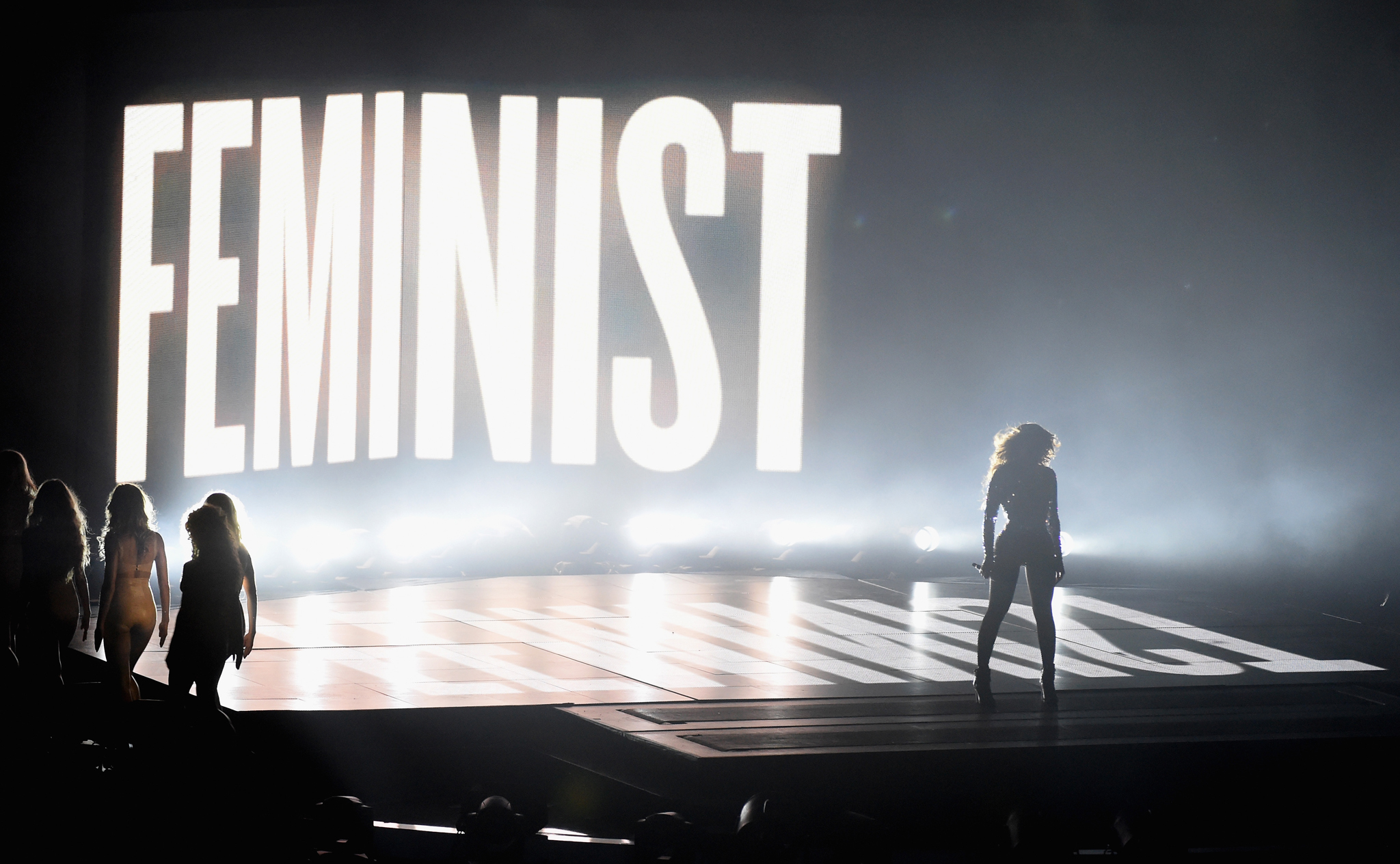 In a recent piece on CNN.com, Nina Burleigh reveals that she’s pretty ignorant about the history of feminism: “Historians could look back on this year as the beginning of feminism’s third wave.”
This year – you mean 1995, or something leading up to it, right?
No. She means 2014. THIS year.
There are several problems with this claim.
First, for an accomplished writer, she hasn’t read much about feminism. Rebecca Walker first named a “third wave” of feminism in her 1995 book To Be Real, in a discussion about the experiences of women raised on and with second-wave feminist ideas and achievements. (Second wave = 1960s & 1970s feminist activism; First wave = 19th century suffrage movement). Jennifer Baumgardner and Amy Richards co-wrote the widely read Manifesta in 2000 to talk about younger women and feminism, with the same generational mindset Walker noted. There have been anthologies of third-wave feminist work like Catching a Wave: Reclaiming Feminism for the 21st Century (2003) and The Fire This Time: Young Activists and the New Feminism (2004) that point out how “this” generation of feminists learned from the failure to analyze interlocking systems of oppression of their mothers’ generation. Incorporating intersectional analysis and theoretical frameworks from scholars like Patricia Hill Collins began to characterize the feminism that I (and Walker, Baumgardner, Richards, et.al.) inhabited as a woman who, like Burleigh, came of age in the 1980s and navigated college and graduate school in the 1990s.
 I’d venture a guess to say that every introductory textbook in every introductory course in women’s studies, women’s history, or gender studies talks about what third wave feminism is. Read one. I’ve even been working to articulate what a third wave feminist theology might look like since 2009. It’s an old concept. So old that debate about the end of the wave metaphor has become the new wave. No-Wave is the new wave.
Second, Burleigh simply reveals her own race and class privilege when she asserts what was apparently true for her, but I’d argue is not true for our entire generation of women:
“My generation of women, who came of age in the 1980s, did not really carry forward the banner of feminism. We took advantage of the gains of the 1970s, getting good jobs and having children and then got so busy having it all that we had no time left over. And it was terribly important to fit in, to be one of the guys, to fly under the radar as women. The last thing we wanted was to be labeled as victims, to wear the humiliation of being prey.”
I’d like to rewrite this to substitute the first person singular where Burleigh makes a sweeping claim for her generation. It’s a whole lot more accurate and revealing:
“I did not really carry forward the banner of feminism. I took advantage of the gains of the 1970s, getting a good job and having children and then got so busy having it all that I had no time left over. And I thought it was terribly important to fit in, to be one of the guys, to fly under the radar. The last thing I wanted was to be labeled as a victim.”
Fine. If that’s what you did and who you are, claim it and name it, Nina Burleigh. But don’t let your ignorance about the fierce activism of an entire generation of feminist activists erase their work. We’ve been working, fighting, teaching, arguing, writing, speaking, and serving while you’ve been busy getting that good job and trying to hide out under your privilege. Young women have been telling the truth about rape and sexual assault for generations, including during the 1980s and 1990s. Eve Ensler has made an industry (now subject to much important critique) out of younger women on college campuses finding empowerment by talking about violence against women on stages across this country. Since 1994. That’s twenty years. Twenty.
And in fact, some people weren’t able to get good jobs because of structural inequalities and generational poverty, many people weren’t able to marry and have those kids because of systemic heterosexism. Some people were too busy surviving and trying to transform unjust systems to look around and wait for you to catch up.
Yes, it was a fascinating year for feminism.
But then, most of them are.
If you pay attention.
Previous Post

December 4, 2014
Casting Off White Invisibility
Next Post

December 20, 2014 A Merry Feminist Christmas, part one
Browse Our Archives
Select a Category Abortion At the Intersections Atheism Christianity Contraception Education Feminism Gender Getting Theological Honorable Mention Islam LGBT News Our Voices Race Uncategorized
Select a Month July 2017 June 2017 May 2017 March 2017 February 2017 January 2017 August 2016 July 2016 June 2016 May 2016 April 2016 March 2016 February 2016 January 2016 December 2015 November 2015 October 2015 September 2015 August 2015 July 2015 June 2015 May 2015 April 2015 March 2015 February 2015 January 2015 December 2014 November 2014 October 2014 September 2014 August 2014 July 2014 June 2014 May 2014 April 2014 March 2014 February 2014 January 2014 December 2013 November 2013 October 2013 September 2013 August 2013 July 2013 June 2013 May 2013 April 2013 March 2013 February 2013 January 2013 December 2012 November 2012 October 2012 September 2012 August 2012 July 2012
Follow Us!
TAKE THE
Religious Wisdom Quiz
Who advised Moses to appoint judges to help lead the people?
Select your answer to see how you score.
Miriam Aaron Jethro Joshua
Related posts from Caryn Riswold

What I Won’t Write About Mary Daly for...

Active in Love: The ELCA on Faith, Sexism,...

Feminist, Interfaith, Public: My Luther Year

A Community Re-Imagining Faithful Justice
TRENDING AT PATHEOS Progressive Christian

What Being a Modern-Day Apostle Means to Me
In my last column, I discussed the ins and outs of modern-day...

Did Ancient China Once Worship the God of...
Across human history, a common thread weaves through the origins of the...

Love Your Neighbor – Including Earth-Kin: Lev. 19,...
God’s command to love your neighbor means acting in an ethical and...

Lead a Church Study of “Jesus and Lao...
Guest writer Jack Thomas (The Irreverent Reverend) reflects on leading his church...

Pastoral Wisdom for Responding to Sermon Pushback
Getting sermon pushback on your social justice sermon? Learn practical, Proverbs-based strategies...

Principles for Understanding the Apostolic Ministry Today
Whenever people discover that my formal ministry title is "apostle," as in...
view all Progressive Christian blogs
Ad-Free & Subscriber Log-In Subscription Support
- About Us
- 2026 Calendar
- Videos
- Podcasts
- Library of World Religions
- Faith In Media Tracker
- Advertise With Us
- Write for Us
- Privacy Policy
- Terms of Service
- Do Not Sell My Data
- Contact Us
- Radiant Digital
- Manage Newsletter Subscriptions
- Unsubscribe From Notifications
- Sitemap
Copyright 2008-2026, Patheos. All rights reserved.
Subscription Support Ad-Free & Subscriber Log-In
Follow Patheos