
BuddhistCatholicContemplativeEvangelicalGeneral ChristianHinduJewishLatter-day SaintMuslimNew VisionsProgressive Christian
Beliefs
- Buddhist
- Catholic
- Contemplative
- Evangelical
- General Christian
- Hindu
- Jewish
- Latter-day Saint
- More Voices
- Muslim
- New Visions
- Pagan
- Progressive Christian
Topics
- Religion News
- Food and Religion
- Sports and Religion
- Religious Art
- Religious Music and Entertainment
- Religious Events
- History and Religion
- Style and Religion
- Politics and Religion
- Women in Religion
- Recreation Outdoors and Religion
- Business Finance and Religion
- Careers Workplace and Religion
- Education and Religion
- Family Parenting and Religion
- Health Fitness and Religion
- Home and Religion
- Relationships and Religion
- Technology and Religion
- Travel and Religion
Columnists
- Buddhist Columnists
- Business Finance and Religion Columnists
- Careers Workplace and Religion Columnists
- Catholic Columnists
- Contemplative Columnists
- Education and Religion Columnists
- Evangelists Columnists
- Family Parenting and Religion Columnists
- General Christian Columnists
- Health Fitness and Religion Columnists
- Hindu Columnists
- History and Religion Columnists
- Home and Religion Columnists
- Jewish Columnists
- More Voices Columnists
- Latter Day Columnists
- Muslim Columnists
- New Visions Columnists
- Nonreligious Columnists
- Pagan Columnists
- Politics and Religion Columnists
- Progressive Columnists
- Recreation Outdoors and Religion Columnists
- Relationships and Religion Columnists
- Religion News Columnists
- Religious Art Columnists
- Religious Events Columnists
- Religious Music and Entertainment Columnists
- Sports and Religion Columnists
- Style and Religion Columnists
- Technology and Religion Columnists
- Travel and Religion Columnists
- Women in Religion Columnists
Resource Library
- 2026 Calendar
- Library of World Religions
- The 100 Most Holy Places on Earth
- Patheos Answers
- Podcasts
- Videos
- Faith Leaders Database
- Anglican Episcopalian
- Bahai
- Baptist
- Buddhism
- Christianity
- Confucianism
- Eastern Orthodoxy
- Hinduism
- Holiness and Pentecostal
- ISKCON
- Islam
- Judaism
- Lutheran
- Methodist
- The Church of Jesus Christ of Latter-day Saints
- New Age
- Paganism
- Presbytarian and Reformed
- Protestantism
- Religion Behind the Scenes
- Roman Catholic
- Scientology
- Shia Islam
- Sikhism
- Sufism
- Sunni Islam
- Taoism
- Zen
- See all religions
Research Tools
 Ad-Free & Subscriber Log-In Subscription Support
Ad-Free & Subscriber Log-In Subscription Support
Follow Patheos 

- Trending:
- Forgiveness
- |
- Marriage
- |
- Consciousness
- |
- Death Penalty
- |
- Election
- |
- Halloween
 Caryn Riswold
- Home
- Progressive Christian
- The Cross & Gendercide: The Problem is Still Patriarchy
The Cross & Gendercide: The Problem is Still Patriarchy
Last updated on: May 16, 2014 at 8:00 am by Caryn Riswold
The Cross & Gendercide: The Problem is Still Patriarchy 2014-05-14T13:35:03-06:00 Caryn Riswold
Patheos Explore the world's faith through different perspectives on religion and spirituality! Patheos has the views of the prevalent religions and spiritualities of the world.
 Once I determined who the audience of Elizabeth Gerhardt’s The Cross and Gendercide is, I got it. She’s writing to those Christian churches who have, for whatever reason, eschewed their responsibility for responding to the global pandemic of violence against women and girls. She provides a deeply theological and cruciform argument requiring their immediate attention. I hope they pay attention.
I paid attention, but not because I find the theology of the cross the most effective response to gendercide (more on that later). I paid attention because there was so much Gerhardt said that was spot on, that needs to be said:
“Churches that emphasize the preaching of the gospel and then ignore the reality of the plight of millions of women and girls are guilty of a detached confessionalism.” (p.19).
“From the perspective of the cross, violence against women is exposed as a sin that divides humankind, violates the dignity of God’s creation, abuses power and obstructs the gospel message of salvation and freedom.” (p.93).
“Christians are responsible to act in order to bring about justice in the social and also the political arena.” (p.104).
Throughout the book, Gerhardt refers to the problem, to what I determined to be her audience: “a proud, triumphant church” and the view of “some churches … that care for the poor and marginalized is through to be too politically radical.” She also calls out “self-preservation and pride” and churches who are “concerned with the promotion of narrow political ideologies” as well as expansion and their own comfort.
By framing violence against women and girls as sin, and by using resources from within the Christian (heavily Lutheran) tradition, she demands response from those persons and institutions claiming to preach to gospel, claiming to live and work at the foot of the cross.
The book is full of statistics and stories to make global gendercide real to anyone who doesn’t yet fully grasp its scope. Gerhardt also, importantly, includes an entire chapter on “the social, religious and political roots of violence against women and girls.” I wanted more on the religious roots here, and more on the ways in which Christian theology, not just Christian people, is complicit in perpetuating violence against women and girls.
Gerhardt never talks about God-language and images of the divine, and how the exclusivity of male language and images of the divine undergirds patriarchy. 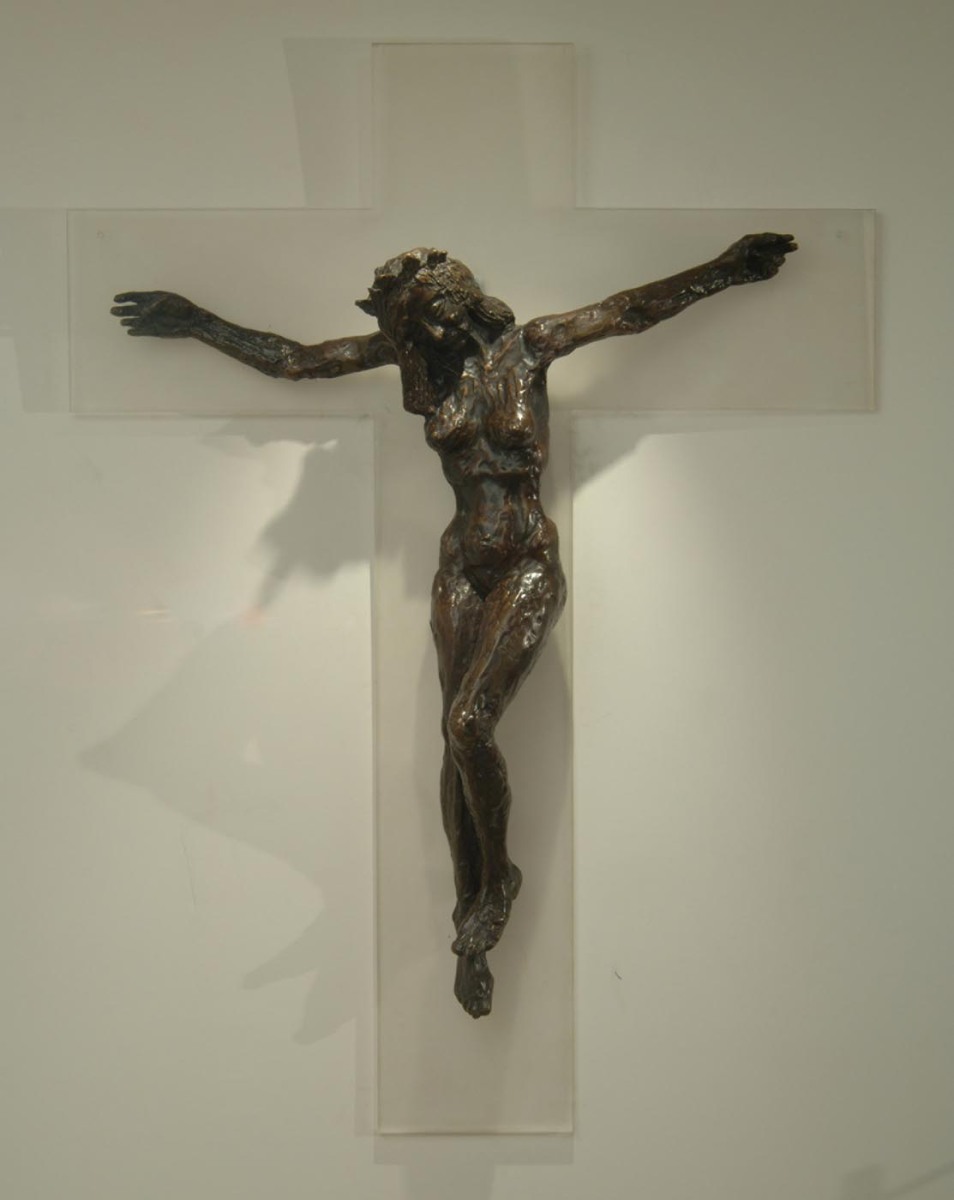 When talking quite strongly and directly about the church “colluding with perpetrators,” she relies on stories of victims being silenced, and of survivors being disbelieved and shamed. Yes. It happens. This is crucial to hear and essential for any reader to know. And, and, and!, there is a whole patriarchal theology that frames each of these terrible conversations that we must investigate, dismantle, and delegitimize. Because in so, so, SO many ways, the problem here is still patriarchy.
This is where I wanted to hear more. Gerhardt has just gotten started, in my opinion, and there’s more that has to be said. But, as I noted above, this book isn’t only for me. I also think that this book isn’t written for the victims and survivors of gender-based violence. Its focus really is on the problem of a complicit proud church. By calling it to account, survivors (indeed all of the world) will be well-served.
The theological resources that Gerhardt relies upon help her make her case to that audience. Luther’s theology of the cross is read as something that “humbles a proud, triumphant church and brings that church back down firmly to the reality of the cross.” This is because it reveals the real and destructive power of social and political systems that demand death. For Gerhardt, it also reveals the presence of God in the midst of suffering and death. The parallels drawn to Dietrich Bonhoeffer’s writings about the church resisting the Nazi state are interesting, if perhaps a bit too easily collapsed.
She anticipates my (and many other feminist theologians’) resistance to the cross as symbol of hope by noting that
“instruction regarding the reality of suffering in Christians’ lives has also been used as an ideological tool to maintain power over women’s and girls’ lives. … This is a horrific perversion of the teaching of the cross. … Women and girls’ suffering results from evil, not good.” (p.100).
Again, I wanted more of this awareness, more discussion of how for many women and many survivors of violence it is not good news to be driven to your knees at the foot of the cross, not helpful to be humbled, and not always meaningful to hear that love is revealed in violence and death. On this as well as the theological point made above, I am much informed by the work of Delores S. Williams, the authors collected in Carol J. Adams’ volume Violence Against Women and Children: A Christian Theological Sourcebook, as well as those in Christianity, Patriarchy, and Abuse. My first book was in part an attempt to craft my own solution to feminist criticisms of cross theologies and atonement theories … I’m not convinced that even I’ve succeeded yet.
In the end, Elizabeth Gerhardt has effectively walked a fine line in The Cross and Gendercide, weaving together statistics, stories, and traditional (Lutheran) Christian resources like Martin Luther and Dietrich Bonhoeffer before concluding with suggestions for action and solution-making. Her careful and detailed (and what will be for some a bit inaccessible) scholarly work demands attention from the proud, haughty, and triumphant gospel-preaching Christian churches who have not yet come to terms both with their real, interpersonal, and political collusion in gendercide, as well as with their responsibility to engage in solutions.
Image is Christa, a bronze sculpture by Edwina Sandys.
Previous Post

May 14, 2014
#ReadingHannah :: A Lutheran-ish Sacramental Novel
Next Post

May 20, 2014 Summer Shelfie
Browse Our Archives
Select a Category Abortion At the Intersections Atheism Christianity Contraception Education Feminism Gender Getting Theological Honorable Mention Islam LGBT News Our Voices Race Uncategorized
Select a Month July 2017 June 2017 May 2017 March 2017 February 2017 January 2017 August 2016 July 2016 June 2016 May 2016 April 2016 March 2016 February 2016 January 2016 December 2015 November 2015 October 2015 September 2015 August 2015 July 2015 June 2015 May 2015 April 2015 March 2015 February 2015 January 2015 December 2014 November 2014 October 2014 September 2014 August 2014 July 2014 June 2014 May 2014 April 2014 March 2014 February 2014 January 2014 December 2013 November 2013 October 2013 September 2013 August 2013 July 2013 June 2013 May 2013 April 2013 March 2013 February 2013 January 2013 December 2012 November 2012 October 2012 September 2012 August 2012 July 2012
Follow Us!
TAKE THE
Religious Wisdom Quiz
What was the name of the disciple in Damascus who was sent to pray for Saul after his conversion?
Select your answer to see how you score.
Ananias Silas Philip Barnabas
Related posts from Caryn Riswold

What I Won’t Write About Mary Daly for...

We Need To Dance at Each Other’s Weddings

Freedom & the Racialized Body: Resonances with Luther...

Active in Love: The ELCA on Faith, Sexism,...
TRENDING AT PATHEOS Progressive Christian

Why Christians Have a Sacred Duty to Vote:...
The Bible offers strong support for the sacred duty to vote. Here...

What Being a Modern-Day Apostle Means to Me
In my last column, I discussed the ins and outs of modern-day...

Did Ancient China Once Worship the God of...
Across human history, a common thread weaves through the origins of the...

Love Your Neighbor – Including Earth-Kin: Lev. 19,...
God’s command to love your neighbor means acting in an ethical and...

Lead a Church Study of “Jesus and Lao...
Guest writer Jack Thomas (The Irreverent Reverend) reflects on leading his church...

Principles for Understanding the Apostolic Ministry Today
Whenever people discover that my formal ministry title is "apostle," as in...
view all Progressive Christian blogs
Ad-Free & Subscriber Log-In Subscription Support
- About Us
- 2026 Calendar
- Videos
- Podcasts
- Library of World Religions
- Faith In Media Tracker
- Advertise With Us
- Write for Us
- Privacy Policy
- Terms of Service
- Do Not Sell My Data
- Contact Us
- Radiant Digital
- Manage Newsletter Subscriptions
- Unsubscribe From Notifications
- Sitemap
Copyright 2008-2026, Patheos. All rights reserved.
Subscription Support Ad-Free & Subscriber Log-In
Follow Patheos