
BuddhistCatholicContemplativeEvangelicalGeneral ChristianHinduJewishLatter-day SaintMuslimNew VisionsProgressive Christian
Beliefs
- Buddhist
- Catholic
- Contemplative
- Evangelical
- General Christian
- Hindu
- Jewish
- Latter-day Saint
- More Voices
- Muslim
- New Visions
- Pagan
- Progressive Christian
Topics
- Religion News
- Food and Religion
- Sports and Religion
- Religious Art
- Religious Music and Entertainment
- Religious Events
- History and Religion
- Style and Religion
- Politics and Religion
- Women in Religion
- Recreation Outdoors and Religion
- Business Finance and Religion
- Careers Workplace and Religion
- Education and Religion
- Family Parenting and Religion
- Health Fitness and Religion
- Home and Religion
- Relationships and Religion
- Technology and Religion
- Travel and Religion
Columnists
- Buddhist Columnists
- Business Finance and Religion Columnists
- Careers Workplace and Religion Columnists
- Catholic Columnists
- Contemplative Columnists
- Education and Religion Columnists
- Evangelists Columnists
- Family Parenting and Religion Columnists
- General Christian Columnists
- Health Fitness and Religion Columnists
- Hindu Columnists
- History and Religion Columnists
- Home and Religion Columnists
- Jewish Columnists
- More Voices Columnists
- Latter Day Columnists
- Muslim Columnists
- New Visions Columnists
- Nonreligious Columnists
- Pagan Columnists
- Politics and Religion Columnists
- Progressive Columnists
- Recreation Outdoors and Religion Columnists
- Relationships and Religion Columnists
- Religion News Columnists
- Religious Art Columnists
- Religious Events Columnists
- Religious Music and Entertainment Columnists
- Sports and Religion Columnists
- Style and Religion Columnists
- Technology and Religion Columnists
- Travel and Religion Columnists
- Women in Religion Columnists
Resource Library
- 2026 Calendar
- Library of World Religions
- The 100 Most Holy Places on Earth
- Patheos Answers
- Podcasts
- Videos
- Faith Leaders Database
- Anglican Episcopalian
- Bahai
- Baptist
- Buddhism
- Christianity
- Confucianism
- Eastern Orthodoxy
- Hinduism
- Holiness and Pentecostal
- ISKCON
- Islam
- Judaism
- Lutheran
- Methodist
- The Church of Jesus Christ of Latter-day Saints
- New Age
- Paganism
- Presbytarian and Reformed
- Protestantism
- Religion Behind the Scenes
- Roman Catholic
- Scientology
- Shia Islam
- Sikhism
- Sufism
- Sunni Islam
- Taoism
- Zen
- See all religions
Research Tools
 Ad-Free & Subscriber Log-In Subscription Support
Ad-Free & Subscriber Log-In Subscription Support
Follow Patheos 

- Trending:
- Forgiveness
- |
- Marriage
- |
- Consciousness
- |
- Death Penalty
- |
- Election
- |
- Halloween
 Caryn Riswold
- Home
- Progressive Christian
- Are Mormons Christian? Who Gets to Decide?
Are Mormons Christian? Who Gets to Decide?
Last updated on: September 26, 2013 at 9:15 am by Caryn Riswold
Are Mormons Christian? Who Gets to Decide? 2013-09-26T09:11:30-06:00 Caryn Riswold
Patheos Explore the world's faith through different perspectives on religion and spirituality! Patheos has the views of the prevalent religions and spiritualities of the world.
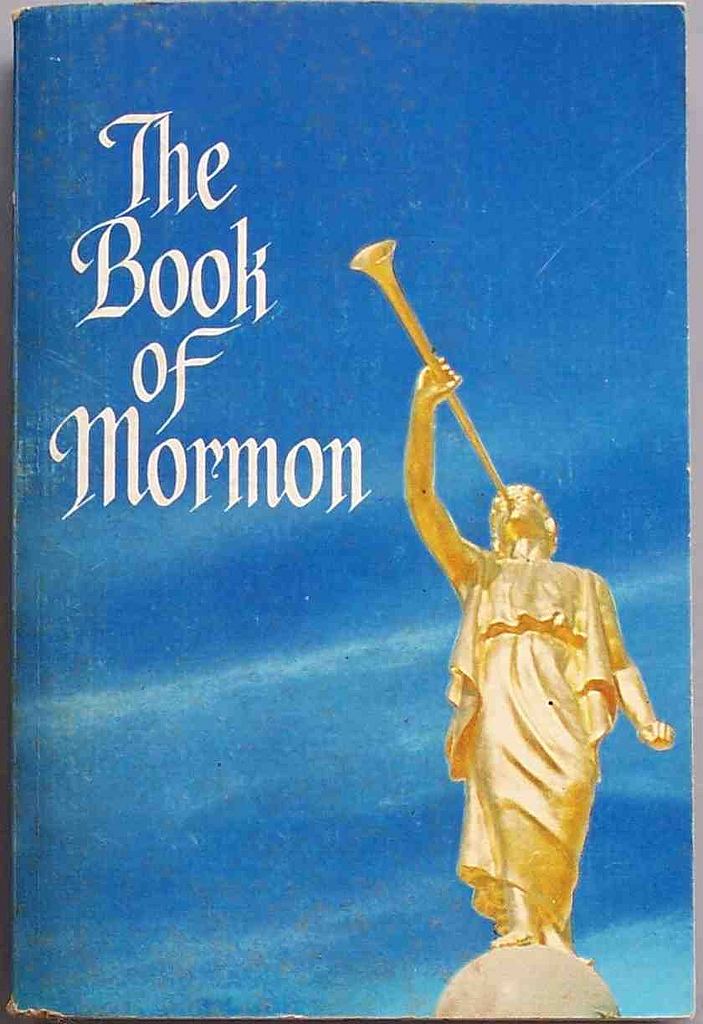
Chris Henrichsen over at Approaching Justice kicked off a Patheos bloggers roundtable this week on the question: Are Mormons Christian? Here’s how he introduced the conversation:
For most Mormons, the answer to this question is obvious. Yes, yes they are. They believe in Jesus Christ. This settles it for them.
For people from other religious perspectives, the answer is obvious but in the negative. Mormons are not Christians. The reasons for this response is varied.
For some, few answers are obvious. Instead, this question is more one of inquiry. For me, the question itself, and that it gets asked, is what intrigues me and brings me to this round table. Why do we get caught up in these debates? What do such questions tell us about Mormonism, Christianity, and religion?
I, too, have long been intrigued by the fact that a lot of people seem to care a lot about figuring this out. A couple of years ago, in the thick of the Republican presidential primary that eventually produced candidate Mitt Romney, I wrote this over at TheReligiousLeft.org:
“So I was trying to remember what we talked about in class last year, is it a cult?”
This was the question that a student popped in my office to ask recently. She’d overheard some chatter about the Republican presidential primary, and recalled that in my introductory class on Christianity we talked about Mormonism. I’m not sure exactly what or who she had recently heard, but I am confident that the chatter was because of Pastor Robert Jeffress’ recent comments about Mitt Romney’s religion at the Values Voter Summit in October: “That is a mainstream view, that Mormonism is a cult.”
Following that event, a slew of political and religious commentaries emerged offering their opinions on whether or not Mormons are Christians. This included Albert Mohler, president of the Southern Baptist Convention, definitively proclaiming that Mormonism “is not orthodox Christianity in a new form or another branch of the Christian tradition.”
In that post, I went on to reflect on how the very people who tend to insist loudly that Mormons are not Christians are the same ones who ramp up Islamophobia at any chance: conservative evangelical Christians. I wondered there if there’s some kind of fear at the root of both of those things:
Considering the way that the Mormon faith hits a unique nerve, though, it seems that there is more. The Church of Jesus Christ of Latter-day Saints has done exactly what early Christianity did in relationship to Judaism: Claim a fuller revelation of God superseding the one that came before. Just as Christianity added on to the sacred text of Judaism, calling the Hebrew Bible the “Old Testament,” Mormons see their book as “Another Testament of Jesus Christ.” Perhaps their increasing legitimacy makes visible the thing that conservative Christians would prefer to ignore completely: That a fully realized and complex Jewish tradition existed before and after Christians decided to claim it for their own. Theologically, Mormonism is perhaps too close to home.
Beyond that speculation, I’m interested in the power dynamics at work in this conversation: Who gets to decide who’s Christian and who’s not? Who stands to benefit if Mormons are excluded? I’m pretty sure that a lot of people who take a definitive stand on this issue aren’t super-well-versed in the intricacies of Trinitarian doctrinal debates or the history of the Nicene Creed so I’m not convinced that that substance is really what matters.
What matters is the power of naming. We might say that it has mattered since one of the earliest creation stories when the adam named all the other creatures in the Yahwist’s tale collected in Genesis.
Do names matter? Maybe more importantly, does the power of self-definition matter? I’m pretty sure that the answer to both of these questions is yes, otherwise we wouldn’t be having this conversation over and over again. And religion isn’t the only area where self-definition is at stake. I wrote last week about how the story of Private [Bradley] Manning requesting that her self-understood gender, female, and her chosen name, Chelsea, now be respected by the media and the world, even though she’s sentenced to spend decades in a military prison convicted on multiple counts of espionage. This case has brought to light a reality that many have ignored or about which too many have been unaware.
When is the last time someone challenged your right to define your gender? To claim your name? Your religion?
And so I’m convinced that what this conversation about Mormons being Christian helps us see clearly is that even more important than the question “are Mormons Christian?” is “who gets to decide?”
The picture above is me peering into a replica of the Salt Lake City Temple at the Temple Visitors Center in 2012.
Previous Post

September 25, 2013
Subservient or Subversive, The Butler Works in a Man's World
Next Post

September 27, 2013 Transitioning in Christian Community: H. Adam Ackley & APU
Browse Our Archives
Select a Category Abortion At the Intersections Atheism Christianity Contraception Education Feminism Gender Getting Theological Honorable Mention Islam LGBT News Our Voices Race Uncategorized
Select a Month July 2017 June 2017 May 2017 March 2017 February 2017 January 2017 August 2016 July 2016 June 2016 May 2016 April 2016 March 2016 February 2016 January 2016 December 2015 November 2015 October 2015 September 2015 August 2015 July 2015 June 2015 May 2015 April 2015 March 2015 February 2015 January 2015 December 2014 November 2014 October 2014 September 2014 August 2014 July 2014 June 2014 May 2014 April 2014 March 2014 February 2014 January 2014 December 2013 November 2013 October 2013 September 2013 August 2013 July 2013 June 2013 May 2013 April 2013 March 2013 February 2013 January 2013 December 2012 November 2012 October 2012 September 2012 August 2012 July 2012
Follow Us!
TAKE THE
Religious Wisdom Quiz
According to Isaiah 53, how would the Messiah be treated by people?
Select your answer to see how you score.
Worshiped and adored Feared and honored Ignored and forgotten Despised and rejected
Related posts from Caryn Riswold

What I Won’t Write About Mary Daly for...

We Need To Dance at Each Other’s Weddings

Freedom & the Racialized Body: Resonances with Luther...

Active in Love: The ELCA on Faith, Sexism,...
TRENDING AT PATHEOS Progressive Christian

Why Christians Have a Sacred Duty to Vote:...
The Bible offers strong support for the sacred duty to vote. Here...

What Being a Modern-Day Apostle Means to Me
In my last column, I discussed the ins and outs of modern-day...

Did Ancient China Once Worship the God of...
Across human history, a common thread weaves through the origins of the...

Love Your Neighbor – Including Earth-Kin: Lev. 19,...
God’s command to love your neighbor means acting in an ethical and...

Lead a Church Study of “Jesus and Lao...
Guest writer Jack Thomas (The Irreverent Reverend) reflects on leading his church...

Principles for Understanding the Apostolic Ministry Today
Whenever people discover that my formal ministry title is "apostle," as in...
view all Progressive Christian blogs
Ad-Free & Subscriber Log-In Subscription Support
- About Us
- 2026 Calendar
- Videos
- Podcasts
- Library of World Religions
- Faith In Media Tracker
- Advertise With Us
- Write for Us
- Privacy Policy
- Terms of Service
- Do Not Sell My Data
- Contact Us
- Radiant Digital
- Manage Newsletter Subscriptions
- Unsubscribe From Notifications
- Sitemap
Copyright 2008-2026, Patheos. All rights reserved.
Subscription Support Ad-Free & Subscriber Log-In
Follow Patheos