
BuddhistCatholicContemplativeEvangelicalGeneral ChristianHinduJewishLatter-day SaintMuslimNew VisionsProgressive Christian
Beliefs
- Buddhist
- Catholic
- Contemplative
- Evangelical
- General Christian
- Hindu
- Jewish
- Latter-day Saint
- More Voices
- Muslim
- New Visions
- Pagan
- Progressive Christian
Topics
- Religion News
- Food and Religion
- Sports and Religion
- Religious Art
- Religious Music and Entertainment
- Religious Events
- History and Religion
- Style and Religion
- Politics and Religion
- Women in Religion
- Recreation Outdoors and Religion
- Business Finance and Religion
- Careers Workplace and Religion
- Education and Religion
- Family Parenting and Religion
- Health Fitness and Religion
- Home and Religion
- Relationships and Religion
- Technology and Religion
- Travel and Religion
Columnists
- Buddhist Columnists
- Business Finance and Religion Columnists
- Careers Workplace and Religion Columnists
- Catholic Columnists
- Contemplative Columnists
- Education and Religion Columnists
- Evangelists Columnists
- Family Parenting and Religion Columnists
- General Christian Columnists
- Health Fitness and Religion Columnists
- Hindu Columnists
- History and Religion Columnists
- Home and Religion Columnists
- Jewish Columnists
- More Voices Columnists
- Latter Day Columnists
- Muslim Columnists
- New Visions Columnists
- Nonreligious Columnists
- Pagan Columnists
- Politics and Religion Columnists
- Progressive Columnists
- Recreation Outdoors and Religion Columnists
- Relationships and Religion Columnists
- Religion News Columnists
- Religious Art Columnists
- Religious Events Columnists
- Religious Music and Entertainment Columnists
- Sports and Religion Columnists
- Style and Religion Columnists
- Technology and Religion Columnists
- Travel and Religion Columnists
- Women in Religion Columnists
Resource Library
- 2026 Calendar
- Library of World Religions
- The 100 Most Holy Places on Earth
- Patheos Answers
- Podcasts
- Videos
- Faith Leaders Database
- Anglican Episcopalian
- Bahai
- Baptist
- Buddhism
- Christianity
- Confucianism
- Eastern Orthodoxy
- Hinduism
- Holiness and Pentecostal
- ISKCON
- Islam
- Judaism
- Lutheran
- Methodist
- The Church of Jesus Christ of Latter-day Saints
- New Age
- Paganism
- Presbytarian and Reformed
- Protestantism
- Religion Behind the Scenes
- Roman Catholic
- Scientology
- Shia Islam
- Sikhism
- Sufism
- Sunni Islam
- Taoism
- Zen
- See all religions
Research Tools
 Ad-Free & Subscriber Log-In Subscription Support
Ad-Free & Subscriber Log-In Subscription Support
Follow Patheos 

- Trending:
- Forgiveness
- |
- Marriage
- |
- Consciousness
- |
- Death Penalty
- |
- Election
- |
- Halloween
 Caryn Riswold
- Home
- Progressive Christian
- “You Call Us, Christ-Sophia”
“You Call Us, Christ-Sophia”
Last updated on: July 1, 2013 at 8:30 am by Caryn Riswold
“You Call Us, Christ-Sophia” 2013-06-27T12:20:03-06:00 Caryn Riswold
Patheos Explore the world's faith through different perspectives on religion and spirituality! Patheos has the views of the prevalent religions and spiritualities of the world.
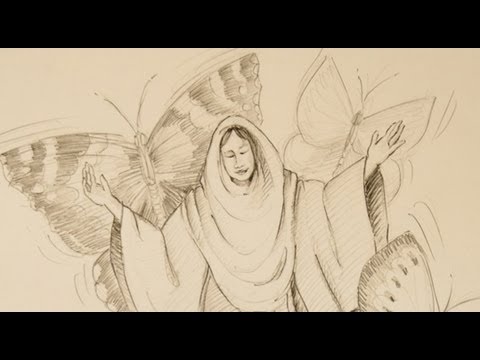 Recently, I shared a story about the power of images and language for God in which the author asks:
How many biblical images of God are there? What about the deeply theological work behind expansive language for God? We were indoctrinating children into an exclusively male image of God and it didn’t seem like anyone noticed or cared!
Because there are people who notice and care about expansive and inclusive language for the divine, I’m happy to once again share a resource in the form of this performance of Rev. Jann Aldredge-Clanton’s hymn “Come to Me, All You With Heavy Hearts.” Like much of her work, it brings new words into relationship with a familiar Christian tune:
Jann describes the biblical grounding of this hymn:
This hymn comes from the well known and loved words of Jesus, “Come to me, all you who are weary and are carrying heavy burdens, and I will give you rest. Take my yoke upon you, and learn from me; for I am gentle and humble in heart, and you will find rest for your souls” (Matthew 11:28-29). Many people do not know that elsewhere in the Bible almost these exact words refer to Wisdom (Sophia): “Put your necks under her yoke, and let your souls receive instruction”; and “give your shoulder to her yoke. . . for in the end you will find rest in her” (Ecclesiasticus/Sirach 51:26; 6:25,28). The book of Proverbs also portrays Wisdom as urging people to accept her teaching but never making this teaching specific. The implication is that Wisdom is herself what is to be learned. Jesus’ invitation in Matthew 11 is similar.
The words of Christ-Sophia’s call form the invitational refrain of the song:
“Come unto me, you weary ones,
and I will give you rest;
come, leave your burdens in my arms,
and lean upon my breast.”
Each verse offers up a different response. Here are two:
We labor, Christ-Sophia,
to bring your truth to light;
we often feel discouraged
when wrong prevails o’er right.
And:
You call us, Christ-Sophia,
our spirits to revive;
we learn from you the Wisdom
to keep our hope alive.
For more about the concept of Christ-Sophia, check out Jann’s book, In Search of the Christ-Sophia: An Inclusive Christology for Liberating Christians
Previous Post

June 26, 2013
Not Separate, Not Unequal: Notes on Two SCOTUS Rulings
Next Post

July 3, 2013 Our Voices: "Who Says?"
Browse Our Archives
Select a Category Abortion At the Intersections Atheism Christianity Contraception Education Feminism Gender Getting Theological Honorable Mention Islam LGBT News Our Voices Race Uncategorized
Select a Month July 2017 June 2017 May 2017 March 2017 February 2017 January 2017 August 2016 July 2016 June 2016 May 2016 April 2016 March 2016 February 2016 January 2016 December 2015 November 2015 October 2015 September 2015 August 2015 July 2015 June 2015 May 2015 April 2015 March 2015 February 2015 January 2015 December 2014 November 2014 October 2014 September 2014 August 2014 July 2014 June 2014 May 2014 April 2014 March 2014 February 2014 January 2014 December 2013 November 2013 October 2013 September 2013 August 2013 July 2013 June 2013 May 2013 April 2013 March 2013 February 2013 January 2013 December 2012 November 2012 October 2012 September 2012 August 2012 July 2012
Follow Us!
TAKE THE
Religious Wisdom Quiz
True or False: Ezekiel saw a vision of a valley of dry bones that came to life.
Select your answer to see how you score.
TRUE FALSE
Related posts from Caryn Riswold

What I Won’t Write About Mary Daly for...

We Need To Dance at Each Other’s Weddings

Freedom & the Racialized Body: Resonances with Luther...

Active in Love: The ELCA on Faith, Sexism,...
TRENDING AT PATHEOS Progressive Christian

What Being a Modern-Day Apostle Means to Me
In my last column, I discussed the ins and outs of modern-day...

Did Ancient China Once Worship the God of...
Across human history, a common thread weaves through the origins of the...

Love Your Neighbor – Including Earth-Kin: Lev. 19,...
God’s command to love your neighbor means acting in an ethical and...

Lead a Church Study of “Jesus and Lao...
Guest writer Jack Thomas (The Irreverent Reverend) reflects on leading his church...

Pastoral Wisdom for Responding to Sermon Pushback
Getting sermon pushback on your social justice sermon? Learn practical, Proverbs-based strategies...

Principles for Understanding the Apostolic Ministry Today
Whenever people discover that my formal ministry title is "apostle," as in...
view all Progressive Christian blogs
Ad-Free & Subscriber Log-In Subscription Support
- About Us
- 2026 Calendar
- Videos
- Podcasts
- Library of World Religions
- Faith In Media Tracker
- Advertise With Us
- Write for Us
- Privacy Policy
- Terms of Service
- Do Not Sell My Data
- Contact Us
- Radiant Digital
- Manage Newsletter Subscriptions
- Unsubscribe From Notifications
- Sitemap
Copyright 2008-2026, Patheos. All rights reserved.
Subscription Support Ad-Free & Subscriber Log-In
Follow Patheos