
BuddhistCatholicContemplativeEvangelicalGeneral ChristianHinduJewishLatter-day SaintMuslimNew VisionsProgressive Christian
Beliefs
- Buddhist
- Catholic
- Contemplative
- Evangelical
- General Christian
- Hindu
- Jewish
- Latter-day Saint
- More Voices
- Muslim
- New Visions
- Pagan
- Progressive Christian
Topics
- Religion News
- Food and Religion
- Sports and Religion
- Religious Art
- Religious Music and Entertainment
- Religious Events
- History and Religion
- Style and Religion
- Politics and Religion
- Women in Religion
- Recreation Outdoors and Religion
- Business Finance and Religion
- Careers Workplace and Religion
- Education and Religion
- Family Parenting and Religion
- Health Fitness and Religion
- Home and Religion
- Relationships and Religion
- Technology and Religion
- Travel and Religion
Columnists
- Buddhist Columnists
- Business Finance and Religion Columnists
- Careers Workplace and Religion Columnists
- Catholic Columnists
- Contemplative Columnists
- Education and Religion Columnists
- Evangelists Columnists
- Family Parenting and Religion Columnists
- General Christian Columnists
- Health Fitness and Religion Columnists
- Hindu Columnists
- History and Religion Columnists
- Home and Religion Columnists
- Jewish Columnists
- More Voices Columnists
- Latter Day Columnists
- Muslim Columnists
- New Visions Columnists
- Nonreligious Columnists
- Pagan Columnists
- Politics and Religion Columnists
- Progressive Columnists
- Recreation Outdoors and Religion Columnists
- Relationships and Religion Columnists
- Religion News Columnists
- Religious Art Columnists
- Religious Events Columnists
- Religious Music and Entertainment Columnists
- Sports and Religion Columnists
- Style and Religion Columnists
- Technology and Religion Columnists
- Travel and Religion Columnists
- Women in Religion Columnists
Resource Library
- 2026 Calendar
- Library of World Religions
- The 100 Most Holy Places on Earth
- Patheos Answers
- Podcasts
- Videos
- Faith Leaders Database
- Anglican Episcopalian
- Bahai
- Baptist
- Buddhism
- Christianity
- Confucianism
- Eastern Orthodoxy
- Hinduism
- Holiness and Pentecostal
- ISKCON
- Islam
- Judaism
- Lutheran
- Methodist
- The Church of Jesus Christ of Latter-day Saints
- New Age
- Paganism
- Presbytarian and Reformed
- Protestantism
- Religion Behind the Scenes
- Roman Catholic
- Scientology
- Shia Islam
- Sikhism
- Sufism
- Sunni Islam
- Taoism
- Zen
- See all religions
Research Tools
 Ad-Free & Subscriber Log-In Subscription Support
Ad-Free & Subscriber Log-In Subscription Support
Follow Patheos 

- Trending:
- Forgiveness
- |
- Marriage
- |
- Consciousness
- |
- Death Penalty
- |
- Election
- |
- Halloween
 Caryn Riswold
- Home
- Progressive Christian
- “We Showed Up” :: Millennials & Reproductive Justice
“We Showed Up” :: Millennials & Reproductive Justice
Last updated on: July 12, 2013 at 8:30 am by Caryn Riswold
“We Showed Up” :: Millennials & Reproductive Justice 2013-07-09T14:04:55-06:00 Caryn Riswold
Patheos Explore the world's faith through different perspectives on religion and spirituality! Patheos has the views of the prevalent religions and spiritualities of the world.
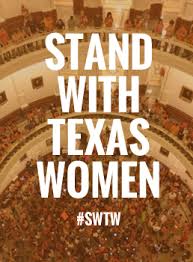 Consider the masses of younger women who showed up at the Texas statehouse before and after Wendy Davis’ pink-shoed filibuster against a bill that would effect devastating restrictions to women’s healthcare. Consider the online organizing carried out by women like Jessica Luther to feed and sustain those orange-shirted activists. Consider the recent panel on Millennials of color and reproductive justice at Netroots Nation.
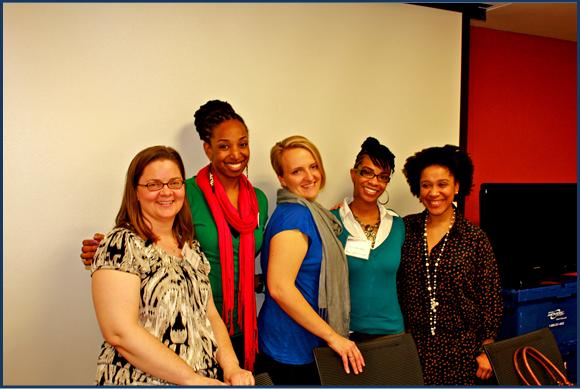
Consider Samantha Griffin and the work of the Black Women’s Health Imperative in Washington, D.C. I met Samantha last year (that’s us bookending the pic below!) as part of the Faith and Reproductive Justice Leadership Institute at the Center for American Progress, and she recently did an interview with Sally Steenland, its director.
They began by focusing on younger women and their advocacy for reproductive justice:
We have always known a world where it’s legal for a woman to make choices about her pregnancy and her preparedness to parent, and we don’t want to go back. …
We showed up for Planned Parenthood when it was going to be defunded. The fact that the organization is able to continue and not only provide abortion care but other reproductive services—including contraception and many important screenings—as well is largely because of the activism of Millennial women. We showed up online, we marched, we donated. Planned Parenthood funding went up because of us and because we care. …
 On what sets Millennial women apart and how that strengthens the reproductive justice movement:
We’re the most diverse generation that America has seen yet, and that’s only going to continue. We grew up in schools and in communities where we were in touch with people that were not like ourselves.
Many of us know the importance of inclusivity, and … so when we talk about reproductive justice, we’re talking about it in the broadest and truest sense. The right of every woman, in every family to control what their family looks like—if they’re going to parent, when they’re going to parent. We have gone beyond the choice model to include things such as gay marriage. We believe in transgender rights. And I think that’s incredibly valuable for the movement.
This is not only a generational thing, Samantha points out, it’s the mission of the organization for which she works:
The Black Women’s Health Imperative was founded in the concept of reproductive justice. That is our grounding. It’s the idea that black women need to be able to control their bodies, their own wellness, and their own lifestyle—whether that’s sexual health and reproductive rights or something such as chronic diseases.
What we’re doing this year is getting back to that grounding in reproductive justice. We’re going back to the basics. We are specifically focusing on sexual health and reproductive justice as one priority issue area. The other issue area we’re focusing on is lifestyle change. And the two issue areas are working in tandem because as we know, in order to make choices about our families and our reproduction and our sexuality, we need to be in a well and whole state of mind.
And finally, Samantha offers a few comments on the intersection of faith with her work for reproductive justice:
My faith embraces the right of everyone to have pleasure and to also have bodily control over themselves to create relationships and family structures that are best for each of us. So when it comes to reproductive justice, if sex is a good thing, then the product of that is also potentially a good thing. And so whether a woman decides that should be a child, or whether it is intimacy and a relationship, that’s a decision that’s best left up to her and her God. We can’t intrude on that divine relationship. God created us to be sexual and to relate to one other in that intimate way. And that’s a good thing. So how can we shame women for needing to make their own decisions after having sex?
For more of the interview, or to listen to the podcast, head over to the Center for American Progress website.
For more information on the work of the BWHI, click here.
Black Women's Health Imperative
faith and reproductive justice
Previous Post

July 10, 2013
Myth Heads Overrun Blogger!
Next Post

July 15, 2013 I Am Not Trayvon Martin
Browse Our Archives
Select a Category Abortion At the Intersections Atheism Christianity Contraception Education Feminism Gender Getting Theological Honorable Mention Islam LGBT News Our Voices Race Uncategorized
Select a Month July 2017 June 2017 May 2017 March 2017 February 2017 January 2017 August 2016 July 2016 June 2016 May 2016 April 2016 March 2016 February 2016 January 2016 December 2015 November 2015 October 2015 September 2015 August 2015 July 2015 June 2015 May 2015 April 2015 March 2015 February 2015 January 2015 December 2014 November 2014 October 2014 September 2014 August 2014 July 2014 June 2014 May 2014 April 2014 March 2014 February 2014 January 2014 December 2013 November 2013 October 2013 September 2013 August 2013 July 2013 June 2013 May 2013 April 2013 March 2013 February 2013 January 2013 December 2012 November 2012 October 2012 September 2012 August 2012 July 2012
Follow Us!
TAKE THE
Religious Wisdom Quiz
True or False: Ezekiel saw a vision of a valley of dry bones that came to life.
Select your answer to see how you score.
TRUE FALSE
Related posts from Caryn Riswold

What I Won’t Write About Mary Daly for...

We Need To Dance at Each Other’s Weddings

Freedom & the Racialized Body: Resonances with Luther...

Active in Love: The ELCA on Faith, Sexism,...
TRENDING AT PATHEOS Progressive Christian

What Being a Modern-Day Apostle Means to Me
In my last column, I discussed the ins and outs of modern-day...

Did Ancient China Once Worship the God of...
Across human history, a common thread weaves through the origins of the...

Love Your Neighbor – Including Earth-Kin: Lev. 19,...
God’s command to love your neighbor means acting in an ethical and...

Lead a Church Study of “Jesus and Lao...
Guest writer Jack Thomas (The Irreverent Reverend) reflects on leading his church...

Pastoral Wisdom for Responding to Sermon Pushback
Getting sermon pushback on your social justice sermon? Learn practical, Proverbs-based strategies...

Principles for Understanding the Apostolic Ministry Today
Whenever people discover that my formal ministry title is "apostle," as in...
view all Progressive Christian blogs
Ad-Free & Subscriber Log-In Subscription Support
- About Us
- 2026 Calendar
- Videos
- Podcasts
- Library of World Religions
- Faith In Media Tracker
- Advertise With Us
- Write for Us
- Privacy Policy
- Terms of Service
- Do Not Sell My Data
- Contact Us
- Radiant Digital
- Manage Newsletter Subscriptions
- Unsubscribe From Notifications
- Sitemap
Copyright 2008-2026, Patheos. All rights reserved.
Subscription Support Ad-Free & Subscriber Log-In
Follow Patheos