
BuddhistCatholicContemplativeEvangelicalGeneral ChristianHinduJewishLatter-day SaintMuslimNew VisionsProgressive Christian
Beliefs
- Buddhist
- Catholic
- Contemplative
- Evangelical
- General Christian
- Hindu
- Jewish
- Latter-day Saint
- More Voices
- Muslim
- New Visions
- Pagan
- Progressive Christian
Topics
- Religion News
- Food and Religion
- Sports and Religion
- Religious Art
- Religious Music and Entertainment
- Religious Events
- History and Religion
- Style and Religion
- Politics and Religion
- Women in Religion
- Recreation Outdoors and Religion
- Business Finance and Religion
- Careers Workplace and Religion
- Education and Religion
- Family Parenting and Religion
- Health Fitness and Religion
- Home and Religion
- Relationships and Religion
- Technology and Religion
- Travel and Religion
Columnists
- Buddhist Columnists
- Business Finance and Religion Columnists
- Careers Workplace and Religion Columnists
- Catholic Columnists
- Contemplative Columnists
- Education and Religion Columnists
- Evangelists Columnists
- Family Parenting and Religion Columnists
- General Christian Columnists
- Health Fitness and Religion Columnists
- Hindu Columnists
- History and Religion Columnists
- Home and Religion Columnists
- Jewish Columnists
- More Voices Columnists
- Latter Day Columnists
- Muslim Columnists
- New Visions Columnists
- Nonreligious Columnists
- Pagan Columnists
- Politics and Religion Columnists
- Progressive Columnists
- Recreation Outdoors and Religion Columnists
- Relationships and Religion Columnists
- Religion News Columnists
- Religious Art Columnists
- Religious Events Columnists
- Religious Music and Entertainment Columnists
- Sports and Religion Columnists
- Style and Religion Columnists
- Technology and Religion Columnists
- Travel and Religion Columnists
- Women in Religion Columnists
Resource Library
- 2026 Calendar
- Library of World Religions
- The 100 Most Holy Places on Earth
- Patheos Answers
- Podcasts
- Videos
- Faith Leaders Database
- Anglican Episcopalian
- Bahai
- Baptist
- Buddhism
- Christianity
- Confucianism
- Eastern Orthodoxy
- Hinduism
- Holiness and Pentecostal
- ISKCON
- Islam
- Judaism
- Lutheran
- Methodist
- The Church of Jesus Christ of Latter-day Saints
- New Age
- Paganism
- Presbytarian and Reformed
- Protestantism
- Religion Behind the Scenes
- Roman Catholic
- Scientology
- Shia Islam
- Sikhism
- Sufism
- Sunni Islam
- Taoism
- Zen
- See all religions
Research Tools
 Ad-Free & Subscriber Log-In Subscription Support
Ad-Free & Subscriber Log-In Subscription Support
Follow Patheos 

- Trending:
- Forgiveness
- |
- Marriage
- |
- Consciousness
- |
- Death Penalty
- |
- Election
- |
- Halloween
 Caryn Riswold
- Home
- Progressive Christian
- Leaning In Since 1960
Leaning In Since 1960
Last updated on: June 19, 2013 at 8:30 am by Caryn Riswold
Leaning In Since 1960 2013-06-14T11:26:32-06:00 Caryn Riswold
Patheos Explore the world's faith through different perspectives on religion and spirituality! Patheos has the views of the prevalent religions and spiritualities of the world.
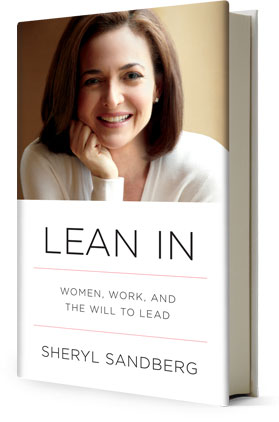 Not me, that is.
I was more than a decade away from being born when Valerie Saiving published her pivotal article, “The Human Situation: A Feminine View,” in the Journal of Religion, critiquing the traditional Christian idea of sin as pride. In a more academic, theological, and less press-savvy way, Saiving was in fact telling women in 1960: Lean in.
Sheryl Sandberg’s recent bestselling book, Lean In, has received its fair share of attention, praise, and substantial critique. I’d read a whole lot of that before I read the book itself. I did wait to offer up my own take on it until after I’d read it, however, unlike some others.
Jessica Valenti sums up some of the criticism Sandberg has received:
There are certainly substantive critiques to be made about Sandberg’s book. “Lean In” is mostly tailored for married women with children and may not resonate with women who aren’t upper-middle-class or elite, something Sandberg acknowledges up front: “The vast majority of women are not looking to lead in the workplace, but are struggling to make ends meet and take care of their families.”
Critics have also knocked Sandberg for putting the onus on women to lift themselves up, rather than blaming society for being sexist. But in her book, she frequently identifies how internal and external forces keep women from advancing in their careers. She also supports structural change, citing economic inequalities, discrimination, and the lack of paid maternity leave and affordable child care as problems that need to be addressed.
So I agree that Lean In has a narrow focus, but I do not think it has a narrow relevance. It’s a message that’s almost so basic and fundamental (and true) that some people might miss the point:
Patriarchal society tells women to sit back, stay quiet, and underestimate themselves. Women! Stop doing that!
Or, to put it another way, women under patriarchy have internalized sexism, thus contributing to the external barriers that prevent them from achieving greater social and political power. Stop doing that.
In 1960, Saiving noted something equally as simple, but also as revolutionary when it came to a religion: The Christian tradition insists that the fundamental human flaw (sin) is pride … too much of a sense of self. “Sin is the self’s attempt to overcome that anxiety by magnifying its own power, righteousness, or knowledge.” The tradition insists that there is virtue in humility, in submitting to (a male) God, and in giving up one’s excessive focus on self to serve others.
Saving’s point: But this is only true for men in patriarchal societies.
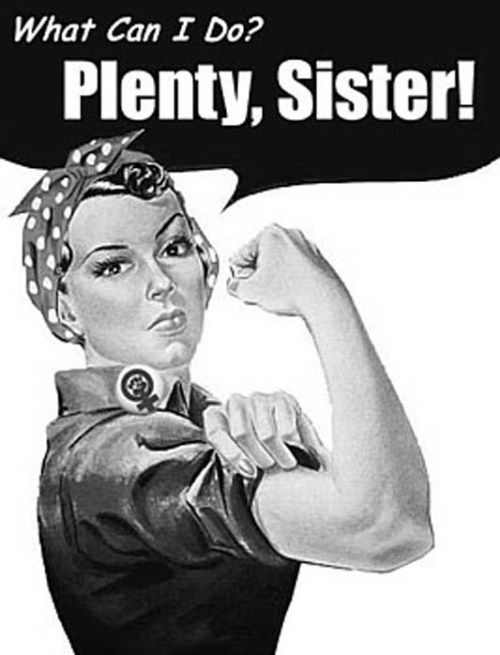 She went on: For women under patriarchy, the fundamental human flaw (sin) is selflessness … giving up of herself and subsuming her needs to everyone else’s: “surrendering her individual concerns in order to serve the immediate needs of others.” Under patriarchy, “the problem” for men and “the problem” for women are not at all the same thing. The theological assessment and corrective, therefore, ought not be the same either.
In 1960, this essay sparked a renewed vitality for generations of Christian feminist theological and biblical scholarship that was critical of classical ideas as well as constructively offering new inclusive proposals and models.
And its message for women in 1960 was in some measure the same as Sandberg’s: Lean in. Don’t be quiet when doing so simply benefits the male-power-elite. Claim a space at the table. Carve out a place in the religion. Take yourself seriously as (to use Saiving’s Christian theological language) a person created in the image of God, fully worthy as any man, and valued for who you are.
Women in patriarchal workplaces, educational institutions, churches, governments, and communities do support their own subjection when they do what the male power structure says they should do: stay quiet, accept less pay, prioritize other peoples’ needs over their own, disbelieve that their own gender can fully re-present the divine. Valerie Saiving started this conversation back in 1960.
So Sandberg’s advice isn’t new. Not by a long shot.
Why is it so controversial?
Because it’s so obviously still needed.
Image via.
Previous Post

June 17, 2013
Vocation Summer Camp
Next Post

June 21, 2013 Our Voices: "Speaking 'He'"
Browse Our Archives
Select a Category Abortion At the Intersections Atheism Christianity Contraception Education Feminism Gender Getting Theological Honorable Mention Islam LGBT News Our Voices Race Uncategorized
Select a Month July 2017 June 2017 May 2017 March 2017 February 2017 January 2017 August 2016 July 2016 June 2016 May 2016 April 2016 March 2016 February 2016 January 2016 December 2015 November 2015 October 2015 September 2015 August 2015 July 2015 June 2015 May 2015 April 2015 March 2015 February 2015 January 2015 December 2014 November 2014 October 2014 September 2014 August 2014 July 2014 June 2014 May 2014 April 2014 March 2014 February 2014 January 2014 December 2013 November 2013 October 2013 September 2013 August 2013 July 2013 June 2013 May 2013 April 2013 March 2013 February 2013 January 2013 December 2012 November 2012 October 2012 September 2012 August 2012 July 2012
Follow Us!
TAKE THE
Religious Wisdom Quiz
What was the occupation of Lydia, the first European convert in Acts?
Select your answer to see how you score.
Seller of purple cloth Fisherwoman Baker Tentmaker
Related posts from Caryn Riswold

What I Won’t Write About Mary Daly for...

We Need To Dance at Each Other’s Weddings

Freedom & the Racialized Body: Resonances with Luther...

Active in Love: The ELCA on Faith, Sexism,...
TRENDING AT PATHEOS Progressive Christian

What Being a Modern-Day Apostle Means to Me
In my last column, I discussed the ins and outs of modern-day...

Did Ancient China Once Worship the God of...
Across human history, a common thread weaves through the origins of the...

Love Your Neighbor – Including Earth-Kin: Lev. 19,...
God’s command to love your neighbor means acting in an ethical and...

Lead a Church Study of “Jesus and Lao...
Guest writer Jack Thomas (The Irreverent Reverend) reflects on leading his church...

Pastoral Wisdom for Responding to Sermon Pushback
Getting sermon pushback on your social justice sermon? Learn practical, Proverbs-based strategies...

Principles for Understanding the Apostolic Ministry Today
Whenever people discover that my formal ministry title is "apostle," as in...
view all Progressive Christian blogs
Ad-Free & Subscriber Log-In Subscription Support
- About Us
- 2026 Calendar
- Videos
- Podcasts
- Library of World Religions
- Faith In Media Tracker
- Advertise With Us
- Write for Us
- Privacy Policy
- Terms of Service
- Do Not Sell My Data
- Contact Us
- Radiant Digital
- Manage Newsletter Subscriptions
- Unsubscribe From Notifications
- Sitemap
Copyright 2008-2026, Patheos. All rights reserved.
Subscription Support Ad-Free & Subscriber Log-In
Follow Patheos