
BuddhistCatholicContemplativeEvangelicalGeneral ChristianHinduJewishLatter-day SaintMuslimNew VisionsProgressive Christian
Beliefs
- Buddhist
- Catholic
- Contemplative
- Evangelical
- General Christian
- Hindu
- Jewish
- Latter-day Saint
- More Voices
- Muslim
- New Visions
- Pagan
- Progressive Christian
Topics
- Religion News
- Food and Religion
- Sports and Religion
- Religious Art
- Religious Music and Entertainment
- Religious Events
- History and Religion
- Style and Religion
- Politics and Religion
- Women in Religion
- Recreation Outdoors and Religion
- Business Finance and Religion
- Careers Workplace and Religion
- Education and Religion
- Family Parenting and Religion
- Health Fitness and Religion
- Home and Religion
- Relationships and Religion
- Technology and Religion
- Travel and Religion
Columnists
- Buddhist Columnists
- Business Finance and Religion Columnists
- Careers Workplace and Religion Columnists
- Catholic Columnists
- Contemplative Columnists
- Education and Religion Columnists
- Evangelists Columnists
- Family Parenting and Religion Columnists
- General Christian Columnists
- Health Fitness and Religion Columnists
- Hindu Columnists
- History and Religion Columnists
- Home and Religion Columnists
- Jewish Columnists
- More Voices Columnists
- Latter Day Columnists
- Muslim Columnists
- New Visions Columnists
- Nonreligious Columnists
- Pagan Columnists
- Politics and Religion Columnists
- Progressive Columnists
- Recreation Outdoors and Religion Columnists
- Relationships and Religion Columnists
- Religion News Columnists
- Religious Art Columnists
- Religious Events Columnists
- Religious Music and Entertainment Columnists
- Sports and Religion Columnists
- Style and Religion Columnists
- Technology and Religion Columnists
- Travel and Religion Columnists
- Women in Religion Columnists
Resource Library
- 2026 Calendar
- Library of World Religions
- The 100 Most Holy Places on Earth
- Patheos Answers
- Podcasts
- Videos
- Faith Leaders Database
- Anglican Episcopalian
- Bahai
- Baptist
- Buddhism
- Christianity
- Confucianism
- Eastern Orthodoxy
- Hinduism
- Holiness and Pentecostal
- ISKCON
- Islam
- Judaism
- Lutheran
- Methodist
- The Church of Jesus Christ of Latter-day Saints
- New Age
- Paganism
- Presbytarian and Reformed
- Protestantism
- Religion Behind the Scenes
- Roman Catholic
- Scientology
- Shia Islam
- Sikhism
- Sufism
- Sunni Islam
- Taoism
- Zen
- See all religions
Research Tools
 Ad-Free & Subscriber Log-In Subscription Support
Ad-Free & Subscriber Log-In Subscription Support
Follow Patheos 

- Trending:
- Forgiveness
- |
- Marriage
- |
- Consciousness
- |
- Death Penalty
- |
- Election
- |
- Halloween
 Caryn Riswold
- Home
- Progressive Christian
- Yes, College is Worth It: Justice, Opportunity, & ‘the practice of freedom’
Yes, College is Worth It: Justice, Opportunity, & ‘the practice of freedom’
Last updated on: May 13, 2013 at 8:30 am by Caryn Riswold
Yes, College is Worth It: Justice, Opportunity, & ‘the practice of freedom’ 2013-05-12T17:29:34-06:00 Caryn Riswold
Patheos Explore the world's faith through different perspectives on religion and spirituality! Patheos has the views of the prevalent religions and spiritualities of the world.
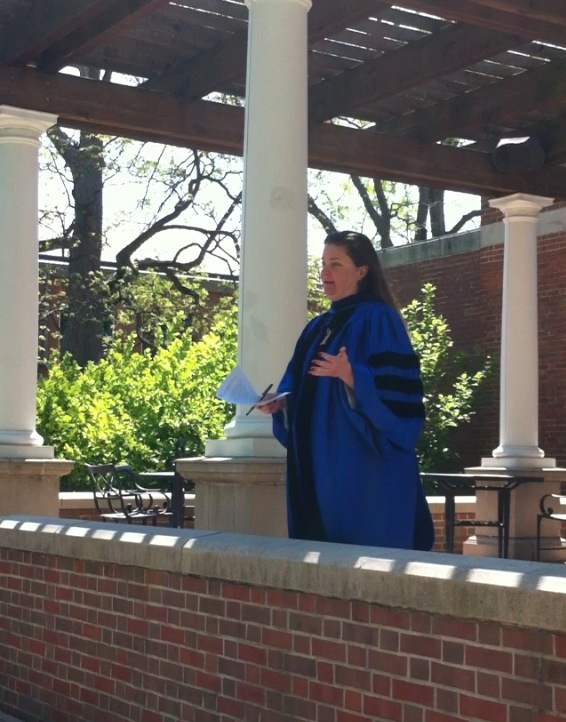
 The following is a set of remarks I delivered yesterday, graduation day, as part of a campus Celebration of Justice and Opportunity at Illinois College. The Celebration was organized by students as an alternate to the College’s official baccalaureate.
Normally, on a Sunday morning, I am doing one of two things: going to church, or more frequently eating breakfast in bed while watching Sunday morning political talk shows. Religion and politics is just what I do … even on the weekend. One of the regular guests on those shows is Bill Bennett, former U.S. Secretary of Education and conservative pundit. Bennett has a new book out this month in which he asks “Is College Worth It?” The ominous subtitle for the book gives you a sense of his answer: “A Former United States Secretary of Education and a Liberal Arts Graduate Expose the Broken Promise of Higher Education.” Bennett was on one of the weekday morning shows last week, when host Mika Brzezinski pointed out that Bennett himself has not only a college degree himself, but also a Ph.D. In Philosophy. With which of course he went on to direct the National Humanities Center, head the National Endowment for the Humanities, direct the Office of National Drug Control Policy, and hold a cabinet level position as secretary of education.
College seemed to be worth it. For him. But today? For you? Well, he’s got a lot of doubt about that.
I tell you this story not only because I have a different answer, but because if you weren’t already aware of it, there is a movement afoot to discredit the very thing that we are celebrating today: the completion of a four-year degree at a private residential liberal arts college. So, was it worth it?
Yes, I tell you, college is worth it. And I want you to know why I think that, and why some others think it isn’t.
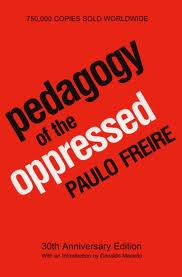
Bennett is relying partly on what Paulo Freire calls the “banking” model of education. Freire was a Brazilian teacher and philosopher of education, key in grassroots community activism and liberation theology. He challenged the ways that the powerful used education to maintain the systems that keep them in power –systems like government, religion, and education itself. Freire describes this model of education:
– The teacher teaches, and the students are taught.
– The teacher knows everything, and the students know nothing.
– The teacher chooses and enforces his/her choice, and the students comply.
This is not only how the banking model of education works, it is in fact how an oppressive society functions.
Friere goes on:
“[In this way of educating] The more students work at storing the deposits entrusted to them, the less they develop the critical consciousness which would result from their intervention in the world as transformers of that world. The more completely they accept the passive role imposed on them, the more they tend simply to adapt to the world as it is and to the fragmented view of reality deposited in them.” (73).
 It’s a one-way street, this kind of education. It serves the powerful in a corrupt and oppressive society. It maintains inequalities. It keeps the status quo just as the powerful “teachers” would like it to be … benefitting their interests.
So, if you look at education with a deposit/withdrawal mentality, and if the student-generation isn’t complying, isn’t being passive, and instead is asking questions that the teacher-generation does not like, then no … it isn’t worth it. The deposits aren’t available for withdrawal.
But here’s the thing … I’m with Freire who says that education should be liberating and revolutionary. That’s the origin of the idea of “liberal arts” in fact … it’s about liberation. It’s freedom from not knowing, freedom to act. He describes the “humanist revolutionary educator” in this way:
“From the outset, her efforts must coincide with those of the students to engage in critical thinking and the quest for mutual humanization. [Her] efforts must be imbued with a profound trust in people and their creative power. To achieve this, they must be partners of the students in their relations with them.” (75).
Freire understood very well the transformative power of education. He saw what difference it made:
“If men and women are searchers and their ontological vocation is humanization, sooner or later they may perceive the contradiction in which banking education seeks to maintain them, and then engage themselves in the struggle for their liberation.” (75)
If we the faculty have done our job right, then you the students will challenge the systems that surround you. You already are. And this is the fundamental reason that that yes, college is worth it. College that is made up of face to face interaction with human beings and human texts, participation in a community, accountability for your actions, and opportunities to practice and develop skills that you’ll use for the rest of your life.
Think about it:
You can begin understand what justice is if you’ve read philosophy or history or classical literature. You can begin to know the consequences of injustice if you’ve encountered voices of the marginalized in poetry, on film, and at the homeless shelter. You can begin to find your own way to transform society if you’ve volunteered to read in an after school program, put in service hours at the food center, raised money to fund cancer research, played bingo at the retirement community, or staged a play that tells the truth about violence against women.? You can begin to experience the frustration of building alliances if you’ve had to do a group project or start a student organization. You can begin to know the power of collaboration when you watch the people you’ve organized and mentored carry out the project or event you never thought would happen.
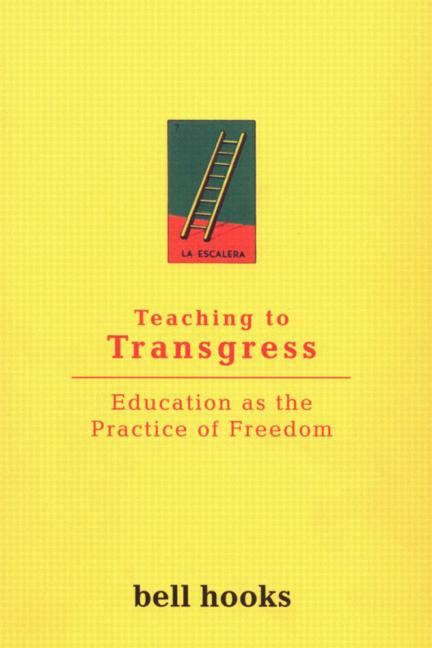 A transformative education, then, isn’t a series of deposits and withdrawals that can be measured and held in balance. bell hooks describes education as a “location of possibility.” She says that in it:
“we have the opportunity to labor for freedom, to demand of ourselves and our comrades, an openness of mind and heart that allows us to face reality even as we collectively imagine ways to move beyond boundaries, to transgress. This is education as the practice of freedom.” (207)
With a college education, you learn the limitations and possibilities of this difficult and wonderous world, and you learn what you can do to transform them even though it may be messy. You learn that standing up for justice can even be divisive.
The ancient Hebrew prophet Amos cried out in the midst of a social crisis where the privileged were prospering at the expense of the oppressed: “Let justice roll down like waters, and righteousness like an ever-flowing stream.” (Amos 5:24). Amos was speaking to and for the ancient 99%. The image of the rushing waters is offered up here as good news for those who have been struggling for survival, a community desperate for justice and longing for the defeat of their enemies.
I am mindful, though, of the fact that we sit here in the basin of the Illinois River, not so far from the confluence of the Missouri and Mississippi rivers, each of them this spring flooding and cresting against constructed levees and sandbag walls that communities of people fought against time to build. Because rushing water isn’t always good news. Its power overwhelms and even alters the landscape.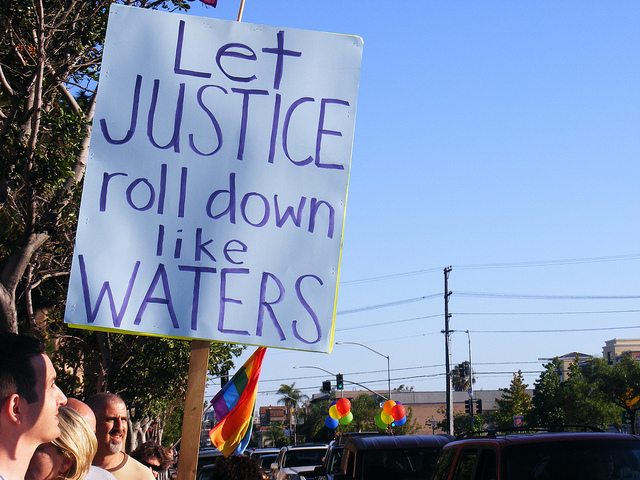
And this is what justice does: It disrupts ordinary life, it threatens to split communities, it transforms the social landscape, and even sometimes it costs a life. In his last speech to the striking sanitation workers in Memphis, Dr. Martin Luther King Jr. had already suffered bomb threats and stabbing, but he knew that the work for justice must continue. He knew that rallying the poor against the powerful came at a cost. He used the New Testament parable of the Good Samaritan to acknowledge that taking a stand with the oppressed and the marginalized is dangerous work. But, he says:
“The question is not, ‘If I stop to help people in need, what will happen to me?’ The question is, ‘If I do not stop to help people in need, what will happen to them?’ That’s the question.”
By changing the question from ‘what will it cost me to stand up for justice? To ‘what will it cost others if I do not stand up for justice?’ King reminds us that it’s not in fact about us. (In fact, I have a magnet from a MLK Day celebration many years ago that reads: “Justice. Not Just Us.”)
And in that speech, he also names the opportunity: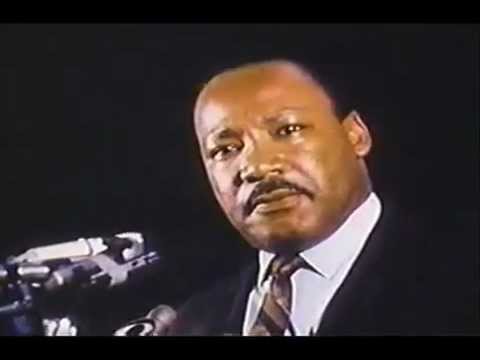
“Let us rise up tonight with a greater readiness. Let us stand with a greater determination. And let us move on in these powerful days, these days of challenge to make America what it ought to be. We have an opportunity to make America a better nation.”
It’s a lofty claim, that we have an opportunity to make this a better nation. But, we do. You do.
There’s a reason, then, that Illinois College’s Leadership Program adopted justice and opportunity as its two signature values, because that is in fact what leaders do, work for justice and expand opportunity. It’s what this College was founded to do. Nearly 200 years ago, the social justice issue, the thing that Julian Sturtevant and Edward Beecher and Jonathan Baldwin Turner and all the rest understood would make this a better nation, was ending slavery. Expanding the actual practice of freedom. Society needed transformation, and they understood education to be part of that work of expanding opportunity and creating justice.
They knew too that that standing for justice can cause division in a community. It did for them with some members of a southern-sympathizing local community. Here is where Dr. King’s idea of the ‘transformed nonconformist,’ those he calls ‘the creatively maladjusted,’ can be a guide. Simply put, there are things in society to which we should not conform. There are realities in our community to which we ought not adjust. We must work to transform them.
I’ll conclude with words from the foreword to Paulo Freire’s Pedagogy of the Oppressed:
“There is no such thing as a neutral educational process. Education either functions as an instrument that is used to facilitate the integration of the younger generation into the logic of the present system and bring about conformity to it, or it becomes “the practice of freedom,” the means by which men and women deal critically and creatively with reality and discover how to participate in the transformation of their world.” (34).
Participate in the transformation of this world. It needs it.
Having the knowledge, and skills, and experience, and strength of character to do this work for justice and meet the challenge of expanding opportunity … now that’s what a college education is for.
And, yes, it’s totally worth it.
‘Let Justice Roll’ image via.
Previous Post

May 10, 2013
Mama’s Day & "The Balance of Justice"
Next Post

May 16, 2013 Pentecost Happened
Browse Our Archives
Select a Category Abortion At the Intersections Atheism Christianity Contraception Education Feminism Gender Getting Theological Honorable Mention Islam LGBT News Our Voices Race Uncategorized
Select a Month July 2017 June 2017 May 2017 March 2017 February 2017 January 2017 August 2016 July 2016 June 2016 May 2016 April 2016 March 2016 February 2016 January 2016 December 2015 November 2015 October 2015 September 2015 August 2015 July 2015 June 2015 May 2015 April 2015 March 2015 February 2015 January 2015 December 2014 November 2014 October 2014 September 2014 August 2014 July 2014 June 2014 May 2014 April 2014 March 2014 February 2014 January 2014 December 2013 November 2013 October 2013 September 2013 August 2013 July 2013 June 2013 May 2013 April 2013 March 2013 February 2013 January 2013 December 2012 November 2012 October 2012 September 2012 August 2012 July 2012
Follow Us!
TAKE THE
Religious Wisdom Quiz
What was the primary method of food preservation in Biblical times?
Select your answer to see how you score.
Drying Pickling Salting Smoking
Related posts from Caryn Riswold

What I Won’t Write About Mary Daly for...

Freedom & the Racialized Body: Resonances with Luther...

Active in Love: The ELCA on Faith, Sexism,...

Feminist, Interfaith, Public: My Luther Year
TRENDING AT PATHEOS Progressive Christian

Why Christians Have a Sacred Duty to Vote:...
The Bible offers strong support for the sacred duty to vote. Here...

What Being a Modern-Day Apostle Means to Me
In my last column, I discussed the ins and outs of modern-day...

Did Ancient China Once Worship the God of...
Across human history, a common thread weaves through the origins of the...

Love Your Neighbor – Including Earth-Kin: Lev. 19,...
God’s command to love your neighbor means acting in an ethical and...

Lead a Church Study of “Jesus and Lao...
Guest writer Jack Thomas (The Irreverent Reverend) reflects on leading his church...

Principles for Understanding the Apostolic Ministry Today
Whenever people discover that my formal ministry title is "apostle," as in...
view all Progressive Christian blogs
Ad-Free & Subscriber Log-In Subscription Support
- About Us
- 2026 Calendar
- Videos
- Podcasts
- Library of World Religions
- Faith In Media Tracker
- Advertise With Us
- Write for Us
- Privacy Policy
- Terms of Service
- Do Not Sell My Data
- Contact Us
- Radiant Digital
- Manage Newsletter Subscriptions
- Unsubscribe From Notifications
- Sitemap
Copyright 2008-2026, Patheos. All rights reserved.
Subscription Support Ad-Free & Subscriber Log-In
Follow Patheos