
BuddhistCatholicContemplativeEvangelicalGeneral ChristianHinduJewishLatter-day SaintMuslimNew VisionsProgressive Christian
Beliefs
- Buddhist
- Catholic
- Contemplative
- Evangelical
- General Christian
- Hindu
- Jewish
- Latter-day Saint
- More Voices
- Muslim
- New Visions
- Pagan
- Progressive Christian
Topics
- Religion News
- Food and Religion
- Sports and Religion
- Religious Art
- Religious Music and Entertainment
- Religious Events
- History and Religion
- Style and Religion
- Politics and Religion
- Women in Religion
- Recreation Outdoors and Religion
- Business Finance and Religion
- Careers Workplace and Religion
- Education and Religion
- Family Parenting and Religion
- Health Fitness and Religion
- Home and Religion
- Relationships and Religion
- Technology and Religion
- Travel and Religion
Columnists
- Buddhist Columnists
- Business Finance and Religion Columnists
- Careers Workplace and Religion Columnists
- Catholic Columnists
- Contemplative Columnists
- Education and Religion Columnists
- Evangelists Columnists
- Family Parenting and Religion Columnists
- General Christian Columnists
- Health Fitness and Religion Columnists
- Hindu Columnists
- History and Religion Columnists
- Home and Religion Columnists
- Jewish Columnists
- More Voices Columnists
- Latter Day Columnists
- Muslim Columnists
- New Visions Columnists
- Nonreligious Columnists
- Pagan Columnists
- Politics and Religion Columnists
- Progressive Columnists
- Recreation Outdoors and Religion Columnists
- Relationships and Religion Columnists
- Religion News Columnists
- Religious Art Columnists
- Religious Events Columnists
- Religious Music and Entertainment Columnists
- Sports and Religion Columnists
- Style and Religion Columnists
- Technology and Religion Columnists
- Travel and Religion Columnists
- Women in Religion Columnists
Resource Library
- 2026 Calendar
- Library of World Religions
- The 100 Most Holy Places on Earth
- Patheos Answers
- Podcasts
- Videos
- Faith Leaders Database
- Anglican Episcopalian
- Bahai
- Baptist
- Buddhism
- Christianity
- Confucianism
- Eastern Orthodoxy
- Hinduism
- Holiness and Pentecostal
- ISKCON
- Islam
- Judaism
- Lutheran
- Methodist
- The Church of Jesus Christ of Latter-day Saints
- New Age
- Paganism
- Presbytarian and Reformed
- Protestantism
- Religion Behind the Scenes
- Roman Catholic
- Scientology
- Shia Islam
- Sikhism
- Sufism
- Sunni Islam
- Taoism
- Zen
- See all religions
Research Tools
 Ad-Free & Subscriber Log-In Subscription Support
Ad-Free & Subscriber Log-In Subscription Support
Follow Patheos 

- Trending:
- Forgiveness
- |
- Marriage
- |
- Consciousness
- |
- Death Penalty
- |
- Election
- |
- Halloween
 Caryn Riswold
- Home
- Progressive Christian
- I Don’t Care If Jesus Was A Feminist
I Don’t Care If Jesus Was A Feminist
Last updated on: March 12, 2013 at 3:52 pm by Caryn Riswold
I Don’t Care If Jesus Was A Feminist 2013-03-12T15:52:45-06:00 Caryn Riswold
Patheos Explore the world's faith through different perspectives on religion and spirituality! Patheos has the views of the prevalent religions and spiritualities of the world.
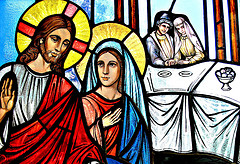 Over at the God’s Politics blog, Adam Ericksen revives the conversation about whether or not Jesus was a feminist. It’s a thing that progressives like to talk about from time to time, and was relatively common for Christian feminist theologians and biblical scholars to assert in the 1970s and 1980s.
I don’t see what difference it makes. In fact, I think it’s a problem.
To be clear, I don’t actually disagree with any of the four reasons Adam gives for why Jesus is his favorite feminist. They are:
- Jesus challenged the conventional patriarchy of his culture. Jesus depended upon the ministry of women and he wasn’t ashamed of receiving their ministry in public.
- Jesus redefined the ways humans relate to one another by receiving cultural outcasts into his community.
- Jesus broke the conventional boundaries of his culture by including women as teachers and disciples.
- Jesus didn’t go against his Jewish faith by including women as full members of his community. Rather, he lived by a specific strand from within his Jewish faith.
True, as far as we know. Important points, all. Things to celebrate, for sure.
Adam even includes a footnote appropriately acknowledging the limits of any claim about Jesus being a feminist:
Of course, Jesus was not part of the modern political movement we call feminism, but he did challenge the patriarchy of his day and embraced women as full members of his new community. Thus, Jesus opened the door for the modern feminist movement.
Sigh. That last point is where he loses me, and where I start to wonder why progressive Christians are still so interested in claiming Jesus’ feminism.

See, I don’t think we need it. And, I think that it belies the truth and troubled misogyny of the Christian tradition over all the centuries between Jesus and, say, Mary Wollstonecraft or Valerie Saiving.
Additionally, this gives credit for feminism to an ancient man, and it makes possible the anti-semitism of which Christian feminists have already stood accused of when making such claims. I know that Adam tries to ward off this claim in his fourth point, but I don’t know that it’s enough. The implication is still out there that the (Jewish) world was so terrible and patriarchal until this new feminist Jesus came along and made it better. It too easily plays into the already-present supersessionist tendencies of Christianity more broadly, and I find that deeply problematic.
In a recent paper on “Anti-Judaism in Christian Feminist Theology,” Caitlyn Duehren at the Boston College Center for Christian-Jewish Learning discusses this issue, and considers at length
“the complexity of ancient Judaism and the early Jesus movement in an effort to recover the liberative tendencies inherent in the Jewish tradition as a means of understanding more fully the view of women presented in Jesus and the early Jesus movement.”
In short, there are aspects of Jesus’ Jewish tradition that made his work with and for women possible, as Adam notes in his fourth point above. But in a zeal for casting Jesus as a renegade liberator, Christian feminism has tended to throw Judaism under the patriarchal bus.
It’s a political move to assign the label of feminist to someone who hasn’t claimed it, let alone someone long dead. More importantly, I just keep wondering about why progressive Christians seem to have this recurring need to claim Jesus as one of us. Can’t we let him be whatever he was? Understand him in his context, take whatever liberating good news we can from the story, and not try to anachronistically fit him into our agenda?
And let’s talk about the women who made modern feminism possible. Generations of them in the Christian tradition that this Jesus inspired: early women apostles working to spread Jesus’ message of grace and justice, women toiling as priests in a fledgling church that eventually saw fit to exclude them from that work, medieval women directly experiencing God in powerful mystical visions, political women arguing for equality on the basis of a patriarchal bible to an all-male clergy, and radical women constructing theologies that finally included women’s experiences of being human, and sometimes even called for an exodus from this thing called patriarchy.
These are my favorite feminists.
Previous Post

March 12, 2013
Thank You, Abortion Providers
Next Post

March 13, 2013 And They Awarded Me A PhD
Browse Our Archives
Select a Category Abortion At the Intersections Atheism Christianity Contraception Education Feminism Gender Getting Theological Honorable Mention Islam LGBT News Our Voices Race Uncategorized
Select a Month July 2017 June 2017 May 2017 March 2017 February 2017 January 2017 August 2016 July 2016 June 2016 May 2016 April 2016 March 2016 February 2016 January 2016 December 2015 November 2015 October 2015 September 2015 August 2015 July 2015 June 2015 May 2015 April 2015 March 2015 February 2015 January 2015 December 2014 November 2014 October 2014 September 2014 August 2014 July 2014 June 2014 May 2014 April 2014 March 2014 February 2014 January 2014 December 2013 November 2013 October 2013 September 2013 August 2013 July 2013 June 2013 May 2013 April 2013 March 2013 February 2013 January 2013 December 2012 November 2012 October 2012 September 2012 August 2012 July 2012
Follow Us!
TAKE THE
Religious Wisdom Quiz
What acrostic device is used in many Psalms and Proverbs?
Select your answer to see how you score.
Alphabetic order Numerical sequence Reversed order Chronological order
Related posts from Caryn Riswold

What I Won’t Write About Mary Daly for...

We Need To Dance at Each Other’s Weddings

Freedom & the Racialized Body: Resonances with Luther...

Active in Love: The ELCA on Faith, Sexism,...
TRENDING AT PATHEOS Progressive Christian

Why Christians Have a Sacred Duty to Vote:...
The Bible offers strong support for the sacred duty to vote. Here...

What Being a Modern-Day Apostle Means to Me
In my last column, I discussed the ins and outs of modern-day...

Did Ancient China Once Worship the God of...
Across human history, a common thread weaves through the origins of the...

Love Your Neighbor – Including Earth-Kin: Lev. 19,...
God’s command to love your neighbor means acting in an ethical and...

Lead a Church Study of “Jesus and Lao...
Guest writer Jack Thomas (The Irreverent Reverend) reflects on leading his church...

Principles for Understanding the Apostolic Ministry Today
Whenever people discover that my formal ministry title is "apostle," as in...
view all Progressive Christian blogs
Ad-Free & Subscriber Log-In Subscription Support
- About Us
- 2026 Calendar
- Videos
- Podcasts
- Library of World Religions
- Faith In Media Tracker
- Advertise With Us
- Write for Us
- Privacy Policy
- Terms of Service
- Do Not Sell My Data
- Contact Us
- Radiant Digital
- Manage Newsletter Subscriptions
- Unsubscribe From Notifications
- Sitemap
Copyright 2008-2026, Patheos. All rights reserved.
Subscription Support Ad-Free & Subscriber Log-In
Follow Patheos