
BuddhistCatholicContemplativeEvangelicalGeneral ChristianHinduJewishLatter-day SaintMuslimNew VisionsProgressive Christian
Beliefs
- Buddhist
- Catholic
- Contemplative
- Evangelical
- General Christian
- Hindu
- Jewish
- Latter-day Saint
- More Voices
- Muslim
- New Visions
- Pagan
- Progressive Christian
Topics
- Religion News
- Food and Religion
- Sports and Religion
- Religious Art
- Religious Music and Entertainment
- Religious Events
- History and Religion
- Style and Religion
- Politics and Religion
- Women in Religion
- Recreation Outdoors and Religion
- Business Finance and Religion
- Careers Workplace and Religion
- Education and Religion
- Family Parenting and Religion
- Health Fitness and Religion
- Home and Religion
- Relationships and Religion
- Technology and Religion
- Travel and Religion
Columnists
- Buddhist Columnists
- Business Finance and Religion Columnists
- Careers Workplace and Religion Columnists
- Catholic Columnists
- Contemplative Columnists
- Education and Religion Columnists
- Evangelists Columnists
- Family Parenting and Religion Columnists
- General Christian Columnists
- Health Fitness and Religion Columnists
- Hindu Columnists
- History and Religion Columnists
- Home and Religion Columnists
- Jewish Columnists
- More Voices Columnists
- Latter Day Columnists
- Muslim Columnists
- New Visions Columnists
- Nonreligious Columnists
- Pagan Columnists
- Politics and Religion Columnists
- Progressive Columnists
- Recreation Outdoors and Religion Columnists
- Relationships and Religion Columnists
- Religion News Columnists
- Religious Art Columnists
- Religious Events Columnists
- Religious Music and Entertainment Columnists
- Sports and Religion Columnists
- Style and Religion Columnists
- Technology and Religion Columnists
- Travel and Religion Columnists
- Women in Religion Columnists
Resource Library
- 2026 Calendar
- Library of World Religions
- The 100 Most Holy Places on Earth
- Patheos Answers
- Podcasts
- Videos
- Faith Leaders Database
- Anglican Episcopalian
- Bahai
- Baptist
- Buddhism
- Christianity
- Confucianism
- Eastern Orthodoxy
- Hinduism
- Holiness and Pentecostal
- ISKCON
- Islam
- Judaism
- Lutheran
- Methodist
- The Church of Jesus Christ of Latter-day Saints
- New Age
- Paganism
- Presbytarian and Reformed
- Protestantism
- Religion Behind the Scenes
- Roman Catholic
- Scientology
- Shia Islam
- Sikhism
- Sufism
- Sunni Islam
- Taoism
- Zen
- See all religions
Research Tools
 Ad-Free & Subscriber Log-In Subscription Support
Ad-Free & Subscriber Log-In Subscription Support
Follow Patheos 

- Trending:
- Forgiveness
- |
- Marriage
- |
- Consciousness
- |
- Death Penalty
- |
- Election
- |
- Halloween
 Caryn Riswold
- Home
- Progressive Christian
- Interfaithing Lutherans
Interfaithing Lutherans
Last updated on: February 11, 2013 at 8:00 am by Caryn Riswold
Interfaithing Lutherans 2013-02-10T15:20:27-07:00 Caryn Riswold
Patheos Explore the world's faith through different perspectives on religion and spirituality! Patheos has the views of the prevalent religions and spiritualities of the world.
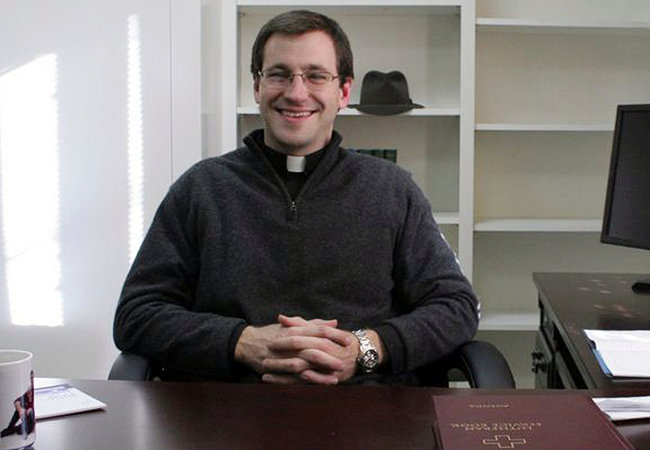 The headlines refer to Rev. Rob Morris as a Lutheran pastor reprimanded by his denomination for participating in an interfaith prayer service in Newtown, Connecticutt, just after the Sandy Hook massacre.
‘MISSOURI-SYNOD LUTHERAN!’ … I want to holler every time I see it.
After I stop hollering, I want to point out that a similar thing happened to Rev. David Benke, who was for participating in the national interfaith service at Yankee Stadium after September 11, 2001.
And then I want to make sure that people understand that this kind of Lutheran denomination is not the only Lutheran church, and it’s not even the predominant kind of Lutheran church in the U.S.
The New York Times tells Morris’ story:
A Lutheran pastor who participated in an interfaith prayer service in Newtown, Conn., in the days after the Sandy Hook massacre has apologized after being criticized by the leader of his denomination for violating its prohibition against joint worship with other religions.
The Rev. Rob Morris, a new pastor who lost one of the members of his congregation in the shooting, defended himself in an open letter published by the church, saying that before the tragedy, he had spent hours with his congregation educating them about the differences between Lutheran teaching “and the teachings of false religions such as Islam or Baha’i,” both of which had clergy members at the interfaith service. He also noted that, in his own prayer at the service, he had spoken about Jesus and quoted from the Bible.
“I believed my participation to be, not an act of joint worship, but an act of community chaplaincy,” he wrote.
But he also apologized.
“To those who believe that I have endorsed false teaching, I assure you that was not my intent, and I give you my unreserved apologies,” he wrote.
And it concludes with the connection to Benke:
In the weeks after the Sept. 11 attacks, the Rev. David H. Benke, the pastor of St. Peter’s Lutheran Church in Brooklyn and the equivalent of a bishop in the church hierarchy, was suspended from ministry for taking part in a huge interfaith prayer service held at Yankee Stadium.
Mr. Benke had broken the First Commandment — “I am the Lord thy God” — by worshiping with “pagans,” including Muslim, Sikh and Hindu clergy members, the Rev. Wallace Schulz, a senior official of the church, said then. Mr. Benke refused to apologize, and was cleared by a church panel in 2003 and permitted to return to ministry.
The differences between Missouri-Synod Lutherans and other Lutheran churches, like the Evangelical Lutheran Church in America to which I belong, are manifold. The ELCA has about twice as many members, nationally, for example. On the issue of interfaith relations in particular, I refer you to the ELCA’s website with resources and information about the denomination’s views on and commitments to inter-religious relations.
 Two statements stand out as to what THIS kind of Lutheran church thinks about interfaith relations:
“If it is possible, as far as it depends on you, live at peace with everyone.” ~ Romans 12:18
And:
We reside as Lutheran Christians in a rich pluralistic world where people maintain sometimes conflicting opinions, moral standards, social perspectives, political allegiances, and religious fidelities.
When the world encounters times of immense change, it affects our self-understanding:
‘Given such diversity, what does it mean to be Lutheran?’
The ELCA thus encourages people to take the reality of pluralism and religious diversity as an opportunity to understand their own religious commitments better, and sees that it does not preclude God’s work being done in partnership with people of other faiths.
And so, on that page, you will find, among other things: A study guide for the Discover Islam DVD series; Talking points for dialogue between Christians and Muslims; Information on the Consultative Panel on Lutheran-Jewish Relations; Resources on Countering Islamophobia; A Buddhist-Christian Common Word on Structural Greed from Lutheran World Federation meetings in Thailand in 2010; A publication on Interreligious Marriage in America; An Interfaith Toolkit and an Inter-Religious Community Building Handbook.
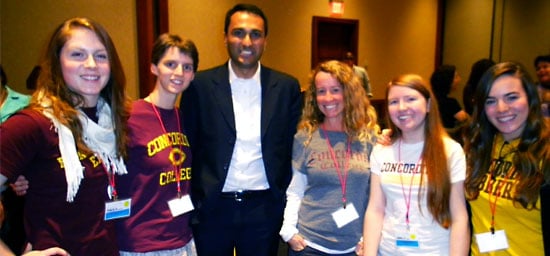 Additionally, one of the colleges of the ELCA, Concordia College, has a Forum on Faith and Life as an expression of the college’s mission “to influence the affairs of the world by sending into society thoughtful and informed men and women dedicated to the Christian life.”
The Forum on Faith and Life aims to foster a deeper, more compassionate understanding of one another and our life together, in defiance of traditional boundaries and stereotypes which all too often hinder authentic relationship.
To that end, the Forum creates exciting local and global opportunities for genuine encounter and transformative conversations with the intra-faith and interfaith neighbor.
THIS is what interfaithing Lutheranism really looks like.
There are other examples of this. These are just a few meant to illustrate that there are so many rich ways that one can be a person of faith, committed to and part of a tradition, and also have “genuine encounters and transformative conversations” with our neighbors.
Indeed we must.
Images via NY Times, ELCA, Concordia College.
Previous Post
February 7, 2013
Because God Said: Farmers, Myth & Truth
Next Post
February 12, 2013 Black History is Now
Browse Our Archives
Select a Category Abortion At the Intersections Atheism Christianity Contraception Education Feminism Gender Getting Theological Honorable Mention Islam LGBT News Our Voices Race Uncategorized
Select a Month July 2017 June 2017 May 2017 March 2017 February 2017 January 2017 August 2016 July 2016 June 2016 May 2016 April 2016 March 2016 February 2016 January 2016 December 2015 November 2015 October 2015 September 2015 August 2015 July 2015 June 2015 May 2015 April 2015 March 2015 February 2015 January 2015 December 2014 November 2014 October 2014 September 2014 August 2014 July 2014 June 2014 May 2014 April 2014 March 2014 February 2014 January 2014 December 2013 November 2013 October 2013 September 2013 August 2013 July 2013 June 2013 May 2013 April 2013 March 2013 February 2013 January 2013 December 2012 November 2012 October 2012 September 2012 August 2012 July 2012
Follow Us!
TAKE THE
Religious Wisdom Quiz
I am the root of all kinds of evil when loved. What am I?
Select your answer to see how you score.
Money Pride Greed Power
Related posts from Caryn Riswold

What I Won’t Write About Mary Daly for...

We Need To Dance at Each Other’s Weddings

Freedom & the Racialized Body: Resonances with Luther...

Active in Love: The ELCA on Faith, Sexism,...
TRENDING AT PATHEOS Progressive Christian

What Being a Modern-Day Apostle Means to Me
In my last column, I discussed the ins and outs of modern-day...

Did Ancient China Once Worship the God of...
Across human history, a common thread weaves through the origins of the...

Love Your Neighbor – Including Earth-Kin: Lev. 19,...
God’s command to love your neighbor means acting in an ethical and...

Lead a Church Study of “Jesus and Lao...
Guest writer Jack Thomas (The Irreverent Reverend) reflects on leading his church...

Pastoral Wisdom for Responding to Sermon Pushback
Getting sermon pushback on your social justice sermon? Learn practical, Proverbs-based strategies...

Principles for Understanding the Apostolic Ministry Today
Whenever people discover that my formal ministry title is "apostle," as in...
view all Progressive Christian blogs
Ad-Free & Subscriber Log-In Subscription Support
- About Us
- 2026 Calendar
- Videos
- Podcasts
- Library of World Religions
- Faith In Media Tracker
- Advertise With Us
- Write for Us
- Privacy Policy
- Terms of Service
- Do Not Sell My Data
- Contact Us
- Radiant Digital
- Manage Newsletter Subscriptions
- Unsubscribe From Notifications
- Sitemap
Copyright 2008-2026, Patheos. All rights reserved.
Subscription Support Ad-Free & Subscriber Log-In
Follow Patheos