
BuddhistCatholicContemplativeEvangelicalGeneral ChristianHinduJewishLatter-day SaintMuslimNew VisionsProgressive Christian
Beliefs
- Buddhist
- Catholic
- Contemplative
- Evangelical
- General Christian
- Hindu
- Jewish
- Latter-day Saint
- More Voices
- Muslim
- New Visions
- Pagan
- Progressive Christian
Topics
- Religion News
- Food and Religion
- Sports and Religion
- Religious Art
- Religious Music and Entertainment
- Religious Events
- History and Religion
- Style and Religion
- Politics and Religion
- Women in Religion
- Recreation Outdoors and Religion
- Business Finance and Religion
- Careers Workplace and Religion
- Education and Religion
- Family Parenting and Religion
- Health Fitness and Religion
- Home and Religion
- Relationships and Religion
- Technology and Religion
- Travel and Religion
Columnists
- Buddhist Columnists
- Business Finance and Religion Columnists
- Careers Workplace and Religion Columnists
- Catholic Columnists
- Contemplative Columnists
- Education and Religion Columnists
- Evangelists Columnists
- Family Parenting and Religion Columnists
- General Christian Columnists
- Health Fitness and Religion Columnists
- Hindu Columnists
- History and Religion Columnists
- Home and Religion Columnists
- Jewish Columnists
- More Voices Columnists
- Latter Day Columnists
- Muslim Columnists
- New Visions Columnists
- Nonreligious Columnists
- Pagan Columnists
- Politics and Religion Columnists
- Progressive Columnists
- Recreation Outdoors and Religion Columnists
- Relationships and Religion Columnists
- Religion News Columnists
- Religious Art Columnists
- Religious Events Columnists
- Religious Music and Entertainment Columnists
- Sports and Religion Columnists
- Style and Religion Columnists
- Technology and Religion Columnists
- Travel and Religion Columnists
- Women in Religion Columnists
Resource Library
- 2026 Calendar
- Library of World Religions
- The 100 Most Holy Places on Earth
- Patheos Answers
- Podcasts
- Videos
- Faith Leaders Database
- Anglican Episcopalian
- Bahai
- Baptist
- Buddhism
- Christianity
- Confucianism
- Eastern Orthodoxy
- Hinduism
- Holiness and Pentecostal
- ISKCON
- Islam
- Judaism
- Lutheran
- Methodist
- The Church of Jesus Christ of Latter-day Saints
- New Age
- Paganism
- Presbytarian and Reformed
- Protestantism
- Religion Behind the Scenes
- Roman Catholic
- Scientology
- Shia Islam
- Sikhism
- Sufism
- Sunni Islam
- Taoism
- Zen
- See all religions
Research Tools
 Ad-Free & Subscriber Log-In Subscription Support
Ad-Free & Subscriber Log-In Subscription Support
Follow Patheos 

- Trending:
- Forgiveness
- |
- Marriage
- |
- Consciousness
- |
- Death Penalty
- |
- Election
- |
- Halloween
 Caryn Riswold
- Home
- Progressive Christian
- Seneca Falls. Selma. Stonewall :: The Basics
Seneca Falls. Selma. Stonewall :: The Basics
Last updated on: January 28, 2013 at 8:30 am by Caryn Riswold
Seneca Falls. Selma. Stonewall :: The Basics 2013-01-24T09:58:14-07:00 Caryn Riswold
Patheos Explore the world's faith through different perspectives on religion and spirituality! Patheos has the views of the prevalent religions and spiritualities of the world.
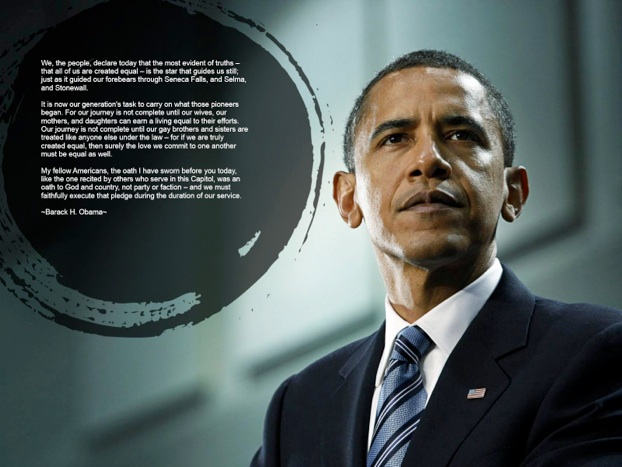 Unless you’ve actively studied the gay rights movement in the U.S., it might be possible that you’d never heard of “Stonewall” before President Barack Obama name checked it in his second inaugural address. You might have had the opportunity to learn about U.S. women’s history at some point, given that we now have such a thing as ‘women’s history month’ (March), but you might not know much about the Seneca Falls convention. My speculation is that most people know that Selma refers to a civil rights march, but how much of the detail do you know?
There has been a fair amount of analysis about the significance of that line in Obama’s speech:
“We, the people, declare today that the most evident of truths—that all of us are created equal—is the star that guides us still; just as it guided our forebears through Seneca Falls and Selma and Stonewall; just as it guided all those men and women, sung and unsung, who left footprints along this great Mall, to hear a preacher say that we cannot walk alone; to hear a King proclaim that our individual freedom is inextricably bound to the freedom of every soul on earth.”
Here is your primer – an equality 101 lesson, perhaps – so that you know exactly what he was talking about.

“In July of 1848, Elizabeth Cady Stanton and Lucretia Mott spearheaded the first women’s rights convention in American history. Although the Convention was hastily organized and hardly publicized, over 300 men and women came to Seneca Falls, New York to protest the mistreatment of women in social, economic, political, and religious life. The Declaration of Sentiments and Resolutions issued by the Convention, which was modeled after the Declaration of Independence, detailed the “injuries and usurpations” that men had inflicted upon women and demanded that women be granted all of the rights and privileges that men possessed, including the right to vote.”
“The Selma-to-Montgomery March for voting rights ended three weeks–and three
events–that represented the political and emotional peak of the modern civil rights movement. On ‘Bloody Sunday,’ March 7, 1965, some 600 civil rights marchers headed east out of Selma on U.S. Route 80. They got only as far as the Edmund Pettus Bridge six blocks away, where state and local lawmen attacked them with billy clubs and tear gas and drove them back into Selma. Two days later on March 9, Martin Luther King, Jr., led a “symbolic” march to the bridge. Then civil rights leaders sought court protection for a third, full-scale march from Selma to the state capitol in Montgomery. … On Sunday, March 21, about 3,200 marchers set out for Montgomery, walking 12 miles a day and sleeping in fields. By the time they reached the capitol on Thursday, March 25, they were 25,000-strong. Less than five months after the last of the three marches, President Lyndon Johnson signed the Voting Rights Act of 1965–the best possible redress of grievances.”
In 1969 Police raids on gay bars occurred regularly. It was illegal to serve Gay people alcohol or for Gays to dance with one another. […] At 1:20 in the morning on Saturday, June 28, 1969, eight police officers arrived at the Stonewall Inn. Approximately 200 people were in the bar that night. But the raid did not go as planned. This time the patrons refused to cooperate. … Within minutes, about 150 people had congregated outside. By the time the first patrol wagon arrived the crowd had grown to at least ten times the number of people who were arrested. A scuffle broke out when a lesbian in handcuffs was escorted to the police wagon. She fought with the police, and was hit in the head with a billy club for complaining that her handcuffs were too tight. An officer then picked her up and heaved her into the back of the wagon. That was the last straw for the already tense crowd. […]
News of the [subsequent] riot spread quickly throughout Greenwich Village and the next night, rioting again surrounded Christopher Street. Thousands of people gathered in front of the Stonewall, which had opened again, choking Christopher Street until the crowd spilled into adjoining blocks. Fires were started in garbage cans throughout the neighborhood. More than a hundred police arrived again and the street battling ensued until 4:00 in the morning. […]

I included a bit more here on Stonewall, because I think it is the least known of these three watershed moments in our struggles toward equality. Liz Halloran over at NPR has a longer description of the era and events here, including a conversation with historian and gay rights activist Martin Duberman, who remembers the events well:
Gay men in San Francisco had already been protesting their treatment at the hands of police. But, for whatever reason, he said, “Stonewall somehow became the symbol for all of this.”
From the Stonewall uprising came activists groups, gay-rights organizations, and in 1970, the first Gay Pride marches in New York and other major American cities on the anniversary of the first night of the riots.
So there you have it. By alliteratively linking these three events, President Obama effectively drew direct lines between the work for women’s equality, racial justice, and gay and lesbian rights.
It underscores the idea, attributed in variations to people ranging from Emma Lazarus and Martin Luther King Jr., to Lynard Skynard that “until we are all free, we are none of us free.”
Previous Post
January 25, 2013
Honorable Mention: Law Students for Reproductive Justice
Next Post

January 29, 2013 Justice, Compassion, Conscience & ‘Biblical Values’
Browse Our Archives
Select a Category Abortion At the Intersections Atheism Christianity Contraception Education Feminism Gender Getting Theological Honorable Mention Islam LGBT News Our Voices Race Uncategorized
Select a Month July 2017 June 2017 May 2017 March 2017 February 2017 January 2017 August 2016 July 2016 June 2016 May 2016 April 2016 March 2016 February 2016 January 2016 December 2015 November 2015 October 2015 September 2015 August 2015 July 2015 June 2015 May 2015 April 2015 March 2015 February 2015 January 2015 December 2014 November 2014 October 2014 September 2014 August 2014 July 2014 June 2014 May 2014 April 2014 March 2014 February 2014 January 2014 December 2013 November 2013 October 2013 September 2013 August 2013 July 2013 June 2013 May 2013 April 2013 March 2013 February 2013 January 2013 December 2012 November 2012 October 2012 September 2012 August 2012 July 2012
Follow Us!
TAKE THE
Religious Wisdom Quiz
What did Jesus turn over in the temple?
Select your answer to see how you score.
Scrolls Statues Lamps Tables
Related posts from Caryn Riswold

What I Won’t Write About Mary Daly for...

Freedom & the Racialized Body: Resonances with Luther...

Active in Love: The ELCA on Faith, Sexism,...
Feminist, Interfaith, Public: My Luther Year
TRENDING AT PATHEOS Progressive Christian

What Being a Modern-Day Apostle Means to Me
In my last column, I discussed the ins and outs of modern-day...

Did Ancient China Once Worship the God of...
Across human history, a common thread weaves through the origins of the...

Love Your Neighbor – Including Earth-Kin: Lev. 19,...
God’s command to love your neighbor means acting in an ethical and...

Lead a Church Study of “Jesus and Lao...
Guest writer Jack Thomas (The Irreverent Reverend) reflects on leading his church...

Pastoral Wisdom for Responding to Sermon Pushback
Getting sermon pushback on your social justice sermon? Learn practical, Proverbs-based strategies...

Principles for Understanding the Apostolic Ministry Today
Whenever people discover that my formal ministry title is "apostle," as in...
view all Progressive Christian blogs
Ad-Free & Subscriber Log-In Subscription Support
- About Us
- 2026 Calendar
- Videos
- Podcasts
- Library of World Religions
- Faith In Media Tracker
- Advertise With Us
- Write for Us
- Privacy Policy
- Terms of Service
- Do Not Sell My Data
- Contact Us
- Radiant Digital
- Manage Newsletter Subscriptions
- Unsubscribe From Notifications
- Sitemap
Copyright 2008-2026, Patheos. All rights reserved.
Subscription Support Ad-Free & Subscriber Log-In
Follow Patheos