
BuddhistCatholicContemplativeEvangelicalGeneral ChristianHinduJewishLatter-day SaintMuslimNew VisionsProgressive Christian
Beliefs
- Buddhist
- Catholic
- Contemplative
- Evangelical
- General Christian
- Hindu
- Jewish
- Latter-day Saint
- More Voices
- Muslim
- New Visions
- Pagan
- Progressive Christian
Topics
- Religion News
- Food and Religion
- Sports and Religion
- Religious Art
- Religious Music and Entertainment
- Religious Events
- History and Religion
- Style and Religion
- Politics and Religion
- Women in Religion
- Recreation Outdoors and Religion
- Business Finance and Religion
- Careers Workplace and Religion
- Education and Religion
- Family Parenting and Religion
- Health Fitness and Religion
- Home and Religion
- Relationships and Religion
- Technology and Religion
- Travel and Religion
Columnists
- Buddhist Columnists
- Business Finance and Religion Columnists
- Careers Workplace and Religion Columnists
- Catholic Columnists
- Contemplative Columnists
- Education and Religion Columnists
- Evangelists Columnists
- Family Parenting and Religion Columnists
- General Christian Columnists
- Health Fitness and Religion Columnists
- Hindu Columnists
- History and Religion Columnists
- Home and Religion Columnists
- Jewish Columnists
- More Voices Columnists
- Latter Day Columnists
- Muslim Columnists
- New Visions Columnists
- Nonreligious Columnists
- Pagan Columnists
- Politics and Religion Columnists
- Progressive Columnists
- Recreation Outdoors and Religion Columnists
- Relationships and Religion Columnists
- Religion News Columnists
- Religious Art Columnists
- Religious Events Columnists
- Religious Music and Entertainment Columnists
- Sports and Religion Columnists
- Style and Religion Columnists
- Technology and Religion Columnists
- Travel and Religion Columnists
- Women in Religion Columnists
Resource Library
- 2026 Calendar
- Library of World Religions
- The 100 Most Holy Places on Earth
- Patheos Answers
- Podcasts
- Videos
- Faith Leaders Database
- Anglican Episcopalian
- Bahai
- Baptist
- Buddhism
- Christianity
- Confucianism
- Eastern Orthodoxy
- Hinduism
- Holiness and Pentecostal
- ISKCON
- Islam
- Judaism
- Lutheran
- Methodist
- The Church of Jesus Christ of Latter-day Saints
- New Age
- Paganism
- Presbytarian and Reformed
- Protestantism
- Religion Behind the Scenes
- Roman Catholic
- Scientology
- Shia Islam
- Sikhism
- Sufism
- Sunni Islam
- Taoism
- Zen
- See all religions
Research Tools
 Ad-Free & Subscriber Log-In Subscription Support
Follow Patheos 

- Trending:
- Advent
- |
- Forgiveness
- |
- Thanksgiving
- |
- Election
- |
- Seasonal Holidays
- |
- Marriage
 Caryn Riswold
- Home
- Progressive Christian
- 47 Percent: It’s About Us
47 Percent: It’s About Us
Last updated on: September 24, 2012 at 6:00 am by Caryn Riswold
47 Percent: It’s About Us 2012-09-23T13:17:03-06:00 Caryn Riswold
Patheos Explore the world's faith through different perspectives on religion and spirituality! Patheos has the views of the prevalent religions and spiritualities of the world.
Of the many analyses of the 47% of Americans who are dependent on government programs or benefits, or not paying taxes at any one time, the most meaningful one to me is that this is not a fixed group of people. It’s not the same people year to year.
And at one point in time, it’s probably been you. I know it’s been me.
From The Washington Post:
“Politicians and commentators often talk about those who don’t pay income taxes as though they’re in a special club with lifetime membership. In fact, it’s a highly diverse group, some of whom move in and out from year to year.
When they first join the workforce, for example, young people may not earn enough to pay federal income taxes. The same is true for many of the temporarily unemployed, working parents and entrepreneurs whose businesses experience a loss. But most of these people look forward to the day, perhaps in just a year or two, when their incomes will rise and they will join or rejoin the 53 percent of Americans who do pay federal income taxes.
The reverse is true for many senior citizens: They may pay no federal income tax in retirement, but most did during their working years.”
I received a Pell grant when I was a college student. I didn’t receive the money because I was lazy or a victim. Receiving the money didn’t make me dependent. Along with the hard work of my parents and me, it helped make higher education possible. That education eventually made possible the career I now have. That career pays the mortgage, invests in my local community, hires contractors to work on home improvement projects, and foots the tax bill for the students who are now in my classroom receiving those grants themselves. Paying it forward, as Elizabeth Warren pointed out.
The year my husband and I were first married, we received an earned income tax credit. It was the year when we’d both finished master’s degrees, I was starting a doctoral program and working only part-time, and he was still seeking gainful employment in a big new city. Even the small amount that it was, a few hundred dollars, added to my part-time pay and our rapidly dwindling savings pulled us through for another month until he found that first salaried job with benefits. Getting even a small bit of aid made our attempt to forge a family and life together possible and eventually sustainable.
I could go on. Almost anyone could: Infrastructure like the interstate highway system that connects us to family in different states and time zones; federally subsidized student loans that we both received; public K-12 education and public libraries that have educated us. Even the vague notion that there might be Medicare if and when we need it decades from now. (Well, who knows …).
None of this is extraordinary and none of this represents the poverty in which too many Americans live. I’m well aware of how middle class values and systems have surrounded and supported me all of my life. And even in that life, government programs and benefits have been present at key transitional moments. These things did not create a victim or foster dependency. They did help make a lot of other things possible.
Because it’s not about you paying my bills, or me paying your bills. It’s about us. All of us. Together. It’s about basic human decency, respect, and community responsibility. So I can pay taxes to help make possible the Pell grants, earned income tax credits, and public education that your family might need.
And for a candidate whose life has in fact been about supporting people in need and giving to charitable causes through his church, a church that has a vibrant welfare services organization and food supply store house helping those in poverty and in transitional moments, Mitt Romney seems shockingly unconcerned with them as a candidate for President.
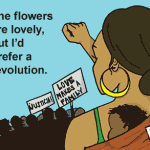
Image via.
Previous Post

September 20, 2012
At the Intersections: Sex & the Christian Campus
Next Post
September 25, 2012 Honorable Mention: Strong Families
Browse Our Archives
Select a Category Abortion At the Intersections Atheism Christianity Contraception Education Feminism Gender Getting Theological Honorable Mention Islam LGBT News Our Voices Race Uncategorized
Select a Month July 2017 June 2017 May 2017 March 2017 February 2017 January 2017 August 2016 July 2016 June 2016 May 2016 April 2016 March 2016 February 2016 January 2016 December 2015 November 2015 October 2015 September 2015 August 2015 July 2015 June 2015 May 2015 April 2015 March 2015 February 2015 January 2015 December 2014 November 2014 October 2014 September 2014 August 2014 July 2014 June 2014 May 2014 April 2014 March 2014 February 2014 January 2014 December 2013 November 2013 October 2013 September 2013 August 2013 July 2013 June 2013 May 2013 April 2013 March 2013 February 2013 January 2013 December 2012 November 2012 October 2012 September 2012 August 2012 July 2012
Follow Us!
TAKE THE
Religious Wisdom Quiz
What Old Testament law was summarized as "love your neighbor as yourself"?
Select your answer to see how you score.
Only 10th commandment The whole law Book of Leviticus only First five commandments
Related posts from Caryn Riswold

What I Won’t Write About Mary Daly for...
We Need To Dance at Each Other’s Weddings

Freedom & the Racialized Body: Resonances with Luther...

Active in Love: The ELCA on Faith, Sexism,...
TRENDING AT PATHEOS Progressive Christian

Can a Chatbot Touch Your Soul?
Can a chatbot offer genuine spiritual counsel? One conversation brought me to...

Religion and Politics: How Should We Then Live?
Two cultural axioms get repeated in polite company. Don't mix religion and...

7 Things We Get Wrong About Giving Thanks
It's a time of year when many of us turn to the...

Uncaging Truth: Spirituality Beyond Institutions
The Lost Connection: Why True Spirituality, Not Religion, Is the Key to...

Christ the King? Maybe We've Misunderstood the Crown
What do we mean when we say that Jesus is King? What...

Counter “Christ Is King” Nationalism with Christ THE...
Christ the King Sunday is an ideal time to address the heresy...
view all Progressive Christian blogs
Ad-Free & Subscriber Log-In Subscription Support
- About Us
- 2026 Calendar
- Videos
- Podcasts
- Library of World Religions
- Faith In Media Tracker
- Advertise With Us
- Write for Us
- Privacy Policy
- Terms of Service
- Do Not Sell My Data
- Contact Us
- Radiant Digital
- Manage Newsletter Subscriptions
- Unsubscribe From Notifications
- Sitemap
Copyright 2008-2026, Patheos, part of the Radiant Digital network of media brands. All rights reserved.
Subscription Support Ad-Free & Subscriber Log-In
Follow Patheos