
BuddhistCatholicContemplativeEvangelicalGeneral ChristianHinduJewishLatter-day SaintMuslimNew VisionsProgressive Christian
Beliefs
- Buddhist
- Catholic
- Contemplative
- Evangelical
- General Christian
- Hindu
- Jewish
- Latter-day Saint
- More Voices
- Muslim
- New Visions
- Pagan
- Progressive Christian
Topics
- Religion News
- Food and Religion
- Sports and Religion
- Religious Art
- Religious Music and Entertainment
- Religious Events
- History and Religion
- Style and Religion
- Politics and Religion
- Women in Religion
- Recreation Outdoors and Religion
- Business Finance and Religion
- Careers Workplace and Religion
- Education and Religion
- Family Parenting and Religion
- Health Fitness and Religion
- Home and Religion
- Relationships and Religion
- Technology and Religion
- Travel and Religion
Columnists
- Buddhist Columnists
- Business Finance and Religion Columnists
- Careers Workplace and Religion Columnists
- Catholic Columnists
- Contemplative Columnists
- Education and Religion Columnists
- Evangelists Columnists
- Family Parenting and Religion Columnists
- General Christian Columnists
- Health Fitness and Religion Columnists
- Hindu Columnists
- History and Religion Columnists
- Home and Religion Columnists
- Jewish Columnists
- More Voices Columnists
- Latter Day Columnists
- Muslim Columnists
- New Visions Columnists
- Nonreligious Columnists
- Pagan Columnists
- Politics and Religion Columnists
- Progressive Columnists
- Recreation Outdoors and Religion Columnists
- Relationships and Religion Columnists
- Religion News Columnists
- Religious Art Columnists
- Religious Events Columnists
- Religious Music and Entertainment Columnists
- Sports and Religion Columnists
- Style and Religion Columnists
- Technology and Religion Columnists
- Travel and Religion Columnists
- Women in Religion Columnists
Resource Library
- 2026 Calendar
- Library of World Religions
- The 100 Most Holy Places on Earth
- Patheos Answers
- Podcasts
- Videos
- Faith Leaders Database
- Anglican Episcopalian
- Bahai
- Baptist
- Buddhism
- Christianity
- Confucianism
- Eastern Orthodoxy
- Hinduism
- Holiness and Pentecostal
- ISKCON
- Islam
- Judaism
- Lutheran
- Methodist
- The Church of Jesus Christ of Latter-day Saints
- New Age
- Paganism
- Presbytarian and Reformed
- Protestantism
- Religion Behind the Scenes
- Roman Catholic
- Scientology
- Shia Islam
- Sikhism
- Sufism
- Sunni Islam
- Taoism
- Zen
- See all religions
Research Tools
 Ad-Free & Subscriber Log-In Subscription Support
Ad-Free & Subscriber Log-In Subscription Support
Follow Patheos 

- Trending:
- Forgiveness
- |
- Marriage
- |
- Consciousness
- |
- Death Penalty
- |
- Election
- |
- Halloween

- Home
- Contemplative
- “The Friar of Love” — Revisiting Brother Lawrence, Mystic of the Divine Presence
“The Friar of Love” — Revisiting Brother Lawrence, Mystic of the Divine Presence
Last updated on: August 23, 2022 at 9:26 pm by Guest Contributor
“The Friar of Love” — Revisiting Brother Lawrence, Mystic of the Divine Presence 2022-08-23T21:26:33-04:00 Guest Contributor
Patheos Explore the world's faith through different perspectives on religion and spirituality! Patheos has the views of the prevalent religions and spiritualities of the world.
N.B. Today’s guest post is by Carmen Acevedo Butcher, Ph.D., renowned for her luminous translation of The Cloud of Unknowing with the Book of Privy Counsel. Her latest book — a new translation of Brother Lawrence’s Practice of the Presence — will be published on Tuesday, August 23, 2022. Order your copy by clicking here.
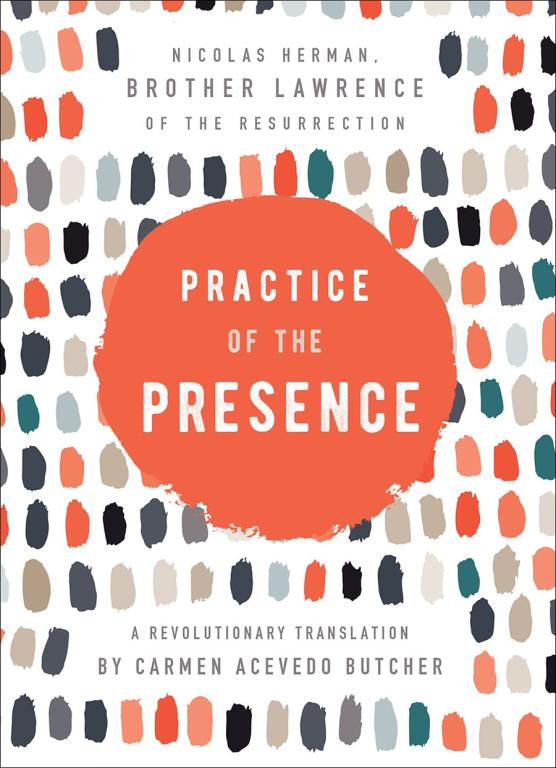
“If the little ship of our soul is still rattled and tossed by winds or by storm, let’s wake up the God who’s resting there.” Brother Lawrence’s epistolary advice to a nun 340 years ago, from Practice of the Presence, recently “set up shop” in the heart of a dear thirtysomething friend, she said.
I too am thankful for his timeless, calm wisdom in our ongoing global ‘perfect storm.’ For centuries this spiritual classic has fulfilled and transcended its Carmelite tradition. Beloved by people of all faiths, wisdom traditions, and none whatsoever, its heart beats with a returning—in micro-moments of meditation—to God, Kindness, Love, True Self, or however you conceive of Mystery.
Its author is easy on the heart too. As I translated his work from French into English, a sense of his brokenness, genuine kindness, ordinary life, and suffering humanity emerged. Because the friar developed his prayer practiceinstinctively for his own healing while experiencing profound anxiety, his book rings with equally profound authenticity.
Born Nicolas Herman in 1614 into the Third Estate of peasants, wage laborers, and bourgeoisie, he had no formal education and no advantages. Around 20 he was severely injured in the leg during the Thirty Years’ War. Leaving the military a disabled veteran, he limped in pain the rest of his long life, spending his last two years unable to walk.
Brother Lawrence shared with his good friend the priest Joseph of Beaufort that he’d also suffered terrible psychological pain. During a dark night of the soul from twenty-six to thirty-six: “He often relived in his mind the dangers of his days in military service, the emptiness and corruption of the times,” and meditated on “the disorders of his youth,” causing him “horror.”
His prayer practice first appealed to me because it made visible my earliest contemplative experiences in nature. There something in me yet inchoate kept me company kindly, out among the red-tailed hawks and tall evergreen pines of red-earthed north Georgia, wandering hours alone in search of peace, trying to process childhood trauma.
Every 4am of the first pandemic summer I got up to translate the friar’s work. Seeing the sun in with my new friend, I was drawn to this down-to-earth mystic’s exceptionally calming presence. Grieving with the ever-rising deaths non-stop narrated in global and local news and in conversations with friends who lost family, I was also teaching full-time on Zoom as I translated, trying to help my students who had catastrophic grief, deaths of loved ones, housing insecurities, food precarities, job losses, or were juggling multiple jobs and school, and other stresses.
Our cataclysmic times echo with Brother Lawrence’s century of plague, authoritarianism, inequities, wars, climate crisis, and famine. After leaving the military, the friar knew failure as a hermit, then as a Paris footman, where he says he felt like “a clumsy oaf who broke everything.”
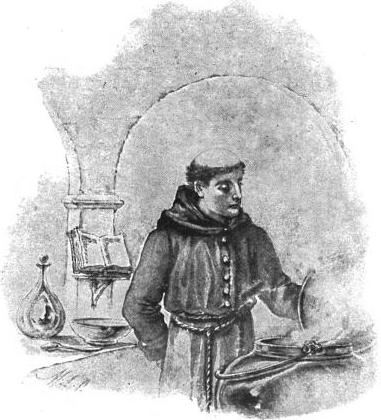
Brother Lawrence in the kitchen; anonymous engraving from ca. 1900 (public domain)
He decided to enter the monastery in Paris in the summer of 1640 as a lay brother. Taking the name Brother Lawrence of the Resurrection, he was assigned to the kitchen. He had “the strongest natural aversion” to scullery duties, but they lasted forty years. Gradually he learned to do even these “with the greatest love possible.” When standing became too much, he was reassigned to the monastery sandal shop, repairing his 100 or so brothers’ sandals.
Over time Brother Lawrence learned to pray constantly. He called it “the practice of the presence.” An “easy” and “strengthening” form of micro-prayer done on the fly, this “brief lifting up of the heart” is a simple Love-homecoming, done at any time, as often as a person can, he says.
The friar did this meditative returning-to-Love even when busiest in the kitchen flipping omelettes. Gradually, his presence prayer grew the spiritual muscles of his calmness to experience deep healing. He lived in and from an inner peace sustaining him through his last forty years, up to his death on February 12, 1691.
Contemplative seekers today find the friar’s practice of the presence helpful because it’s portable, easy-to-do, healing, and cultivates our self-compassion and community. It’s evergreen.
A moment of practicing the presence might begin with anything, an injury, a joy, a task, a cup of tea or coffee, morning sun through a window, a nagging worry, or any uncontrollable aspect of our human life. There we turn to Love, check in, then come back to the quotidian—open email, wash a dish, drive to work. Repeating this gentle returning develops our self-kindness, and empowers anyone to make a compassionate difference in our world.
Since being-good-at-it is not the point of the friar’s practice, its unconditional-love foundation makes it especially healthy in our capitalistically transactional world. He says Love always called him back when he forgot, adding: “[W]e must not get discouraged when we forget it, for any good habit is only formed with difficulty, but when it is formed, we will find contentment in all we do.” This meditative habit directly connects a person with divinity, as he reminds: “If the will can in any way understand God, it can only be through love.”
His centering on God as love is why I call him the friar d’amour.
As Joseph shares, the friar’s practice of the presence made him “gentle” during a harsh time very like our own: “Brother Lawrence was a warm, welcoming person. He gave others confidence. . . . [Y]ou felt you could tell him anything. You knew you’d found a friend.”
Friendship and peace are what this book offers. My translation of Practice of the Presence gives a wide range of readers access for the first time to the complete Brother Lawrence, who models developing calmness like a muscle.
The kindest teacher, Brother Lawrence reassures all: “In the middle of your tasks you can comfort yourself with Love as often as you can. . . . Everyone is capable of these familiar conversations with God.”
“Let’s begin.”

Carmen Acevedo Butcher
Carmen Acevedo Butcher, Ph.D., is an author, teacher, poet, and an award-winning translator of spiritual texts. Her dynamic work has garnered interest from various media, including the BBC and NPR’s Morning Edition. A Carnegie Foundation Professor of the Year and Fulbright Senior Lecturer, Acevedo Butcher’s work in translation has made accessible works by such writers as The Cloud‘s Anonymous, Hildegard of Bingen, and Julian of Norwich. Her revolutionary translation of Brother Lawrence’s Practice of the Presence releases August 2022 from Broadleaf Books. She currently teaches full-time at the University of California, Berkeley, in the College Writing Programs.
Practice of the Presence of God
Previous Post

August 6, 2022
Memento Mori: The Contemplation of Death and the Wonder of Life
Next Post

September 15, 2022 Happy Birthday, Dawn Treader!
Browse Our Archives
Select a Category Activism Announcements Art Books Catholicism Celtic Christianity Christian mysticism Christianity Contemplation Current events Etc. Family humor interfaith dialogue Interfaith Wisdom Interspirituality Lay Cistercians Living the Faith Meditation movies Mysticism Mystics nature Poetry Reviews Scripture silence Spirituality Uncategorized Writing
Select a Month February 2025 January 2025 November 2024 September 2024 August 2024 July 2024 June 2024 May 2024 March 2024 January 2024 December 2023 November 2023 August 2023 June 2023 April 2023 March 2023 February 2023 January 2023 December 2022 November 2022 October 2022 September 2022 August 2022 July 2022 June 2022 May 2022 April 2022 February 2022 January 2022 December 2021 November 2021 October 2021 September 2021 August 2021 July 2021 June 2021 May 2021 April 2021 March 2021 February 2021 January 2021 December 2020 November 2020 October 2020 September 2020 August 2020 July 2020 June 2020 May 2020 April 2020 March 2020 February 2020 January 2020 December 2019 November 2019 October 2019 September 2019 August 2019 July 2019 June 2019 May 2019 April 2019 March 2019 February 2019 January 2019 December 2018 November 2018 October 2018 September 2018 August 2018 July 2018 June 2018 May 2018 April 2018 March 2018 February 2018 January 2018 December 2017 November 2017 October 2017 September 2017 August 2017 July 2017 June 2017 May 2017 April 2017 March 2017 February 2017 January 2017 December 2016 November 2016 October 2016 September 2016 August 2016 July 2016 June 2016 May 2016 March 2016 February 2016 January 2016 December 2015 November 2015 October 2015 September 2015 August 2015 July 2015 June 2015 May 2015 April 2015 March 2015 February 2015 January 2015 December 2014 November 2014 October 2014 September 2014 August 2014 July 2014 June 2014 May 2014 April 2014 March 2014 February 2014 January 2014 December 2013 October 2013 September 2013 July 2013 May 2013 January 2013 December 2012 November 2012 August 2012 July 2012 June 2012 March 2012 December 2011 September 2011 October 2010 August 2010 March 2010 September 2009 July 2008 January 2008 December 2007 September 2007 February 2007 January 2007 December 2004
Follow Us!
TAKE THE
Religious Wisdom Quiz
What does the name "Daniel" mean?
Select your answer to see how you score.
God is my strength God is my judge Chosen one The Lord is my shepherd
Support this
Column


Related posts from Carl McColman

You don't have to become a monk to...

Mysticism, Faith, and "Knowing" God's Will


Contemplative Books to Read and Savor During Advent...
TRENDING AT PATHEOS Contemplative

Handy Contemplative Practices for Political Spaces
A Spiritually Grounded Presence In order to bring a spiritually grounded presence...

Halloween: The Holiday of Loving Your Neighbor
All Hallows Eve Is Halloween the least Christian holiday in America, or...

Can Love Be Saved? Some Thoughts on the...
Happy Valentine's Day! I recently published a post on Patreon called Can...

"This Loving, Uniting Embrace": the Holy Ordinary
Today's guest post is by Mark Longhurst, author of The Holy Ordinary:...

How Are We Called to Live?: More About...
How Are We Called to Live? Many of us struggle with discerning...

A Spiritual Practice of Reading: Join Us Online
A Spiritual Practice of Reading A healthy spiritual practice of reading is...
view all Contemplative blogs
Ad-Free & Subscriber Log-In Subscription Support
- About Us
- 2026 Calendar
- Videos
- Podcasts
- Library of World Religions
- Faith In Media Tracker
- Advertise With Us
- Write for Us
- Privacy Policy
- Terms of Service
- Do Not Sell My Data
- Contact Us
- Radiant Digital
- Manage Newsletter Subscriptions
- Unsubscribe From Notifications
- Sitemap
Copyright 2008-2026, Patheos. All rights reserved.
Subscription Support Ad-Free & Subscriber Log-In
Follow Patheos