
BuddhistCatholicContemplativeEvangelicalGeneral ChristianHinduJewishLatter-day SaintMuslimNew VisionsProgressive Christian
Beliefs
- Buddhist
- Catholic
- Contemplative
- Evangelical
- General Christian
- Hindu
- Jewish
- Latter-day Saint
- More Voices
- Muslim
- New Visions
- Pagan
- Progressive Christian
Topics
- Religion News
- Food and Religion
- Sports and Religion
- Religious Art
- Religious Music and Entertainment
- Religious Events
- History and Religion
- Style and Religion
- Politics and Religion
- Women in Religion
- Recreation Outdoors and Religion
- Business Finance and Religion
- Careers Workplace and Religion
- Education and Religion
- Family Parenting and Religion
- Health Fitness and Religion
- Home and Religion
- Relationships and Religion
- Technology and Religion
- Travel and Religion
Columnists
- Buddhist Columnists
- Business Finance and Religion Columnists
- Careers Workplace and Religion Columnists
- Catholic Columnists
- Contemplative Columnists
- Education and Religion Columnists
- Evangelists Columnists
- Family Parenting and Religion Columnists
- General Christian Columnists
- Health Fitness and Religion Columnists
- Hindu Columnists
- History and Religion Columnists
- Home and Religion Columnists
- Jewish Columnists
- More Voices Columnists
- Latter Day Columnists
- Muslim Columnists
- New Visions Columnists
- Nonreligious Columnists
- Pagan Columnists
- Politics and Religion Columnists
- Progressive Columnists
- Recreation Outdoors and Religion Columnists
- Relationships and Religion Columnists
- Religion News Columnists
- Religious Art Columnists
- Religious Events Columnists
- Religious Music and Entertainment Columnists
- Sports and Religion Columnists
- Style and Religion Columnists
- Technology and Religion Columnists
- Travel and Religion Columnists
- Women in Religion Columnists
Resource Library
- 2026 Calendar
- Library of World Religions
- The 100 Most Holy Places on Earth
- Patheos Answers
- Podcasts
- Videos
- Faith Leaders Database
- Anglican Episcopalian
- Bahai
- Baptist
- Buddhism
- Christianity
- Confucianism
- Eastern Orthodoxy
- Hinduism
- Holiness and Pentecostal
- ISKCON
- Islam
- Judaism
- Lutheran
- Methodist
- The Church of Jesus Christ of Latter-day Saints
- New Age
- Paganism
- Presbytarian and Reformed
- Protestantism
- Religion Behind the Scenes
- Roman Catholic
- Scientology
- Shia Islam
- Sikhism
- Sufism
- Sunni Islam
- Taoism
- Zen
- See all religions
Research Tools
 Ad-Free & Subscriber Log-In Subscription Support
Ad-Free & Subscriber Log-In Subscription Support
Follow Patheos 

- Trending:
- Forgiveness
- |
- Marriage
- |
- Consciousness
- |
- Death Penalty
- |
- Election
- |
- Halloween

- Home
- Contemplative
- How to be a Contemplative in Today’s Political Climate
How to be a Contemplative in Today’s Political Climate
Last updated on: July 22, 2022 at 7:24 pm by Carl "Skye" McColman
How to be a Contemplative in Today’s Political Climate 2022-07-22T19:24:56-04:00 Carl "Skye" McColman
Patheos Explore the world's faith through different perspectives on religion and spirituality! Patheos has the views of the prevalent religions and spiritualities of the world.
I was speaking recently with one of my Patreon supporters (Patreon is a crowdfunding program to support writers, bloggers, musicians, etc. This blog is made possible by the generous people who support it through Patreon).
She asked me a blunt question.
How do you do it? How do you, as someone who writes about contemplation, respond to the political moment that we find ourselves in?
Such an important and vital query, and not one easily answered!
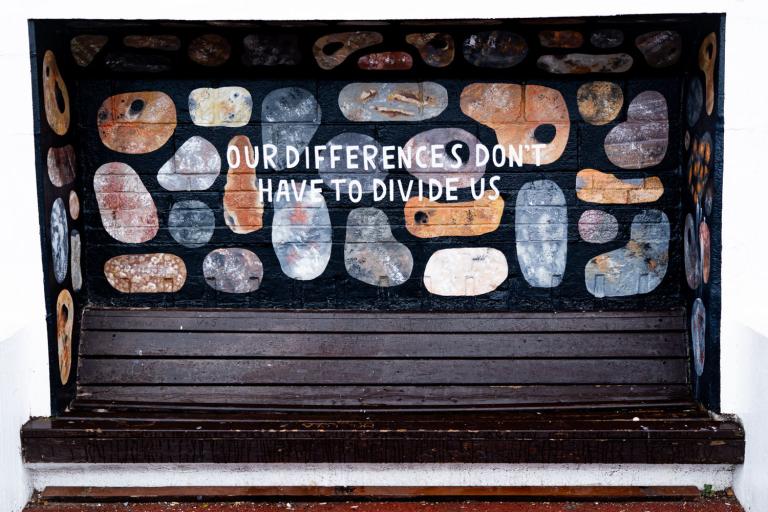
When I first started this blog (almost 20 years ago now!) I very much tried to avoid writing about politics, not because I lacked conviction (believe me, I have strong views) but because I believed that prayer and mysticism are topics for everyone, not just people who vote like I do. I did not trust my own ability as a writer to persuade people in terms of core political values or perspectives. I largely still feel that way: I believe some of us are neurologically wired to be conservative, and others are wired to be liberal; I believe God made us that way and in a democracy we have to figure out how to get along.
But over the years that I’ve been writing, I have watched the train wreck that is American politics — aided and abetted by an increasingly partisan media and the divisive nature of social media — foster what seems to be at least the image of Americans getting more and more hostile toward our political opponents. Of course, I have to remind myself that the image of America becoming increasingly divided might not always be the reality — if we look back to the 1930s or the 1960s, we can see the same kind of civil unrest and extremism (complete with violence) that seems to be bedeviling us today. When it comes right down to it, the Weather Underground of the 1960s and the Proud Boys of today are practically mirror images of each other, both supremely convinced of the rightness of their cause, both frighteningly unafraid to employ violence, or at least the threat of violence, in the service of their political aims.
But even if we can take some small comfort in the idea that America is no more divided today than it’s always been, my patron’s question still remains. How can we meet the political conflicts of this time (or any time) with the heart of a contemplative?
Here are just a few thoughts.
- Don’t demonize one another. Just a cursory glance through social media sites like Twitter and Facebook reveal a disturbing tendency across the political spectrum: for people to express contempt and even hatred toward those with whom we disagree. I understand how angry we can get when we feel so passionately about an issue — especially when current legislation, court decisions, or public opinion is opposed to “our” view. Such anger can lead to a sense that the other side is not just wrong, they’re… well, evil, demonic. For contemplatives, demonizing your opponent flies in the face of the conviction that all people bear the divine image and likeness. Demonizing others can lead to violence or abuse. Unless we want political violence like the 1969 “Days of Rage” or the January 6 insurrection to recur again and again, we all have to find a way to fight for what we believe is right, without fighting against our opponents as “bad” people.
- Tell your story — and be honest about how we see things differently. I believe the only way we are going to find a way forward out of our divided political climate is for people who disagree politically to begin talking, in person — around family rooms, dinner tables, and other “real life” settings. Posting clever social media posts where we “own the liberals” or “own the conservatives” creates heat but not light. We have to meet eye to eye, and find ways to tell our stories to one another. This is not easy to do, and many of us who are contemplatives tend to be introverts and conflict-avoidant. But if people of good will do not learn how to come together, then we are abdicating the political conversation in our society to the extremists (on both sides). And we all know where the extremists will take us. But how do we talk about disagreements? We have to learn to say “I see things differently.” Telling your story needs to be about your story, not about how everyone else is so wrong. If you see the world differently than someone who votes differently, we need to find ways to talk about those different perspectives.
- Listen to one another with discernment. There’s no point in telling our stories if we also cannot practice the art of listening to one another. Once again, this may be difficult, particularly when people are separated by economic status, education level, skin color, gender, sexuality, religious belief, and other values. But again, the question is: how do we as contemplatives navigate our political divides? Contemplatives practice the art of listening-as-prayer, so we need to apply that to the challenging matter of listening to those whose life experiences are very much unlike our own. Listening does not mean uncritically accepting everything anyone says, of course. We need to learn how to listen with a sense of discernment, a willingness to consider conflicting viewpoints in light of the larger questions of what is good, what is true, what is best for society as a whole.
- We need to emphasize our common ground. We all know how social, political, economic, religious and other divisions seem to erect barriers between different groups of people. But if we let those divisions have the final say, then we are just condemning ourselves and our society to a never-ending cycle of mistrust and suspicion. We have to find ways to relate to one another, in spite of our deep divisions. One way to do this — and again, this needs to happen on the local level, in person — is to balance our concern over what divides us with an appreciation for what unites us. We all want a world where our children can thrive. We all want safety, freedom, and the capacity to enjoy the fruit of our labors. We all want clean air, clean water, affordable housing, accessible healthcare, and civil liberties. We have to keep reminding ourselves, and each other, that what unites us matters just as much as what divides us, and our common ground provides us a powerful incentive to work together for the common good.
- Be patient when possible. I know that many of the hottest issues our society faces are not only divisive, but carry a sense of urgency — we can see how people can be harmed or even might die because of specific policy decisions. Naturally, we will fight more aggressively when the matter at hand is urgent. But there is also a long game in politics that we should not ignore, even in the midst of many pressing issues. We need to patiently work on how we can establish or restore civility, neighborly good will, long term policies that benefit us all, and other goals that may take years or even decades to accomplish. Patience, perseverance, resilience, and fortitude are not just abstract virtues — they are necessary qualities to keeping society healthy and productive over time. Martin Luther King Jr. was known to quote the 19th century Unitarian minister Theodore Parker, who said “The arc of the moral universe is long, but it bends toward justice.” Trusting that long arc — and working to support it — is just as important politically as fighting for the life-or-death issues facing us today.
- Speak with courage and conviction: but also be humble. Here I’m really restating #s 2 and 3 above. It’s been said that we need to speak the truth, even if our voice shakes. Amen to that. Political progress is not made by people keeping their opinions to themselves! But contemplative spirituality with its roots in monasticism understands the importance of humility — in other words, recognizing that we don’t always know everything, or have all the answers, or have everything figured out. And “we” refers not only to us as individuals, but also to our political party or “side” as well. Humility seems to be in terribly short supply these days. Maybe contemplatives can model a generous politics of humility, by being willing to say “I wonder” and “I don’t know” when such is the case.
- Keep praying. I know that “thoughts and prayers” has become a loaded phrase, thanks to the question of how best to prevent gun violence in America. I agree that our thoughts and prayers should never be something we do to avoid the important and necessary action that we need to take to address the problems we face. But I also believe it’s just as dangerous to act without prayer (or, at least, without careful contemplation). Yes, in emergencies we have to act quickly — which is why we need to be contemplative every day. Cultivating a spirit of thoughtful listening, compassionate wonder, willing silence, and heartfelt desire to enact the will of Divine compassion, mercy and justice — once again, this is something we all need to be doing, but perhaps contemplative practitioners can lead the way.

I’m afraid this post will strike some people as pollyannish, but I believe we have to hope for the best, and to proclaim that hope so that it can guide us even when we have to make difficult decisions.
So, back to my patron’s question. These are the points I keep in mind as I attempt to maintain a contemplative approach to the political challenges of our time. Please let me know if you see things differently — or if you have additional suggestions on how contemplatives can contribute to improving the political climate in today’s world.

Previous Post

June 28, 2022
Encountering Christian Mysticism with the "Mystics and Skeptics" Podcast

Browse Our Archives
Select a Category Activism Announcements Art Books Catholicism Celtic Christianity Christian mysticism Christianity Contemplation Current events Etc. Family humor interfaith dialogue Interfaith Wisdom Interspirituality Lay Cistercians Living the Faith Meditation movies Mysticism Mystics nature Poetry Reviews Scripture silence Spirituality Uncategorized Writing
Select a Month February 2025 January 2025 November 2024 September 2024 August 2024 July 2024 June 2024 May 2024 March 2024 January 2024 December 2023 November 2023 August 2023 June 2023 April 2023 March 2023 February 2023 January 2023 December 2022 November 2022 October 2022 September 2022 August 2022 July 2022 June 2022 May 2022 April 2022 February 2022 January 2022 December 2021 November 2021 October 2021 September 2021 August 2021 July 2021 June 2021 May 2021 April 2021 March 2021 February 2021 January 2021 December 2020 November 2020 October 2020 September 2020 August 2020 July 2020 June 2020 May 2020 April 2020 March 2020 February 2020 January 2020 December 2019 November 2019 October 2019 September 2019 August 2019 July 2019 June 2019 May 2019 April 2019 March 2019 February 2019 January 2019 December 2018 November 2018 October 2018 September 2018 August 2018 July 2018 June 2018 May 2018 April 2018 March 2018 February 2018 January 2018 December 2017 November 2017 October 2017 September 2017 August 2017 July 2017 June 2017 May 2017 April 2017 March 2017 February 2017 January 2017 December 2016 November 2016 October 2016 September 2016 August 2016 July 2016 June 2016 May 2016 March 2016 February 2016 January 2016 December 2015 November 2015 October 2015 September 2015 August 2015 July 2015 June 2015 May 2015 April 2015 March 2015 February 2015 January 2015 December 2014 November 2014 October 2014 September 2014 August 2014 July 2014 June 2014 May 2014 April 2014 March 2014 February 2014 January 2014 December 2013 October 2013 September 2013 July 2013 May 2013 January 2013 December 2012 November 2012 August 2012 July 2012 June 2012 March 2012 December 2011 September 2011 October 2010 August 2010 March 2010 September 2009 July 2008 January 2008 December 2007 September 2007 February 2007 January 2007 December 2004
Follow Us!
TAKE THE
Religious Wisdom Quiz
Which giant Philistine did David defeat with a sling and a stone?
Select your answer to see how you score.
Og Agag Goliath Ishbi-Benob
Support this
Column


Related posts from Carl McColman

Can Love Be Saved? Some Thoughts on the...


Join Me for "24 Meditations for 2024"

LSD, Anxiety, and Contemplation: Can Psychedelic Therapy Support...
TRENDING AT PATHEOS Contemplative

Handy Contemplative Practices for Political Spaces
A Spiritually Grounded Presence In order to bring a spiritually grounded presence...

Halloween: The Holiday of Loving Your Neighbor
All Hallows Eve Is Halloween the least Christian holiday in America, or...

Can Love Be Saved? Some Thoughts on the...
Happy Valentine's Day! I recently published a post on Patreon called Can...

"This Loving, Uniting Embrace": the Holy Ordinary
Today's guest post is by Mark Longhurst, author of The Holy Ordinary:...

How Are We Called to Live?: More About...
How Are We Called to Live? Many of us struggle with discerning...

A Spiritual Practice of Reading: Join Us Online
A Spiritual Practice of Reading A healthy spiritual practice of reading is...
view all Contemplative blogs
Ad-Free & Subscriber Log-In Subscription Support
- About Us
- 2026 Calendar
- Videos
- Podcasts
- Library of World Religions
- Faith In Media Tracker
- Advertise With Us
- Write for Us
- Privacy Policy
- Terms of Service
- Do Not Sell My Data
- Contact Us
- Radiant Digital
- Manage Newsletter Subscriptions
- Unsubscribe From Notifications
- Sitemap
Copyright 2008-2026, Patheos. All rights reserved.
Subscription Support Ad-Free & Subscriber Log-In
Follow Patheos