
BuddhistCatholicContemplativeEvangelicalGeneral ChristianHinduJewishLatter-day SaintMuslimNew VisionsProgressive Christian
Beliefs
- Buddhist
- Catholic
- Contemplative
- Evangelical
- General Christian
- Hindu
- Jewish
- Latter-day Saint
- More Voices
- Muslim
- New Visions
- Pagan
- Progressive Christian
Topics
- Religion News
- Food and Religion
- Sports and Religion
- Religious Art
- Religious Music and Entertainment
- Religious Events
- History and Religion
- Style and Religion
- Politics and Religion
- Women in Religion
- Recreation Outdoors and Religion
- Business Finance and Religion
- Careers Workplace and Religion
- Education and Religion
- Family Parenting and Religion
- Health Fitness and Religion
- Home and Religion
- Relationships and Religion
- Technology and Religion
- Travel and Religion
Columnists
- Buddhist Columnists
- Business Finance and Religion Columnists
- Careers Workplace and Religion Columnists
- Catholic Columnists
- Contemplative Columnists
- Education and Religion Columnists
- Evangelists Columnists
- Family Parenting and Religion Columnists
- General Christian Columnists
- Health Fitness and Religion Columnists
- Hindu Columnists
- History and Religion Columnists
- Home and Religion Columnists
- Jewish Columnists
- More Voices Columnists
- Latter Day Columnists
- Muslim Columnists
- New Visions Columnists
- Nonreligious Columnists
- Pagan Columnists
- Politics and Religion Columnists
- Progressive Columnists
- Recreation Outdoors and Religion Columnists
- Relationships and Religion Columnists
- Religion News Columnists
- Religious Art Columnists
- Religious Events Columnists
- Religious Music and Entertainment Columnists
- Sports and Religion Columnists
- Style and Religion Columnists
- Technology and Religion Columnists
- Travel and Religion Columnists
- Women in Religion Columnists
Resource Library
- 2026 Calendar
- Library of World Religions
- The 100 Most Holy Places on Earth
- Patheos Answers
- Podcasts
- Videos
- Faith Leaders Database
- Anglican Episcopalian
- Bahai
- Baptist
- Buddhism
- Christianity
- Confucianism
- Eastern Orthodoxy
- Hinduism
- Holiness and Pentecostal
- ISKCON
- Islam
- Judaism
- Lutheran
- Methodist
- The Church of Jesus Christ of Latter-day Saints
- New Age
- Paganism
- Presbytarian and Reformed
- Protestantism
- Religion Behind the Scenes
- Roman Catholic
- Scientology
- Shia Islam
- Sikhism
- Sufism
- Sunni Islam
- Taoism
- Zen
- See all religions
Research Tools
 Ad-Free & Subscriber Log-In Subscription Support
Ad-Free & Subscriber Log-In Subscription Support
Follow Patheos 

- Trending:
- Forgiveness
- |
- Marriage
- |
- Consciousness
- |
- Death Penalty
- |
- Election
- |
- Halloween

- Home
- Contemplative
- Divine Union is Embodied: Notes on the Incarnational Nature of Christian Mysticism
Divine Union is Embodied: Notes on the Incarnational Nature of Christian Mysticism
Last updated on: April 6, 2022 at 1:14 pm by Carl "Skye" McColman
Divine Union is Embodied: Notes on the Incarnational Nature of Christian Mysticism 2022-04-06T13:14:09-04:00 Carl "Skye" McColman
Patheos Explore the world's faith through different perspectives on religion and spirituality! Patheos has the views of the prevalent religions and spiritualities of the world.
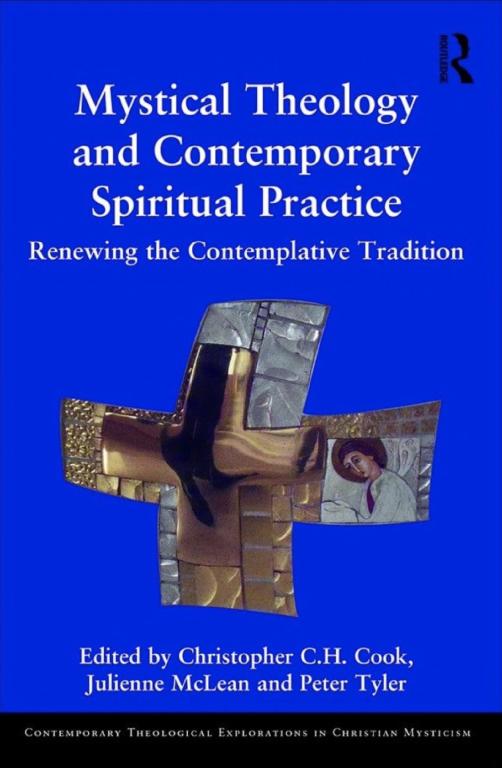
I’ve been working my way through Mystical Theology and Contemporary Spiritual Practice: Renewing the Contemplative Tradition, a book in Routledge’s “Contemporary Theological Explorations in Mysticism” series. There’s a delightful essay in it called “Unlikely Mystics” about the sense of wonder and numinous reality that people encounter when visiting medieval cathedrals. Based on her research at Durham Cathedral in England, author Rosalind Brown describes the cathedral as “mystical space for ordinary people.” Telling the story of a visitor to the cathedral who had two very different experiences of the building at different points in her life, Brown makes this observation:
Mystical experience is not entirely from beyond ourselves; in an incarnational faith it incorporates our humanity, our particularity, into the life of the Trinitarian God.
I agree wholeheartedly.
Mysticism — at least, theistic mysticism — is about relationship. We often think that mysticism is about experience (we equate “mystical experience” with peak or ecstatic moments), or about consciousness (what makes a mystical experience “mystical” is how it represents an enlarging or enlightening of awareness, an “in-rushing” of divine union or sacred presence). Those are certainly meaningful categories for understanding or exploring the landscape of mystical spirituality. But theistic mysticism — God-centered or divine mysticism — always anchors experience and consciousness, no matter how beautiful or illuminating, in relationship — specifically the relationship between the creature (the person) and the Creator (God, for lack of a better word).
So much of the language of mystical experience/consciousness/relationship is unitive or nondual in nature: “one with God,” “divine union,” “God and I are not-two” — but the reason why such language is even necessary stems from the fact that we have a pervasive sense of the otherness of God/The Mystery: the nondual unitive theosis (“en-God-dening”) of mysticism has to be talked about because it represents a rupture or transformation of the all-too-common experience of God-as-separate. And while we can argue that such a sense of separation is wrong, or misguided, or incomplete, for many people, it simply is. And I think there’s nothing to be gained for shaming those for whom God is encountered as “other.” Instead, let’s see this for what it is: a splendid and beautiful opportunity to be in relationship with the divine other, even if such a relationship ultimately leads to a recognition that “God” and “I” have been one all along!
So the heart of mysticism, divine union, is relational. But it’s not just a spirit-to-spirit or mind-to-mind nonduality. Again, speaking at least in a Christian sense, the relational nature of mysticism is an embodied or incarnational relationship. We do not just imagine that we are one with God — we embody it. We bring our own selves into the relationship: the fullness of our selves, mind, spirit and body.
So this is why you and I can both visit a sacred site, like a monastery or a holy well or a shrine associated with a mystic, and one of us has a luminous sense of divine presence while the other one was left unmoved. God is not playing favorites here, as much as it might seem like that. Nor is the Mystery “rewarding” one person while ignoring the other.
Rather, there are a host of variables at play here: a person’s capacity for belief and wonder, their emotional state, their need or desire for a sense of divine presence, and maybe even the inscrutable mystery of God’s own designs (it is possible that for some people a mystical experience or sense of encounter with the divine could be frightening, or ego-inflating, or in some other way counter-indicated for the good of that person’s soul).
The common theme here is that the fullness of the human being matters when it comes to mystical spirituality: my body, my mind, my soul, my beliefs, my feelings: all have a part to play in the “particularity” of how I encounter the Trinitarian God.
More than once in a my life, I have been at a particular place and have enjoyed a surprising and meaningful sense of God’s loving and beautiful presence. Then, a year or a quarter-century later, I return to that particular location, only to find that my experience of it is remarkably different the second time around. Does this mean I am somehow “less worthy”? Or that there is a capricious randomness to mysticism that makes any sense of the presence of God completely unpredictable? I suppose you could make the case for either of these interpretations.
But I prefer to think of it this way: mysticism means relationship: the human encounter with the mystery we call God. Like all relationships, I can never fully be in control of this encounter. All I can do is try to bring myself as fully and consciously to the encounter as I can. But even there, I never have full control over the mystery of my own being, let alone God’s! Issues concerning my health, wellness, emotional state, physical fitness, experience of illness or trauma, etc. etc. are often partially or fully outside my control. So all I really can do is to do my best to show up — and then experience what ever it is I am available to experience.
Mystically speaking, we “show up” by praying. By opening our hearts and minds and souls to meditation, to contemplation. We make ourselves available and we consent to the hidden mystery of the divine presence. Then, we experience whatever we experience. Maybe “nothing.” Maybe simply a sense of yearning or hope. Maybe boredom or a sense of fidgety unease. And maybe a sense of euphoria, or happiness, or rapture, or ecstasy, or boundary-dissolving union.
This is why the mystics tell us not to over-focus on experience. Maybe the key is, don’t waste time and energy judging or evaluating our experience (or lack thereof). Let God meet us in our bodies, in our particular places, just as we are. And then trust whatever happens (or doesn’t happen) as just what the God-human relationship needs, at that place in space and team. Trust the particularity of the mystical encounter, no matter how hidden it may be. Let our humanity, our “contribution” to the mystical encounter, be what it is: and let God receive that gift as God gives God’s own immeasurable gifts to us. In this gift-encountering-gift, the mystery happens: no matter what we feel or experience.
Yes, mysticism involves the mind, the imagination, the heart. But it also involves the body. Your body is the “location” of your relationship with God. It truly is, therefore, a temple of the Holy.
Enjoy reading this blog?
Click here to become a patron.



Browse Our Archives
Select a Category Activism Announcements Art Books Catholicism Celtic Christianity Christian mysticism Christianity Contemplation Current events Etc. Family humor interfaith dialogue Interfaith Wisdom Interspirituality Lay Cistercians Living the Faith Meditation movies Mysticism Mystics nature Poetry Reviews Scripture silence Spirituality Uncategorized Writing
Select a Month February 2025 January 2025 November 2024 September 2024 August 2024 July 2024 June 2024 May 2024 March 2024 January 2024 December 2023 November 2023 August 2023 June 2023 April 2023 March 2023 February 2023 January 2023 December 2022 November 2022 October 2022 September 2022 August 2022 July 2022 June 2022 May 2022 April 2022 February 2022 January 2022 December 2021 November 2021 October 2021 September 2021 August 2021 July 2021 June 2021 May 2021 April 2021 March 2021 February 2021 January 2021 December 2020 November 2020 October 2020 September 2020 August 2020 July 2020 June 2020 May 2020 April 2020 March 2020 February 2020 January 2020 December 2019 November 2019 October 2019 September 2019 August 2019 July 2019 June 2019 May 2019 April 2019 March 2019 February 2019 January 2019 December 2018 November 2018 October 2018 September 2018 August 2018 July 2018 June 2018 May 2018 April 2018 March 2018 February 2018 January 2018 December 2017 November 2017 October 2017 September 2017 August 2017 July 2017 June 2017 May 2017 April 2017 March 2017 February 2017 January 2017 December 2016 November 2016 October 2016 September 2016 August 2016 July 2016 June 2016 May 2016 March 2016 February 2016 January 2016 December 2015 November 2015 October 2015 September 2015 August 2015 July 2015 June 2015 May 2015 April 2015 March 2015 February 2015 January 2015 December 2014 November 2014 October 2014 September 2014 August 2014 July 2014 June 2014 May 2014 April 2014 March 2014 February 2014 January 2014 December 2013 October 2013 September 2013 July 2013 May 2013 January 2013 December 2012 November 2012 August 2012 July 2012 June 2012 March 2012 December 2011 September 2011 October 2010 August 2010 March 2010 September 2009 July 2008 January 2008 December 2007 September 2007 February 2007 January 2007 December 2004
Follow Us!
TAKE THE
Religious Wisdom Quiz
What occupation did Peter, Andrew, James, and John have before following Jesus?
Select your answer to see how you score.
Fishermen Scribes Tax collectors Politicians
Support this
Column


Related posts from Carl McColman

"This Loving, Uniting Embrace": the Holy Ordinary

I Believe Prayer Changes Things. Here's a Few...

If You Worship an Angry God, You'll Be...

The Difference Between Apophatic and Kataphatic Spirituality
TRENDING AT PATHEOS Contemplative

Handy Contemplative Practices for Political Spaces
A Spiritually Grounded Presence In order to bring a spiritually grounded presence...

Halloween: The Holiday of Loving Your Neighbor
All Hallows Eve Is Halloween the least Christian holiday in America, or...

Can Love Be Saved? Some Thoughts on the...
Happy Valentine's Day! I recently published a post on Patreon called Can...

"This Loving, Uniting Embrace": the Holy Ordinary
Today's guest post is by Mark Longhurst, author of The Holy Ordinary:...

How Are We Called to Live?: More About...
How Are We Called to Live? Many of us struggle with discerning...

A Spiritual Practice of Reading: Join Us Online
A Spiritual Practice of Reading A healthy spiritual practice of reading is...
view all Contemplative blogs
Ad-Free & Subscriber Log-In Subscription Support
- About Us
- 2026 Calendar
- Videos
- Podcasts
- Library of World Religions
- Faith In Media Tracker
- Advertise With Us
- Write for Us
- Privacy Policy
- Terms of Service
- Do Not Sell My Data
- Contact Us
- Radiant Digital
- Manage Newsletter Subscriptions
- Unsubscribe From Notifications
- Sitemap
Copyright 2008-2026, Patheos. All rights reserved.
Subscription Support Ad-Free & Subscriber Log-In
Follow Patheos