
BuddhistCatholicContemplativeEvangelicalGeneral ChristianHinduJewishLatter-day SaintMuslimNew VisionsProgressive Christian
Beliefs
- Buddhist
- Catholic
- Contemplative
- Evangelical
- General Christian
- Hindu
- Jewish
- Latter-day Saint
- More Voices
- Muslim
- New Visions
- Pagan
- Progressive Christian
Topics
- Religion News
- Food and Religion
- Sports and Religion
- Religious Art
- Religious Music and Entertainment
- Religious Events
- History and Religion
- Style and Religion
- Politics and Religion
- Women in Religion
- Recreation Outdoors and Religion
- Business Finance and Religion
- Careers Workplace and Religion
- Education and Religion
- Family Parenting and Religion
- Health Fitness and Religion
- Home and Religion
- Relationships and Religion
- Technology and Religion
- Travel and Religion
Columnists
- Buddhist Columnists
- Business Finance and Religion Columnists
- Careers Workplace and Religion Columnists
- Catholic Columnists
- Contemplative Columnists
- Education and Religion Columnists
- Evangelists Columnists
- Family Parenting and Religion Columnists
- General Christian Columnists
- Health Fitness and Religion Columnists
- Hindu Columnists
- History and Religion Columnists
- Home and Religion Columnists
- Jewish Columnists
- More Voices Columnists
- Latter Day Columnists
- Muslim Columnists
- New Visions Columnists
- Nonreligious Columnists
- Pagan Columnists
- Politics and Religion Columnists
- Progressive Columnists
- Recreation Outdoors and Religion Columnists
- Relationships and Religion Columnists
- Religion News Columnists
- Religious Art Columnists
- Religious Events Columnists
- Religious Music and Entertainment Columnists
- Sports and Religion Columnists
- Style and Religion Columnists
- Technology and Religion Columnists
- Travel and Religion Columnists
- Women in Religion Columnists
Resource Library
- 2026 Calendar
- Library of World Religions
- The 100 Most Holy Places on Earth
- Patheos Answers
- Podcasts
- Videos
- Faith Leaders Database
- Anglican Episcopalian
- Bahai
- Baptist
- Buddhism
- Christianity
- Confucianism
- Eastern Orthodoxy
- Hinduism
- Holiness and Pentecostal
- ISKCON
- Islam
- Judaism
- Lutheran
- Methodist
- The Church of Jesus Christ of Latter-day Saints
- New Age
- Paganism
- Presbytarian and Reformed
- Protestantism
- Religion Behind the Scenes
- Roman Catholic
- Scientology
- Shia Islam
- Sikhism
- Sufism
- Sunni Islam
- Taoism
- Zen
- See all religions
Research Tools
 Ad-Free & Subscriber Log-In Subscription Support
Ad-Free & Subscriber Log-In Subscription Support
Follow Patheos 

- Trending:
- Forgiveness
- |
- Marriage
- |
- Consciousness
- |
- Death Penalty
- |
- Election
- |
- Halloween

- Home
- Contemplative
- Putting the “Christian” into “Christian Mysticism”
Putting the “Christian” into “Christian Mysticism”
Last updated on: November 4, 2021 at 6:09 pm by Carl "Skye" McColman
Putting the “Christian” into “Christian Mysticism” 2021-11-04T18:09:12-04:00 Carl "Skye" McColman
Patheos Explore the world's faith through different perspectives on religion and spirituality! Patheos has the views of the prevalent religions and spiritualities of the world.
Mysticism crosses all religious and spiritual boundaries. In other words, mysticism — like prayer or meditation or worship or sacrifice — is a universal spiritual/religious concept, not something that is limited to just one religious or wisdom tradition.
What Baron Friedrich von Hugel called “the mystical element of religion” can be found in all the world’s great traditions, east and west, indigenous and cross-cultural. Granted, the word mysticism with its roots in Greek paganism and its rich contemplative tradition within Christianity, is not always a word or concept that other spiritual traditions might claim as their own.
Even if Protestants or Jews or Muslims will tell you that their faith doesn’t have “mysticism,” you can still find spiritual practices, experiences, and teachings within theirs (and every) culture that many observers would agree falls under at least a broad understanding of mysticism, understood universally. As the old saying goes, if it walks like a duck and talks like a duck, it’s a duck, no matter what anyone else might insist…
On this blog, I’m interested in exploring mysticism in a global/universal sense, but I’m also particularly interested in Christian mysticism, as a unique expression of Christian spirituality — but also as a unique expression of world mysticism. In other posts I have shared some thoughts on What is Mysticism? (in a general sense) and What Do Christian Mystics Believe? — but today I’d like to offer five elements that differentiate mysticism-in-general from Christian-mysticism-in-particular.
Those five marks are:
- Following Jesus
- Rooted in the Bible
- Engaged in the Christian Mystical Tradition
- Union with God means Communion with God
- Commitment to the love of others
There may be other signifying marks of Christian mysticism, of course; and even these five marks will be understood by different Christian mystics in different ways. Like all global religions, Christianity is culturally divergent, with many different theologies, doctrines, practices, styles of worship, and spiritual exercises found in some but not all corners of the Christian world. So not everyone will necessarily understand Christian mysticism the way I present it here. Still, I am trying to offer some orienting generalizations that can help most people to understand what puts the Christian into Christian mysticism.
First, let’s look at a brief definition of Christian mysticism, coming from my own book, The Big Book of Christian Mysticism: “Christian mysticism is all about having a ‘relationship with God.’ Indeed, this is its bedrock principle.” (p. 25). So we begin to approach Christian mysticism recognizing that it has something to do with God, but not God in an abstract way, but rather an embodied, relational way. Right away, “God” is a complicated concept and means different things to different people. But without God, Christian mysticism really doesn’t exist. Allow for the word “God” to have plenty of mystery about it, but to the extent that this mysterious Divine Other is encounterable and relatable — there you find the headwaters of Christian mysticism.

Now, on to the five marks of a distinctively Christian expression of mysticism.
Christian Mysticism Means Following Jesus
There are many ways to understand Jesus, many ways of thinking about Jesus’s relationship with God and humanity. But whether you have a Trinitarian understanding of Jesus as “One with the Father” or a more humanistic way of regarding Jesus primarily as a great teacher, mysticism in a Christian sense naturally involves some sort of relationship with Jesus. So many flavors of Christianity emphasize Jesus as a savior, or as a moral exemplar, that what often gets lost is the profound message of Jesus as an initiator into union with God. “Abide in me, as I abide in you,” proclaimed the one who also taught “Love your enemies.” Taken in its fullness, Christianity is more than just a religion of personal holiness or social justice — it’s an invitation into the mystery of God, and Jesus is both the guide and, in his own words, “the Way.”
Christian Mysticism is Rooted in the Bible
The Gospels offer rich and insightful mystical teachings — but they are only a fraction of the writings that the Christian tradition regard as sacred. Jesus himself would have been familiar with the Jewish Bible, the collection of sacred writings that Christians call the Old Testament. In addition, the four Gospels and 23 other writings (mostly letters) comprise the Christian New Testament. The Bible can be a maddening book: it is ancient, and reflects that values (and blind spots) of a culture far removed from our own — although to be fair, the wisdom contained in it sometimes requires us to overcome the blind spots in our culture! Not every page of Biblical writings is contemplative or mystical, by a long shot — but there’s plenty of wisdom teachings to be found herein. Christian mystics for some two thousand years have relied on the Bible as their sacred text, so anyone curious about this path of mystical wisdom will find the Bible to be an essential resource.
Christian Mysticism engages with its own tradition
The writings of the New Testament were pretty much completed in the first century after the life, death and resurrection of Jesus. Some 1900 years have passed since then, centuries that have given western culture the beauty and splendor of this particular mystical tradition. If you want to explore the mysteries of Christian mysticism, you begin with Christ as met through the Bible — but that’s just the starting point. Christian mysticism draws on wisdom teachings from the hermits of the deserts in the middle east, from monks and nuns and friars throughout the middle ages, from saints and visionaries and poets and spiritual teachers, many of whom are not well known outside the mystical tradition — but who are major voices within it. Julian of Norwich, Meister Eckhart, Teresa of Ávila, John of the Cross, Hildegard of Bingen, Bernard of Clairvaux — just a few names of the essential mystical teachers in this tradition. And Christian mystics aren’t just figures from the past: the twentieth century saw its own mystical geniuses, such as Evelyn Underhill, Teilhard de Chardin, Simone Weil, Thomas Merton, Howard Thurman, and many others. Every mystic has something insightful to say about the Christ-centered relationship with God. Knowing them is an essential part of knowing Christian mysticism.
Christian Mysticism recognizes Union with God — as Communion with God
If the heart of mystical spirituality is relating intimately with God, where does this ultimately lead? When Meister Eckhart said “the eye with which I see God is the same eye with which God sees me,” he is alluding to union with God. It’s not just having an experience of God, or feeling close to God, or even feeling in love with God. Mysticism boldly takes us further: the ultimate relationship, the ultimate intimacy, the ultimate love between Divine and human, is that place where we can join with Jesus in saying, “I and the father are one.” (John 10:30). And unless you think that Christians should not dare to presume that Jesus’s proclamation of unity with God could ever extend to us mere humans, well, remember equally bold statements like “Do you not realize that Christ is in you?” (II Corinthians 13:5) and “It is no longer I who live, but Christ lives in me” (Galatians 2:20). The person united with Christ is “one spirit” with Christ (I Corinthians 6:17), and we are “partakers of the Divine Nature (II Peter 1:4). But here’s the point: all this bold language about in-dwelling, or oneness, and so forth, is not meant to suggest that the line separating the human you from the Divine Christ simply disappears. Christian mysticism, like Jewish and Sufi spirituality, operates with a paradoxical understanding: we are one with Christ, and Christ is God in a way that we are not. The key, of course, is communion — a nuanced understanding of “union” that anchors such union in love. We become one with Christ through love. It is an undifferentiated mystical union, and it is the intimate embrace of lover and beloved. Not either/or: both/and. Some people may speculate that this kind of mystical thinking is so profound and nuanced that the language of union, communion, and love are all imperfect attempts to describe an ineffable reality. I think that’s a reasonable perspective, so I remain open to the idea that the union with God in Christ that Christian mysticism points us to ultimately takes us to a place were human language, human concepts, human binary and dualistic thinking, all ultimately fail. Be that as it may, my point remains: one of the essential ways in which Christian mysticism can be distinguished from other types of mysticism is its insistence that we hold this tension of union/communion. It’s a non-duality that not only erases all dualities, but even erases the duality between duality and non-duality.
Christian Mysticism includes the love and service of others
Finally, another key marker of the Christian mystical tradition is its ongoing insistence that the love of God is most fully and beautifully expressed through the love of others, on a simple human level. Plotinus, the great Greek pagan philosopher, is renowned for describing mysticism as “the flight of the alone to the alone.” Yes, there is a solitary dimension to Christian spirituality (look at Matthew 6:6, which emphasizes the importance of praying in solitude), but it is not only a spirituality of solitude. From the earliest centuries, Christians who have felt called to becomes hermits have had to answer the question, “Whose feet shall you wash?” — a reference to John 13:14, where Jesus, having washed his disciples’ feet, instruct them to do the same for one another. The message is simple: part of the mission of every Christian is a life fo care and service for others. Obviously this can take many different forms. For some it is simply being a good citizen, a good worker, a good family member. For others it is about teaching, or speaking, or creating art that inspires and helps others. Many turn to direct service: following Jesus’s teachings, they work hard to feed the hungry, clothe the naked, tend to the sick, and so forth. And what about those hermits? Even they often have a ministry of hospitality, welcome those who seek them out with kindness and understanding (I know many monks, who live cloistered lives, who nevertheless work hard at caring for those who are in need). So while they may be many ways to do it, what all serious followers of Christ’s teachings have in common is a shared commitment to put the spiritual wisdom of this path into practical application by caring for one another.
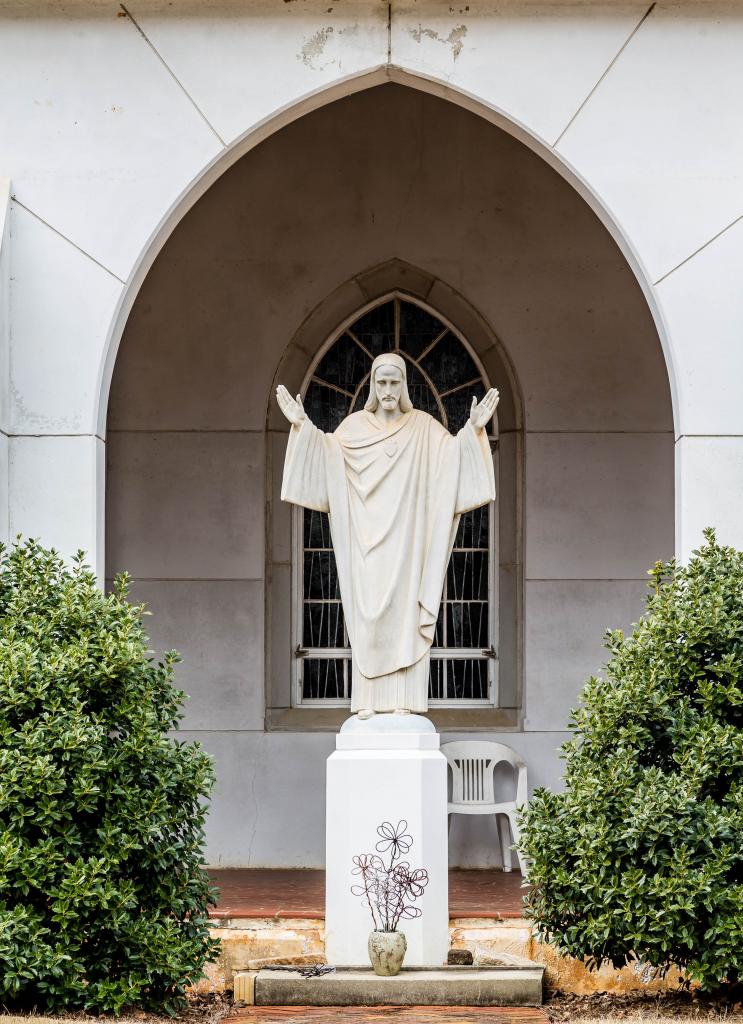
Certainly, these five marks of Christian mysticism are not the only ways in which we can see something unique or distinctive about this spiritual path. Can you think of other ways that Christian mysticism is, well, Christian? It’s worth reflecting on, whether your interest in Christian mysticism is purely academic, or an expression of your own desire for a closer relationship with the mystery we call God.
Enjoy reading this blog?
Click here to become a patron.

Previous Post
October 11, 2021
Do the Ten Commandments Still Matter?
Next Post
November 10, 2021 Critics Say "Centering Prayer Empties the Mind." They are Wrong.
Browse Our Archives
Select a Category Activism Announcements Art Books Catholicism Celtic Christianity Christian mysticism Christianity Contemplation Current events Etc. Family humor interfaith dialogue Interfaith Wisdom Interspirituality Lay Cistercians Living the Faith Meditation movies Mysticism Mystics nature Poetry Reviews Scripture silence Spirituality Uncategorized Writing
Select a Month February 2025 January 2025 November 2024 September 2024 August 2024 July 2024 June 2024 May 2024 March 2024 January 2024 December 2023 November 2023 August 2023 June 2023 April 2023 March 2023 February 2023 January 2023 December 2022 November 2022 October 2022 September 2022 August 2022 July 2022 June 2022 May 2022 April 2022 February 2022 January 2022 December 2021 November 2021 October 2021 September 2021 August 2021 July 2021 June 2021 May 2021 April 2021 March 2021 February 2021 January 2021 December 2020 November 2020 October 2020 September 2020 August 2020 July 2020 June 2020 May 2020 April 2020 March 2020 February 2020 January 2020 December 2019 November 2019 October 2019 September 2019 August 2019 July 2019 June 2019 May 2019 April 2019 March 2019 February 2019 January 2019 December 2018 November 2018 October 2018 September 2018 August 2018 July 2018 June 2018 May 2018 April 2018 March 2018 February 2018 January 2018 December 2017 November 2017 October 2017 September 2017 August 2017 July 2017 June 2017 May 2017 April 2017 March 2017 February 2017 January 2017 December 2016 November 2016 October 2016 September 2016 August 2016 July 2016 June 2016 May 2016 March 2016 February 2016 January 2016 December 2015 November 2015 October 2015 September 2015 August 2015 July 2015 June 2015 May 2015 April 2015 March 2015 February 2015 January 2015 December 2014 November 2014 October 2014 September 2014 August 2014 July 2014 June 2014 May 2014 April 2014 March 2014 February 2014 January 2014 December 2013 October 2013 September 2013 July 2013 May 2013 January 2013 December 2012 November 2012 August 2012 July 2012 June 2012 March 2012 December 2011 September 2011 October 2010 August 2010 March 2010 September 2009 July 2008 January 2008 December 2007 September 2007 February 2007 January 2007 December 2004
Follow Us!
TAKE THE
Religious Wisdom Quiz
How did Judas signal who Jesus was to the soldiers?
Select your answer to see how you score.
By pointing With a kiss By handing Him bread By shouting
Support this
Column


Related posts from Carl McColman

"This Loving, Uniting Embrace": the Holy Ordinary

You don't have to become a monk to...

If You Worship an Angry God, You'll Be...

LSD, Anxiety, and Contemplation: Can Psychedelic Therapy Support...
TRENDING AT PATHEOS Contemplative

Handy Contemplative Practices for Political Spaces
A Spiritually Grounded Presence In order to bring a spiritually grounded presence...

Halloween: The Holiday of Loving Your Neighbor
All Hallows Eve Is Halloween the least Christian holiday in America, or...

Can Love Be Saved? Some Thoughts on the...
Happy Valentine's Day! I recently published a post on Patreon called Can...

"This Loving, Uniting Embrace": the Holy Ordinary
Today's guest post is by Mark Longhurst, author of The Holy Ordinary:...

How Are We Called to Live?: More About...
How Are We Called to Live? Many of us struggle with discerning...

A Spiritual Practice of Reading: Join Us Online
A Spiritual Practice of Reading A healthy spiritual practice of reading is...
view all Contemplative blogs
Ad-Free & Subscriber Log-In Subscription Support
- About Us
- 2026 Calendar
- Videos
- Podcasts
- Library of World Religions
- Faith In Media Tracker
- Advertise With Us
- Write for Us
- Privacy Policy
- Terms of Service
- Do Not Sell My Data
- Contact Us
- Radiant Digital
- Manage Newsletter Subscriptions
- Unsubscribe From Notifications
- Sitemap
Copyright 2008-2026, Patheos. All rights reserved.
Subscription Support Ad-Free & Subscriber Log-In
Follow Patheos