
BuddhistCatholicContemplativeEvangelicalGeneral ChristianHinduJewishLatter-day SaintMuslimNew VisionsProgressive Christian
Beliefs
- Buddhist
- Catholic
- Contemplative
- Evangelical
- General Christian
- Hindu
- Jewish
- Latter-day Saint
- More Voices
- Muslim
- New Visions
- Pagan
- Progressive Christian
Topics
- Religion News
- Food and Religion
- Sports and Religion
- Religious Art
- Religious Music and Entertainment
- Religious Events
- History and Religion
- Style and Religion
- Politics and Religion
- Women in Religion
- Recreation Outdoors and Religion
- Business Finance and Religion
- Careers Workplace and Religion
- Education and Religion
- Family Parenting and Religion
- Health Fitness and Religion
- Home and Religion
- Relationships and Religion
- Technology and Religion
- Travel and Religion
Columnists
- Buddhist Columnists
- Business Finance and Religion Columnists
- Careers Workplace and Religion Columnists
- Catholic Columnists
- Contemplative Columnists
- Education and Religion Columnists
- Evangelists Columnists
- Family Parenting and Religion Columnists
- General Christian Columnists
- Health Fitness and Religion Columnists
- Hindu Columnists
- History and Religion Columnists
- Home and Religion Columnists
- Jewish Columnists
- More Voices Columnists
- Latter Day Columnists
- Muslim Columnists
- New Visions Columnists
- Nonreligious Columnists
- Pagan Columnists
- Politics and Religion Columnists
- Progressive Columnists
- Recreation Outdoors and Religion Columnists
- Relationships and Religion Columnists
- Religion News Columnists
- Religious Art Columnists
- Religious Events Columnists
- Religious Music and Entertainment Columnists
- Sports and Religion Columnists
- Style and Religion Columnists
- Technology and Religion Columnists
- Travel and Religion Columnists
- Women in Religion Columnists
Resource Library
- 2026 Calendar
- Library of World Religions
- The 100 Most Holy Places on Earth
- Patheos Answers
- Podcasts
- Videos
- Faith Leaders Database
- Anglican Episcopalian
- Bahai
- Baptist
- Buddhism
- Christianity
- Confucianism
- Eastern Orthodoxy
- Hinduism
- Holiness and Pentecostal
- ISKCON
- Islam
- Judaism
- Lutheran
- Methodist
- The Church of Jesus Christ of Latter-day Saints
- New Age
- Paganism
- Presbytarian and Reformed
- Protestantism
- Religion Behind the Scenes
- Roman Catholic
- Scientology
- Shia Islam
- Sikhism
- Sufism
- Sunni Islam
- Taoism
- Zen
- See all religions
Research Tools
 Ad-Free & Subscriber Log-In Subscription Support
Ad-Free & Subscriber Log-In Subscription Support
Follow Patheos 

- Trending:
- Forgiveness
- |
- Marriage
- |
- Consciousness
- |
- Death Penalty
- |
- Election
- |
- Halloween

- Home
- Contemplative
- Do the Ten Commandments Still Matter?
Do the Ten Commandments Still Matter?
Last updated on: October 19, 2021 at 3:17 pm by Carl "Skye" McColman
Do the Ten Commandments Still Matter? 2021-10-19T15:17:18-04:00 Carl "Skye" McColman
Patheos Explore the world's faith through different perspectives on religion and spirituality! Patheos has the views of the prevalent religions and spiritualities of the world.
N.B. Today’s post is a meditation on the Ten Commandments that I wrote for the people who support this blog through Patreon. I’m sharing this particular post with the public because I hope it will spark reflection and dialogue. Eventually every post I share with patrons will eventually be published, but if you’d like to be the first to see much of my new writing, then I hope you’ll consider becoming a supporter today. Click here to visit Patreon.
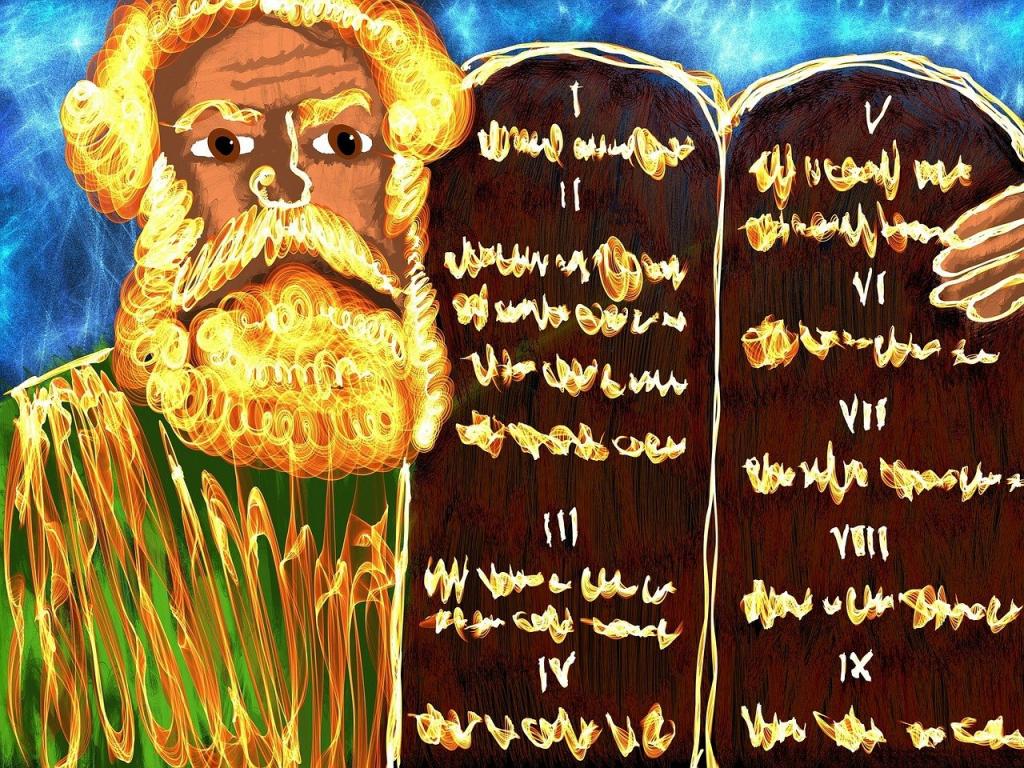
Meditations On The Christian Mysteries, Chapter 35. Ten Words For Freedom
When I was a little boy, my mother told me I needed to learn by heart the Lord’s Prayer, the Apostles’ Creed, the Beatitudes, and the Ten Commandments.
I don’t know that she ever succeeded in getting me to memorize these core elements of the Christian faith, at least as a kid — but I certainly remember she thought I should know these things, so it got rather hard-wired into me that these things were central to whatever religion was.
Then, when I was a bit older and could actually learn about the Ten Commandments, I wasn’t particularly impressed. It seemed to be a rather negative statement: more “don’ts” than do’s. Some of it seemed rather obvious (everyone knows that stealing and killing are wrong), but other parts seemed rather abstract and removed from the realities of my day-to-day life (what’s all this about “coveting” anyway?). Then, as I moved into my adult years, I discovered that the Ten Commandments had been, well, weaponized — that a common custom in some parts of the country was to have plaques of the commandments installed in schools and courthouses, but when citizens, including people of other faiths (or no faith at all) objected that this violated the separation of church and state, some Christians became aggrieved, arguing that this was “evidence” that Christianity was on its way to becoming a persecuted religion (!).
All this is to say that, by the time I reached midlife, I wasn’t too sure what all the fuss about the Ten Commandments was all about, especially if they represented the ideals of the Christian (originally Jewish) faith.
But then I discovered two books that gave me a new perspective on the commandments, and have helped me to see that these ancient moral precepts really do have a timeless relevance about them, even for contemplatives.
First I was introduced to Brain Haggerty’s little paperback, Out of the House of Slavery: On the Meaning of the Ten Commandments. Haggerty suggests that you can’t really make sense of the commandments without seeing them as inherently linked to the experience of the Hebrew people becoming liberated from slavery. So the commandments are more than just a set or moral precepts: they are a statement of cultural identity, for a people newly freed from slavery and needing guidance about how to live as free people.
The second book that broadened my sense of the commandments was Leonard Felder’s The Ten Challenges: Spiritual Lessons from the Ten Commandments for Creating Meaning, Growth and Richness Every Day of Your Life. Felder, a psychologist, invites us to see these ten precepts as “challenges” rather than “commandments,” shifting them from a juridical set of rules to obey (or else) to a more therapeutic curriculum for fostering wellness and even happiness by applying common sense wisdom to the ethics of everyday life.
Religion does not exist in a vacuum, even though sometimes we approach it as if it did. By expanding our understanding of the Ten Commandments to consider the political, social, and psychological ramifications of their principles, we see how religious perspectives on ethics and morality has relevance to, frankly, all aspects of life, both social and personal. Furthermore, by seeing these principles as challenges or as statements of freedom, we can set aside the unfortunate tendency to read religious teaching as a kind of rigid legalism with a zero-sum consequence (either you are a sheep that God rewards, or a goat that God punishes!).
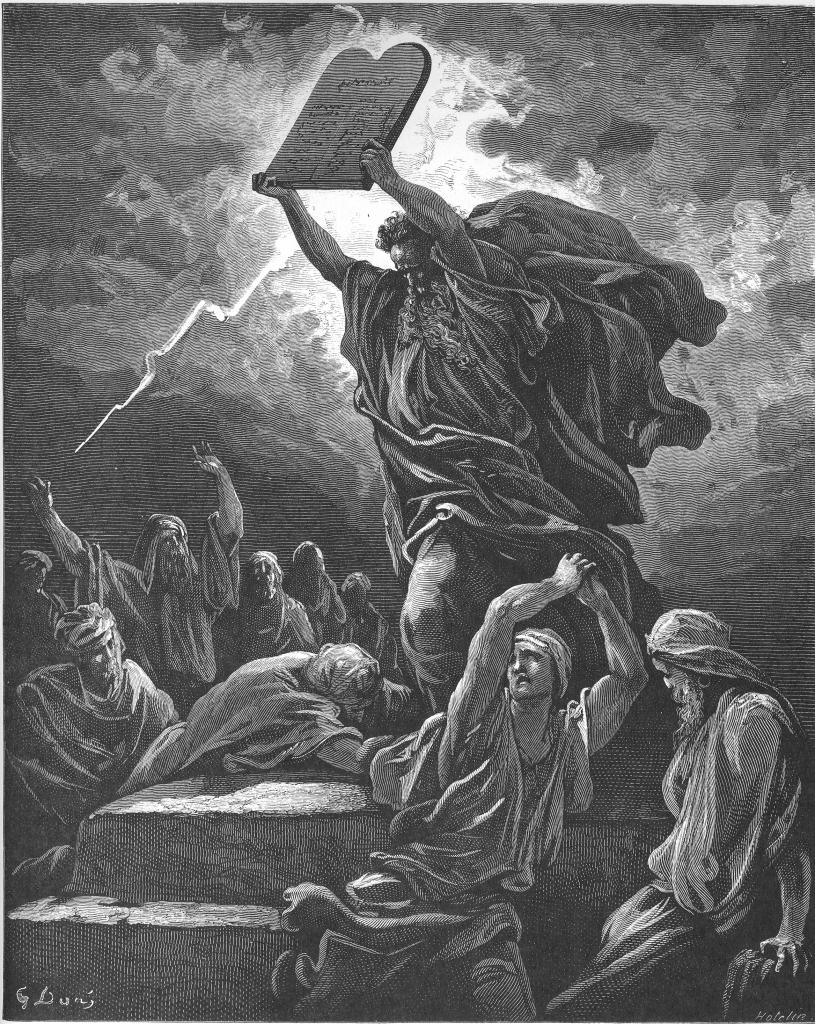
Another name for the Ten Commandments is the Decalogue, from a Greek compound word that literally means “Ten Words.” As we travel through these ten precepts with Haggerty and Feldman as our guides, I encourage you to see these “words” as life-giving invitations rather than punishment-threatening rules. Contemplatives recognize that God’s love is unconditional. Therefore, we obey the Ten Commandments not motivated by fear of punishment, but rather seeking a wisdom that can make a life shaped by love better and better. I’m presenting each of the Ten Commandments with Haggerty’s paraphrase in bold, followed by Feldman’s insight into the challenge, and a few contemplative insights of my own woven in. Enjoy!
- Only God has proven worthy of unreserved faith and unbounded trust. You shall not worship transitory gods but shall serve only the living God. Felder suggests that this first challenge calls us to “discovering the still small voice within.” You can’t get much more contemplative than that! But what are the “transitory gods” we are challenged not to worship? Indeed, human life is filled with all sorts of “gods” to which we often bind ourselves: the gods of money, of power, of success, of beauty or glamour, of material wealth, and so forth. None of these things are necessarily evil — but when they cease to be goods that serve us in the pursuit of true happiness, and become objects that impinge on our spiritual freedom, then they have becomes idols that spiritual freedom will call us to renounce. Indeed, even religion can give us “transitory” images of God: the god who punishes, who demands submission, whose favor must be earned. Like all other idols, these false gods do not deserve our trust.
- You shall not enshrine any notion, ideology, or interest as God and allow yourself to be dominated by it. Felder describes the second challenge as a call to “breaking free of unfulfilling paths and habits.” The second commandment is really just an expansion of the first. The first commandment says don’t have any gods in place of God; the second commandment reminds us that false gods ultimately are a spiritual addiction: they lead to diminished freedom. When we hear the word “idol” we often think of carved figurines, like something Indiana Jones might steal out of a jungle temple. But the idols that we really have to watch out for are the temptations we have to trade away our spiritual freedom — which tend to me doctrines or ideologies that constrict our souls rather than liberating them. Fundamentalism, authoritarian politics, and other forms of enervating belief systems do not deserve our fealty: that’s only for God.
- You shall not lay exclusive claim to God’s blessing or call upon God to bless your selfish purposes. Since “using the Lord’s name in vain” is often associated with cursing and swearing — behaviors, in turn, associated with anger or rage — Felder presents this third challenge as “learning to control anger, insecurity and self-righteousness.” But I rather favor Haggerty’s perspective. The problem here is not cussing, but rather claiming that God just happens to agree with whatever ideology (political, religious or otherwise) that we happen to endorse! Persons who are convinced that they have a mandate from God to do whatever it is they are setting out to do are quite often dangerous. Think about Bernard of Clairvaux, convinced that God was calling him to recruit soldiers for the crusades; his arrogance and “certainty” led to a costly and entirely unnecessary military campaign that wasted resources and many human lives. Only when we resist using God’s name in such vain ways can we truly be free.
- Show reverence for the land; regard those who labor with respect. Christians often have a smug attitude toward this commandment, traditionally rendered as “Remember the Sabbath and keep it holy.” We see it as an emblem of religious legalism, and smirk that Jesus set us free from having to take an enforced day off — which means, of course, that workaholism and burnout is epidemic among Christians. Both Haggerty and Felder remind us that this commandment/challenges involves something much deeper than a social practice of one community-wide day off each week. Haggerty points out that the sabbath is not only giving yourself a day off, but it entails giving your servants, laborers, livestock, and even the land itself the downtime necessary to function (and live) well. Felder echoes this, but circles back around to your own benefit: this challenge calls us “to unhook from your everyday pressures and connect with something profoundly joyful.”
- Treat the elderly with respect and deference. Haggerty expands the social vision of this commandment: it’s not just about obeying mom and dad, but it incorporates all of the community’s elders. Felder acknowledges that, especially when it comes to our parents, this isn’t always easy: he asks, “How do you honor a parent when there’s tension between you?” No human being is perfect, so the perfect parents (or other elders) do not exist; so why, then, does this commandment/challenge matter? Because elderly people are vulnerable. With diminishing health and failing strength, they represent those whose need outstrip their capacity for self-care and self-reliance. A challenge to care for such vulnerable persons is a simple way to foster a society that, in many ways, cares for those who are vulnerable and in need. A cynic might point out that our society isn’t very good at that. No argument there! But perhaps if we took caring for elders more seriously, we’d do a better job at caring for the chronically ill, the handicapped, and other vulnerable populations.
- You shall not threaten the lives of others by your aggressive or irresponsible behavior. If I were asked to revise Haggerty’s version of the decalogue, I would change this one to “You shall not threaten the lives of others by your aggressive, irresponsible or privileged behavior.” In 1978 when Out of the House of Slavery was published, the conversation about how privilege is embedded in racism, sexism, and other structures of injustice hadn’t yet become mainstream (Peggy McIntosh’s groundbreaking essays on the nature of privilege were first published in the late 1980s). But today we can see that privilege is just as dangerous to people’s well-being as aggression or neglect. Felder’s perspective echoes Haggerty’s: he sees this as a challenge to know “what you can do to prevent the crushing of a person’s spirit.” Yes, this commandment is a “don’t,” but it’s a necessary don’t: making basic human safety non-negotiable is a necessary prerequisite for establishing a civilized community.
- You shall not threaten another person’s marriage or family life. Presented simply as “Thou shalt not commit adultery” in the Bible, this commandment has become a clobber verse to denounce everything from pre-marital sex to queer sex to pornography and even masturbation. It’s very helpful to remember that the prohibition on adultery was not about how bad sex is, but about how good marriage is — or should be. Protecting a person’s family is a logical next step after protecting their life. We protect other families because our own is likewise worthy of safeguarding. Felder brings it back to sex, but recasts it as a positive challenge, seeing this is a call “to elevate your sexuality to greater sacredness and fulfillment.” Sexuality that is exploitative or grounded in a consumer mentality is corrosive of the love that enables families to thrive — and in the context of a truly loving family, faithful sexuality has the potential to not only be fulfilling, but to truly embody the fullness of joy.
- You shall not deprive other people of their freedom. In Felder’s words the eighth challenge calls us to “accomplishing your goals without mistreating other people.” Originally this is the commandment prohibiting theft, but once again, it means something much deeper than “don’t go shoplifting or become a mugger.” It’s easy to say “don’t take what’s not yours,” especially when one has one’s basic needs met. So, like commandment #6, this commandment needs to be understood in the light of the mandate to dismantle privilege. Privilege — the systematic social benefits that some people enjoy at the expense of others — is, in itself, a form of subconscious, socially sanctioned theft. When we learn to let it go, as well as any other act or behavior that fundamentally mistreats or deprives others, we are more available to orient our lives toward love, peace, and justice.
- You shall not cause another person to be treated unjustly. As Felder puts it, this is a challenge to “reduce gossip and hurtful talk in your daily life.” I’m reminded of the language in the New Testament Epistle of James on the power of the human tongue: “the tongue is a fire… no one can tame the tongue… With it we bless the Lord and Father, and with it we curse those who are made in the likeness of God. From the same mouth come blessing and cursing. My brothers and sisters, this ought not to be so. Does a spring pour forth from the same opening both fresh and brackish water? (James 3:6-11). “Don’t bear false witness” means, very simply, do not lie. Lies are corrosive: they weaken relationships, undermine trust, and foster situations where one individual or party can take advantage of others. When we tell the truth, we live truthfully.
- You shall not grasp after what belongs to someone else or seek for yourself what belongs to all people. Once again, Felder keeps it simpler but his words still convey much meaning: he sees this challenge calling us to “the way to feel good about what you have.” It’s far too easy to cultivate a spirit of jealousy or envy when we see others who have something we don’t. But when that is the case, we have a fundamental choice: we either find a way to be at peace with the situation, or we allow it to dominate our thoughts and actions. Even if everything we do to “grasp” what others have is technically ethical, we have already lost our freedom, because our grasping is what directs our lives, rather than our free choices. When we choose freedom, even at the expense of “having what we think we want,” we are free. But when we choose to obey all our wants, we are in bondage: for as soon as one want is satisfied, another inevitably takes its place.
What is the final contemplative word here, beneath these “Ten Words”? I believe it has to do with freedom: whether the psychological freedom that Felder promotes, or the more social freedom that Haggerty endorses. To be free in God is to be available for the deep joy that only contemplation can bring. Such joy does not require us to live as paupers or to deny life’s wholesome pleasures. But it does require us to let go of any obsession or compulsion that keeps us in the thrall of “lesser” pleasures, especially when such pleasures are bought at the expense of others or to the loss of our own honor.
Whether you see them as ten commandments, ten challenges, or ten words of freedom, the Decalogue remains surprisingly relevant as a framework for the culture of both personal holiness and social justice. The calls embedded here are not always easy, but who said the contemplative life was a cakewalk? If we prayerfully seek Divine grace in our lives and then embrace these calls to transform both our lives and our communities, I believe miracles await us. It’s an adventure — like all aspects of the contemplative life.
Copyright © 2021 by Carl McColman. All rights reserved. This is an unpublished, uncorrected work in progress. It is subject to major or minor revision prior to publication. It is made available to patrons for your personal use only. Do not copy or share this material without written permission from the author. Thank you for your understanding and your cooperation.
Enjoy reading this blog?
Click here to become a patron.

Previous Post

October 8, 2021
October 2021: Two Online Contemplative Retreat Opportunities
Next Post
November 4, 2021 Putting the “Christian” into “Christian Mysticism”
Browse Our Archives
Select a Category Activism Announcements Art Books Catholicism Celtic Christianity Christian mysticism Christianity Contemplation Current events Etc. Family humor interfaith dialogue Interfaith Wisdom Interspirituality Lay Cistercians Living the Faith Meditation movies Mysticism Mystics nature Poetry Reviews Scripture silence Spirituality Uncategorized Writing
Select a Month February 2025 January 2025 November 2024 September 2024 August 2024 July 2024 June 2024 May 2024 March 2024 January 2024 December 2023 November 2023 August 2023 June 2023 April 2023 March 2023 February 2023 January 2023 December 2022 November 2022 October 2022 September 2022 August 2022 July 2022 June 2022 May 2022 April 2022 February 2022 January 2022 December 2021 November 2021 October 2021 September 2021 August 2021 July 2021 June 2021 May 2021 April 2021 March 2021 February 2021 January 2021 December 2020 November 2020 October 2020 September 2020 August 2020 July 2020 June 2020 May 2020 April 2020 March 2020 February 2020 January 2020 December 2019 November 2019 October 2019 September 2019 August 2019 July 2019 June 2019 May 2019 April 2019 March 2019 February 2019 January 2019 December 2018 November 2018 October 2018 September 2018 August 2018 July 2018 June 2018 May 2018 April 2018 March 2018 February 2018 January 2018 December 2017 November 2017 October 2017 September 2017 August 2017 July 2017 June 2017 May 2017 April 2017 March 2017 February 2017 January 2017 December 2016 November 2016 October 2016 September 2016 August 2016 July 2016 June 2016 May 2016 March 2016 February 2016 January 2016 December 2015 November 2015 October 2015 September 2015 August 2015 July 2015 June 2015 May 2015 April 2015 March 2015 February 2015 January 2015 December 2014 November 2014 October 2014 September 2014 August 2014 July 2014 June 2014 May 2014 April 2014 March 2014 February 2014 January 2014 December 2013 October 2013 September 2013 July 2013 May 2013 January 2013 December 2012 November 2012 August 2012 July 2012 June 2012 March 2012 December 2011 September 2011 October 2010 August 2010 March 2010 September 2009 July 2008 January 2008 December 2007 September 2007 February 2007 January 2007 December 2004
Follow Us!
TAKE THE
Religious Wisdom Quiz
Which king prayed and saw the shadow go backward as a sign from God?
Select your answer to see how you score.
Uzziah Solomon Hezekiah Ahab
Support this
Column


Related posts from Carl McColman

"This Loving, Uniting Embrace": the Holy Ordinary

I Believe Prayer Changes Things. Here's a Few...

If You Worship an Angry God, You'll Be...

The Difference Between Apophatic and Kataphatic Spirituality
TRENDING AT PATHEOS Contemplative

Handy Contemplative Practices for Political Spaces
A Spiritually Grounded Presence In order to bring a spiritually grounded presence...

Halloween: The Holiday of Loving Your Neighbor
All Hallows Eve Is Halloween the least Christian holiday in America, or...

Can Love Be Saved? Some Thoughts on the...
Happy Valentine's Day! I recently published a post on Patreon called Can...

"This Loving, Uniting Embrace": the Holy Ordinary
Today's guest post is by Mark Longhurst, author of The Holy Ordinary:...

How Are We Called to Live?: More About...
How Are We Called to Live? Many of us struggle with discerning...

A Spiritual Practice of Reading: Join Us Online
A Spiritual Practice of Reading A healthy spiritual practice of reading is...
view all Contemplative blogs
Ad-Free & Subscriber Log-In Subscription Support
- About Us
- 2026 Calendar
- Videos
- Podcasts
- Library of World Religions
- Faith In Media Tracker
- Advertise With Us
- Write for Us
- Privacy Policy
- Terms of Service
- Do Not Sell My Data
- Contact Us
- Radiant Digital
- Manage Newsletter Subscriptions
- Unsubscribe From Notifications
- Sitemap
Copyright 2008-2026, Patheos. All rights reserved.
Subscription Support Ad-Free & Subscriber Log-In
Follow Patheos