
BuddhistCatholicContemplativeEvangelicalGeneral ChristianHinduJewishLatter-day SaintMuslimNew VisionsProgressive Christian
Beliefs
- Buddhist
- Catholic
- Contemplative
- Evangelical
- General Christian
- Hindu
- Jewish
- Latter-day Saint
- More Voices
- Muslim
- New Visions
- Pagan
- Progressive Christian
Topics
- Religion News
- Food and Religion
- Sports and Religion
- Religious Art
- Religious Music and Entertainment
- Religious Events
- History and Religion
- Style and Religion
- Politics and Religion
- Women in Religion
- Recreation Outdoors and Religion
- Business Finance and Religion
- Careers Workplace and Religion
- Education and Religion
- Family Parenting and Religion
- Health Fitness and Religion
- Home and Religion
- Relationships and Religion
- Technology and Religion
- Travel and Religion
Columnists
- Buddhist Columnists
- Business Finance and Religion Columnists
- Careers Workplace and Religion Columnists
- Catholic Columnists
- Contemplative Columnists
- Education and Religion Columnists
- Evangelists Columnists
- Family Parenting and Religion Columnists
- General Christian Columnists
- Health Fitness and Religion Columnists
- Hindu Columnists
- History and Religion Columnists
- Home and Religion Columnists
- Jewish Columnists
- More Voices Columnists
- Latter Day Columnists
- Muslim Columnists
- New Visions Columnists
- Nonreligious Columnists
- Pagan Columnists
- Politics and Religion Columnists
- Progressive Columnists
- Recreation Outdoors and Religion Columnists
- Relationships and Religion Columnists
- Religion News Columnists
- Religious Art Columnists
- Religious Events Columnists
- Religious Music and Entertainment Columnists
- Sports and Religion Columnists
- Style and Religion Columnists
- Technology and Religion Columnists
- Travel and Religion Columnists
- Women in Religion Columnists
Resource Library
- 2026 Calendar
- Library of World Religions
- The 100 Most Holy Places on Earth
- Patheos Answers
- Podcasts
- Videos
- Faith Leaders Database
- Anglican Episcopalian
- Bahai
- Baptist
- Buddhism
- Christianity
- Confucianism
- Eastern Orthodoxy
- Hinduism
- Holiness and Pentecostal
- ISKCON
- Islam
- Judaism
- Lutheran
- Methodist
- The Church of Jesus Christ of Latter-day Saints
- New Age
- Paganism
- Presbytarian and Reformed
- Protestantism
- Religion Behind the Scenes
- Roman Catholic
- Scientology
- Shia Islam
- Sikhism
- Sufism
- Sunni Islam
- Taoism
- Zen
- See all religions
Research Tools
 Ad-Free & Subscriber Log-In Subscription Support
Ad-Free & Subscriber Log-In Subscription Support
Follow Patheos 

- Trending:
- Forgiveness
- |
- Marriage
- |
- Consciousness
- |
- Death Penalty
- |
- Election
- |
- Halloween

- Home
- Contemplative
- Thomas Merton: the Noisy Contemplative
Thomas Merton: the Noisy Contemplative
Last updated on: August 15, 2021 at 5:28 pm by Guest Contributor
Thomas Merton: the Noisy Contemplative 2021-08-15T17:28:23-04:00 Guest Contributor
Patheos Explore the world's faith through different perspectives on religion and spirituality! Patheos has the views of the prevalent religions and spiritualities of the world.
N.B. Today’s guest post is by Jon M. Sweeney. Jon is the author of numerous books, including The Pope Who Quit, Beauty Awakening Belief: How the Medieval Worldview Inspires Faith Today, Phyllis Tickle: A Life and The Pope’s Cat among many others. He has edited works by Thomas Merton, Meister Eckhart, and others (Jon also edited my book on C.S. Lewis, The Lion, the Mouse and the Dawn Treader). This blog post is adapted from Jon’s book Thomas Merton: An Introduction to His Life, Teachings and Practices. Jon has contributed to this blog before: click here to see some of his previous posts. In today’s post, he considers some of the irony that surrounds Merton, the most famous of monks.
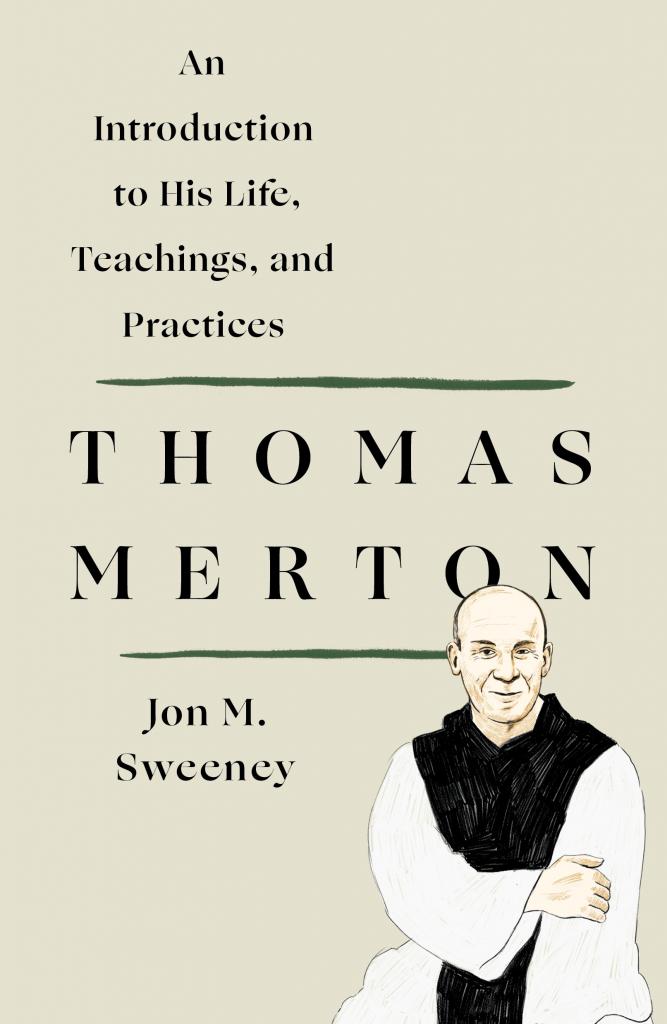
How could the monk who was so often upset about his own lack of quiet and solitude also become the most loquacious of communicators?
In the last decade of his life, Thomas Merton enjoyed correspondence with hundreds of people, including the most renowned literary and religious people of his day—from Russian poet Boris Pasternak to folk singer Joan Baez to Pope John XXIII. When he’d first become a monk, in 1941, Merton thought he was leaving the world behind, quite literally, before his abbot instructed him to sit at a typewriter in an office, during work hours, and tell his life story. Then, look what happened.
There’s a letter, for instance, that he wrote to one of his publishers in February 1948, several months before The Seven Storey Mountain would be published and make him famous, and in it he begins with a confession: “The devil is trying to mess up all that I do by getting me to do too much and involve me in such a network of projects that I will be neither able to work or pray.” He goes on to detail his writing projects one by one. Fr. Abbot is annoyed that one of the monk’s books of poems is out of stock. The monk needs a Spanish text of St. John of the Cross to work more on a project that’s been previously discussed. The monk needs to write more poems. Meanwhile, another book—which he calls his “book of pensées”—is coming along nicely. (This would become Seeds of Contemplation.) And the autobiography (Seven Storey) is much too long, needs trimming. No wonder he had trouble balancing things and finding time to pray!
Soon, Merton was beginning to back out of community life, seeking to explore a hermit’s vocation, which was then mostly unknown among the Trappists. For years, he asked his abbot for more access to time alone before being granted what he desired. He knew that in many respects he’d created his own problem; the success of his writings had brought many people to the monastery looking for what this “Thomas Merton” had discovered. He wanted to live apart from community life. For at least a decade before his death, in 1968, Fr. Louis was instructing young monks as their novice master, guiding them into a monastic life—that he was himself, in some ways, seeking to escape.
The impulse is common among creatives. For example, the famous French writer Romain Rolland, after being awarded a Nobel Prize in Literature and protesting the First World War so vigorously that he became an outcast in French society, left for rural Switzerland. He said he was exchanging the “perpetual anxiety” of Paris for a life of silence.
The mistake that many people make is to say: “Merton . . . was a famous writer who, late in life, had wearied of his fame and who, after a lifetime of giving his words to others, needed to place himself before the Unsayable.” I don’t think that’s it. He was more like the artist who hurts himself and while hurting himself creates great art. Think of Van Gogh cutting off his ear. Think of Kurt Cobain dying by suicide. Think of Dylan Thomas and Jack Kerouac drinking themselves to death, or Sylvia Plath sticking her head in the oven. From his difficult childhood onward, Merton had used his art to seek understanding of himself, knowing full well his flaws, offering those flaws onto the pages of what he created. That didn’t change late in his life. Perhaps, rather, he came to see the flaws themselves as a natural part of a flawed self, seeking salvation. The flaws wouldn’t necessarily go away. He began to see to the other side of them.

He saw giving up his public life as a step of finality that he was willing to take. For instance, after an afternoon meditating in the woods in the spring before he died, he wrote in his private journal: “I really enjoyed being in the wild, silent spot. . . . And really I am ready to let the writing go to the dogs if necessary, and to prefer this: which is what I really want and what I am here for.”
But then of course a guest from Boston arrives, as planned, that evening. We who love Merton and learn from him must accept how he often contradicts himself.
This realization can be frustrating at times, and helpful in others. He sometimes comes across almost fickle. Truth is, he was constantly “working out” his understanding on paper; he left it for us to see, and we go looking for it. (My fickleness and other weaknesses are much more private.) Thus, we have him writing about being “in the wild, silent spot” and saying that this is who he truly is, all while guests are due to arrive, with whom he’ll chat the night away, discussing things of the world. Similarly, he struggled for years with thoughts of leaving, or finding a situation that was better.
We have to reconcile this with what he writes near the end of chapter 35 of that classic, New Seeds of Contemplation:
Fickleness and indecision are signs of self-love. If you can never make up your mind what God wills for you, but are always veering from one opinion to another, from one practice to another, from one method to another, it may be an indication that you are trying to get around God’s will and do your own with a quiet conscience. As soon as God gets you in one monastery you want to be in another. (page 260)
He’s writing at times to himself.
An analogy may be helpful: My wife and I like to take long bike rides. The purpose of a good bike ride is, for her, mostly about the exercise. She’s an athlete and I’m not. The exercise of a ride is, for me, only one part. So, when we plan a ride, I prefer that we also be headed somewhere: a park, a tavern, downtown, a friend’s house. Simply hauling down a bike path, turning around, and coming back, doesn’t really interest me. For me, the journey (or the ride) is not enough by itself, whereas it is enough for my wife as good exercise. I want to feel, also, as if I’m going somewhere. I think that Merton wished he could feel about the spiritual life the way my wife feels about bike rides— with a sort of purity of intention—but he couldn’t really do that. For whatever reason, he found that that wasn’t in him. In the end, he wanted to be going somewhere.
Most importantly, we should all be so self-aware, as Merton was, and so willing to reconsider who we are as we are on a journey of lifelong conversion.
Notes:
Merton’s letter from February 1948 is found in Thomas Merton and James Laughlin: Selected Letters, ed. David D. Cooper (New York: W. W. Norton, 1997), 30.
Rolland’s Letter to Rabindranath Tagore is found in Bridging East and West: Rabindranath Tagore and Romain Rolland Correspondence (1919–1940), Chinmoy Guha, ed. and trans. (New Delhi: Oxford University Press, 2018), 12.
The “famous writer” quote comes from Fred Bahnson, “On the Road with Thomas Merton,” Emergence Magazine, 2019, 105.
Check out Jon Sweeney’s previous post on this blog about Thomas Merton:
“He Confuses a Lot of People” — Jon M. Sweeney on Writing About Thomas Merton
Enjoy reading this blog?
Click here to become a patron.

Previous Post
August 8, 2021
The Problem with Christianity in a Nutshell
Next Post

September 20, 2021 The Cathedral Beyond the Forest (A Dream)
Browse Our Archives
Select a Category Activism Announcements Art Books Catholicism Celtic Christianity Christian mysticism Christianity Contemplation Current events Etc. Family humor interfaith dialogue Interfaith Wisdom Interspirituality Lay Cistercians Living the Faith Meditation movies Mysticism Mystics nature Poetry Reviews Scripture silence Spirituality Uncategorized Writing
Select a Month February 2025 January 2025 November 2024 September 2024 August 2024 July 2024 June 2024 May 2024 March 2024 January 2024 December 2023 November 2023 August 2023 June 2023 April 2023 March 2023 February 2023 January 2023 December 2022 November 2022 October 2022 September 2022 August 2022 July 2022 June 2022 May 2022 April 2022 February 2022 January 2022 December 2021 November 2021 October 2021 September 2021 August 2021 July 2021 June 2021 May 2021 April 2021 March 2021 February 2021 January 2021 December 2020 November 2020 October 2020 September 2020 August 2020 July 2020 June 2020 May 2020 April 2020 March 2020 February 2020 January 2020 December 2019 November 2019 October 2019 September 2019 August 2019 July 2019 June 2019 May 2019 April 2019 March 2019 February 2019 January 2019 December 2018 November 2018 October 2018 September 2018 August 2018 July 2018 June 2018 May 2018 April 2018 March 2018 February 2018 January 2018 December 2017 November 2017 October 2017 September 2017 August 2017 July 2017 June 2017 May 2017 April 2017 March 2017 February 2017 January 2017 December 2016 November 2016 October 2016 September 2016 August 2016 July 2016 June 2016 May 2016 March 2016 February 2016 January 2016 December 2015 November 2015 October 2015 September 2015 August 2015 July 2015 June 2015 May 2015 April 2015 March 2015 February 2015 January 2015 December 2014 November 2014 October 2014 September 2014 August 2014 July 2014 June 2014 May 2014 April 2014 March 2014 February 2014 January 2014 December 2013 October 2013 September 2013 July 2013 May 2013 January 2013 December 2012 November 2012 August 2012 July 2012 June 2012 March 2012 December 2011 September 2011 October 2010 August 2010 March 2010 September 2009 July 2008 January 2008 December 2007 September 2007 February 2007 January 2007 December 2004
Follow Us!
TAKE THE
Religious Wisdom Quiz
Who was high priest when David ate the consecrated bread?
Select your answer to see how you score.
Ahimelech Caiaphas Aaron Eli
Support this
Column


Related posts from Carl McColman

"This Loving, Uniting Embrace": the Holy Ordinary

I Believe Prayer Changes Things. Here's a Few...

If You Worship an Angry God, You'll Be...

The Difference Between Apophatic and Kataphatic Spirituality
TRENDING AT PATHEOS Contemplative

Handy Contemplative Practices for Political Spaces
A Spiritually Grounded Presence In order to bring a spiritually grounded presence...

Halloween: The Holiday of Loving Your Neighbor
All Hallows Eve Is Halloween the least Christian holiday in America, or...

Can Love Be Saved? Some Thoughts on the...
Happy Valentine's Day! I recently published a post on Patreon called Can...

"This Loving, Uniting Embrace": the Holy Ordinary
Today's guest post is by Mark Longhurst, author of The Holy Ordinary:...

How Are We Called to Live?: More About...
How Are We Called to Live? Many of us struggle with discerning...

A Spiritual Practice of Reading: Join Us Online
A Spiritual Practice of Reading A healthy spiritual practice of reading is...
view all Contemplative blogs
Ad-Free & Subscriber Log-In Subscription Support
- About Us
- 2026 Calendar
- Videos
- Podcasts
- Library of World Religions
- Faith In Media Tracker
- Advertise With Us
- Write for Us
- Privacy Policy
- Terms of Service
- Do Not Sell My Data
- Contact Us
- Radiant Digital
- Manage Newsletter Subscriptions
- Unsubscribe From Notifications
- Sitemap
Copyright 2008-2026, Patheos. All rights reserved.
Subscription Support Ad-Free & Subscriber Log-In
Follow Patheos