
BuddhistCatholicContemplativeEvangelicalGeneral ChristianHinduJewishLatter-day SaintMuslimNew VisionsProgressive Christian
Beliefs
- Buddhist
- Catholic
- Contemplative
- Evangelical
- General Christian
- Hindu
- Jewish
- Latter-day Saint
- More Voices
- Muslim
- New Visions
- Pagan
- Progressive Christian
Topics
- Religion News
- Food and Religion
- Sports and Religion
- Religious Art
- Religious Music and Entertainment
- Religious Events
- History and Religion
- Style and Religion
- Politics and Religion
- Women in Religion
- Recreation Outdoors and Religion
- Business Finance and Religion
- Careers Workplace and Religion
- Education and Religion
- Family Parenting and Religion
- Health Fitness and Religion
- Home and Religion
- Relationships and Religion
- Technology and Religion
- Travel and Religion
Columnists
- Buddhist Columnists
- Business Finance and Religion Columnists
- Careers Workplace and Religion Columnists
- Catholic Columnists
- Contemplative Columnists
- Education and Religion Columnists
- Evangelists Columnists
- Family Parenting and Religion Columnists
- General Christian Columnists
- Health Fitness and Religion Columnists
- Hindu Columnists
- History and Religion Columnists
- Home and Religion Columnists
- Jewish Columnists
- More Voices Columnists
- Latter Day Columnists
- Muslim Columnists
- New Visions Columnists
- Nonreligious Columnists
- Pagan Columnists
- Politics and Religion Columnists
- Progressive Columnists
- Recreation Outdoors and Religion Columnists
- Relationships and Religion Columnists
- Religion News Columnists
- Religious Art Columnists
- Religious Events Columnists
- Religious Music and Entertainment Columnists
- Sports and Religion Columnists
- Style and Religion Columnists
- Technology and Religion Columnists
- Travel and Religion Columnists
- Women in Religion Columnists
Resource Library
- 2026 Calendar
- Library of World Religions
- The 100 Most Holy Places on Earth
- Patheos Answers
- Podcasts
- Videos
- Faith Leaders Database
- Anglican Episcopalian
- Bahai
- Baptist
- Buddhism
- Christianity
- Confucianism
- Eastern Orthodoxy
- Hinduism
- Holiness and Pentecostal
- ISKCON
- Islam
- Judaism
- Lutheran
- Methodist
- The Church of Jesus Christ of Latter-day Saints
- New Age
- Paganism
- Presbytarian and Reformed
- Protestantism
- Religion Behind the Scenes
- Roman Catholic
- Scientology
- Shia Islam
- Sikhism
- Sufism
- Sunni Islam
- Taoism
- Zen
- See all religions
Research Tools
 Ad-Free & Subscriber Log-In Subscription Support
Ad-Free & Subscriber Log-In Subscription Support
Follow Patheos 

- Trending:
- Forgiveness
- |
- Marriage
- |
- Consciousness
- |
- Death Penalty
- |
- Election
- |
- Halloween

- Home
- Contemplative
- The Problem with Christianity in a Nutshell
The Problem with Christianity in a Nutshell
Last updated on: August 8, 2021 at 8:17 am by Carl "Skye" McColman
The Problem with Christianity in a Nutshell 2021-08-08T08:17:26-04:00 Carl "Skye" McColman
Patheos Explore the world's faith through different perspectives on religion and spirituality! Patheos has the views of the prevalent religions and spiritualities of the world.
We all know that so many people today prefer to remain spiritually independent, intentional about cultivating their interior life but unencumbered by affiliation to a faith community. In other words: “spiritual but not religious.”
We know that this annoys some religious people, while others seem to roll with it. Even though I remain engaged with Christianity-as-religion, I also try to understand and appreciate the perspectives of those who say “no thank you” to institutional religion.
Yesterday morning, this insight came to me, and if you identify yourself as spiritually independent, I’d love to hear from you to see if this resonates with your experience of spirituality and religion. I’m speaking specifically about Christianity, since that is the religion (and spiritual tradition) I know best. I’ll leave it to others to reflect on how other religions come across to the spiritually independent.
Here’s the thought that occurred to me:
You know what’s wrong with Christianity? It’s like learning that someone truly beautiful and wonderful has fallen in love with you — but all of your mutual friends keep busy telling you how you must act or behave or what you must do in order to be “worthy” of that love. All their advice, instructions, demands, etc. create such a din that it’s easy to forget that this was all about love to begin with.
I suppose it’s human nature. We want to give each other advice. We want to “help” each other out. Even those with the best of intentions often end of creating a worse mess because our attempts to shape each other’s actions end up coming across as controlling rather than liberating.
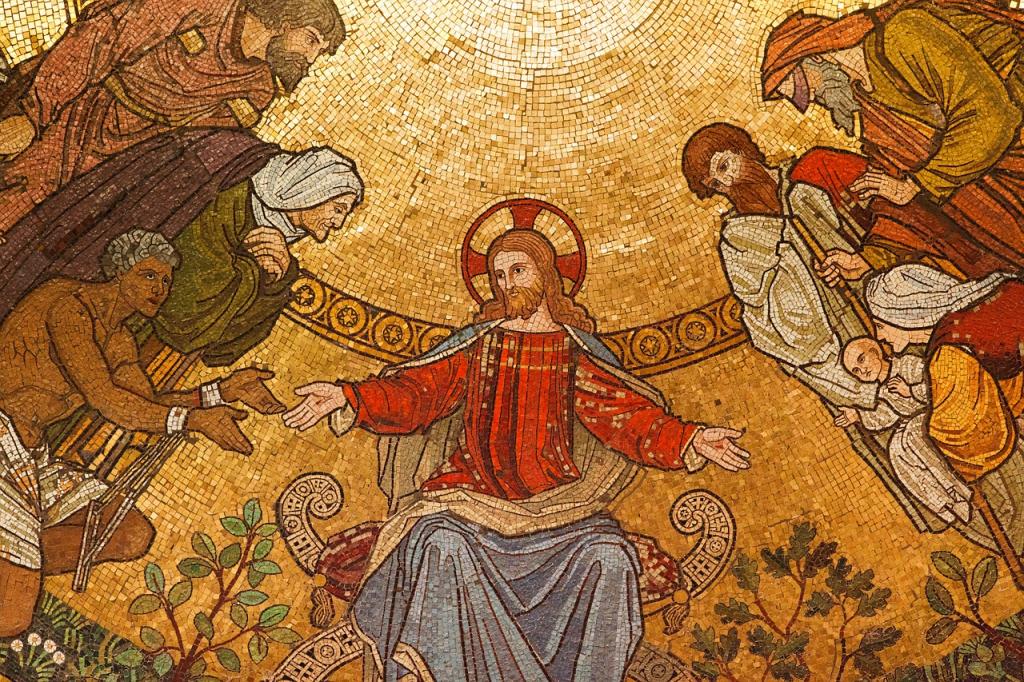
Christianity is a religion, and I believe at its heart, religion is simply a complex story about what it means to be human.
The story of Christianity is the story of a Divine Creator God who is Love, and who loves us, and essential that love is how God wants us to love one another — something we fail at spectacularly, pretty much all the time. So this God-of-Love has encouraged us to become, ourselves, embodiments of Love — in other words, to become saints, and prophets, and theologians, and mystics, and pastors, and preachers, and priests — all with the same end in mind: to love each other, serve each other, and help each other to respond more fully to the God-who-is-Love.
But ironically, even all these spiritual masters end up, often as not, making things worse rather than better.
Eventually, this Loving God becomes human to live and die as one of us, showing us the way to live and to love. This inspires an entirely new type of spiritual community, which of course leads to more saints, mystics, and so forth. Generation after generation, we keep telling each other the story, and countless people become inspired to embrace a fully mystical life, a life of union with this Divine Lover. But others just get caught up in the rules and the regulations.
As we approach the two thousandth anniversary of the death and resurrection of Jesus, for so many people it feels like the “story” has become so caught up in the “rules” that its mystical heart has been all but lost.
I, for one, remain plugged in to Christianity as a community because for me it’s the way I keep working on the “love your neighbors” bit. But I also understand that “love your neighbors” has to extend beyond any visible institution. Meanwhile, I try to be sympathetic to those who have been hurt by the institution, or rejected by it, ignored by it, or even just bored to death by it. Sometimes, leaving a situation that is death-dealing rather than life-giving is itself a profoundly prophetic act.
I hope that those who feel called to engage with the adventure of mystical Christianity, whether functioning inside or outside of Christianity-as-a-religion, can find ways to understand that, in the eyes of Love, we all remain one. So let’s act like it.
Hmmm, did I myself just indulge in that tendency to tell other people what to do? I’m afraid so. Forgive me. Maybe it can’t be helped. So, facing the irony of this-is-what-Christians-do, allow me to try again: I hope that everyone whose eyes encounters these words, myself included, will simply take some time today and every day to embrace the Divine Love that is already present in all our hearts. Embrace that Love, and listen to Love’s call to you. Truly find the voice of Love, deep radical self-giving Love, and it will not lead you astray.
Enjoy reading this blog?
Click here to become a patron.

Previous Post

August 2, 2021
Two Types of Healing Prayer Every Christian Should Know
Next Post

August 15, 2021 Thomas Merton: the Noisy Contemplative
Browse Our Archives
Select a Category Activism Announcements Art Books Catholicism Celtic Christianity Christian mysticism Christianity Contemplation Current events Etc. Family humor interfaith dialogue Interfaith Wisdom Interspirituality Lay Cistercians Living the Faith Meditation movies Mysticism Mystics nature Poetry Reviews Scripture silence Spirituality Uncategorized Writing
Select a Month February 2025 January 2025 November 2024 September 2024 August 2024 July 2024 June 2024 May 2024 March 2024 January 2024 December 2023 November 2023 August 2023 June 2023 April 2023 March 2023 February 2023 January 2023 December 2022 November 2022 October 2022 September 2022 August 2022 July 2022 June 2022 May 2022 April 2022 February 2022 January 2022 December 2021 November 2021 October 2021 September 2021 August 2021 July 2021 June 2021 May 2021 April 2021 March 2021 February 2021 January 2021 December 2020 November 2020 October 2020 September 2020 August 2020 July 2020 June 2020 May 2020 April 2020 March 2020 February 2020 January 2020 December 2019 November 2019 October 2019 September 2019 August 2019 July 2019 June 2019 May 2019 April 2019 March 2019 February 2019 January 2019 December 2018 November 2018 October 2018 September 2018 August 2018 July 2018 June 2018 May 2018 April 2018 March 2018 February 2018 January 2018 December 2017 November 2017 October 2017 September 2017 August 2017 July 2017 June 2017 May 2017 April 2017 March 2017 February 2017 January 2017 December 2016 November 2016 October 2016 September 2016 August 2016 July 2016 June 2016 May 2016 March 2016 February 2016 January 2016 December 2015 November 2015 October 2015 September 2015 August 2015 July 2015 June 2015 May 2015 April 2015 March 2015 February 2015 January 2015 December 2014 November 2014 October 2014 September 2014 August 2014 July 2014 June 2014 May 2014 April 2014 March 2014 February 2014 January 2014 December 2013 October 2013 September 2013 July 2013 May 2013 January 2013 December 2012 November 2012 August 2012 July 2012 June 2012 March 2012 December 2011 September 2011 October 2010 August 2010 March 2010 September 2009 July 2008 January 2008 December 2007 September 2007 February 2007 January 2007 December 2004
Follow Us!
TAKE THE
Religious Wisdom Quiz
Who asked Jesus, "What is truth?"
Select your answer to see how you score.
Pilate Caiaphas Judas Peter
Support this
Column


Related posts from Carl McColman

"This Loving, Uniting Embrace": the Holy Ordinary

I Believe Prayer Changes Things. Here's a Few...

If You Worship an Angry God, You'll Be...

The Difference Between Apophatic and Kataphatic Spirituality
TRENDING AT PATHEOS Contemplative

Handy Contemplative Practices for Political Spaces
A Spiritually Grounded Presence In order to bring a spiritually grounded presence...

Halloween: The Holiday of Loving Your Neighbor
All Hallows Eve Is Halloween the least Christian holiday in America, or...

Can Love Be Saved? Some Thoughts on the...
Happy Valentine's Day! I recently published a post on Patreon called Can...

"This Loving, Uniting Embrace": the Holy Ordinary
Today's guest post is by Mark Longhurst, author of The Holy Ordinary:...

How Are We Called to Live?: More About...
How Are We Called to Live? Many of us struggle with discerning...

A Spiritual Practice of Reading: Join Us Online
A Spiritual Practice of Reading A healthy spiritual practice of reading is...
view all Contemplative blogs
Ad-Free & Subscriber Log-In Subscription Support
- About Us
- 2026 Calendar
- Videos
- Podcasts
- Library of World Religions
- Faith In Media Tracker
- Advertise With Us
- Write for Us
- Privacy Policy
- Terms of Service
- Do Not Sell My Data
- Contact Us
- Radiant Digital
- Manage Newsletter Subscriptions
- Unsubscribe From Notifications
- Sitemap
Copyright 2008-2026, Patheos. All rights reserved.
Subscription Support Ad-Free & Subscriber Log-In
Follow Patheos