
BuddhistCatholicContemplativeEvangelicalGeneral ChristianHinduJewishLatter-day SaintMuslimNew VisionsProgressive Christian
Beliefs
- Buddhist
- Catholic
- Contemplative
- Evangelical
- General Christian
- Hindu
- Jewish
- Latter-day Saint
- More Voices
- Muslim
- New Visions
- Pagan
- Progressive Christian
Topics
- Religion News
- Food and Religion
- Sports and Religion
- Religious Art
- Religious Music and Entertainment
- Religious Events
- History and Religion
- Style and Religion
- Politics and Religion
- Women in Religion
- Recreation Outdoors and Religion
- Business Finance and Religion
- Careers Workplace and Religion
- Education and Religion
- Family Parenting and Religion
- Health Fitness and Religion
- Home and Religion
- Relationships and Religion
- Technology and Religion
- Travel and Religion
Columnists
- Buddhist Columnists
- Business Finance and Religion Columnists
- Careers Workplace and Religion Columnists
- Catholic Columnists
- Contemplative Columnists
- Education and Religion Columnists
- Evangelists Columnists
- Family Parenting and Religion Columnists
- General Christian Columnists
- Health Fitness and Religion Columnists
- Hindu Columnists
- History and Religion Columnists
- Home and Religion Columnists
- Jewish Columnists
- More Voices Columnists
- Latter Day Columnists
- Muslim Columnists
- New Visions Columnists
- Nonreligious Columnists
- Pagan Columnists
- Politics and Religion Columnists
- Progressive Columnists
- Recreation Outdoors and Religion Columnists
- Relationships and Religion Columnists
- Religion News Columnists
- Religious Art Columnists
- Religious Events Columnists
- Religious Music and Entertainment Columnists
- Sports and Religion Columnists
- Style and Religion Columnists
- Technology and Religion Columnists
- Travel and Religion Columnists
- Women in Religion Columnists
Resource Library
- 2026 Calendar
- Library of World Religions
- The 100 Most Holy Places on Earth
- Patheos Answers
- Podcasts
- Videos
- Faith Leaders Database
- Anglican Episcopalian
- Bahai
- Baptist
- Buddhism
- Christianity
- Confucianism
- Eastern Orthodoxy
- Hinduism
- Holiness and Pentecostal
- ISKCON
- Islam
- Judaism
- Lutheran
- Methodist
- The Church of Jesus Christ of Latter-day Saints
- New Age
- Paganism
- Presbytarian and Reformed
- Protestantism
- Religion Behind the Scenes
- Roman Catholic
- Scientology
- Shia Islam
- Sikhism
- Sufism
- Sunni Islam
- Taoism
- Zen
- See all religions
Research Tools
 Ad-Free & Subscriber Log-In Subscription Support
Ad-Free & Subscriber Log-In Subscription Support
Follow Patheos 

- Trending:
- Forgiveness
- |
- Marriage
- |
- Consciousness
- |
- Death Penalty
- |
- Election
- |
- Halloween

- Home
- Contemplative
- “He Confuses a Lot of People” — Jon M. Sweeney on Writing About Thomas Merton
“He Confuses a Lot of People” — Jon M. Sweeney on Writing About Thomas Merton
Last updated on: May 18, 2021 at 9:47 am by Guest Contributor
“He Confuses a Lot of People” — Jon M. Sweeney on Writing About Thomas Merton 2021-05-18T09:47:50-04:00 Guest Contributor
Patheos Explore the world's faith through different perspectives on religion and spirituality! Patheos has the views of the prevalent religions and spiritualities of the world.
N.B. Today’s guest post is by Jon M. Sweeney. Jon is the author of numerous books, including The Pope Who Quit, Beauty Awakening Belief: How the Medieval Worldview Inspires Faith Today, Phyllis Tickle: A Life and The Pope’s Cat among many others. He has edited works by Thomas Merton, Meister Eckhart, and others (Jon also edited my book on C.S. Lewis, The Lion, the Mouse and the Dawn Treader). His newest book, released today, is Thomas Merton: An Introduction to His Life, Teachings and Practices. Jon has contributed to this blog before: click here to see some of his previous posts. Today, he tells us why he wrote about Thomas Merton.
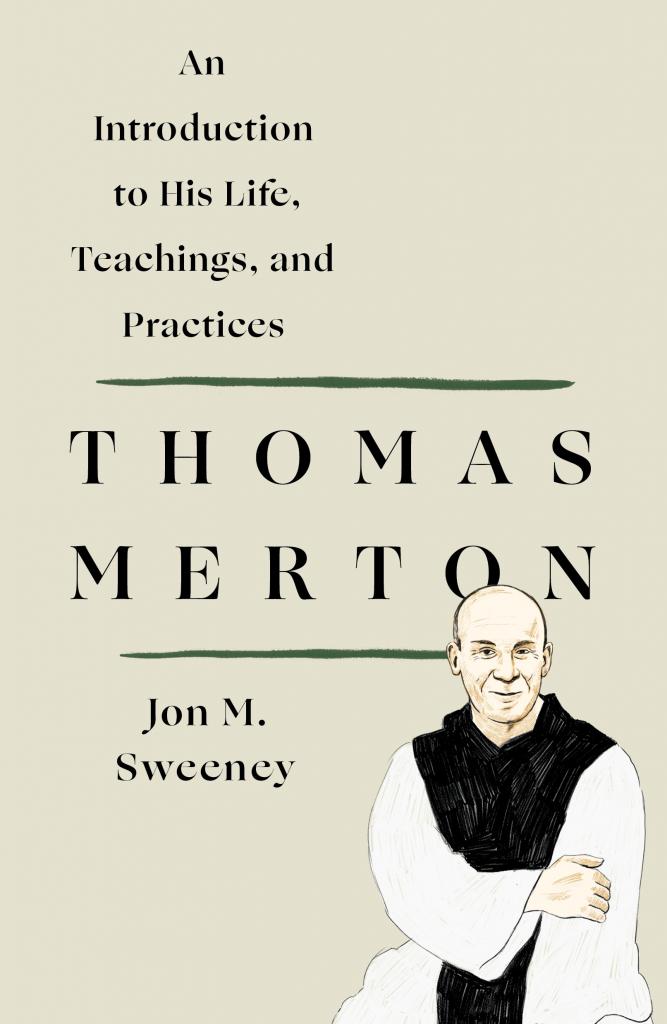
WHAT BROUGHT ME HERE: WHY I WROTE A BOOK ABOUT THOMAS MERTON
I was only a year old when Merton died. But when I was seventeen and contemplating having to register with selective service as eligible for the draft, I had a feeling that I shouldn’t be willing to kill others, even in a war. I didn’t find people who were friendly to objecting to military service in my church, but someone pointed me to a Mennonite nonprofit nearby, and I met with the director there. It was he who first put a Thomas Merton book in my hands: a collection of Merton’s writings on peace. Then, when I was nineteen, after having devoured The Seven Storey Mountain’s five hundred or so pages in three days of excited reading, I made the first of several visits to Merton’s monastery in Kentucky, pondering a monastic life. Should I? Eventually, I decided no. Instead, I would try to be what is sometimes called a “monk in the world.” I became a disciple of the teachings of those who emphasized the contemplative aspect of the spiritual life.
Today, there are far fewer monks left at the Abbey of Gethsemani than there were when Merton was alive. Hundreds of monks lived there at one time, some sixty or seventy years ago. Today, they are only a few dozen. Organized religious life is on the wane everywhere you look, and monastery populations are no exception. The population of every monastic community has been aging every year for decades. Some monasteries have closed. Others survive only because they have become places of retreat, as people like you and me visit for a weekend or two a year. Also, many monasteries have a large numbers of oblates, or associates—laypeople who commit to living with monastic rhythms and spiritual practices, and financially support the monastery. I suspect that Merton could see that this would one day be the case.
Those of us who visit monasteries on retreat, and who pursue the spiritual practices of someone like Thomas Merton, are indeed among the keepers of the monastic way. We don’t—we can’t—do it like he did. But in many ways, we can be monks, and in many ways, Merton showed us how. I wrote my book in the hope that it might help you find your way with him, his writings, and his spiritual practices.

Jon M. Sweeney
HE CONFUSES A LOT OF PEOPLE
“We are all secrets,” Merton wrote one day in his private journal. In other words, there are limits to how much we can understand ourselves, let alone each other. Particularly, we can’t presume to understand someone else’s religious or spiritual life. What is “on the surface” tells only a fraction of their story.
Another twentieth-century favorite of mine is Edith Stein, the Jewish philosopher who converted to Roman Catholicism, became a Carmelite nun, and then died in a Nazi concentration camp. The Nazis didn’t care if a Jew had converted to another religion. After her tragic death, Stein became a saint in the estimation of the Catholic Church, whereas I’m sure Merton never will receive such an honor. (More on that in my book.) She’s officially known in the church as St. Teresa Benedicta of the Cross. Still, her niece once asked her about her conversion to Catholicism from Judaism, and Edith responded with a Latin phrase: “Secretum meum mihi.” “My secret is mine.”
I think you’ll find that this is very true of Merton, as well. Our secrets are our own, particularly when it comes to who we are in our relationship with a God who, when communicating with us, if at all, often does so in a whisper.
This is one way of suggesting that we’ll never fully understand our subject. It is also a way of saying that Merton’s willingness to consistently and consciously be on pilgrimage, to talk with us while he’s searching for what he’s looking for, and to acknowledge that the search never stops in this life—that the answers are not often clear or simple—makes him an evergreen teacher of spiritual wisdom.
Popularly understood, he was a contemplative monk who introduced the possibility of a deep religious and spiritual life—something one might imagine exists only in a monastery—as available to anyone, whether they lived in a cloister or a city, were Christian or some other religious tradition, and whether or not they felt certain in their beliefs. His own life was full of contradictions, as we will soon see, and it is these very contradictions that also make him appealing to us still. He seems to have found a real and deep personal connection to the living God, and yet some of his actions reveal how very human he remained. Yet that core understanding—that a monastic sort of life might be available to you wherever you live—remains compelling.
ONE MORE THING
Not long ago at the Abbey of Gethsemani, I spent an afternoon with one of the monks and a friend at Merton’s old hermitage in the woods. Although there is a right way to see this special place—by permission, without trespassing—it also isn’t uncommon for people to make their way to the hermitage in their own way, and the monks are generally gracious and forgiving about it. In fact, the trespassing has been happening since Merton’s own lifetime; he spent a fair amount of time ducking people in the woods who were trying to find “that famous monk.”
Merton liked to walk in the predawn hours as the mist was rising, observing wrens, cardinals, woodpeckers, and the occasional mockingbird along the way. On this particular morning not long ago, as my two companions and I were walking from the hermitage back to the abbey, I spied a folded single sheet of paper soaking on the grass in the morning dew. I bent down and picked it up.
Someone had printed out a Merton poem and carried it with them, probably to read it while sitting on the hermitage porch the night before. It had fallen out of the pocket, quite recently, of someone who had walked back down the same hill we were walking down. “His God lives in his emptiness like an affliction,” is one of the lines from the poem on that paper soaking in the dew. The poem is titled “When in the Soul of the Serene Disciple.” It was that emptiness, but also the knowing that God was there in it, that moved Merton throughout his life.
I tucked the poem in my pocket as we all walked down the hill in the woods, then crossed the road, toward where the gate used to stand that Merton was so happy had once enclosed him inside, about eighty years before.
Enjoy reading this blog?
Click here to become a patron.

Previous Post

May 8, 2021
Why Julian of Norwich Matters to Me
Next Post

May 21, 2021 When You Pre-order a Book, It Makes a Difference (Here’s Why)
Browse Our Archives
Select a Category Activism Announcements Art Books Catholicism Celtic Christianity Christian mysticism Christianity Contemplation Current events Etc. Family humor interfaith dialogue Interfaith Wisdom Interspirituality Lay Cistercians Living the Faith Meditation movies Mysticism Mystics nature Poetry Reviews Scripture silence Spirituality Uncategorized Writing
Select a Month February 2025 January 2025 November 2024 September 2024 August 2024 July 2024 June 2024 May 2024 March 2024 January 2024 December 2023 November 2023 August 2023 June 2023 April 2023 March 2023 February 2023 January 2023 December 2022 November 2022 October 2022 September 2022 August 2022 July 2022 June 2022 May 2022 April 2022 February 2022 January 2022 December 2021 November 2021 October 2021 September 2021 August 2021 July 2021 June 2021 May 2021 April 2021 March 2021 February 2021 January 2021 December 2020 November 2020 October 2020 September 2020 August 2020 July 2020 June 2020 May 2020 April 2020 March 2020 February 2020 January 2020 December 2019 November 2019 October 2019 September 2019 August 2019 July 2019 June 2019 May 2019 April 2019 March 2019 February 2019 January 2019 December 2018 November 2018 October 2018 September 2018 August 2018 July 2018 June 2018 May 2018 April 2018 March 2018 February 2018 January 2018 December 2017 November 2017 October 2017 September 2017 August 2017 July 2017 June 2017 May 2017 April 2017 March 2017 February 2017 January 2017 December 2016 November 2016 October 2016 September 2016 August 2016 July 2016 June 2016 May 2016 March 2016 February 2016 January 2016 December 2015 November 2015 October 2015 September 2015 August 2015 July 2015 June 2015 May 2015 April 2015 March 2015 February 2015 January 2015 December 2014 November 2014 October 2014 September 2014 August 2014 July 2014 June 2014 May 2014 April 2014 March 2014 February 2014 January 2014 December 2013 October 2013 September 2013 July 2013 May 2013 January 2013 December 2012 November 2012 August 2012 July 2012 June 2012 March 2012 December 2011 September 2011 October 2010 August 2010 March 2010 September 2009 July 2008 January 2008 December 2007 September 2007 February 2007 January 2007 December 2004
Follow Us!
TAKE THE
Religious Wisdom Quiz
Which Old Testament book is entirely written as a dialogue between God and a prophet?
Select your answer to see how you score.
Malachi Amos Habakkuk Zechariah
Support this
Column


Related posts from Carl McColman

Contemplative Books to Read and Savor During Advent...

New From Encountering Silence: Exploring the Lost History...
Twelve Mystical Anthologies That Belong in Every Contemplative...
TRENDING AT PATHEOS Contemplative

Handy Contemplative Practices for Political Spaces
A Spiritually Grounded Presence In order to bring a spiritually grounded presence...

Halloween: The Holiday of Loving Your Neighbor
All Hallows Eve Is Halloween the least Christian holiday in America, or...

Can Love Be Saved? Some Thoughts on the...
Happy Valentine's Day! I recently published a post on Patreon called Can...

"This Loving, Uniting Embrace": the Holy Ordinary
Today's guest post is by Mark Longhurst, author of The Holy Ordinary:...

How Are We Called to Live?: More About...
How Are We Called to Live? Many of us struggle with discerning...

A Spiritual Practice of Reading: Join Us Online
A Spiritual Practice of Reading A healthy spiritual practice of reading is...
view all Contemplative blogs
Ad-Free & Subscriber Log-In Subscription Support
- About Us
- 2026 Calendar
- Videos
- Podcasts
- Library of World Religions
- Faith In Media Tracker
- Advertise With Us
- Write for Us
- Privacy Policy
- Terms of Service
- Do Not Sell My Data
- Contact Us
- Radiant Digital
- Manage Newsletter Subscriptions
- Unsubscribe From Notifications
- Sitemap
Copyright 2008-2026, Patheos. All rights reserved.
Subscription Support Ad-Free & Subscriber Log-In
Follow Patheos