
BuddhistCatholicContemplativeEvangelicalGeneral ChristianHinduJewishLatter-day SaintMuslimNew VisionsProgressive Christian
Beliefs
- Buddhist
- Catholic
- Contemplative
- Evangelical
- General Christian
- Hindu
- Jewish
- Latter-day Saint
- More Voices
- Muslim
- New Visions
- Pagan
- Progressive Christian
Topics
- Religion News
- Food and Religion
- Sports and Religion
- Religious Art
- Religious Music and Entertainment
- Religious Events
- History and Religion
- Style and Religion
- Politics and Religion
- Women in Religion
- Recreation Outdoors and Religion
- Business Finance and Religion
- Careers Workplace and Religion
- Education and Religion
- Family Parenting and Religion
- Health Fitness and Religion
- Home and Religion
- Relationships and Religion
- Technology and Religion
- Travel and Religion
Columnists
- Buddhist Columnists
- Business Finance and Religion Columnists
- Careers Workplace and Religion Columnists
- Catholic Columnists
- Contemplative Columnists
- Education and Religion Columnists
- Evangelists Columnists
- Family Parenting and Religion Columnists
- General Christian Columnists
- Health Fitness and Religion Columnists
- Hindu Columnists
- History and Religion Columnists
- Home and Religion Columnists
- Jewish Columnists
- More Voices Columnists
- Latter Day Columnists
- Muslim Columnists
- New Visions Columnists
- Nonreligious Columnists
- Pagan Columnists
- Politics and Religion Columnists
- Progressive Columnists
- Recreation Outdoors and Religion Columnists
- Relationships and Religion Columnists
- Religion News Columnists
- Religious Art Columnists
- Religious Events Columnists
- Religious Music and Entertainment Columnists
- Sports and Religion Columnists
- Style and Religion Columnists
- Technology and Religion Columnists
- Travel and Religion Columnists
- Women in Religion Columnists
Resource Library
- 2026 Calendar
- Library of World Religions
- The 100 Most Holy Places on Earth
- Patheos Answers
- Podcasts
- Videos
- Faith Leaders Database
- Anglican Episcopalian
- Bahai
- Baptist
- Buddhism
- Christianity
- Confucianism
- Eastern Orthodoxy
- Hinduism
- Holiness and Pentecostal
- ISKCON
- Islam
- Judaism
- Lutheran
- Methodist
- The Church of Jesus Christ of Latter-day Saints
- New Age
- Paganism
- Presbytarian and Reformed
- Protestantism
- Religion Behind the Scenes
- Roman Catholic
- Scientology
- Shia Islam
- Sikhism
- Sufism
- Sunni Islam
- Taoism
- Zen
- See all religions
Research Tools
 Ad-Free & Subscriber Log-In Subscription Support
Ad-Free & Subscriber Log-In Subscription Support
Follow Patheos 

- Trending:
- Forgiveness
- |
- Marriage
- |
- Consciousness
- |
- Death Penalty
- |
- Election
- |
- Halloween

- Home
- Contemplative
- Many Paths, One Way: Balancing Religious Commitment with Spiritual Diversity
Many Paths, One Way: Balancing Religious Commitment with Spiritual Diversity
Last updated on: February 17, 2021 at 11:55 am by Carl "Skye" McColman
Many Paths, One Way: Balancing Religious Commitment with Spiritual Diversity 2021-02-17T11:55:35-04:00 Carl "Skye" McColman
Patheos Explore the world's faith through different perspectives on religion and spirituality! Patheos has the views of the prevalent religions and spiritualities of the world.
A reader, who chooses to remain anonymous, posed the following question:
“a world shaped by peace and harmony among the people of all positive paths.” Are they all the way or is there only one way?
The reader is quoting me from an article posted on my website, The Hidden Tradition of Christian Mysticism.
In short: are all religions one? Are all spiritual paths simply different expressions of the “one path” — or is there, in fact, only “one” way?
It’s a great question, and I am only qualified to offer my own thoughts. But I believe the perspective I present here is a common one among contemplatives, not only of Christianity but of all positive/healthy spiritual paths.
First, a bit of background. I grew up in a middle-class, mostly white, suburban Lutheran congregation. I suppose like many young people in Christian settings, I learned — among other things — that Jesus Christ is the only way to God.
Indeed, verse 14:6 of the Gospel of John quotes Jesus as bluntly saying:
I am the way, and the truth, and the life. No one comes to the Father except through me.
If we take this literally, doesn’t it seem to be saying that Jesus is the only way to God? That’s certainly what I was taught.
There’s only one problem here. In High School I had friends who were Jewish and Hindu. By the time I got to college and graduate school, I could add Buddhists and Muslims to my list of friends — and then I would meet Wiccans, practitioners of indigenous and primal spiritualities, and so forth. If I read John 14:6 literally, I am basically left with a world-view that says none of these friends will “come to the Father.”
This has created quite the existential problem for Christians, especially those who live in a pluralistic society — like most of the world today.
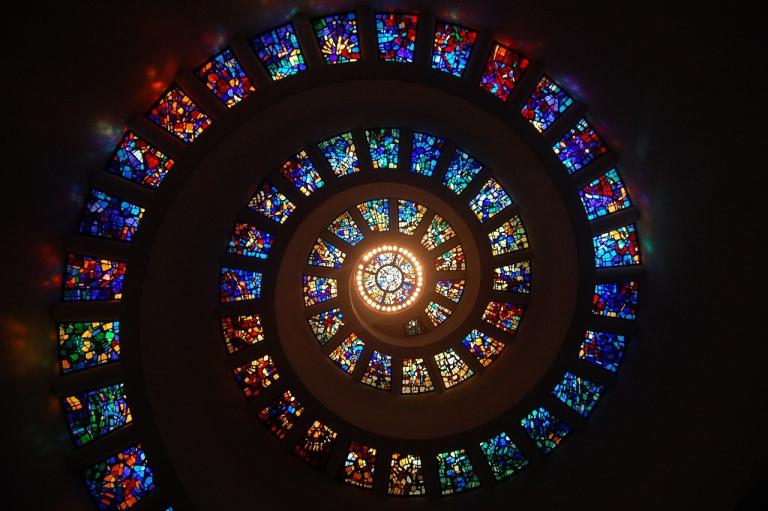
How Christians Deal with John 14:6
Generally speaking, it seems that Christians have dealt with this problem in one of three ways:
- They choose to take John 14:6 literally, and do everything they can to get their non-Christian friends and neighbors to become Christian. This often backfires, and leaves the non-Christians annoyed or angered, giving them a bad taste in their mouth about Jesus. And it leaves the Christian facing the idea that all the non-Christian people they genuinely love and care about are cut off from God, because they (the Christian) failed to effectively evangelize these folks. And, since there is a long tradition in Christianity that equates “being cut off from God” with “spending an eternity in the conscious torments of hell”, this scenario is frankly rather terrifying.
- Because of the problems behind door #1, many people from Christian backgrounds experience a crisis of faith. If part of the “requirement” of being a Christian is believing that non-Christians are going to hell, that’s enough of a sticking point to cause some people — maybe many people — to give up on Christianity. “Why should I worship a God,” they reason, “who is so vicious as to condemn the vast majority of his own creation to an eternity of torment, simply because they were born into the wrong religion?” In other words, a person is born into a Buddhist or Muslim or Jewish or Hindu (or whatever) family, conscientiously observes the religion of their upbringing, lives as good and moral a life as they can, but then they die and are told “Sorry, you didn’t follow Jesus, so off to the lake of fire you go!” Many people just say “no thanks” and either give up on spirituality altogether or become “spiritually independent” or “spiritual but not religious.” It’s important for Christians to understand that these people are not just lazy or rebellious — they are making a moral choice by rejecting an image of God that they see as abusive and hostile to the cultural diversity on planet earth.
- The third option some Christians take: to adopt a live and let live approach to people who follow different faiths. They see making the effort to live a good and virtuous life as ultimately mattering more than what religion you belong to. If they were pressed on the question of John 14:6, they would argue that it’s just an outdated concept in the Bible, similar to how the Bible insists that women should obey their husbands or that slaves should submit to their masters. Even if they believe the Bible is the inspired word of God, they don’t insist that every single verse carries the same weight, and that some of the verses — even when attributed to the mouth of Jesus himself — need to be understood as metaphorical or symbolic language. These Christians are willing to criticize their faith (including how the Bible is interpreted), but they still value being in a spiritual community so they don’t reject Christianity altogether.
Now, let’s go back to the reader’s question: are all paths the way, or is there only one way? I think you can only answer this question once you have decided how you understand God. If you think about it, each of the three bullet points above is based on a different image of God, which is to say, a different way of understanding who God is, and how God operates in the world.
- The first option: based on taking passages like John 14:6 literally — sees God as embodying a set of rules, and unyielding in his objective application of these rules. This image of God sees obedience to law as mattering more than relationships and bonds of love — everything simply depends on conformity (or lack thereof) to some objective standard. Either you come to God through Jesus, or you don’t. It’s very black-or-white. This image of God appeals to a personality type that requires a very concrete, structured way of seeing God and the universe.
- The second option prefers a God who is loving and relationship-centered, but perhaps is rather individualistic. This God doesn’t care about rules and regulations, and can’t be bothered with any community or social structure, especially if it impinges on a person’s individual rights. This God says “you do your thing, and I’ll do mine, and we can get together as long as it’s convenient for both of us.” This God-image has a good heart, but perhaps is not very patient with the messy work of building or sustaining community.
- The third option is, once again, a God who prioritizes love, but not by rejecting law. This God-image still values social and communal engagement, even if it means living with the tension of some ideas or principles that seem to be in conflict. This image of God is more comfortable with paradox and ambiguity. It values both relationship and individuality and tries to hold both of these values together, even though that may cause some unresolvable tension. This God-image does not reject law, but tries to balance rules and relationship in a creative way.
Granted, these are over simplifications. But for the purposes of answering my reader’s question:
- People who prefer the first image of God — the God who prioritizes rules and law over relationships and love — are more likely to believe that there is only one way (and all other “ways” are erroneous if not evil).
- People who prefer the second image of God — the God who prioritizes relationships and love over rules and law — are more likely to believe that “all paths are ‘the way'” or even that “all paths are one” (in practice this can mean refusing to follow any one path, since no one path is any better than any others).
- People who prefer the third image of God — that see God as holding love, relationships, law and rules in a creative tension — probably see value in all paths, but also have a sense that there is still one ultimate way or path.
The Spirituality of the “Ultimate” Path
In my experience, people who are serious about contemplative and mystical practice often will sooner or later find themselves embracing this third image of God. They value spiritual community (which may or may not look like the old models of institutional religion). But they also value the freedom of one’s conscience. They respect different religions and trust that a person can live a good and even virtuous life by following any positive/healthy spiritual path, but they also have fairly clear or nuanced ideas about what makes a path “positive” and “healthy”:
- A positive and healthy path is anchored in love, in compassion, in caring and kindness.
- A positive and healthy path promotes virtues, such as justice, humility, generosity and hospitality.
- A positive and healthy path acknowledges that no one is perfect and offers ways for people to repent, practice forgiveness, and work toward reconciliation.
- A positive and healthy path understands that we live in a diverse world where people look, think and act differently; difference in itself is not a bad thing.
- A positive and healthy path offers individuals ways to grow spirituality, through prayer, meditation, contemplation, and other meaningful spiritual practices.
- A positive and healthy path challenges individuals to become better people, by letting go of harmful or selfish behavior and embracing a higher, more “divine” consciousness.
- A positive and healthy path actively works to make the world a better place, by fighting injustice and oppression and systemic evils (such as poverty, racism or sexism).
Anyone who knows much about world religions knows that every path is a gloriously messy mixture of these kinds of positive/healthy qualities, but also more toxic or dysfunctional qualities: such as intolerance, prejudice, hostility to those who are different, judgmentalism, legalism, and spiritual chauvinism which leads to spiritual pride.
In other words, no one path is perfect — including Christianity (I write this as a practicing Christian). But every path that seeks to cultivate the above markers of positive/healthy spirituality, while imperfect, is still “on the right path.”
So, with this in mind, here’s my answer to the question: I believe in one path: the path of love, of compassion, of kindness and humility and holiness. I believe no one religion perfectly walks this path, but that many spiritual/religious traditions nevertheless do invite us to walk this “one path.” And since no one religion perfectly embodies the one path, I accept the fact that different paths exist. You could say there are “many paths but one way” — the way of love.
Now, a final word about John 14:6. Christians believe that Jesus is one with God, and that God is Love (see John 10:30 and I John 4:16). Therefore, to be a Christian means to believe that Jesus is one with Love. So look at John 14:6 this way:
Love is the way, the truth, and the life. No one comes to God except through Love.
In other words, we need to recognize a distinction between Jesus of Nazareth — the human being whom Christians celebrate as the Son of God, but other faiths do not see the same way — and what Richard Rohr calls The Universal Christ — that manifestation of God-is-Love that transcends all religious or cultural boundaries. It’s when we get caught up in reading John 14:6 from the limited perspective of Jesus of Nazareth that we get ourselves into trouble. But when we can read it from and through the eyes of Christ, one with God, one with Love: then the wisdom of this passage opens us up — not to legalism or religious exclusivism, but to an all-embracing compassion and mystical heart.
Enjoy reading this blog?
Click here to become a patron.

Previous Post
February 10, 2021
Theosis: A Misunderstood Mystical Concept
Next Post

March 9, 2021 A Meditation on the Spirituality of Healing (A Patreon Sneak Peek)
Browse Our Archives
Select a Category Activism Announcements Art Books Catholicism Celtic Christianity Christian mysticism Christianity Contemplation Current events Etc. Family humor interfaith dialogue Interfaith Wisdom Interspirituality Lay Cistercians Living the Faith Meditation movies Mysticism Mystics nature Poetry Reviews Scripture silence Spirituality Uncategorized Writing
Select a Month February 2025 January 2025 November 2024 September 2024 August 2024 July 2024 June 2024 May 2024 March 2024 January 2024 December 2023 November 2023 August 2023 June 2023 April 2023 March 2023 February 2023 January 2023 December 2022 November 2022 October 2022 September 2022 August 2022 July 2022 June 2022 May 2022 April 2022 February 2022 January 2022 December 2021 November 2021 October 2021 September 2021 August 2021 July 2021 June 2021 May 2021 April 2021 March 2021 February 2021 January 2021 December 2020 November 2020 October 2020 September 2020 August 2020 July 2020 June 2020 May 2020 April 2020 March 2020 February 2020 January 2020 December 2019 November 2019 October 2019 September 2019 August 2019 July 2019 June 2019 May 2019 April 2019 March 2019 February 2019 January 2019 December 2018 November 2018 October 2018 September 2018 August 2018 July 2018 June 2018 May 2018 April 2018 March 2018 February 2018 January 2018 December 2017 November 2017 October 2017 September 2017 August 2017 July 2017 June 2017 May 2017 April 2017 March 2017 February 2017 January 2017 December 2016 November 2016 October 2016 September 2016 August 2016 July 2016 June 2016 May 2016 March 2016 February 2016 January 2016 December 2015 November 2015 October 2015 September 2015 August 2015 July 2015 June 2015 May 2015 April 2015 March 2015 February 2015 January 2015 December 2014 November 2014 October 2014 September 2014 August 2014 July 2014 June 2014 May 2014 April 2014 March 2014 February 2014 January 2014 December 2013 October 2013 September 2013 July 2013 May 2013 January 2013 December 2012 November 2012 August 2012 July 2012 June 2012 March 2012 December 2011 September 2011 October 2010 August 2010 March 2010 September 2009 July 2008 January 2008 December 2007 September 2007 February 2007 January 2007 December 2004
Follow Us!
TAKE THE
Religious Wisdom Quiz
Who fell out of a window and was restored to life by Paul?
Select your answer to see how you score.
Silas Timothy Eutychus Barnabas
Support this
Column


Related posts from Carl McColman

"This Loving, Uniting Embrace": the Holy Ordinary

I Believe Prayer Changes Things. Here's a Few...

You don't have to become a monk to...

If You Worship an Angry God, You'll Be...
TRENDING AT PATHEOS Contemplative

Handy Contemplative Practices for Political Spaces
A Spiritually Grounded Presence In order to bring a spiritually grounded presence...

Halloween: The Holiday of Loving Your Neighbor
All Hallows Eve Is Halloween the least Christian holiday in America, or...

Can Love Be Saved? Some Thoughts on the...
Happy Valentine's Day! I recently published a post on Patreon called Can...

"This Loving, Uniting Embrace": the Holy Ordinary
Today's guest post is by Mark Longhurst, author of The Holy Ordinary:...

How Are We Called to Live?: More About...
How Are We Called to Live? Many of us struggle with discerning...

A Spiritual Practice of Reading: Join Us Online
A Spiritual Practice of Reading A healthy spiritual practice of reading is...
view all Contemplative blogs
Ad-Free & Subscriber Log-In Subscription Support
- About Us
- 2026 Calendar
- Videos
- Podcasts
- Library of World Religions
- Faith In Media Tracker
- Advertise With Us
- Write for Us
- Privacy Policy
- Terms of Service
- Do Not Sell My Data
- Contact Us
- Radiant Digital
- Manage Newsletter Subscriptions
- Unsubscribe From Notifications
- Sitemap
Copyright 2008-2026, Patheos. All rights reserved.
Subscription Support Ad-Free & Subscriber Log-In
Follow Patheos