
BuddhistCatholicContemplativeEvangelicalGeneral ChristianHinduJewishLatter-day SaintMuslimNew VisionsProgressive Christian
Beliefs
- Buddhist
- Catholic
- Contemplative
- Evangelical
- General Christian
- Hindu
- Jewish
- Latter-day Saint
- More Voices
- Muslim
- New Visions
- Pagan
- Progressive Christian
Topics
- Religion News
- Food and Religion
- Sports and Religion
- Religious Art
- Religious Music and Entertainment
- Religious Events
- History and Religion
- Style and Religion
- Politics and Religion
- Women in Religion
- Recreation Outdoors and Religion
- Business Finance and Religion
- Careers Workplace and Religion
- Education and Religion
- Family Parenting and Religion
- Health Fitness and Religion
- Home and Religion
- Relationships and Religion
- Technology and Religion
- Travel and Religion
Columnists
- Buddhist Columnists
- Business Finance and Religion Columnists
- Careers Workplace and Religion Columnists
- Catholic Columnists
- Contemplative Columnists
- Education and Religion Columnists
- Evangelists Columnists
- Family Parenting and Religion Columnists
- General Christian Columnists
- Health Fitness and Religion Columnists
- Hindu Columnists
- History and Religion Columnists
- Home and Religion Columnists
- Jewish Columnists
- More Voices Columnists
- Latter Day Columnists
- Muslim Columnists
- New Visions Columnists
- Nonreligious Columnists
- Pagan Columnists
- Politics and Religion Columnists
- Progressive Columnists
- Recreation Outdoors and Religion Columnists
- Relationships and Religion Columnists
- Religion News Columnists
- Religious Art Columnists
- Religious Events Columnists
- Religious Music and Entertainment Columnists
- Sports and Religion Columnists
- Style and Religion Columnists
- Technology and Religion Columnists
- Travel and Religion Columnists
- Women in Religion Columnists
Resource Library
- 2026 Calendar
- Library of World Religions
- The 100 Most Holy Places on Earth
- Patheos Answers
- Podcasts
- Videos
- Faith Leaders Database
- Anglican Episcopalian
- Bahai
- Baptist
- Buddhism
- Christianity
- Confucianism
- Eastern Orthodoxy
- Hinduism
- Holiness and Pentecostal
- ISKCON
- Islam
- Judaism
- Lutheran
- Methodist
- The Church of Jesus Christ of Latter-day Saints
- New Age
- Paganism
- Presbytarian and Reformed
- Protestantism
- Religion Behind the Scenes
- Roman Catholic
- Scientology
- Shia Islam
- Sikhism
- Sufism
- Sunni Islam
- Taoism
- Zen
- See all religions
Research Tools
 Ad-Free & Subscriber Log-In Subscription Support
Ad-Free & Subscriber Log-In Subscription Support
Follow Patheos 

- Trending:
- Forgiveness
- |
- Marriage
- |
- Consciousness
- |
- Death Penalty
- |
- Election
- |
- Halloween

- Home
- Contemplative
- James Martin: Learning to Pray
James Martin: Learning to Pray
Last updated on: February 2, 2021 at 9:12 am by Carl "Skye" McColman
James Martin: Learning to Pray 2021-02-02T09:12:53-04:00 Carl "Skye" McColman
Patheos Explore the world's faith through different perspectives on religion and spirituality! Patheos has the views of the prevalent religions and spiritualities of the world.
“Everyone can pray” is the hopeful and helpful opening message of Learning to Pray, the new book from bestselling Jesuit author James Martin. But he knows that many people don’t pray — even people who never miss church on Sundays. Prayer is something that, at least for those of us who grew up in religious homes, we learn as small children — but then it seems for so many of us, we never manage to graduate from the sing-song rhythms of “Now I lay me down to sleep.” Father Jim understands this, and so he has written this lovely introduction to adult prayer, that acknowledges that most of us have the praying skills of a five-year-old, but he never judges or talks down to us as he provides a simple, step-by-step introduction to this most spiritual of spiritual practices.
As a Jesuit, Martin is steeped in the spirituality of Saint Ignatius — a spirituality that takes praying seriously, that promotes prayer as a meaningful conversation with God and as the foundation of such practices as going on retreat, working with a spiritual director, and seeking to know and apply God’s will in one’s life. St. Ignatius is the creator of the “Spiritual Exercises,” an in-depth retreat experience modeled after the life of Christ and designed to assist the person doing the exercises in fostering a more fully-formed, lifelong sense of God’s presence and purpose in life.
But this is not a book about a program as rigorous as that. In Learning to Pray, Martin begins at the beginning, leading the reader through a thoughtful but accessible of survey of what prayer is, why it matters, and how many people can be praying far more than they realize. He tells wonderful stories from his own childhood of learning to pray “like a child,” and then discovering — thanks to his Jesuit formation — a more adult approach to spirituality in general, and prayer in particular.
After making the case for prayer, he offers a wonderful survey of the many ways to pray, from rote recitations of written prayers, to specifically Ignatian practices like the Daily Examen and using the imagination in prayer, to other common prayer disciplines, such as lectio divina, silent prayer, and keeping a prayer journal. Along the way, he touches on key topics, such as discernment, dealing with dryness and distractions, doubt, and even the possibility of having mystical experience (or not — one of Martin’s gifts is his ease at navigating both the impulse to believe and the impulse to question). He briefly touches on the ministry of spiritual direction/spiritual companionship and the important role that making retreats can play in the life of the praying person. All in all, he’s written a superb one-volume introduction to a topic that is vital to any serious spiritual seeker.
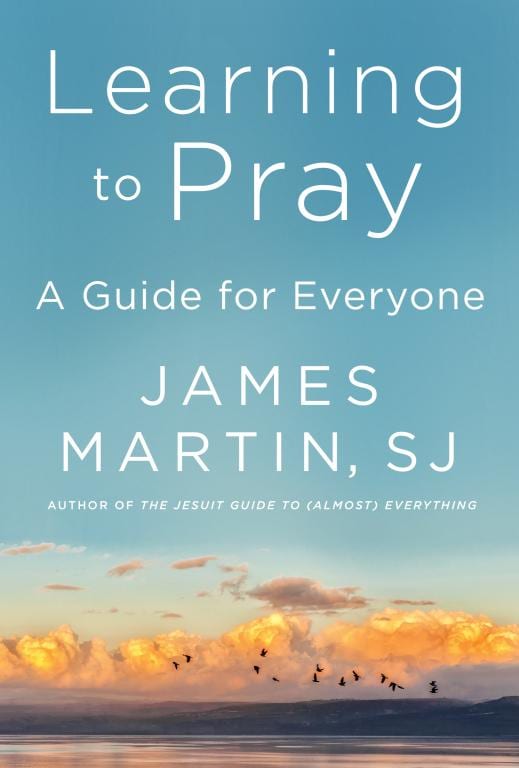
Plenty of treasures await the reader. Martin’s heartfelt description of himself as a boy, earnestly praying in efforts to bargain with God (and blissfully discovering his own capacity for spiritual knowing during his morning commute to school) is both disarming and relatable. I believe most readers will find his candor and clarity both appealing and trustworthy. Then, when he gets into the nitty gritty of talking about the experience of prayer as an adult, he truly shines. For example, he offers a helpful distinction between the role that emotions and insights play in prayer — which, to my mind, is so helpful that this section alone is worth the price of the book.
He also humbly relies on the insights of others, such as several of his Jesuit mentors (most notably William Barry, who passed away recently after a long and distinguished career as an author of spiritual books), and — in another one of my favorite passages — a lengthy anecdote from noted poet and memoirist Mary Karr, who describes a glittering mystical experience she received at a Christmas Eve Mass. Earthy, poetic, and even slightly amusing, it captures both the wonder and mystery that is possible to those who embrace the life of prayer, while also situating such a “mystical” encounter in a most ordinary and unassuming context — in the middle of an over-crowded holiday Mass.
Martin is unapologetic about being a Jesuit and therefore presenting prayer from a primarily, but not exclusively, Ignatian perspective. Still, this book is not just about Ignatian prayer — for one thing, Martin already wrote such a book, The Jesuit Guide to (Almost) Everything. Indeed some sections from that book were reprinted in Learning to Pray; nevertheless, it’s not meant to be a “Jesuit Guide to Prayer” but a “Guide to Prayer by a Jesuit.”
I do have two quibbles with the book. First, his description of lectio divina is actually a departure from the classical lectio model. Guigo II, the French Carthusian monk who wrote the classic description of lectio in the 12th century, explicitly describes the process as entailing “reading, meditation, prayer and contemplation.” I would have thought that Jesuits would be very comfortable with this venerable method of prayer, but Martin offers a model of lectio that is different in a surprising way. It comes from another Jesuit (and respected Biblical scholar) Daniel J. Harrington, and follows this process: reading, meditation, prayer, and action. I, for one, would never leave contemplation out of the lectio process, so this just seemed, well, odd. I can see the argument that all prayer should lead to “action” of some sort: prayer ought to make a difference in one’s life. But to just skip over contemplation altogether? That just seems to be misguided (and certainly does not respect the monastic tradition). My only guess is that Martin (or Harrington) felt that contemplation might be too lofty a goal for the beginner. I suppose one could make that argument, but I believe the heart of contemplation — silent adoration — is accessible even to children.
Not surprisingly, my other gripe has to do with the chapter on Centering Prayer. First, though, credit where it is due: I’m truly pleased that Martin saw fit to devote an entire chapter to this topic. Overall, he does a good job at commending silent forms of prayer to his readers. Indeed, I think the chapter should have been called “silent prayer.” That’s because he makes the mistake of eliding Centering Prayer with Christian Meditation — in other words, the teachings of Thomas Keating, Basil Pennington and William Meninger are basically blended together with the teachings of John Main and Laurence Freeman. For the beginner in prayer — and in silent prayer — this may not seem like much of a big deal. But as Cynthia Bourgeault so effectively demonstrated in The Heart of Centering Prayer, there are subtle but significant differences in these methods of prayer, that result in real and meaningful differences in the experience of silence. Part of the problem, it seems to me, is that Martin apparently drew only from one book about Centering Prayer, Finding Grace at the Center, that is now quite dated, having been first published in 1978. There’s nothing “wrong” with that title; it’s considered a seminal book on this method of prayer (and was probably favored by Martin because one of the contributors was a Jesuit). But he ignored some fairly basic guidelines on the Centering Prayer method as they have evolved over the last forty years, and thus does not present the ways in which this approach to silence is meaningfully distinct from other practices, including secular mindfulness exercises and eastern forms of meditation. If this chapter had been written with more care, it could have done a better job at describing how silent prayer is richly beautiful, deeply healing, and spiritually transformative.
A quibble and a gripe — but neither of these issues will keep me from heartily recommending this book to others. I can easily see how valuable it will be for RCIA, for spiritual direction, and for retreatants. While I might encourage people to supplement it with a more nuanced book on contemplation (such as Martin Laird’s Into the Silent Land), I think as a general introductory, one-volume book on prayer for the adult who is open to spiritual growth but doesn’t know where to begin, Learning to Pray will be a blessing for many.
Enjoy reading this blog?
Click here to become a patron.

Previous Post

February 1, 2021
A Dream About A High School Library and Standing Up For What’s Right
Next Post
February 6, 2021 What is Centering Prayer?
Browse Our Archives
Select a Category Activism Announcements Art Books Catholicism Celtic Christianity Christian mysticism Christianity Contemplation Current events Etc. Family humor interfaith dialogue Interfaith Wisdom Interspirituality Lay Cistercians Living the Faith Meditation movies Mysticism Mystics nature Poetry Reviews Scripture silence Spirituality Uncategorized Writing
Select a Month February 2025 January 2025 November 2024 September 2024 August 2024 July 2024 June 2024 May 2024 March 2024 January 2024 December 2023 November 2023 August 2023 June 2023 April 2023 March 2023 February 2023 January 2023 December 2022 November 2022 October 2022 September 2022 August 2022 July 2022 June 2022 May 2022 April 2022 February 2022 January 2022 December 2021 November 2021 October 2021 September 2021 August 2021 July 2021 June 2021 May 2021 April 2021 March 2021 February 2021 January 2021 December 2020 November 2020 October 2020 September 2020 August 2020 July 2020 June 2020 May 2020 April 2020 March 2020 February 2020 January 2020 December 2019 November 2019 October 2019 September 2019 August 2019 July 2019 June 2019 May 2019 April 2019 March 2019 February 2019 January 2019 December 2018 November 2018 October 2018 September 2018 August 2018 July 2018 June 2018 May 2018 April 2018 March 2018 February 2018 January 2018 December 2017 November 2017 October 2017 September 2017 August 2017 July 2017 June 2017 May 2017 April 2017 March 2017 February 2017 January 2017 December 2016 November 2016 October 2016 September 2016 August 2016 July 2016 June 2016 May 2016 March 2016 February 2016 January 2016 December 2015 November 2015 October 2015 September 2015 August 2015 July 2015 June 2015 May 2015 April 2015 March 2015 February 2015 January 2015 December 2014 November 2014 October 2014 September 2014 August 2014 July 2014 June 2014 May 2014 April 2014 March 2014 February 2014 January 2014 December 2013 October 2013 September 2013 July 2013 May 2013 January 2013 December 2012 November 2012 August 2012 July 2012 June 2012 March 2012 December 2011 September 2011 October 2010 August 2010 March 2010 September 2009 July 2008 January 2008 December 2007 September 2007 February 2007 January 2007 December 2004
Follow Us!
TAKE THE
Religious Wisdom Quiz
Which empire destroyed the First Temple in Jerusalem?
Select your answer to see how you score.
Babylonian Empire Persian Empire Roman Empire Assyrian Empire
Support this
Column


Related posts from Carl McColman

"This Loving, Uniting Embrace": the Holy Ordinary

I Believe Prayer Changes Things. Here's a Few...

If You Worship an Angry God, You'll Be...

The Difference Between Apophatic and Kataphatic Spirituality
TRENDING AT PATHEOS Contemplative

Handy Contemplative Practices for Political Spaces
A Spiritually Grounded Presence In order to bring a spiritually grounded presence...

Halloween: The Holiday of Loving Your Neighbor
All Hallows Eve Is Halloween the least Christian holiday in America, or...

Can Love Be Saved? Some Thoughts on the...
Happy Valentine's Day! I recently published a post on Patreon called Can...

"This Loving, Uniting Embrace": the Holy Ordinary
Today's guest post is by Mark Longhurst, author of The Holy Ordinary:...

How Are We Called to Live?: More About...
How Are We Called to Live? Many of us struggle with discerning...

A Spiritual Practice of Reading: Join Us Online
A Spiritual Practice of Reading A healthy spiritual practice of reading is...
view all Contemplative blogs
Ad-Free & Subscriber Log-In Subscription Support
- About Us
- 2026 Calendar
- Videos
- Podcasts
- Library of World Religions
- Faith In Media Tracker
- Advertise With Us
- Write for Us
- Privacy Policy
- Terms of Service
- Do Not Sell My Data
- Contact Us
- Radiant Digital
- Manage Newsletter Subscriptions
- Unsubscribe From Notifications
- Sitemap
Copyright 2008-2026, Patheos. All rights reserved.
Subscription Support Ad-Free & Subscriber Log-In
Follow Patheos