
BuddhistCatholicContemplativeEvangelicalGeneral ChristianHinduJewishLatter-day SaintMuslimNew VisionsProgressive Christian
Beliefs
- Buddhist
- Catholic
- Contemplative
- Evangelical
- General Christian
- Hindu
- Jewish
- Latter-day Saint
- More Voices
- Muslim
- New Visions
- Pagan
- Progressive Christian
Topics
- Religion News
- Food and Religion
- Sports and Religion
- Religious Art
- Religious Music and Entertainment
- Religious Events
- History and Religion
- Style and Religion
- Politics and Religion
- Women in Religion
- Recreation Outdoors and Religion
- Business Finance and Religion
- Careers Workplace and Religion
- Education and Religion
- Family Parenting and Religion
- Health Fitness and Religion
- Home and Religion
- Relationships and Religion
- Technology and Religion
- Travel and Religion
Columnists
- Buddhist Columnists
- Business Finance and Religion Columnists
- Careers Workplace and Religion Columnists
- Catholic Columnists
- Contemplative Columnists
- Education and Religion Columnists
- Evangelists Columnists
- Family Parenting and Religion Columnists
- General Christian Columnists
- Health Fitness and Religion Columnists
- Hindu Columnists
- History and Religion Columnists
- Home and Religion Columnists
- Jewish Columnists
- More Voices Columnists
- Latter Day Columnists
- Muslim Columnists
- New Visions Columnists
- Nonreligious Columnists
- Pagan Columnists
- Politics and Religion Columnists
- Progressive Columnists
- Recreation Outdoors and Religion Columnists
- Relationships and Religion Columnists
- Religion News Columnists
- Religious Art Columnists
- Religious Events Columnists
- Religious Music and Entertainment Columnists
- Sports and Religion Columnists
- Style and Religion Columnists
- Technology and Religion Columnists
- Travel and Religion Columnists
- Women in Religion Columnists
Resource Library
- 2026 Calendar
- Library of World Religions
- The 100 Most Holy Places on Earth
- Patheos Answers
- Podcasts
- Videos
- Faith Leaders Database
- Anglican Episcopalian
- Bahai
- Baptist
- Buddhism
- Christianity
- Confucianism
- Eastern Orthodoxy
- Hinduism
- Holiness and Pentecostal
- ISKCON
- Islam
- Judaism
- Lutheran
- Methodist
- The Church of Jesus Christ of Latter-day Saints
- New Age
- Paganism
- Presbytarian and Reformed
- Protestantism
- Religion Behind the Scenes
- Roman Catholic
- Scientology
- Shia Islam
- Sikhism
- Sufism
- Sunni Islam
- Taoism
- Zen
- See all religions
Research Tools
 Ad-Free & Subscriber Log-In Subscription Support
Follow Patheos 

- Trending:
- Advent
- |
- Forgiveness
- |
- Thanksgiving
- |
- Election
- |
- Seasonal Holidays
- |
- Marriage

- Home
- Contemplative
- How do I choose a contemplative lay order? And do I have to be Catholic to do so?
How do I choose a contemplative lay order? And do I have to be Catholic to do so?
Last updated on: December 14, 2020 at 11:15 am by Carl "Skye" McColman
How do I choose a contemplative lay order? And do I have to be Catholic to do so? 2020-12-07T08:41:24-04:00 Carl "Skye" McColman
Patheos Explore the world's faith through different perspectives on religion and spirituality! Patheos has the views of the prevalent religions and spiritualities of the world.
A reader recently wrote to me:
Dear Carl, I grew up as a Protestant, but as I’ve journeyed into Contemplative Christianity over the last while I’ve become more amenable to Roman Catholicism. I have been wondering about lay orders and how to connect with the contemplative tradition through a lay order. I was wondering if you could shed some light on which lay orders there are (main ones) and what the main focus is in each one, and specifically which one, if any, “carries the most weight” of the contemplative tradition. I should note that I have a particular affinity for St. Francis of Assisi. I just read Chasing Francis and am captivated by Francis!
Thanks for your message.
As you know, there are many lay communities within the Catholic world, some but not all associated with the historic religious orders. Benedictine oblates, Lay Carmelites, Secular Franciscans, Lay Cistercians, Lay Dominicans… along with groups that may not be as well known but offer other opportunities for lay Catholics to associate, serve, learn and worship together, including Focolare, Society of Our Lady of the Holy Trinity (SOLT), and of course, the notorious Opus Dei. Some of these groups are for lay people specifically, while others offer membership to both lay, ordained, and consecrated religious Catholics.
So there are many groups to choose from! Each group has its own charism or identity based on the group’s gifts or mission or history. To put in more down-to-earth language, some groups are more conservative, others more progressive, others more charismatic, others more apostolic (service/outreach oriented) and so forth. You describe yourself as on a journey “into contemplative Christianity” (which is beautiful) and I think it’s important to consider that not all Catholics (or Catholic groups) consider contemplation a priority. Some groups are even hostile to some forms of contemplative practice, like Centering Prayer, which they see as too interfaith-friendly.
Complicating matters further is that groups or fraternities within lay orders are like parishes — each one has its own identity. I’m a Lay Cistercian and I can tell you after more than 13 years of involvement (and getting to know Lay Cistercians across the country and even the world), different LC communities have each their own “personality” and some are more contemplative than others, some more academic/theological, some more devotional, etc. So it’s not just about getting to know the overall charism of the order, but also getting to know the character of your local fraternity or group affiliated within that order.
For what it’s worth, in the past few years I’ve become active with Contemplative Outreach, which of course is an ecumenical group dedicated to learning and practicing Centering Prayer. I find that it is a much more supportive and formative environment for my own contemplative practice. That may just be because my “home” Lay Cistercian community is, in all candor, not as contemplative as I would like it to be (our founding monastic advisor was a lovely old monk but much more charismatic than contemplative in his spirituality, and of course his personality put its stamp on the group at large). But my point is that if you want contemplative community, perhaps your first priority should be to look at specifically contemplative organizations, even if they are not necessarily structured as lay orders.
And I think it’s important to keep in mind that even if a lay group has a historical tie to some of the great mystics (for example, Lay Carmelites can claim Teresa of Ávila and John of the Cross as “their own”), that does not guarantee any particular commitment to contemplative practice or immersion into mystical theology on the part of the group. The group will be more shaped by the personalities of its current leadership than by the profile of its historical saints.
Which leads us to your interest in Franciscan spirituality. I’m not a Secular Franciscan but I have led retreats on Franciscan spirituality and for Franciscan groups. I find Franciscan spirituality to be very rich and beautiful, a healthy integration of both down-t0-earth and contemplative/mystical strands of spirituality. So I do hope you will explore them. Furthermore two of the most helpful contemplative writers active today are Franciscan: Richard Rohr and Ilia Delio. Historically, in addition to St. Francis and St. Clare you’ve got great mystics like St. Bonaventure, Angela of Foligno, John Dun Scotus, and Thea Bowman. So there is plenty of rich material that your local Franciscan fraternity can draw on.
Now, you mentioned being raised Protestant and becoming “more amenable” to Roman Catholicism, but you did not specify whether you actually have become a Catholic or not. That of course is a very personal decision that can often have big consequences (families and friends often can be unsupportive of such a move). I bring this up because the Franciscans, in particular, have grown beyond the confines of institutional Catholicism — this is true of some of the other orders as well: you can be a Protestant and still become a Benedictine Oblate or a Lay Cistercian, depending on the customs of the local monastery or community — some welcome non-Catholics, some don’t. So you would need to check out the culture of your local group or monastery.
But back to the Franciscans: there are, in addition to the Secular Franciscan Order within Catholicism, two other groups worth knowing about: an Anglican Society of Saint Francis, and the Order of Ecumenical Franciscans. Neither of these groups require you to be a practicing Catholic in order to join (SSF might want you to be an Anglican, though — I’m not a member so I don’t know for sure, but you can see what they say if you contact them). I’m not trying to dissuade you from becoming a Catholic, but I do think it’s good to know that there are opportunities for groups like this beyond the institutional boundaries of Catholicism. In my experience, non-Catholics who explore contemplative spirituality (whether through Contemplative Outreach, a lay order, or just privately) tend to appreciate the good and beautiful dimensions of Catholicism, even if they remain primarily anchored in a non-Catholic faith community. That kind of ecumenical friendliness is, it seems to me, the work of the Holy Spirit!
So, to summarize:
- There are many different lay orders within Catholicism, and even extending beyond the boundaries of the institutional church;
- Each order as a whole has its own personality or “charism”; furthermore, individual fraternities or groups within each order has its own character as well;
- Some groups are more contemplative than others, and some might even be biased against some forms of contemplative practice;
- If your main goal is a contemplative community, consider explicitly contemplative organizations like Contemplative Outreach or World Community of Christian Meditation, both of which have Catholic roots but today are ecumenical in their scope;
- Because of your interest in Franciscan spirituality, consider exploring one of the non-Catholic Franciscan communities;
- Try to see the decision whether or not to become Catholic and the decision whether or not to join a lay order as two separate matters. You can do one without doing the other.
I hope this is helpful. Please let me know if you have further questions.
Enjoy reading this blog?
Click here to become a patron.

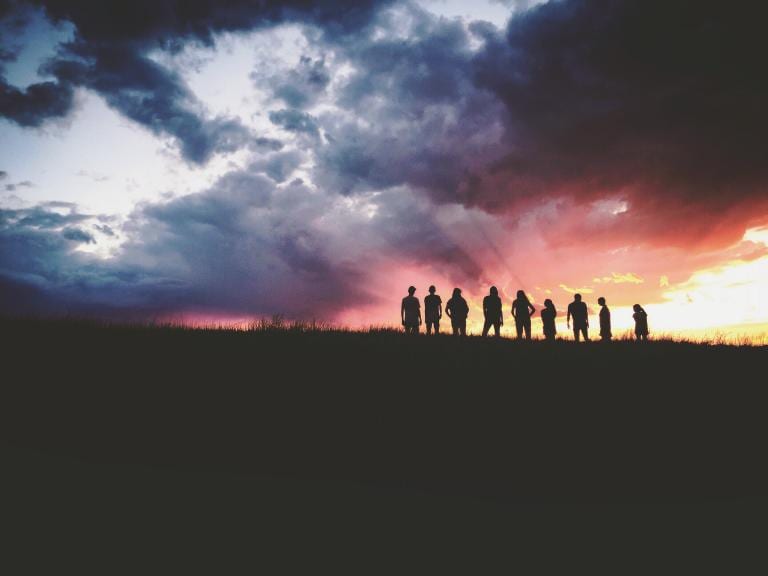
Featured photo by Hudson Hintze.
Previous Post

November 28, 2020
Heart to Heart, Simple Awareness of Love
Next Post

December 28, 2020 A Mystical Catechism
Browse Our Archives
Select a Category Activism Announcements Art Books Catholicism Celtic Christianity Christian mysticism Christianity Contemplation Current events Etc. Family humor interfaith dialogue Interfaith Wisdom Interspirituality Lay Cistercians Living the Faith Meditation movies Mysticism Mystics nature Poetry Reviews Scripture silence Spirituality Uncategorized Writing
Select a Month February 2025 January 2025 November 2024 September 2024 August 2024 July 2024 June 2024 May 2024 March 2024 January 2024 December 2023 November 2023 August 2023 June 2023 April 2023 March 2023 February 2023 January 2023 December 2022 November 2022 October 2022 September 2022 August 2022 July 2022 June 2022 May 2022 April 2022 February 2022 January 2022 December 2021 November 2021 October 2021 September 2021 August 2021 July 2021 June 2021 May 2021 April 2021 March 2021 February 2021 January 2021 December 2020 November 2020 October 2020 September 2020 August 2020 July 2020 June 2020 May 2020 April 2020 March 2020 February 2020 January 2020 December 2019 November 2019 October 2019 September 2019 August 2019 July 2019 June 2019 May 2019 April 2019 March 2019 February 2019 January 2019 December 2018 November 2018 October 2018 September 2018 August 2018 July 2018 June 2018 May 2018 April 2018 March 2018 February 2018 January 2018 December 2017 November 2017 October 2017 September 2017 August 2017 July 2017 June 2017 May 2017 April 2017 March 2017 February 2017 January 2017 December 2016 November 2016 October 2016 September 2016 August 2016 July 2016 June 2016 May 2016 March 2016 February 2016 January 2016 December 2015 November 2015 October 2015 September 2015 August 2015 July 2015 June 2015 May 2015 April 2015 March 2015 February 2015 January 2015 December 2014 November 2014 October 2014 September 2014 August 2014 July 2014 June 2014 May 2014 April 2014 March 2014 February 2014 January 2014 December 2013 October 2013 September 2013 July 2013 May 2013 January 2013 December 2012 November 2012 August 2012 July 2012 June 2012 March 2012 December 2011 September 2011 October 2010 August 2010 March 2010 September 2009 July 2008 January 2008 December 2007 September 2007 February 2007 January 2007 December 2004
Follow Us!
TAKE THE
Religious Wisdom Quiz
Who did God give the Ten Commandments to?
Select your answer to see how you score.
Abraham Joshua Noah Moses
Support this
Column


Related posts from Carl McColman

Four Dimensions of Mindfulness and Centering Prayer
A Contemplative Reflection on the Death of Christ
Join Me for "24 Meditations for 2024"

LSD, Anxiety, and Contemplation: Can Psychedelic Therapy Support...
TRENDING AT PATHEOS Contemplative

Handy Contemplative Practices for Political Spaces
A Spiritually Grounded Presence In order to bring a spiritually grounded presence...

Halloween: The Holiday of Loving Your Neighbor
All Hallows Eve Is Halloween the least Christian holiday in America, or...

Can Love Be Saved? Some Thoughts on the...
Happy Valentine's Day! I recently published a post on Patreon called Can...
"This Loving, Uniting Embrace": the Holy Ordinary
Today's guest post is by Mark Longhurst, author of The Holy Ordinary:...

How Are We Called to Live?: More About...
How Are We Called to Live? Many of us struggle with discerning...

A Spiritual Practice of Reading: Join Us Online
A Spiritual Practice of Reading A healthy spiritual practice of reading is...
view all Contemplative blogs
Ad-Free & Subscriber Log-In Subscription Support
- About Us
- 2026 Calendar
- Videos
- Podcasts
- Library of World Religions
- Faith In Media Tracker
- Advertise With Us
- Write for Us
- Privacy Policy
- Terms of Service
- Do Not Sell My Data
- Contact Us
- Radiant Digital
- Manage Newsletter Subscriptions
- Unsubscribe From Notifications
- Sitemap
Copyright 2008-2026, Patheos, part of the Radiant Digital network of media brands. All rights reserved.
Subscription Support Ad-Free & Subscriber Log-In
Follow Patheos