
BuddhistCatholicContemplativeEvangelicalGeneral ChristianHinduJewishLatter-day SaintMuslimNew VisionsProgressive Christian
Beliefs
- Buddhist
- Catholic
- Contemplative
- Evangelical
- General Christian
- Hindu
- Jewish
- Latter-day Saint
- More Voices
- Muslim
- New Visions
- Pagan
- Progressive Christian
Topics
- Religion News
- Food and Religion
- Sports and Religion
- Religious Art
- Religious Music and Entertainment
- Religious Events
- History and Religion
- Style and Religion
- Politics and Religion
- Women in Religion
- Recreation Outdoors and Religion
- Business Finance and Religion
- Careers Workplace and Religion
- Education and Religion
- Family Parenting and Religion
- Health Fitness and Religion
- Home and Religion
- Relationships and Religion
- Technology and Religion
- Travel and Religion
Columnists
- Buddhist Columnists
- Business Finance and Religion Columnists
- Careers Workplace and Religion Columnists
- Catholic Columnists
- Contemplative Columnists
- Education and Religion Columnists
- Evangelists Columnists
- Family Parenting and Religion Columnists
- General Christian Columnists
- Health Fitness and Religion Columnists
- Hindu Columnists
- History and Religion Columnists
- Home and Religion Columnists
- Jewish Columnists
- More Voices Columnists
- Latter Day Columnists
- Muslim Columnists
- New Visions Columnists
- Nonreligious Columnists
- Pagan Columnists
- Politics and Religion Columnists
- Progressive Columnists
- Recreation Outdoors and Religion Columnists
- Relationships and Religion Columnists
- Religion News Columnists
- Religious Art Columnists
- Religious Events Columnists
- Religious Music and Entertainment Columnists
- Sports and Religion Columnists
- Style and Religion Columnists
- Technology and Religion Columnists
- Travel and Religion Columnists
- Women in Religion Columnists
Resource Library
- 2026 Calendar
- Library of World Religions
- The 100 Most Holy Places on Earth
- Patheos Answers
- Podcasts
- Videos
- Faith Leaders Database
- Anglican Episcopalian
- Bahai
- Baptist
- Buddhism
- Christianity
- Confucianism
- Eastern Orthodoxy
- Hinduism
- Holiness and Pentecostal
- ISKCON
- Islam
- Judaism
- Lutheran
- Methodist
- The Church of Jesus Christ of Latter-day Saints
- New Age
- Paganism
- Presbytarian and Reformed
- Protestantism
- Religion Behind the Scenes
- Roman Catholic
- Scientology
- Shia Islam
- Sikhism
- Sufism
- Sunni Islam
- Taoism
- Zen
- See all religions
Research Tools
 Ad-Free & Subscriber Log-In Subscription Support
Ad-Free & Subscriber Log-In Subscription Support
Follow Patheos 

- Trending:
- Forgiveness
- |
- Marriage
- |
- Consciousness
- |
- Death Penalty
- |
- Election
- |
- Halloween

- Home
- Contemplative
- A Mystical Catechism
A Mystical Catechism
Last updated on: December 28, 2020 at 11:16 am by Carl "Skye" McColman
A Mystical Catechism 2020-12-07T20:30:04-04:00 Carl "Skye" McColman
Patheos Explore the world's faith through different perspectives on religion and spirituality! Patheos has the views of the prevalent religions and spiritualities of the world.
One of my dreams is to create a Christian Mysticism Knowledge Base (or, perhaps better described as a Christian Mysticism Un-knowledge Base!). I wrote the following questions a while back thinking that they would go into the FAQ page of a Mysticism Knowledge Base. And maybe they will. But for now, I’m publishing them here.

What is Christian Mysticism?
Christian mysticism, an aspect of Christian spirituality, emphasizes knowing and encountering God, here and now, in our lives today. The Christian mystics, renowned spiritual teachers from each of the last 20 centuries, were men and women who knew this Divine encounter, and taught and inspired others to do the same. Mysticism emphasizes prayer, meditation, contemplation, worship, community, and living a virtuous life as keys to discovering union with God.
Why does it matter?
Many Christians think the point of religion is to practice self-denial on earth in order to go to heaven after you die. Meanwhile, more and more people (especially younger people) find that spirituality matters more to them than religion. Christian mysticism, first and foremost, is a spiritual path – and it emphasizes not some abstract reward after we die, but finding joy, meaning, purpose, and a sense of real communion, in our present day lives. So in a very real way, Christian mysticism can help us to have a better relationship with God – starting today.
Why did I never learn about this in my church growing up?
For a number of historical reasons, Christianity developed a culture that emphasized religion over spirituality: for the average person, being a Christian meant obeying church teachings, living a moral life, supporting the church financially, and… well, not much else. Even practices like Bible study were more for the “head” than the “heart.” Historically, mysticism was kept alive by monks and nuns, but especially starting in the twentieth century, more Christians are seeking to reclaim this all-but-forgotten spiritual heritage – which is meant for everybody.
Isn’t mysticism just for Catholics?
Many of the great mystics for much of Christian history were monks and nuns. Since most Protestant churches do not have monasteries or convents, these “custodians” of mysticism have tended to be Catholic or Orthodox. However, it should be noted that mysticism is rooted in the BIble, and nearly all of the teachings of the great mystics are universal – appropriate for Christians of all denominations. There have been some great Protestant mystics, like Evelyn Underhill, George Fox, and Howard Thurman.
Is this really Christian? It sounds like something imported from other religions.
Mysticism is a universal spiritual phenomenon – like meditation and prayer, forms of mysticism can be found in all the world’s great religious traditions. Especially in America after World War II, many people became familiar with forms of eastern spirituality and mysticism – Zen Buddhism, Vedanta, and religious forms of Yoga. With its emphasis on meditation and contemplation, Christian mysticism seems very similar to eastern religions. But Christian mysticism is Christ-centered, and based on the teachings of the Bible and the Christian saints.
What is the difference between mysticism and contemplation?
Many people use these words almost interchangeably. They are both difficult to define, and have been used to mean different things by different writers and teachers. For our purposes, think of it this way: mysticism is the theory and contemplation is the practice. In other words, mysticism entails the philosophy and theology of Christian spirituality that is centered on union with God. Contemplation refers to prayer and other spiritual practices that help us to recognize and discover God’s abiding presence in our lives.
Do you have to be a Christian to become a mystic?
Not all types of mysticism are Christian. If you are interested in mysticism in a general sense or your primary focus is interfaith or interspiritual practice, then you might be interested in learning about Christian mysticism without feeling any need to become a Christian. The focus of Via Mysticism is on the uniquely beautiful Christian expression of mysticism. Since Christian mysticism points us toward deep intimacy with Christ and union with the God who is recognized as the Holy Trinity, naturally anyone who is serious about this path would identify as a Christian.
What did Karl Rahner mean when he said “The Christian of the future will be a mystic or will not exist?”
Most people, especially in Europe and North America, recognize that Christianity is undergoing major transformation in our time. Many churches are losing members, and some entire congregations have had to close their doors. This seems to be the fulfillment of Rahner’s warning about “the Christian of the future” no longer existing. If we take Rahner at his word, perhaps the best hope for the future of Christianity is for Christians to embrace the spiritual heart of Christianity – the mystical way – rather than just the institution.
Why do you have a Patreon page (and ask for donations)?
My blog (mirrored at www.anamchara.com and www.patheos.com/blogs/carlmccolman is a labor of love. I’ve been a student of Christian mysticism for over forty years and a full-time Christian speaker/writer since 2013. Maintaining a blog is a significant commitment of time, and there is no “salary” for doing so (Patheos does pay a small stipend from their advertising revenue but it amounts to just a few dollars each month). Through the generous support of readers like you, my blog is available as a free online resource for anyone who wants to learn about — and explore — the mystical way. For those who do make a pledge, exclusive additional content is available at www.patreon.com/carlmccolman.
Enjoy reading this blog?
Click here to become a patron.

Featured image photo by Simone Secci.


Browse Our Archives
Select a Category Activism Announcements Art Books Catholicism Celtic Christianity Christian mysticism Christianity Contemplation Current events Etc. Family humor interfaith dialogue Interfaith Wisdom Interspirituality Lay Cistercians Living the Faith Meditation movies Mysticism Mystics nature Poetry Reviews Scripture silence Spirituality Uncategorized Writing
Select a Month February 2025 January 2025 November 2024 September 2024 August 2024 July 2024 June 2024 May 2024 March 2024 January 2024 December 2023 November 2023 August 2023 June 2023 April 2023 March 2023 February 2023 January 2023 December 2022 November 2022 October 2022 September 2022 August 2022 July 2022 June 2022 May 2022 April 2022 February 2022 January 2022 December 2021 November 2021 October 2021 September 2021 August 2021 July 2021 June 2021 May 2021 April 2021 March 2021 February 2021 January 2021 December 2020 November 2020 October 2020 September 2020 August 2020 July 2020 June 2020 May 2020 April 2020 March 2020 February 2020 January 2020 December 2019 November 2019 October 2019 September 2019 August 2019 July 2019 June 2019 May 2019 April 2019 March 2019 February 2019 January 2019 December 2018 November 2018 October 2018 September 2018 August 2018 July 2018 June 2018 May 2018 April 2018 March 2018 February 2018 January 2018 December 2017 November 2017 October 2017 September 2017 August 2017 July 2017 June 2017 May 2017 April 2017 March 2017 February 2017 January 2017 December 2016 November 2016 October 2016 September 2016 August 2016 July 2016 June 2016 May 2016 March 2016 February 2016 January 2016 December 2015 November 2015 October 2015 September 2015 August 2015 July 2015 June 2015 May 2015 April 2015 March 2015 February 2015 January 2015 December 2014 November 2014 October 2014 September 2014 August 2014 July 2014 June 2014 May 2014 April 2014 March 2014 February 2014 January 2014 December 2013 October 2013 September 2013 July 2013 May 2013 January 2013 December 2012 November 2012 August 2012 July 2012 June 2012 March 2012 December 2011 September 2011 October 2010 August 2010 March 2010 September 2009 July 2008 January 2008 December 2007 September 2007 February 2007 January 2007 December 2004
Follow Us!
TAKE THE
Religious Wisdom Quiz
What does "Barnabas" mean?
Select your answer to see how you score.
God is my help Servant of the Lord The Chosen One Son of Encouragement
Support this
Column


Related posts from Carl McColman

You don't have to become a monk to...

Mysticism, Faith, and "Knowing" God's Will

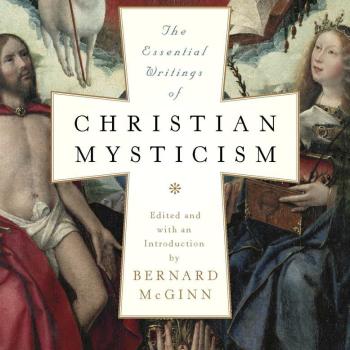
Twelve Mystical Anthologies That Belong in Every Contemplative...
TRENDING AT PATHEOS Contemplative

Handy Contemplative Practices for Political Spaces
A Spiritually Grounded Presence In order to bring a spiritually grounded presence...

Halloween: The Holiday of Loving Your Neighbor
All Hallows Eve Is Halloween the least Christian holiday in America, or...

Can Love Be Saved? Some Thoughts on the...
Happy Valentine's Day! I recently published a post on Patreon called Can...

"This Loving, Uniting Embrace": the Holy Ordinary
Today's guest post is by Mark Longhurst, author of The Holy Ordinary:...

How Are We Called to Live?: More About...
How Are We Called to Live? Many of us struggle with discerning...

A Spiritual Practice of Reading: Join Us Online
A Spiritual Practice of Reading A healthy spiritual practice of reading is...
view all Contemplative blogs
Ad-Free & Subscriber Log-In Subscription Support
- About Us
- 2026 Calendar
- Videos
- Podcasts
- Library of World Religions
- Faith In Media Tracker
- Advertise With Us
- Write for Us
- Privacy Policy
- Terms of Service
- Do Not Sell My Data
- Contact Us
- Radiant Digital
- Manage Newsletter Subscriptions
- Unsubscribe From Notifications
- Sitemap
Copyright 2008-2026, Patheos. All rights reserved.
Subscription Support Ad-Free & Subscriber Log-In
Follow Patheos