
BuddhistCatholicContemplativeEvangelicalGeneral ChristianHinduJewishLatter-day SaintMuslimNew VisionsProgressive Christian
Beliefs
- Buddhist
- Catholic
- Contemplative
- Evangelical
- General Christian
- Hindu
- Jewish
- Latter-day Saint
- More Voices
- Muslim
- New Visions
- Pagan
- Progressive Christian
Topics
- Religion News
- Food and Religion
- Sports and Religion
- Religious Art
- Religious Music and Entertainment
- Religious Events
- History and Religion
- Style and Religion
- Politics and Religion
- Women in Religion
- Recreation Outdoors and Religion
- Business Finance and Religion
- Careers Workplace and Religion
- Education and Religion
- Family Parenting and Religion
- Health Fitness and Religion
- Home and Religion
- Relationships and Religion
- Technology and Religion
- Travel and Religion
Columnists
- Buddhist Columnists
- Business Finance and Religion Columnists
- Careers Workplace and Religion Columnists
- Catholic Columnists
- Contemplative Columnists
- Education and Religion Columnists
- Evangelists Columnists
- Family Parenting and Religion Columnists
- General Christian Columnists
- Health Fitness and Religion Columnists
- Hindu Columnists
- History and Religion Columnists
- Home and Religion Columnists
- Jewish Columnists
- More Voices Columnists
- Latter Day Columnists
- Muslim Columnists
- New Visions Columnists
- Nonreligious Columnists
- Pagan Columnists
- Politics and Religion Columnists
- Progressive Columnists
- Recreation Outdoors and Religion Columnists
- Relationships and Religion Columnists
- Religion News Columnists
- Religious Art Columnists
- Religious Events Columnists
- Religious Music and Entertainment Columnists
- Sports and Religion Columnists
- Style and Religion Columnists
- Technology and Religion Columnists
- Travel and Religion Columnists
- Women in Religion Columnists
Resource Library
- 2026 Calendar
- Library of World Religions
- The 100 Most Holy Places on Earth
- Patheos Answers
- Podcasts
- Videos
- Faith Leaders Database
- Anglican Episcopalian
- Bahai
- Baptist
- Buddhism
- Christianity
- Confucianism
- Eastern Orthodoxy
- Hinduism
- Holiness and Pentecostal
- ISKCON
- Islam
- Judaism
- Lutheran
- Methodist
- The Church of Jesus Christ of Latter-day Saints
- New Age
- Paganism
- Presbytarian and Reformed
- Protestantism
- Religion Behind the Scenes
- Roman Catholic
- Scientology
- Shia Islam
- Sikhism
- Sufism
- Sunni Islam
- Taoism
- Zen
- See all religions
Research Tools
 Ad-Free & Subscriber Log-In Subscription Support
Ad-Free & Subscriber Log-In Subscription Support
Follow Patheos 

- Trending:
- Forgiveness
- |
- Marriage
- |
- Consciousness
- |
- Death Penalty
- |
- Election
- |
- Halloween

- Home
- Contemplative
- Heart to Heart, Simple Awareness of Love
Heart to Heart, Simple Awareness of Love
Last updated on: November 28, 2020 at 9:48 am by Carl "Skye" McColman
Heart to Heart, Simple Awareness of Love 2020-11-25T09:51:50-04:00 Carl "Skye" McColman
Patheos Explore the world's faith through different perspectives on religion and spirituality! Patheos has the views of the prevalent religions and spiritualities of the world.
Recently I received this message from a new reader of this blog…
Hi Carl, I found your site yesterday.
I am a beginner and the Lord has been telling me to practice simple inner awareness of love. Is this what you’re doing?
I find it very difficult and I’m not sure I’m doing it right. I’m super frustrated. I’m not sure of what or how I’m to be aware. Am I supposed to just notice feelings, and or sensations in my body? He also spoke about my “body of love”. Also, this is different than the silent prayer. Jesus has also spoke about heart to heart connection. This is where I’m confused. How can I just be nothing, pitiful, weak… he also said, and offer my heart to his and connect with him, because I’m actually lifting my heart to his… please help!
Thanks for your email. It sounds like you are experiencing a call to a more silent and contemplative way of praying. The way you describe it, it sounds like a truly beautiful call indeed.
Contemplation has been defined as “A form of wordless prayer in which mind and heart focus on God’s greatness and goodness in affective, loving adoration; to look on Jesus and the mysteries of his life with faith and love.” When you speak of a “simple inner awareness of love,” to me that sounds a lot like **“**wordless prayer…in affective, loving adoration”!
So yes, I do think you are being called to something similar to the way I pray and what I write about in this blog. Contemplative prayer is an umbrella term for several different methods or approaches to prayer, but generally speaking they all involve “wordless adoration” — in other words, the emphasis is not on language or thought, “talking to God,” but on gently resting in silence, where the love of the heart takes center stage, rather than the chatter of the mind.
I think it is very normal, especially when beginning to pray this way, to feel like you’re not doing it “right.” Indeed, I wrote a blog post about this just recently; you can read it here: What Contemplatives Think of Their Prayer Practice.
I think this is because, despite how seemingly simple this way of praying is, it is actually challenging — because the old brain won’t shut up! We seek to “be still and know God” — to lovingly be present to God in silence — but in practice it seems like the mind keeps filling up silence with noisy thoughts, distractions, daydreams, ideas, worries, and commentary.
What is it that Shrek said about the talking donkey? “Getting him to shut up is the trick.” Likewise, encouraging that inner commentator to, at least, slow down, is a big part of the challenge of this way of praying. Another big part of the challenge: learning to humbly accept that the inner chatterbox will never fully go away.
Silent prayer is an exercise in learning how to pray imperfectly. We seek to be still and know God with love, but often the best we can manage is to fidget for twenty minutes while hopefully capturing glimpses of the silence that slows between all our thoughts and feelings.

“I’m not sure of what or how I’m to be aware.”
The prophet Isaiah described God as a God “who hides” (Isaiah 45:15). So while the glib answer to your question might be “just be aware of God’s presence,” I find that’s not a very helpful bit of advice. How can we be aware of the hidden God?
This is why I think silence is so important to contemplative ways of praying.
Sometimes we can think about God’s presence or feel God’s presence or even imagine God’s presence. I think each of these approaches can be useful, and can help us to deepen our sense of intimacy with God. But they are all brain-activities, which take the focus away from our heart and back to our head. So while they may be appropriate in some forms of prayer, in silent prayer we take the time to actually let go of all our thoughts, feelings, and imaginings of God. We let go in order to rest in the silence, trusting that God is present even though we aren’t consciously aware of it.
So: try to be aware of silence. You may only catch glimpses of it, especially in between all your thoughts and feelings. That’s okay. It’s like learning to notice the peace of paper on which writing is printed. The writing gives you ideas, words, thoughts. But the piece of paper holds it all for you. In a similar way, our mind/brain gives us all our thoughts and feelings (about God and about all aspects of life). But all of our mental activity arises out of a deep interior silence, and that silence is the “camouflage” that our loving, hidden God wears.
I can’t stress this enough: especially at first, you may only catch the occasional glimpse of the silence within. Learn to accept that and to trust it. The silence is always there, we’re just not always aware of it, since we get so caught up in our thoughts: the words on the page, rather than the page itself.
“Am I supposed to just notice feelings, and or sensations in my body?”
There’s nothing wrong with noticing feelings and sensations, but again, that’s the words rather than the page. When you catch yourself paying attention to whatever is distracting you from silence, gently return your awareness to the openness of silence itself.
This is why many methods of silent prayer involve using a prayer word or phrase to gently focus your attention. Whenever you notice your mind wandering, return to the sacred word, and allow that to “tether” your mind so that your heart can simply rest in the silence, the silence between every thought and every heartbeat.
“How can I just be nothing, pitiful, weak… and offer my heart to his and connect with him?”
I’m not sure I fully understand this question, but let me give it a try. It seems that you are conscious of your own limitations: your nothingness, your vulnerability, your littleness, especially in the face of the majestic beauty and awe that is the glory of God.
Now, being conscious of our littleness, how dare we presume to be intimate with the vast, awe-inspiring beauty and majesty of God?
It’s a great question. And the only answer I know is, “because God seeks us.”
I can’t explain how my heart becomes one with God’s heart. But I believe it happens. As St. Paul writes in Romans 5:5, “Hope does not disappoint us, because God’s love has been poured into our hearts through the Holy Spirit that has been given to us.” My heart may be “nothing, pitiful, weak” but that’s not enough to stop God from pouring divine love into it! And divine love given through the very Spirit of God.
Ironically, the practice of silent prayer both deepens a sense of humility (that’s the feeling like you’re nothing, or weak) but simultaneously it deepens a sense of being loved and cared for. It can actually be toxic to focus on being nothing, pitiful, weak — if that’s the end of your self-assessment. That can be self-contempt rather than true humility. But it’s just as toxic to cultivate hubris or pride. So what is a healthy self-concept? Simply this: I am loved, just as I am, with all my strengths and weaknesses.
Knowing that God loves me, takes the emphasis off of me — whether I am nothing or something, pitiful or beautiful, weak or strong. It takes the emphasis off of me and places our attention where it belongs: on God, on God’s beauty, God’s strength, God’s glory, God’s felicity, God’s love…
And all of this is given to us. Poured from the limitless heart of God into our tiny, mortal, human hearts. How this is done, I do not know. But I believe it… with all my heart.
I think the human heart is like Dr. Who’s “Tardis” — it’s bigger on the inside than on the outside. Inside our heart, it’s big enough for God’s presence, for heaven. It’s a miracle given to us, by God. All we have to do is accept it — and then let that divine love direct our lives.
Praying the “Body of Love”
You mention receiving a word about the “body of love” — I’m not familiar with this exact phrase, but it calls to mind the truth that we meet God in our bodies, through prayer, through silence, through contemplation. We meet the God who pours love into our hearts. If love is poured in our hearts (and I for one am not going to argue with St. Paul about this!), then truly our bodies are “bodies of love” — divine love.
So when you pray, be present in your body, knowing that the Holy Spirit is likewise present, pouring love into your heart. Allow that love to flow in, to, and through you, back to God and out to all people. Safe and secure in this knowledge that you are loved, pray a single, sacred word of love, and rest in the silence (even if lots of thoughts keep flowing by).
I hope this is helpful. Thanks for such a great question!
Enjoy reading this blog?
Click here to become a patron.

Featured photo by Sharon McCutcheon on Unsplash.


Browse Our Archives
Select a Category Activism Announcements Art Books Catholicism Celtic Christianity Christian mysticism Christianity Contemplation Current events Etc. Family humor interfaith dialogue Interfaith Wisdom Interspirituality Lay Cistercians Living the Faith Meditation movies Mysticism Mystics nature Poetry Reviews Scripture silence Spirituality Uncategorized Writing
Select a Month February 2025 January 2025 November 2024 September 2024 August 2024 July 2024 June 2024 May 2024 March 2024 January 2024 December 2023 November 2023 August 2023 June 2023 April 2023 March 2023 February 2023 January 2023 December 2022 November 2022 October 2022 September 2022 August 2022 July 2022 June 2022 May 2022 April 2022 February 2022 January 2022 December 2021 November 2021 October 2021 September 2021 August 2021 July 2021 June 2021 May 2021 April 2021 March 2021 February 2021 January 2021 December 2020 November 2020 October 2020 September 2020 August 2020 July 2020 June 2020 May 2020 April 2020 March 2020 February 2020 January 2020 December 2019 November 2019 October 2019 September 2019 August 2019 July 2019 June 2019 May 2019 April 2019 March 2019 February 2019 January 2019 December 2018 November 2018 October 2018 September 2018 August 2018 July 2018 June 2018 May 2018 April 2018 March 2018 February 2018 January 2018 December 2017 November 2017 October 2017 September 2017 August 2017 July 2017 June 2017 May 2017 April 2017 March 2017 February 2017 January 2017 December 2016 November 2016 October 2016 September 2016 August 2016 July 2016 June 2016 May 2016 March 2016 February 2016 January 2016 December 2015 November 2015 October 2015 September 2015 August 2015 July 2015 June 2015 May 2015 April 2015 March 2015 February 2015 January 2015 December 2014 November 2014 October 2014 September 2014 August 2014 July 2014 June 2014 May 2014 April 2014 March 2014 February 2014 January 2014 December 2013 October 2013 September 2013 July 2013 May 2013 January 2013 December 2012 November 2012 August 2012 July 2012 June 2012 March 2012 December 2011 September 2011 October 2010 August 2010 March 2010 September 2009 July 2008 January 2008 December 2007 September 2007 February 2007 January 2007 December 2004
Follow Us!
TAKE THE
Religious Wisdom Quiz
The beginning of knowledge starts with this.
Select your answer to see how you score.
Instruction Fear of the Lord Wisdom Understanding
Support this
Column


Related posts from Carl McColman

Four Dimensions of Mindfulness and Centering Prayer

I Believe Prayer Changes Things. Here's a Few...
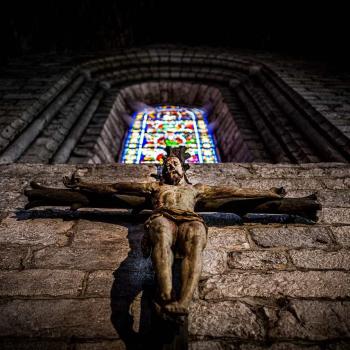
A Contemplative Reflection on the Death of Christ

LSD, Anxiety, and Contemplation: Can Psychedelic Therapy Support...
TRENDING AT PATHEOS Contemplative

Handy Contemplative Practices for Political Spaces
A Spiritually Grounded Presence In order to bring a spiritually grounded presence...

Halloween: The Holiday of Loving Your Neighbor
All Hallows Eve Is Halloween the least Christian holiday in America, or...

Can Love Be Saved? Some Thoughts on the...
Happy Valentine's Day! I recently published a post on Patreon called Can...

"This Loving, Uniting Embrace": the Holy Ordinary
Today's guest post is by Mark Longhurst, author of The Holy Ordinary:...

How Are We Called to Live?: More About...
How Are We Called to Live? Many of us struggle with discerning...

A Spiritual Practice of Reading: Join Us Online
A Spiritual Practice of Reading A healthy spiritual practice of reading is...
view all Contemplative blogs
Ad-Free & Subscriber Log-In Subscription Support
- About Us
- 2026 Calendar
- Videos
- Podcasts
- Library of World Religions
- Faith In Media Tracker
- Advertise With Us
- Write for Us
- Privacy Policy
- Terms of Service
- Do Not Sell My Data
- Contact Us
- Radiant Digital
- Manage Newsletter Subscriptions
- Unsubscribe From Notifications
- Sitemap
Copyright 2008-2026, Patheos. All rights reserved.
Subscription Support Ad-Free & Subscriber Log-In
Follow Patheos