
BuddhistCatholicContemplativeEvangelicalGeneral ChristianHinduJewishLatter-day SaintMuslimNew VisionsProgressive Christian
Beliefs
- Buddhist
- Catholic
- Contemplative
- Evangelical
- General Christian
- Hindu
- Jewish
- Latter-day Saint
- More Voices
- Muslim
- New Visions
- Pagan
- Progressive Christian
Topics
- Religion News
- Food and Religion
- Sports and Religion
- Religious Art
- Religious Music and Entertainment
- Religious Events
- History and Religion
- Style and Religion
- Politics and Religion
- Women in Religion
- Recreation Outdoors and Religion
- Business Finance and Religion
- Careers Workplace and Religion
- Education and Religion
- Family Parenting and Religion
- Health Fitness and Religion
- Home and Religion
- Relationships and Religion
- Technology and Religion
- Travel and Religion
Columnists
- Buddhist Columnists
- Business Finance and Religion Columnists
- Careers Workplace and Religion Columnists
- Catholic Columnists
- Contemplative Columnists
- Education and Religion Columnists
- Evangelists Columnists
- Family Parenting and Religion Columnists
- General Christian Columnists
- Health Fitness and Religion Columnists
- Hindu Columnists
- History and Religion Columnists
- Home and Religion Columnists
- Jewish Columnists
- More Voices Columnists
- Latter Day Columnists
- Muslim Columnists
- New Visions Columnists
- Nonreligious Columnists
- Pagan Columnists
- Politics and Religion Columnists
- Progressive Columnists
- Recreation Outdoors and Religion Columnists
- Relationships and Religion Columnists
- Religion News Columnists
- Religious Art Columnists
- Religious Events Columnists
- Religious Music and Entertainment Columnists
- Sports and Religion Columnists
- Style and Religion Columnists
- Technology and Religion Columnists
- Travel and Religion Columnists
- Women in Religion Columnists
Resource Library
- 2026 Calendar
- Library of World Religions
- The 100 Most Holy Places on Earth
- Patheos Answers
- Podcasts
- Videos
- Faith Leaders Database
- Anglican Episcopalian
- Bahai
- Baptist
- Buddhism
- Christianity
- Confucianism
- Eastern Orthodoxy
- Hinduism
- Holiness and Pentecostal
- ISKCON
- Islam
- Judaism
- Lutheran
- Methodist
- The Church of Jesus Christ of Latter-day Saints
- New Age
- Paganism
- Presbytarian and Reformed
- Protestantism
- Religion Behind the Scenes
- Roman Catholic
- Scientology
- Shia Islam
- Sikhism
- Sufism
- Sunni Islam
- Taoism
- Zen
- See all religions
Research Tools
 Ad-Free & Subscriber Log-In Subscription Support
Ad-Free & Subscriber Log-In Subscription Support
Follow Patheos 

- Trending:
- Forgiveness
- |
- Marriage
- |
- Consciousness
- |
- Death Penalty
- |
- Election
- |
- Halloween

- Home
- Contemplative
- Dreams, Songs, and Sorrow: Three Celtic Poets to Read Now
Dreams, Songs, and Sorrow: Three Celtic Poets to Read Now
Last updated on: June 25, 2020 at 8:25 am by Carl "Skye" McColman
Dreams, Songs, and Sorrow: Three Celtic Poets to Read Now 2020-06-22T18:31:57-04:00 Carl "Skye" McColman
Patheos Explore the world's faith through different perspectives on religion and spirituality! Patheos has the views of the prevalent religions and spiritualities of the world.
Ireland is a land shaped by myth, story, and poetry — and her sister countries in the Celtic world, Scotland, Wales, Cornwall, and so forth, all share in their affinity to eloquence and incantatory language. Names like William Butler Yeats, Seamus Heaney, Robert Burns, Dylan Thomas, R.S. Thomas (no relation, I believe) and countless others testify to the enduring place of poetry in the hearts and minds of the Celtic peoples.
In traditional Gaelic culture, the bard played a central role in the spiritual and social life of the community. He or she was an historian, a chronicler, a genealogist — but also a seer, a prophet, an influencer. It was said that if a king or chieftain was ungenerous and unhospitable, he would be at risk of having a bard satirize him, which meant more than bad press — a bardic satire was said to cause boils to erupt on the face of the parsimonious ruler!
Hopefully, most Celtic poets have a more affirming function in the world at large: they not only tell their own stories, with grace and beauty and sometimes searing insight, but they invite us to enter into their words and their lives, and so to let their language shape our own encounter with truth and art and mystery.
Celtic poetry is a living tradition, and as the following three books show, a tradition no longer bound by the traditional Celtic lands. While Pádraig Ó Tuama hails from Cork and today calls Belfast home, Christine Valters Paintner is an American who now lives in Galway, while Mary C. Earle is fully a member of the Celtic diaspora, an Episcopal priest based in Texas. All three of these poets not only witness to the living tradition of Celtic poetry, but with their own lyrical and accessible voices they are contributing to that tradition, helping to keep it vital and vibrant for the generations to come.
If you love poetry, or Celtic spirituality, or any combination thereof, I hope you’ll check out some or all of these books. Even their titles are instructive: they call us to sing, to lament, to dream. Let us do so — with these poets as our guides.
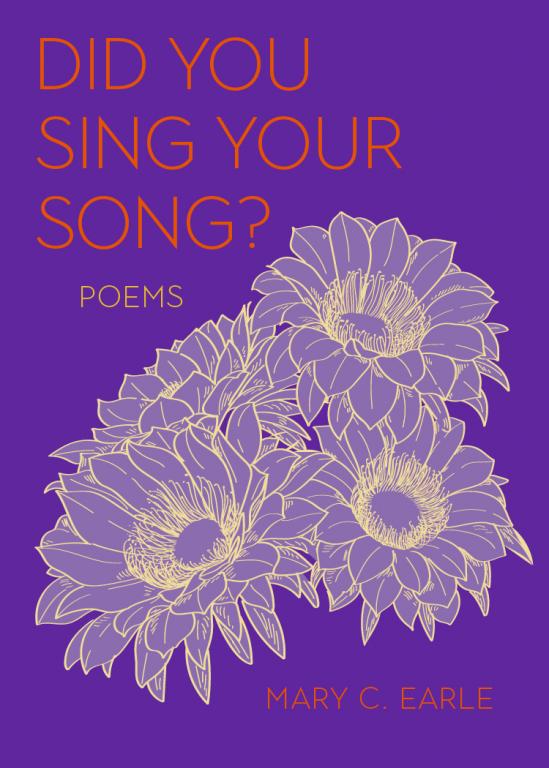
Did You Sing Your Song? Poems by Mary C. Earle collects over twenty years’ worth of poetry by this Episcopal priest and noted author of Celtic spiritual books. Her poems sing of the land, of scripture, of people and pilgrimage. While the language and imagery of Christianity dances throughout, Earle understands that truth and authenticity sometimes calls for a more deeper invocation: “My pilgrimages / are expeditions / into the hidden bodies of my mothers” she warns us, weaving together a commitment to remember and re-tell the lost stories of her ancestors with an almost contemplative encounter with the American southwest where the author lives: so poems about Wales and Ireland sit side-by-side with snapshots of San Antonia, Louisiana, or rural Texas. Mystics like Hildegard of Bingen or Bonaventure show up as invites the reader to bring prayer into the ordinary stuff of life — and vice versa. This collection gets the most explicitly “Celtic” in the “pilgrimage” section when Earle offers evocative word portraits of the Irish landscape, but a sensibility of loving place and finding the mystical in the ordinary suffuses every page. And it doesn’t get much more Celtic than that!
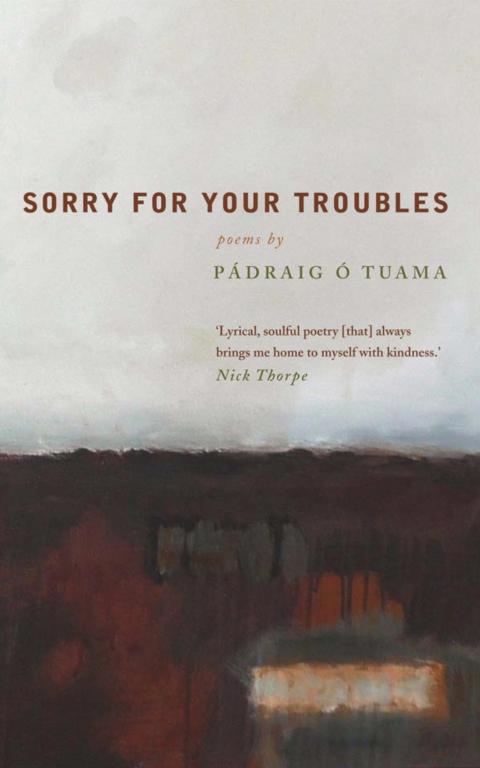
Sorry For Your Troubles: Poems by Pádraig Ó Tuama invites the reader into the heart of Ireland today, as seen by this gifted poet who combines his experience as a peacemaker, storyteller and theologian with a keen insight into both the joys and sorrows of his native land at this moment in time. Ó Tuama is the theologian in residence for Krista Tippett’s On Being and hosts the Poetry Unbound podcast produced by On Being. Previously he was the director of the Corrymeela Community, a center for faith, peace and reconciliation in Northern Ireland. Indeed, many of the poems from this anthology are shaped by the horror and numbness of the conflict that has marred that region — in the poet’s own words, “Many of the poems in this book were written as responses to hearing the stories of people who lived through troubles” — not just the Troubles that rocked Northern Ireland for years, but certainly including that conflict-splattered time. Yet while lamentation certainly shapes this collection, it also invites the reader into promise and possibility; nowhere more so than with the poem “Shaking Hands” — about the moment when Queen Elizabeth II shook hands with Martin McGuinness, Deputy First Minister of Northern Ireland and former leader of the Provisional Irish Republican Army. Such a simple gesture of welcome and hospitality means the world when it comes after the cessation of a time of hostility, and Ó Tuama’s poem both celebrates its meaning and challenges the gesture to mean something more than just a momentary symbol of peace. Crafted as a lengthy response to the question “Why?”, “Shaking Hands” repeats the word Because as almost a litany in defense of that most elusive of feelings: hope.
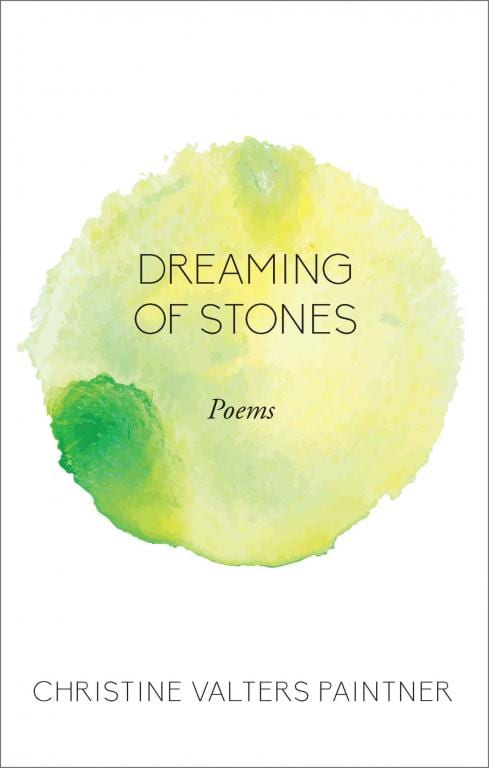
Dreaming of Stones: Poems by Christine Valters Paintner offers the reader another entry into the Celtic consciousness: the words of an American who has lived in Ireland for a number of years now. If you know Paintner primarily through her inspirational nonfiction or her website, Abbey of the Arts, you will already know that she is a generous guide to the nexus between contemplation and creativity. Here you see the fruit of her own reflection and embodiment of location and language. Her formation as a Benedictine oblate shapes poems based on the liturgy of the hours as well as her joyful celebrations of saints, both Celtic and universal: St. Benedict and St. Teresa of Ávila stand alongside lesser known figures like St. Colman, St. Enda and St. Sourney, old Celtic holy men and women who are known primarily in the remote places where once they walked and prayed and preached. But like both Earle and Ó Tuama, Paintner refuses to compromise her poetic diction for the sake of religious sensibility, and so her spirituality is shaped as much by landscape as by liturgy. As the book’s title suggests, this is a collection of dream images, but also thresholds, boundaries, and silences. Paintner is not afraid to acknowledge the shadow places in her heart or her land, but like our other Celtic poets, she never drops anchor: as in her poem about Moses’s sister Miriam, she wonders “How many of us still live enslaved in Egypt / beholden and weary?” but ends with a rousing invitation into liberation: “Will you carry your musical instrument / and dance right there on the shores?” You don’t need to have Celtic blood to understand the most life-giving way to answer that question.
Enjoy reading this blog?
Click here to become a patron.


Browse Our Archives
Select a Category Activism Announcements Art Books Catholicism Celtic Christianity Christian mysticism Christianity Contemplation Current events Etc. Family humor interfaith dialogue Interfaith Wisdom Interspirituality Lay Cistercians Living the Faith Meditation movies Mysticism Mystics nature Poetry Reviews Scripture silence Spirituality Uncategorized Writing
Select a Month February 2025 January 2025 November 2024 September 2024 August 2024 July 2024 June 2024 May 2024 March 2024 January 2024 December 2023 November 2023 August 2023 June 2023 April 2023 March 2023 February 2023 January 2023 December 2022 November 2022 October 2022 September 2022 August 2022 July 2022 June 2022 May 2022 April 2022 February 2022 January 2022 December 2021 November 2021 October 2021 September 2021 August 2021 July 2021 June 2021 May 2021 April 2021 March 2021 February 2021 January 2021 December 2020 November 2020 October 2020 September 2020 August 2020 July 2020 June 2020 May 2020 April 2020 March 2020 February 2020 January 2020 December 2019 November 2019 October 2019 September 2019 August 2019 July 2019 June 2019 May 2019 April 2019 March 2019 February 2019 January 2019 December 2018 November 2018 October 2018 September 2018 August 2018 July 2018 June 2018 May 2018 April 2018 March 2018 February 2018 January 2018 December 2017 November 2017 October 2017 September 2017 August 2017 July 2017 June 2017 May 2017 April 2017 March 2017 February 2017 January 2017 December 2016 November 2016 October 2016 September 2016 August 2016 July 2016 June 2016 May 2016 March 2016 February 2016 January 2016 December 2015 November 2015 October 2015 September 2015 August 2015 July 2015 June 2015 May 2015 April 2015 March 2015 February 2015 January 2015 December 2014 November 2014 October 2014 September 2014 August 2014 July 2014 June 2014 May 2014 April 2014 March 2014 February 2014 January 2014 December 2013 October 2013 September 2013 July 2013 May 2013 January 2013 December 2012 November 2012 August 2012 July 2012 June 2012 March 2012 December 2011 September 2011 October 2010 August 2010 March 2010 September 2009 July 2008 January 2008 December 2007 September 2007 February 2007 January 2007 December 2004
Follow Us!
TAKE THE
Religious Wisdom Quiz
Which woman was the judge and prophetess who led Israel?
Select your answer to see how you score.
Miriam Jael Deborah Esther
Support this
Column


Related posts from Carl McColman

Contemplative Books to Read and Savor During Advent...
New From Encountering Silence: Exploring the Lost History...
Twelve Mystical Anthologies That Belong in Every Contemplative...
TRENDING AT PATHEOS Contemplative

Handy Contemplative Practices for Political Spaces
A Spiritually Grounded Presence In order to bring a spiritually grounded presence...

Halloween: The Holiday of Loving Your Neighbor
All Hallows Eve Is Halloween the least Christian holiday in America, or...

Can Love Be Saved? Some Thoughts on the...
Happy Valentine's Day! I recently published a post on Patreon called Can...

"This Loving, Uniting Embrace": the Holy Ordinary
Today's guest post is by Mark Longhurst, author of The Holy Ordinary:...

How Are We Called to Live?: More About...
How Are We Called to Live? Many of us struggle with discerning...

A Spiritual Practice of Reading: Join Us Online
A Spiritual Practice of Reading A healthy spiritual practice of reading is...
view all Contemplative blogs
Ad-Free & Subscriber Log-In Subscription Support
- About Us
- 2026 Calendar
- Videos
- Podcasts
- Library of World Religions
- Faith In Media Tracker
- Advertise With Us
- Write for Us
- Privacy Policy
- Terms of Service
- Do Not Sell My Data
- Contact Us
- Radiant Digital
- Manage Newsletter Subscriptions
- Unsubscribe From Notifications
- Sitemap
Copyright 2008-2026, Patheos. All rights reserved.
Subscription Support Ad-Free & Subscriber Log-In
Follow Patheos