
BuddhistCatholicContemplativeEvangelicalGeneral ChristianHinduJewishLatter-day SaintMuslimNew VisionsProgressive Christian
Beliefs
- Buddhist
- Catholic
- Contemplative
- Evangelical
- General Christian
- Hindu
- Jewish
- Latter-day Saint
- More Voices
- Muslim
- New Visions
- Pagan
- Progressive Christian
Topics
- Religion News
- Food and Religion
- Sports and Religion
- Religious Art
- Religious Music and Entertainment
- Religious Events
- History and Religion
- Style and Religion
- Politics and Religion
- Women in Religion
- Recreation Outdoors and Religion
- Business Finance and Religion
- Careers Workplace and Religion
- Education and Religion
- Family Parenting and Religion
- Health Fitness and Religion
- Home and Religion
- Relationships and Religion
- Technology and Religion
- Travel and Religion
Columnists
- Buddhist Columnists
- Business Finance and Religion Columnists
- Careers Workplace and Religion Columnists
- Catholic Columnists
- Contemplative Columnists
- Education and Religion Columnists
- Evangelists Columnists
- Family Parenting and Religion Columnists
- General Christian Columnists
- Health Fitness and Religion Columnists
- Hindu Columnists
- History and Religion Columnists
- Home and Religion Columnists
- Jewish Columnists
- More Voices Columnists
- Latter Day Columnists
- Muslim Columnists
- New Visions Columnists
- Nonreligious Columnists
- Pagan Columnists
- Politics and Religion Columnists
- Progressive Columnists
- Recreation Outdoors and Religion Columnists
- Relationships and Religion Columnists
- Religion News Columnists
- Religious Art Columnists
- Religious Events Columnists
- Religious Music and Entertainment Columnists
- Sports and Religion Columnists
- Style and Religion Columnists
- Technology and Religion Columnists
- Travel and Religion Columnists
- Women in Religion Columnists
Resource Library
- 2026 Calendar
- Library of World Religions
- The 100 Most Holy Places on Earth
- Patheos Answers
- Podcasts
- Videos
- Faith Leaders Database
- Anglican Episcopalian
- Bahai
- Baptist
- Buddhism
- Christianity
- Confucianism
- Eastern Orthodoxy
- Hinduism
- Holiness and Pentecostal
- ISKCON
- Islam
- Judaism
- Lutheran
- Methodist
- The Church of Jesus Christ of Latter-day Saints
- New Age
- Paganism
- Presbytarian and Reformed
- Protestantism
- Religion Behind the Scenes
- Roman Catholic
- Scientology
- Shia Islam
- Sikhism
- Sufism
- Sunni Islam
- Taoism
- Zen
- See all religions
Research Tools
 Ad-Free & Subscriber Log-In Subscription Support
Ad-Free & Subscriber Log-In Subscription Support
Follow Patheos 

- Trending:
- Forgiveness
- |
- Marriage
- |
- Consciousness
- |
- Death Penalty
- |
- Election
- |
- Halloween

- Home
- Contemplative
- How to Find the Right Contemplative Community
How to Find the Right Contemplative Community
Last updated on: May 6, 2020 at 10:31 am by Carl "Skye" McColman
How to Find the Right Contemplative Community 2020-05-06T10:31:49-04:00 Carl "Skye" McColman
Patheos Explore the world's faith through different perspectives on religion and spirituality! Patheos has the views of the prevalent religions and spiritualities of the world.

Making my life promises as a Lay Cistercian, May 6, 2012. Fran is at my side, and other Lay Cistercians making their life promises are off to the side.
A reader named Brian writes:
Being a Lay Cistercian seems to be an important part of your journey. I’m wondering if becoming an oblate is a next step for me?
My spiritual director and I have discussed this off and on for over a year now. While I have an established contemplative practice (e.g., Daily Office, Lectio Divina, Examen, Centering Prayer), he and I agree that “scaffolding” helps keep me intentional, accountable, and engaged with community.
How to discern which monastery to affiliate with? There is a very large Benedictine abbey near by. There is a Cistercian monastery within a day’s drive that has an on-line lay Cistercian community. And the Camaldolese also allow “distance” oblates. I have a regular hermitage I make silent retreats at, and I have no desire to replace it with a monastery’s guest house.
Or is being an oblate something that finds you, and not something you pursue?
Thanks. And peace.
Thanks for this question. Tomorrow (May 6) is the 8th anniversary of my solemn (life) promises as a Lay Cistercian, so it’s a delight to reflect on this at this point in time.
Yes, being a Lay Cistercian has been a tremendous blessing for my own contemplative journey. No community is perfect and my relationship with the Lay Cistercians (and the Trappist monastery with which we are affiliated) has had its ups and downs over the years, but the “ups” have more than made up for the “downs.”
Let me echo the wise words from your spiritual director about the “scaffolding” — and about the importance of community. Contemplation is so often something that introverts are drawn to, and often we have to be reminded that community matters just as solitude does. We all need both — although, admittedly, a healthy balance between the two will vary from person to person. But even a hermit needs to wash someone’s feet from time to time, and even the most engaged community leader/activist needs to get away from time to time for prayer, meditation, contemplation and rest.
I think you are very fortunate to have several options for a possible contemplative community you could affiliate with. What a blessing! Lay Cistercians, Benedictine Oblates, Camaldolese Oblates… and if you are in or near a large city, you probably also could find Third Order Franciscans, Lay Carmelites, and other communities, usually but not always affiliated with a monastic or religious community, that might be worth exploring.
Choosing the Right Contemplative Community
So to your question: how to choose? While I like the idea of letting the oblate life “find you,” that smells just a bit too quietist for my taste. Being passive can be a subtle way of avoiding responsibility. I believe God gives us desires and longings for a purpose, and it is a good thing to act on such yearnings, ethically and reasonably of course. So if you are feeling a desire to explore contemplative community, do so! There’s no hurry, no rush. Contemplation always invites us into the leisure of eternity, and this is helpful to remember when exploring the possibility of joining a community.
Every community is unique, even within the same order. I have knowledge of several different Lay Cistercian groups, and each one has its own personality. And of course once you start looking at groups from different orders, those differences become more pronounced, since the charism of each order will shape the identity of its groups. So I’d invite you to consider taking time to get to know all three of the groups you mentioned, and perhaps even some other groups in your area, if they come to your attention (maybe that’s where you can just allow “the group to find you” — no need to exhaustively hunt down every oblate group within 200 miles, but on the other hand if someone tells you about a group, maybe it’s worth a look see).
Each group will have its own protocols for inquirers/prospective members. Some groups might simply say, “We meet on the first Saturday of every month, see you next month!” Others might want you to undergo an interview process and then will ask you to participate in a program just for inquirers. My own Lay Cistercian group does it that way, and we only have a new inquirers program once every two years — and that program lasts six months before you may be admitted to the novitiate. So you may find there is a waiting period that could last anywhere from a few months to a year or longer. Trust the process, but also don’t be afraid to explore the more accessible groups first while you wait for the opportunity to explore the group(s) that have a more structured entry program.
So how do you determine which group is right for you? On one level, it’s almost like dating. We all know that romance is the fine art of balancing a person’s attractiveness with honestly understanding their flaws, and marriage works best when we choose to love someone whose beauty makes us sing — and whose flaws we can live with! For example: I’m useless in the kitchen, and it’s a running joke between my wife and me that when she was praying for a husband, she forget to mention that he should be able to cook! But fortunately for both of us, Fran loves to cook, and aside from the occasional teasing, she seems to be content with me as little more than a helper (and bottle washer).
So it’s the same principle. You’ll find that some communities are very social, others very quiet; some are theologically rigorous, others have a more generous understanding of orthodoxy. Some groups tend to be more elderly and affluent, others younger and perhaps more diverse. Some might be more focused on devotional practices like the rosary and adoration, while others tend toward the liturgy and centering prayer. Some groups will be exclusively Catholic (or whatever denomination), while others will graciously be ecumenical in their spirit. So part of your journey will be getting to know the “personality” of each group, and without judgment, simply discerning “Is this someplace where I can grow in love and faith and in my commitment to my contemplative vocation?” And like romance, chances are you’ll know intuitively when the answer is yes.
Keep in mind, though, that the road moves in two directions: and while you are discerning if you are a good fit for them, they’ll be discerning the same about you.
Finding a Group You Can Be Faithful To
Finally, to return to the romance analogy: while when you’re just casually dating it’s fun to socialize with many different people, going steady implies a certain commitment to just one person — and marriage formalizes that commitment with the good intention of it being lifelong. Keep this principle in mind while exploring contemplative communities as well.
So at first, when you’re just doing some initial inquiries, go ahead and visit all the communities that you know of — get to know them, and see which one feels right. But when it comes time to make a formal commitment to be a postulate or novice, that’s the equivalent to “going steady.” So only take that step once you’re ready to exclusively participate in just one community. Eventually (the process will vary from community to community), postulants become novices, and novices will be asked to make temporary promises (usually for a year). That’s like “getting engaged.” And after a period of temporary promises (in my case it was at least three years), you may have the opportunity to make a lifelong commitment through solemn promises. At that point, your relationship with the community ought to have a sense of fidelity and perseverance just as we would bring to a loving marriage.
But don’t worry about those momentous commitments — they are years down the road. Just as it’s not helpful to be listening for wedding bells on a first date, when you’re just getting to know contemplative communities, don’t worry about whether or not you’re ready for a lifelong commitment. That would just make the process more stressful than it needs to be. Take it a day at a time — remember that “leisure of eternity” I spoke of earlier.
The questions to ask:
- Is this a community where I can more fully live into my contemplative vocation?
- Is this community truly prayerful — and thoughtful as well?
- Is this a community that will both nurture and challenge me?
- Is this a community where I can be truly myself — where it’s safe to be authentic?
- Is this a community that knows how to deal with conflict in a healthy and caring way?
- Is this a community where I can be generous and joyful in my service?
- Are these the kinds of folks I would enjoy hanging out with? (you might never hang out with most of them, but if your experience is anything like mine, you’ll form some meaningful lifelong friendships in your contemplative community — so it’s an important question to consider).
I hope these questions will aid you in your discernment journey. Thanks again for the question, it’s an important point and I’m glad you gave me the chance to write about it. Blessings on your journey!
Enjoy reading this blog?
Click here to become a patron.

Previous Post

April 20, 2020
Some Thoughts On the Dolphins That Are (Not) in Venice
Next Post

May 26, 2020 An Examen of the Senses
Browse Our Archives
Select a Category Activism Announcements Art Books Catholicism Celtic Christianity Christian mysticism Christianity Contemplation Current events Etc. Family humor interfaith dialogue Interfaith Wisdom Interspirituality Lay Cistercians Living the Faith Meditation movies Mysticism Mystics nature Poetry Reviews Scripture silence Spirituality Uncategorized Writing
Select a Month February 2025 January 2025 November 2024 September 2024 August 2024 July 2024 June 2024 May 2024 March 2024 January 2024 December 2023 November 2023 August 2023 June 2023 April 2023 March 2023 February 2023 January 2023 December 2022 November 2022 October 2022 September 2022 August 2022 July 2022 June 2022 May 2022 April 2022 February 2022 January 2022 December 2021 November 2021 October 2021 September 2021 August 2021 July 2021 June 2021 May 2021 April 2021 March 2021 February 2021 January 2021 December 2020 November 2020 October 2020 September 2020 August 2020 July 2020 June 2020 May 2020 April 2020 March 2020 February 2020 January 2020 December 2019 November 2019 October 2019 September 2019 August 2019 July 2019 June 2019 May 2019 April 2019 March 2019 February 2019 January 2019 December 2018 November 2018 October 2018 September 2018 August 2018 July 2018 June 2018 May 2018 April 2018 March 2018 February 2018 January 2018 December 2017 November 2017 October 2017 September 2017 August 2017 July 2017 June 2017 May 2017 April 2017 March 2017 February 2017 January 2017 December 2016 November 2016 October 2016 September 2016 August 2016 July 2016 June 2016 May 2016 March 2016 February 2016 January 2016 December 2015 November 2015 October 2015 September 2015 August 2015 July 2015 June 2015 May 2015 April 2015 March 2015 February 2015 January 2015 December 2014 November 2014 October 2014 September 2014 August 2014 July 2014 June 2014 May 2014 April 2014 March 2014 February 2014 January 2014 December 2013 October 2013 September 2013 July 2013 May 2013 January 2013 December 2012 November 2012 August 2012 July 2012 June 2012 March 2012 December 2011 September 2011 October 2010 August 2010 March 2010 September 2009 July 2008 January 2008 December 2007 September 2007 February 2007 January 2007 December 2004
Follow Us!
TAKE THE
Religious Wisdom Quiz
What happened when the Philistines captured the Ark of the Covenant?
Select your answer to see how you score.
Fire rained from heaven The Jordan parted The sun stood still Dagon's idol fell
Support this
Column


Related posts from Carl McColman

Four Dimensions of Mindfulness and Centering Prayer
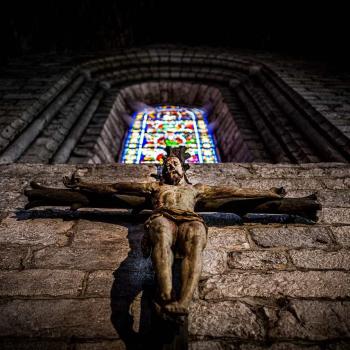
A Contemplative Reflection on the Death of Christ

LSD, Anxiety, and Contemplation: Can Psychedelic Therapy Support...

Discover the Three Forms of Contemplation, according to...
TRENDING AT PATHEOS Contemplative

Handy Contemplative Practices for Political Spaces
A Spiritually Grounded Presence In order to bring a spiritually grounded presence...

Halloween: The Holiday of Loving Your Neighbor
All Hallows Eve Is Halloween the least Christian holiday in America, or...

Can Love Be Saved? Some Thoughts on the...
Happy Valentine's Day! I recently published a post on Patreon called Can...

"This Loving, Uniting Embrace": the Holy Ordinary
Today's guest post is by Mark Longhurst, author of The Holy Ordinary:...

How Are We Called to Live?: More About...
How Are We Called to Live? Many of us struggle with discerning...

A Spiritual Practice of Reading: Join Us Online
A Spiritual Practice of Reading A healthy spiritual practice of reading is...
view all Contemplative blogs
Ad-Free & Subscriber Log-In Subscription Support
- About Us
- 2026 Calendar
- Videos
- Podcasts
- Library of World Religions
- Faith In Media Tracker
- Advertise With Us
- Write for Us
- Privacy Policy
- Terms of Service
- Do Not Sell My Data
- Contact Us
- Radiant Digital
- Manage Newsletter Subscriptions
- Unsubscribe From Notifications
- Sitemap
Copyright 2008-2026, Patheos. All rights reserved.
Subscription Support Ad-Free & Subscriber Log-In
Follow Patheos