
BuddhistCatholicContemplativeEvangelicalGeneral ChristianHinduJewishLatter-day SaintMuslimNew VisionsProgressive Christian
Beliefs
- Buddhist
- Catholic
- Contemplative
- Evangelical
- General Christian
- Hindu
- Jewish
- Latter-day Saint
- More Voices
- Muslim
- New Visions
- Pagan
- Progressive Christian
Topics
- Religion News
- Food and Religion
- Sports and Religion
- Religious Art
- Religious Music and Entertainment
- Religious Events
- History and Religion
- Style and Religion
- Politics and Religion
- Women in Religion
- Recreation Outdoors and Religion
- Business Finance and Religion
- Careers Workplace and Religion
- Education and Religion
- Family Parenting and Religion
- Health Fitness and Religion
- Home and Religion
- Relationships and Religion
- Technology and Religion
- Travel and Religion
Columnists
- Buddhist Columnists
- Business Finance and Religion Columnists
- Careers Workplace and Religion Columnists
- Catholic Columnists
- Contemplative Columnists
- Education and Religion Columnists
- Evangelists Columnists
- Family Parenting and Religion Columnists
- General Christian Columnists
- Health Fitness and Religion Columnists
- Hindu Columnists
- History and Religion Columnists
- Home and Religion Columnists
- Jewish Columnists
- More Voices Columnists
- Latter Day Columnists
- Muslim Columnists
- New Visions Columnists
- Nonreligious Columnists
- Pagan Columnists
- Politics and Religion Columnists
- Progressive Columnists
- Recreation Outdoors and Religion Columnists
- Relationships and Religion Columnists
- Religion News Columnists
- Religious Art Columnists
- Religious Events Columnists
- Religious Music and Entertainment Columnists
- Sports and Religion Columnists
- Style and Religion Columnists
- Technology and Religion Columnists
- Travel and Religion Columnists
- Women in Religion Columnists
Resource Library
- 2026 Calendar
- Library of World Religions
- The 100 Most Holy Places on Earth
- Patheos Answers
- Podcasts
- Videos
- Faith Leaders Database
- Anglican Episcopalian
- Bahai
- Baptist
- Buddhism
- Christianity
- Confucianism
- Eastern Orthodoxy
- Hinduism
- Holiness and Pentecostal
- ISKCON
- Islam
- Judaism
- Lutheran
- Methodist
- The Church of Jesus Christ of Latter-day Saints
- New Age
- Paganism
- Presbytarian and Reformed
- Protestantism
- Religion Behind the Scenes
- Roman Catholic
- Scientology
- Shia Islam
- Sikhism
- Sufism
- Sunni Islam
- Taoism
- Zen
- See all religions
Research Tools
 Ad-Free & Subscriber Log-In Subscription Support
Ad-Free & Subscriber Log-In Subscription Support
Follow Patheos 

- Trending:
- Forgiveness
- |
- Marriage
- |
- Consciousness
- |
- Death Penalty
- |
- Election
- |
- Halloween

- Home
- Contemplative
- What’s the Best Church for Contemplative Christians?
What’s the Best Church for Contemplative Christians?
Last updated on: February 21, 2020 at 8:00 am by Carl "Skye" McColman
What’s the Best Church for Contemplative Christians? 2020-02-21T00:43:22-04:00 Carl "Skye" McColman
Patheos Explore the world's faith through different perspectives on religion and spirituality! Patheos has the views of the prevalent religions and spiritualities of the world.
A reader writes:
Carl, do you think the Catholic Church has more scope to welcome contemplative Christians? I attend an Anglican church and I’m very high Anglican in my thinking. A friend calls me a secret Catholic. I’m growing weary of the evangelical fundamentalist direction of the church… I’m a bit lost to be honest.
I’m sorry you feel lost, and I think it’s not unusual, especially when someone discovers contemplative spirituality, to feel a bit out of place if your local church does not have a contemplative culture. And unfortunately, that’s true of most churches.
There are several ways to respond to your question. First, the question of which expression of Christianity is the most “welcoming” to contemplatives. Related to that, you are specifically asking about Catholicism. But then you also bring up the question of fundamentalism, and how fundamentalists in your church leave you feeling weary and lost.
So let’s look at each of these in turn.
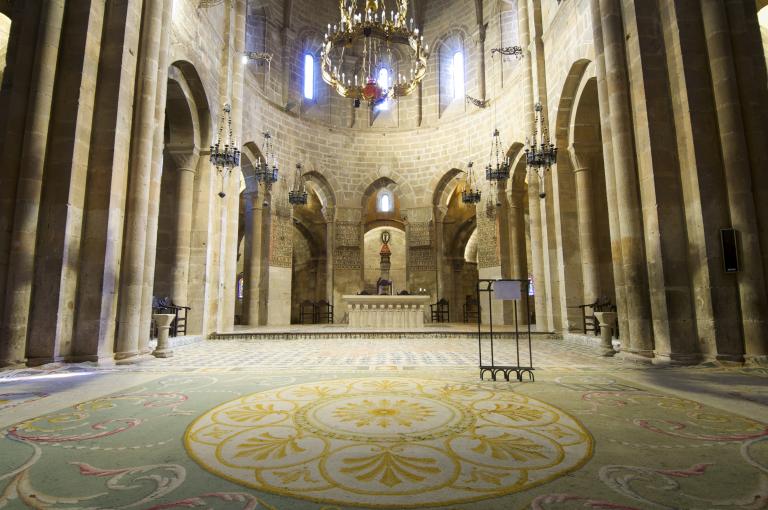
Is Catholicism the Most Contemplative-friendly type of Christianity?
First, a disclaimer. I myself am a Catholic Christian, having converted to Catholicism from Protestantism about fifteen years ago. So my answer to your question may be a bit biased. But I’ll try to be honest with you, and in all honesty, I think when it comes to contemplation, there are both pros and cons to being a Catholic (as opposed to other forms of Christianity).
First, the pros. Since Catholicism celebrates the entire 2000 year history of Christian spirituality, many Catholics are comfortable turning to the great saints of the past (like St. Teresa of Ávila or St. John of the Cross) to learn more about the spiritual life. By contrast, many Protestant churches have a much narrower approach to tradition: basically, they only teach out of the Bible. Now, the Bible does have a contemplative dimension, but much of the truly deep wisdom of Christian contemplation comes from centuries after the last books of the Bible were written. Generally speaking, Catholics are more open to applying the wisdom of the saints to their spiritual lives today.
Likewise, most Protestant churches do not have monasteries, and may even be biased against monasteries as an expression of Christian discipleship. Since for many centuries the contemplative tradition of spirituality was passed down by monks in the cloister, it’s harder for Protestants to relate to the wisdom of monasteries since it is not part of their culture. That’s not true across the board, of course — as you know, there is a monastic tradition in Anglicanism. But many other Protestant and Evangelical churches might regard contemplation as “too Catholic” because of its roots in the monastic world.
Finally, it’s significant to note how many contemporary teachers of contemplative Christianity are Catholic. Thomas Merton, Thomas Keating, M. Basil Pennington, Richard Rohr, John Main, Laurence Freeman, Pierre Teilhard de Chardin, Mary Margaret Funk, Bede Griffiths, Sarah Grant, Wayne Teasdale, Caryll Houselander, Ruth Burrows, Bernadette Roberts… these are just some of the many Catholic spiritual teachers of our time or the recent past. Clearly, there seems to be a deep affinity between Catholicism and contemplation.
But now for the cons. Unfortunately, many Catholics regard contemplation as something only monks and nuns do. Often the local parishes are much more focused on simple devotional practices like the Rosary or Holy Hours, with very little emphasis on contemplation at all. In fact, some Catholics, basing their idea that contemplation can only be a grace — a gift from God — regard it as presumptuous for ordinary people to try to cultivate contemplation on their own. So it’s important to remember that the bias against contemplation that you can find in some Protestant churches, unfortunately, can be present in Catholic Churches as well.
I’ve lived in Atlanta, Georgia for going on 30 years now, and I’ve never been to the Atlanta zoo. I’ve been to zoos in other cities, but not the one here! My point is, sometimes we take for granted what’s in our own back yard — and I think Catholics can sometimes have that attitude toward contemplation. Since it is very much part of Catholic culture, ironically that makes it less appealing for many Catholics! They are more likely to want to visit “the zoo in another city” — i.e, practice charismatic prayer or zen or something like that — than to really get to know the treasure in their own back yard.
For me, becoming a Catholic was a great way to integrate my love for contemplation with my conviction that spirituality ought to be sacramental in nature. So I think that would be final word of advice about Catholicism: don’t join the Catholic church just because you have a romantic idea that it might be “more” contemplative; I’m afraid you’ll find in some ways it is, in other ways it isn’t. But if you are drawn to Catholicism for other reasons in addition to your love of contemplation, then I would encourage you to explore it further. At the end of the day, there’s only one reason to join a church: because you believe that church will help you to follow Jesus better. If that’s not your conviction, then all the other reasons for joining the church probably are not that important. Ask yourself, “Where do I believe Jesus wants me to be?” and let that be your guide.
Enjoy reading this blog?
Click here to become a patron.

If Not Catholicism, What Then?
So maybe like me, you’ll find becoming a Catholic truly makes your soul sing. But if you really don’t feel drawn to becoming a Catholic, trust your intuition. Remember, God loves everybody, not just Catholics!
But what should someone do, who wants a more contemplative-friendly church? I think there’s two answers to this question. First, we have to accept that the perfect church (including the perfect contemplative church) simply doesn’t exist. Then it’s a question of finding the best church for you — and your family, if you have one.
When I was thinking about becoming a Catholic, more than one person told me to visit different parishes. Each one has its own personality, its own focus on this or that aspect of faith and practice. Some parishes are more devotional, some are more activist, some are mostly focused on education, others have a strong interest in evangelization (what Protestants call “mission”). And yes, once in a while you find a parish that has a truly prayerful, contemplative personality.
This is true, whether or not the church is Catholic. In fact, if you exchange the word “congregation” for “parish” in the above paragraph, you’ll see that it just as much applies to Protestant and Evangelical churches as to Catholic ones.
There are some truly contemplative-focussed churches here and there. I know of at least two here in Georgia, where I live. One is Catholic, the other is Episcopalian (Anglican). But they tend to be only a fraction of the overall number of churches, and if you don’t happen to live close to one, you are more likely going to have to make do with the local church, no matter what its “personality” is like.
So here’s what I would say: visit nearby churches — regardless of their denominational affiliation. When you visit, read their bulletins. Check out their websites. Check to see if the church sponsors a Centering Prayer or Christian Meditation group. See if they have upcoming retreats planned at a nearby monastery or Jesuit Retreat House. You may not find the perfect church, but it’s still possible you can find the “good enough” church.
Then, no matter how good (or bad) your local congregation or parish is at welcoming contemplatives, take responsibility for finding contemplatives outside your local community. Make retreats at a monastery. Take a course online. Join a contemplative Facebook group. Get involved with an organization like Contemplative Outreach or the World Community for Christian Meditation. It’s easier to find your “home” as a contemplative if you don’t expect the local parish/congregation to meet all your needs.
But this leads to your third, and perhaps most important question.
What About the Fundamentalists?
Somebody once said, “Mysticism is the antidote to fundamentalism.” Unfortunately, I think that works the other way around: when there are too many fundamentalists gathered together, the mystics (and contemplatives) have a tendency to go elsewhere.
Once again, bad news and good news. First, the bad news: fundamentalism is everywhere. Yes, there is even such a thing as fundamentalist Catholics. In fact, the book Catholics and Fundamentalists: Understanding the Difference has a chapter in it about fundamentalist Catholics. So it’s possible to find, in every church, people who have an authoritarian, legalistic, narrow/rigid understanding of faith, one that sees God as angry and demanding rather than loving and kind. Some human beings just tend to be authoritarian, rigid, and legalistic — it’s a personality type. So they will show up anywhere.
You talked about “the fundamentalist direction” your church is taking. That makes it sound like the leadership of your church tends towards fundamentalism. If that’s the case, it may be time to find a new church, whether or not you change denominations. But remember, fundamentalism is everywhere, so wherever you go, you’ll have to deal with it.
Here’s what I think is important to keep in mind: fundamentalists follow a spirituality of fear, rather than of compassion. Because they see the world through fear-tinted glasses, they tend to be fearful (suspicious) of people who are different from them. It’s hard to not to feel judged when someone views you with suspicion. But I think it’s really important that we try to remain grounded in the love of God. Our job, as followers of the compassionate Christ, is to meet their suspicion with kindness, their fear with compassion, and their judgment with non-judgment.
This doesn’t mean we have to acquiesce to their way of seeing things. We can disagree, and we can remain true to our own conscience. But we don’t have to be unpleasant to others in the meantime.
As for me, I try really hard not to get into debates or fights with fundamentalists. I just tell them, “We see things differently, and I don’t want to discuss it.” Sooner or later, they get tired of hearing that and they walk away. Some of the more toxic ones might get belligerent and threatening (“If you don’t repent, you’re going to hell!”) but once again, the best response is, “I’m sorry, but I see things differently. And I don’t want to discuss it.”
The main thing that I do to keep fundamentalists from bugging me is this: I am proactive about finding friends who share my spiritual and theological views and I turn to them for spiritual and emotional support. I can worship with people with whom I disagree, I can do volunteer work with them, and serve on committees with them. But when it comes to who I socialize with, that’s when I am more choosy about who I send time with. And it’s okay to set boundaries like this.
So the best way to deal with fundamentalists is to find a church (again, it could be any denomination) where there is an emphasis on kindness, compassion, a scholarly approach to scripture and theology, and a recognition that we don’t all have to think alike in order to worship together. Such churches do exist, although they’re probably easier to find in big cities. If that’s just not possible (no such church exists near you), then the ideas I shared above, about learning how to get along with fundamentalists (a mixture of being kind and setting good boundaries) may be your only strategy.
A Final Thought
It’s not easy to find a truly nurturing church home. It’s like finding a husband or wife: sometimes we have to kiss a lot of toads in order to find that prince (or princess). And it’s not easy to deal with people whose way of being Christian is narrow-minded, mean-spirited, legalistic, or excessively authoritarian. But in both these scenarios, having a commitment to contemplative practice — daily silent prayer — can be a huge help. Taking time to rest in the love of God is an excellent way to cultivate your own spirit of kindness and compassion; and it’s a great way to fortify yourself for the perseverance necessary to find, and become connected to, the church that is right for you. But good luck! Trust that God has a place just for you. And prayerfully give yourself to the adventure of finding that place.
Enjoy reading this blog?
Click here to become a patron.
Previous Post

February 17, 2020
Contemplation and Emotional Intensity

Browse Our Archives
Select a Category Activism Announcements Art Books Catholicism Celtic Christianity Christian mysticism Christianity Contemplation Current events Etc. Family humor interfaith dialogue Interfaith Wisdom Interspirituality Lay Cistercians Living the Faith Meditation movies Mysticism Mystics nature Poetry Reviews Scripture silence Spirituality Uncategorized Writing
Select a Month February 2025 January 2025 November 2024 September 2024 August 2024 July 2024 June 2024 May 2024 March 2024 January 2024 December 2023 November 2023 August 2023 June 2023 April 2023 March 2023 February 2023 January 2023 December 2022 November 2022 October 2022 September 2022 August 2022 July 2022 June 2022 May 2022 April 2022 February 2022 January 2022 December 2021 November 2021 October 2021 September 2021 August 2021 July 2021 June 2021 May 2021 April 2021 March 2021 February 2021 January 2021 December 2020 November 2020 October 2020 September 2020 August 2020 July 2020 June 2020 May 2020 April 2020 March 2020 February 2020 January 2020 December 2019 November 2019 October 2019 September 2019 August 2019 July 2019 June 2019 May 2019 April 2019 March 2019 February 2019 January 2019 December 2018 November 2018 October 2018 September 2018 August 2018 July 2018 June 2018 May 2018 April 2018 March 2018 February 2018 January 2018 December 2017 November 2017 October 2017 September 2017 August 2017 July 2017 June 2017 May 2017 April 2017 March 2017 February 2017 January 2017 December 2016 November 2016 October 2016 September 2016 August 2016 July 2016 June 2016 May 2016 March 2016 February 2016 January 2016 December 2015 November 2015 October 2015 September 2015 August 2015 July 2015 June 2015 May 2015 April 2015 March 2015 February 2015 January 2015 December 2014 November 2014 October 2014 September 2014 August 2014 July 2014 June 2014 May 2014 April 2014 March 2014 February 2014 January 2014 December 2013 October 2013 September 2013 July 2013 May 2013 January 2013 December 2012 November 2012 August 2012 July 2012 June 2012 March 2012 December 2011 September 2011 October 2010 August 2010 March 2010 September 2009 July 2008 January 2008 December 2007 September 2007 February 2007 January 2007 December 2004
Follow Us!
TAKE THE
Religious Wisdom Quiz
What does Proverbs say about hard work?
Select your answer to see how you score.
Lazy people win It is pointless Diligence brings profit Sleep always
Support this
Column


Related posts from Carl McColman

Four Dimensions of Mindfulness and Centering Prayer

If You Worship an Angry God, You'll Be...
A Contemplative Reflection on the Death of Christ

Join Me for "24 Meditations for 2024"
TRENDING AT PATHEOS Contemplative

Handy Contemplative Practices for Political Spaces
A Spiritually Grounded Presence In order to bring a spiritually grounded presence...

Halloween: The Holiday of Loving Your Neighbor
All Hallows Eve Is Halloween the least Christian holiday in America, or...

Can Love Be Saved? Some Thoughts on the...
Happy Valentine's Day! I recently published a post on Patreon called Can...

"This Loving, Uniting Embrace": the Holy Ordinary
Today's guest post is by Mark Longhurst, author of The Holy Ordinary:...

How Are We Called to Live?: More About...
How Are We Called to Live? Many of us struggle with discerning...

A Spiritual Practice of Reading: Join Us Online
A Spiritual Practice of Reading A healthy spiritual practice of reading is...
view all Contemplative blogs
Ad-Free & Subscriber Log-In Subscription Support
- About Us
- 2026 Calendar
- Videos
- Podcasts
- Library of World Religions
- Faith In Media Tracker
- Advertise With Us
- Write for Us
- Privacy Policy
- Terms of Service
- Do Not Sell My Data
- Contact Us
- Radiant Digital
- Manage Newsletter Subscriptions
- Unsubscribe From Notifications
- Sitemap
Copyright 2008-2026, Patheos. All rights reserved.
Subscription Support Ad-Free & Subscriber Log-In
Follow Patheos