
BuddhistCatholicContemplativeEvangelicalGeneral ChristianHinduJewishLatter-day SaintMuslimNew VisionsProgressive Christian
Beliefs
- Buddhist
- Catholic
- Contemplative
- Evangelical
- General Christian
- Hindu
- Jewish
- Latter-day Saint
- More Voices
- Muslim
- New Visions
- Pagan
- Progressive Christian
Topics
- Religion News
- Food and Religion
- Sports and Religion
- Religious Art
- Religious Music and Entertainment
- Religious Events
- History and Religion
- Style and Religion
- Politics and Religion
- Women in Religion
- Recreation Outdoors and Religion
- Business Finance and Religion
- Careers Workplace and Religion
- Education and Religion
- Family Parenting and Religion
- Health Fitness and Religion
- Home and Religion
- Relationships and Religion
- Technology and Religion
- Travel and Religion
Columnists
- Buddhist Columnists
- Business Finance and Religion Columnists
- Careers Workplace and Religion Columnists
- Catholic Columnists
- Contemplative Columnists
- Education and Religion Columnists
- Evangelists Columnists
- Family Parenting and Religion Columnists
- General Christian Columnists
- Health Fitness and Religion Columnists
- Hindu Columnists
- History and Religion Columnists
- Home and Religion Columnists
- Jewish Columnists
- More Voices Columnists
- Latter Day Columnists
- Muslim Columnists
- New Visions Columnists
- Nonreligious Columnists
- Pagan Columnists
- Politics and Religion Columnists
- Progressive Columnists
- Recreation Outdoors and Religion Columnists
- Relationships and Religion Columnists
- Religion News Columnists
- Religious Art Columnists
- Religious Events Columnists
- Religious Music and Entertainment Columnists
- Sports and Religion Columnists
- Style and Religion Columnists
- Technology and Religion Columnists
- Travel and Religion Columnists
- Women in Religion Columnists
Resource Library
- 2026 Calendar
- Library of World Religions
- The 100 Most Holy Places on Earth
- Patheos Answers
- Podcasts
- Videos
- Faith Leaders Database
- Anglican Episcopalian
- Bahai
- Baptist
- Buddhism
- Christianity
- Confucianism
- Eastern Orthodoxy
- Hinduism
- Holiness and Pentecostal
- ISKCON
- Islam
- Judaism
- Lutheran
- Methodist
- The Church of Jesus Christ of Latter-day Saints
- New Age
- Paganism
- Presbytarian and Reformed
- Protestantism
- Religion Behind the Scenes
- Roman Catholic
- Scientology
- Shia Islam
- Sikhism
- Sufism
- Sunni Islam
- Taoism
- Zen
- See all religions
Research Tools
 Ad-Free & Subscriber Log-In Subscription Support
Ad-Free & Subscriber Log-In Subscription Support
Follow Patheos 

- Trending:
- Forgiveness
- |
- Marriage
- |
- Consciousness
- |
- Death Penalty
- |
- Election
- |
- Halloween

- Home
- Contemplative
- Contemplation and Emotional Intensity
Contemplation and Emotional Intensity
Last updated on: February 17, 2020 at 7:59 pm by Carl "Skye" McColman
Contemplation and Emotional Intensity 2020-02-17T19:59:17-04:00 Carl "Skye" McColman
Patheos Explore the world's faith through different perspectives on religion and spirituality! Patheos has the views of the prevalent religions and spiritualities of the world.
One of this blog’s readers wrote to me this past Saturday (February 15, 2020) to ask a question about Richard Rohr’s daily meditation for that day.
Here’s the quote (emphasis added):
Contemplative prayer always requires hospitality to your deep self, to the deep parts of your self. It demands the openness to receive whatever might arise in you and then gently release it into God’s hands. But in prayer you are not alone as you open yourself to whatever might emerge. You do so in a relationship that provides a safety and support in holding whatever emerges. That which arises might come with a flood of emotional intensity. Sometimes, being still before self and God releases a torrent of emotions. Tears may be intermixed with joy. . . .
My reader’s question:
I was surprised to read the underlined part. I thought that in contemplation you were supposed to mistrust an emotional reaction and move away from it by returning to your prayer word, as you’re supposed to move away from everything. No? Yes? Both?
I don’t want to presume to speak for Richard, but it appears that he is describing what Thomas Keating calls “the unloading of the unconscious.” The idea is simple: as we progress in the practice of silent prayer, we create a sense of safety in our hearts and minds. Silent prayer practices like Centering Prayer or Christian Meditation are exercises in cultivating a gentle, non-judgmental way of being present to our own awareness. A thought emerges, and we gently let it rise and fall. Same thing with images, daydreams, memories, and even emotions.
But when we do this for a while, what happens is the mind and heart begin to “unload” — which is to say, dredge up old memories, old feelings, old beliefs, even old traumas. Not that these have necessarily been repressed, but they typically are stored away outside of the normal sphere of everyday consciousness, almost like a file cabinet marked “To be dealt with later.” And, if my experience is any guide, I would say that “old” can be from childhood — or from earlier today. It’s not just about suddenly recalling what’s been deeply buried, so much as it is about paying attention to what needs to be healed.

Trust, Welcome, Let Go
I would not say the instructions of silent prayer practices (like Centering Prayer) are to “mistrust” our emotional reactions. Indeed, I’ve never used that word in all the times I’ve presented or taught the Centering Prayer method or other forms of silent prayer. In fact, I would say the part of the beauty of contemplative practice is that it gently encourages us to trust our minds and hearts — but to trust what arises, welcome it, and then let it go.
Why trust — rather than mistrust? It’s the same principle that a smile takes less effort than a frown. To mistrust our thoughts and feelings is to necessarily become enmeshed in them. That’s an act of judgment, which Jesus counseled us against (Matthew 7:1). To trust whatever arises is to simply accept that the mind and heart is what it is, no matter how wise or ignorant, how virtuous or sinful, how healthy or dysfunctional we might be. After all, most of us are a glorious mix of all the above.
So we gently trust whatever arises, whether it’s the garden-variety distractions that annoy us most of the time in silence — or suddenly some wave of primal emotion like anger or rage or sadness or fear washes over us. But trusting what emerges is not the same thing as getting enmeshed in it. The posture of trust simply enables us to watch without judgment. What arises, arises. In silence, we let it arise, and we let it dissipate. And we always rely on a prayer word, a sacred word, following the breath, or the Jesus Prayer as a way to keep ourselves gently focused on the intention of the prayer.
What if it’s too much?
The reality of having powerful emotions, painful memories, half-forgotten traumas, or other intense thoughts/feelings emerging during silent prayer is that sometimes it can be overwhelming. As Richard points out, it can be a “torrent of emotions” where “tears may be intermixed with joy.” What are we to do when something so intense emerges? It’s like a huge wave that threatens to capsize the boat. How do we remain focused on the intention of the prayer at times like that?
Well, sometimes we don’t, or at least, not very well. And this is why Contemplative Outreach teaches a method called “the Welcoming Prayer” which was developed by an early leader of the Centering Prayer movement, Mary Mrozowski. Cynthia Bourgeault has a wonderful chapter in her book Centering Prayer and Inner Awakening that explains this method of prayer, and so I would commend this book to anyone serious about learning how to respond to powerful/overwhelming emotions or thoughts that emerge during silent prayer.
In a blog post I can only offer the barest summary of the three-step process of Welcoming Prayer:
- Focus and Sink In
- Welcome
- Let Go
The first step is to receive the powerful feeling, just as it is, present in the body. Focus on it: don’t fight it (this is what I mean by “trusting” it). As Cynthia says, “Don’t try to change anything. Just stay present.” But it’s not about trying to analyze or understand what’s going on (if you need to do that, save it for a therapy session). Remember, in this moment you are praying. So by focussing and sinking in to the powerful emotion, you are in effect inviting God to notice with you what you are currently experiencing/embodying.
The second step is to welcome the feeling. The instructions for Welcoming Prayer involve actually welcoming the emotion by name but not by trying to label whatever thoughts or memories are swirling around it. So for example, let’s say you are overwhelmed by sadness because you remember being bullied as a child. Silently in your prayer you can welcome this by saying “Welcome sadness.” You are welcoming the feeling — not the memory, and most certainly not the trauma! So you wouldn’t say, “Welcome bullying” or “Welcoming getting picked on” or anything like that. You focus on the feeling and so you welcome the emotion, nothing more.
Finally, having focused on and welcomed the feeling — you simply let it go. Cynthia suggests that we do not need to rush to this third step. Depending on how overwhelming the feeling is, we may need to knead it like a charley-horse in your leg, to use her simile. But by focusing and welcoming the feeling, sooner or later it begins to lose its power to overwhelm us. As we sense that happening, we are reaching the point where we can simply let it go and return our awareness to the silence of the prayer.
As I hinted above, sometimes what emerges might be so powerful that we need to follow up with a therapist or counselor to truly heal what needs healing. Other times the prayer itself can be a healing process for us. And I should also mention that the Welcoming Prayer is not just for difficult or painful emotions — it’s an excellent method for “praying through” any kind of powerful emotion, even the happy ones like joy or exhilaration or the headiness of new love.
The Body Prays, The Body Feels
So many of us turn to silent prayer practices like Centering Prayer because we seek greater peace and serenity in our lives. So it can be a bit dispiriting to realize that even silent prayer can be turbulent and intense. But our interior lives are mirrors of our exterior circumstances, and since we all live in a society that is turbulent, conflict-ridden, and often traumatized, we need to gently acknowledge that any or all of this will show up in prayer, which of course is the forum for our intimacy with God. But by learning to trust, welcome, and gently release these powerful energies, we make it more possible to discover the silent beauty of peaceful presence within us.
Featured image photo by Josep Castells on Unsplash.
Enjoy reading this blog?
Click here to become a patron.


Next Post

February 21, 2020 What's the Best Church for Contemplative Christians?
Browse Our Archives
Select a Category Activism Announcements Art Books Catholicism Celtic Christianity Christian mysticism Christianity Contemplation Current events Etc. Family humor interfaith dialogue Interfaith Wisdom Interspirituality Lay Cistercians Living the Faith Meditation movies Mysticism Mystics nature Poetry Reviews Scripture silence Spirituality Uncategorized Writing
Select a Month February 2025 January 2025 November 2024 September 2024 August 2024 July 2024 June 2024 May 2024 March 2024 January 2024 December 2023 November 2023 August 2023 June 2023 April 2023 March 2023 February 2023 January 2023 December 2022 November 2022 October 2022 September 2022 August 2022 July 2022 June 2022 May 2022 April 2022 February 2022 January 2022 December 2021 November 2021 October 2021 September 2021 August 2021 July 2021 June 2021 May 2021 April 2021 March 2021 February 2021 January 2021 December 2020 November 2020 October 2020 September 2020 August 2020 July 2020 June 2020 May 2020 April 2020 March 2020 February 2020 January 2020 December 2019 November 2019 October 2019 September 2019 August 2019 July 2019 June 2019 May 2019 April 2019 March 2019 February 2019 January 2019 December 2018 November 2018 October 2018 September 2018 August 2018 July 2018 June 2018 May 2018 April 2018 March 2018 February 2018 January 2018 December 2017 November 2017 October 2017 September 2017 August 2017 July 2017 June 2017 May 2017 April 2017 March 2017 February 2017 January 2017 December 2016 November 2016 October 2016 September 2016 August 2016 July 2016 June 2016 May 2016 March 2016 February 2016 January 2016 December 2015 November 2015 October 2015 September 2015 August 2015 July 2015 June 2015 May 2015 April 2015 March 2015 February 2015 January 2015 December 2014 November 2014 October 2014 September 2014 August 2014 July 2014 June 2014 May 2014 April 2014 March 2014 February 2014 January 2014 December 2013 October 2013 September 2013 July 2013 May 2013 January 2013 December 2012 November 2012 August 2012 July 2012 June 2012 March 2012 December 2011 September 2011 October 2010 August 2010 March 2010 September 2009 July 2008 January 2008 December 2007 September 2007 February 2007 January 2007 December 2004
Follow Us!
TAKE THE
Religious Wisdom Quiz
To where did Jesus' family flee from Bethlehem?
Select your answer to see how you score.
Greece Samaria Egypt Nazareth
Support this
Column


Related posts from Carl McColman

Four Dimensions of Mindfulness and Centering Prayer
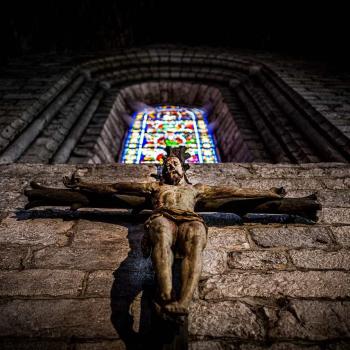
A Contemplative Reflection on the Death of Christ

LSD, Anxiety, and Contemplation: Can Psychedelic Therapy Support...

TRENDING AT PATHEOS Contemplative

Handy Contemplative Practices for Political Spaces
A Spiritually Grounded Presence In order to bring a spiritually grounded presence...

Halloween: The Holiday of Loving Your Neighbor
All Hallows Eve Is Halloween the least Christian holiday in America, or...

Can Love Be Saved? Some Thoughts on the...
Happy Valentine's Day! I recently published a post on Patreon called Can...

"This Loving, Uniting Embrace": the Holy Ordinary
Today's guest post is by Mark Longhurst, author of The Holy Ordinary:...

How Are We Called to Live?: More About...
How Are We Called to Live? Many of us struggle with discerning...

A Spiritual Practice of Reading: Join Us Online
A Spiritual Practice of Reading A healthy spiritual practice of reading is...
view all Contemplative blogs
Ad-Free & Subscriber Log-In Subscription Support
- About Us
- 2026 Calendar
- Videos
- Podcasts
- Library of World Religions
- Faith In Media Tracker
- Advertise With Us
- Write for Us
- Privacy Policy
- Terms of Service
- Do Not Sell My Data
- Contact Us
- Radiant Digital
- Manage Newsletter Subscriptions
- Unsubscribe From Notifications
- Sitemap
Copyright 2008-2026, Patheos. All rights reserved.
Subscription Support Ad-Free & Subscriber Log-In
Follow Patheos