
BuddhistCatholicContemplativeEvangelicalGeneral ChristianHinduJewishLatter-day SaintMuslimNew VisionsProgressive Christian
Beliefs
- Buddhist
- Catholic
- Contemplative
- Evangelical
- General Christian
- Hindu
- Jewish
- Latter-day Saint
- More Voices
- Muslim
- New Visions
- Pagan
- Progressive Christian
Topics
- Religion News
- Food and Religion
- Sports and Religion
- Religious Art
- Religious Music and Entertainment
- Religious Events
- History and Religion
- Style and Religion
- Politics and Religion
- Women in Religion
- Recreation Outdoors and Religion
- Business Finance and Religion
- Careers Workplace and Religion
- Education and Religion
- Family Parenting and Religion
- Health Fitness and Religion
- Home and Religion
- Relationships and Religion
- Technology and Religion
- Travel and Religion
Columnists
- Buddhist Columnists
- Business Finance and Religion Columnists
- Careers Workplace and Religion Columnists
- Catholic Columnists
- Contemplative Columnists
- Education and Religion Columnists
- Evangelists Columnists
- Family Parenting and Religion Columnists
- General Christian Columnists
- Health Fitness and Religion Columnists
- Hindu Columnists
- History and Religion Columnists
- Home and Religion Columnists
- Jewish Columnists
- More Voices Columnists
- Latter Day Columnists
- Muslim Columnists
- New Visions Columnists
- Nonreligious Columnists
- Pagan Columnists
- Politics and Religion Columnists
- Progressive Columnists
- Recreation Outdoors and Religion Columnists
- Relationships and Religion Columnists
- Religion News Columnists
- Religious Art Columnists
- Religious Events Columnists
- Religious Music and Entertainment Columnists
- Sports and Religion Columnists
- Style and Religion Columnists
- Technology and Religion Columnists
- Travel and Religion Columnists
- Women in Religion Columnists
Resource Library
- 2026 Calendar
- Library of World Religions
- The 100 Most Holy Places on Earth
- Patheos Answers
- Podcasts
- Videos
- Faith Leaders Database
- Anglican Episcopalian
- Bahai
- Baptist
- Buddhism
- Christianity
- Confucianism
- Eastern Orthodoxy
- Hinduism
- Holiness and Pentecostal
- ISKCON
- Islam
- Judaism
- Lutheran
- Methodist
- The Church of Jesus Christ of Latter-day Saints
- New Age
- Paganism
- Presbytarian and Reformed
- Protestantism
- Religion Behind the Scenes
- Roman Catholic
- Scientology
- Shia Islam
- Sikhism
- Sufism
- Sunni Islam
- Taoism
- Zen
- See all religions
Research Tools
 Ad-Free & Subscriber Log-In Subscription Support
Ad-Free & Subscriber Log-In Subscription Support
Follow Patheos 

- Trending:
- Forgiveness
- |
- Marriage
- |
- Consciousness
- |
- Death Penalty
- |
- Election
- |
- Halloween

- Home
- Contemplative
- What We Need for Union with God
What We Need for Union with God
Last updated on: December 16, 2019 at 11:18 am by Carl "Skye" McColman
What We Need for Union with God 2019-12-16T11:18:07-04:00 Carl "Skye" McColman
Patheos Explore the world's faith through different perspectives on religion and spirituality! Patheos has the views of the prevalent religions and spiritualities of the world.
Recently I posted this quote from Fr. Thomas Keating on Facebook:
If you’re curious about the source of this quote, it is found on page 71 of Open Mind, Open Heart.
In response, one reader posted this question as a comment:
Carl, what, in practice, does divine union actually mean? Surely we’ll be totally at one with God only in the next life?
It’s a fair question, especially for anyone who has been taught that there is a terrible chasm that separates us from God (such teaching typically blames human sinfulness for this separation). I think the idea that we are existentially alienated from God is bad theology, but it’s certainly a common notion, especially in the institutional church.
Here’s how I initially replied to the question.
“In him we live and move and have our being” — isn’t that union with God? Paul doesn’t quote this line to suggest it only applies to eternity, but rather as a present reality.
Put another way: God is omnipresent, which means God is everywhere. But if God is, in fact, everywhere, then God is in every cell of your body, right here and right now. You cannot escape God. God is not elsewhere.
The question of Divine Union is not “Can we attain it?” because it has already been given — even to the most reprehensible sinner. The real question is, “Can we learn to truly know it?” and maybe even more important, “Can we conduct our lives in a manner worthy of it?”
But it occurs to me that this is truly an important question, so I decided to explore it in a bit more detail here on my blog.
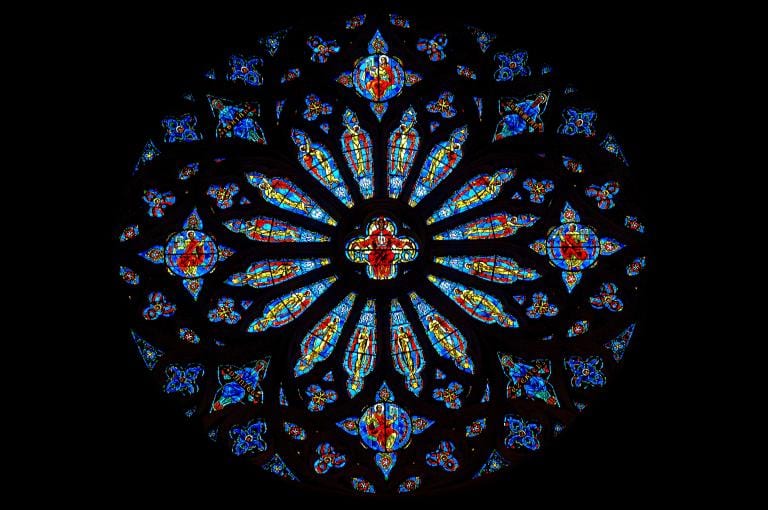
Where Does the Notion of “Separation from God” Come From?
The idea that we are somehow separate from God probably stems from Isaiah 59:2, which says that our sins have “separated” us from God. II Thessalonians 1:9 also suggests that those who reject God will be separated from God from all eternity — but that is a threat for the future, not a comment on current reality. So we’ll just consider Isaiah’s words. And Isaiah makes very clear, in 59:1, that “the Lord’s hand is not too short to save, nor his ear too dull to hear.” So any “separation” between us and God is not God’s doing, but our own. Which begs the question: if God has not separated from us, are we truly separate, or does it just feel that way?
The Hebrew word in Isaiah 59:2 that gets translated as “separation” (or “barrier” in some versions) is בֵּין (bayin) which has the sense of an “interval” or a “space between.” So the separation is not an insurmountable barrier, but rather a spaciousness that, presumably, God allows in order for us to come to our senses regarding our misdeeds.
What it makes me think of is how, in marriage, sometimes (like right after a fight) the two spouses might need some time apart. Time to think, to calm down, to relax, to reflect on what caused the fight and then what could be done to resolve the conflict.
Here’s the important point: they are still married, even while they are apart. “The two shall become one flesh” — even when there is a space between them, because of a conflict that is not yet resolved.
Our relationship with God works in a similar way, although with the added felicity of God’s perfection. We are one with God, even when we human beings reject that divine union, either explicitly (by making unloving choices) or implicitly (by ignoring or forgetting God’s unitive presence in our lives). So… we have a job to do, in order to restore what has been lost on our part.
That’s the blessing here: God never loses God’s union with us. So even while we think or feel that we are separated from God, that is only a misperception on our parts, a consequence of our own spiritual blindness. But we are always invited back into the light of divine grace and divine union.
It’s interesting to look at the original context of what Fr. Keating wrote:
Some people experience a preview of divine union, lose it for a period of time, then have to climb back to it. God can start you off at any point in the spiritual life. If you get a headstart, you have to go back and fill in the gaps. Don’t think that some people are lucky because they have visions when they are five or six years old. These people still have to go through the struggle to dismantle the emotional programs of early childhood. These programs are only temporarily put to sleep by the divine action. One great advantage for such persons, however, is that they know by experience what is missing in their lives and that nothing less than God can ever satisfy them. It is a mistake, however, to envy or admire someone else’s path. You must be convinced that you have everything you need to reach divine union. The reason any expectation is a hindrance is that it is a form of clinging, hence comes from the desire to control. (Emphasis mine).
So we can see the context in which Fr. Keating is talking: he’s addressing the question of someone who feels envious of someone else — perhaps a mystic like Hildegard of Bingen — who enjoyed consoling experiences of divine presence from an early age. Fr. Keating points out that everyone is different, but even those who have mystical experiences still have to do the long slow hard work of gradually letting go of all our inner woundedness that keeps us feeling alienated from God (and that also fuels our unloving behavior).
But then he insists: we must be convinced we have everything we need to reach divine union. We don’t need special visions or mystical experiences. We don’t need some sort of spiritual superpower that is only available to the select few. Everyone lives and moves and have their being in God, so that means everyone has union with God — right here and right now.
Reaching What is Already There
But what do we need to “reach” it? Back to my questions: “Can we learn to truly know it?” and “Can we conduct our lives in a manner worthy of it?” We already have everything we need to say “Yes” to both of these questions. And the “how” of that yes stems from the same spiritual act: repentance.
Remember, repentance, in Greek, is metanoia, a word that literally means “after the mind” or “after consciousness.” We have to move beyond ordinary consciousness in order to repent, which is to say, in order to recognize God’s presence in our lives and to amend our lives in a manner that is worthy of that presence.
You see, my first question is a challenge to embrace contemplation: to learn to truly know we have divine union requires adopting a life grounded in contemplative prayer. And my second question is a challenge to embody compassion: to live in a manner worthy of divine union means to live a life grounded in love and mercy, rather than in hostility and fear.
Both contemplation and compassion emerge from the higher consciousness that repentance calls us to (remember, repentance is not just feeling sorry for your sins. That, actually, is contrition. Repentance is embracing the higher mind/heart that makes contrition and amendment of life possible).
But then how do I repent? If that’s your question, I would invite you to pray every day, with at least some of that prayer including contemplative silence. And I would invite you to honestly acknowledge the ways you make choices in your life that are contrary to love. If you faithfully do both of these things, God will lead you into metanoia — into the higher heart/mind that recognizes Divine Union has been our free gift all along.
Enjoy reading this blog?
Click here to become a patron.

Previous Post

December 8, 2019
Thank you for your support
Next Post

December 27, 2019 The Goodness of Gray, the Holy Innocents, and the Kairos (Time) of God
Browse Our Archives
Select a Category Activism Announcements Art Books Catholicism Celtic Christianity Christian mysticism Christianity Contemplation Current events Etc. Family humor interfaith dialogue Interfaith Wisdom Interspirituality Lay Cistercians Living the Faith Meditation movies Mysticism Mystics nature Poetry Reviews Scripture silence Spirituality Uncategorized Writing
Select a Month February 2025 January 2025 November 2024 September 2024 August 2024 July 2024 June 2024 May 2024 March 2024 January 2024 December 2023 November 2023 August 2023 June 2023 April 2023 March 2023 February 2023 January 2023 December 2022 November 2022 October 2022 September 2022 August 2022 July 2022 June 2022 May 2022 April 2022 February 2022 January 2022 December 2021 November 2021 October 2021 September 2021 August 2021 July 2021 June 2021 May 2021 April 2021 March 2021 February 2021 January 2021 December 2020 November 2020 October 2020 September 2020 August 2020 July 2020 June 2020 May 2020 April 2020 March 2020 February 2020 January 2020 December 2019 November 2019 October 2019 September 2019 August 2019 July 2019 June 2019 May 2019 April 2019 March 2019 February 2019 January 2019 December 2018 November 2018 October 2018 September 2018 August 2018 July 2018 June 2018 May 2018 April 2018 March 2018 February 2018 January 2018 December 2017 November 2017 October 2017 September 2017 August 2017 July 2017 June 2017 May 2017 April 2017 March 2017 February 2017 January 2017 December 2016 November 2016 October 2016 September 2016 August 2016 July 2016 June 2016 May 2016 March 2016 February 2016 January 2016 December 2015 November 2015 October 2015 September 2015 August 2015 July 2015 June 2015 May 2015 April 2015 March 2015 February 2015 January 2015 December 2014 November 2014 October 2014 September 2014 August 2014 July 2014 June 2014 May 2014 April 2014 March 2014 February 2014 January 2014 December 2013 October 2013 September 2013 July 2013 May 2013 January 2013 December 2012 November 2012 August 2012 July 2012 June 2012 March 2012 December 2011 September 2011 October 2010 August 2010 March 2010 September 2009 July 2008 January 2008 December 2007 September 2007 February 2007 January 2007 December 2004
Follow Us!
TAKE THE
Religious Wisdom Quiz
What tree were Adam and Eve told not to eat from?
Select your answer to see how you score.
Tree of Life Tree of Knowledge of Good and Evil Olive Tree Fig Tree
Support this
Column


Related posts from Carl McColman

You don't have to become a monk to...

Mysticism, Faith, and "Knowing" God's Will

Twelve Mystical Anthologies That Belong in Every Contemplative...
TRENDING AT PATHEOS Contemplative

Handy Contemplative Practices for Political Spaces
A Spiritually Grounded Presence In order to bring a spiritually grounded presence...

Halloween: The Holiday of Loving Your Neighbor
All Hallows Eve Is Halloween the least Christian holiday in America, or...

Can Love Be Saved? Some Thoughts on the...
Happy Valentine's Day! I recently published a post on Patreon called Can...

"This Loving, Uniting Embrace": the Holy Ordinary
Today's guest post is by Mark Longhurst, author of The Holy Ordinary:...

How Are We Called to Live?: More About...
How Are We Called to Live? Many of us struggle with discerning...

A Spiritual Practice of Reading: Join Us Online
A Spiritual Practice of Reading A healthy spiritual practice of reading is...
view all Contemplative blogs
Ad-Free & Subscriber Log-In Subscription Support
- About Us
- 2026 Calendar
- Videos
- Podcasts
- Library of World Religions
- Faith In Media Tracker
- Advertise With Us
- Write for Us
- Privacy Policy
- Terms of Service
- Do Not Sell My Data
- Contact Us
- Radiant Digital
- Manage Newsletter Subscriptions
- Unsubscribe From Notifications
- Sitemap
Copyright 2008-2026, Patheos. All rights reserved.
Subscription Support Ad-Free & Subscriber Log-In
Follow Patheos