
BuddhistCatholicContemplativeEvangelicalGeneral ChristianHinduJewishLatter-day SaintMuslimNew VisionsProgressive Christian
Beliefs
- Buddhist
- Catholic
- Contemplative
- Evangelical
- General Christian
- Hindu
- Jewish
- Latter-day Saint
- More Voices
- Muslim
- New Visions
- Pagan
- Progressive Christian
Topics
- Religion News
- Food and Religion
- Sports and Religion
- Religious Art
- Religious Music and Entertainment
- Religious Events
- History and Religion
- Style and Religion
- Politics and Religion
- Women in Religion
- Recreation Outdoors and Religion
- Business Finance and Religion
- Careers Workplace and Religion
- Education and Religion
- Family Parenting and Religion
- Health Fitness and Religion
- Home and Religion
- Relationships and Religion
- Technology and Religion
- Travel and Religion
Columnists
- Buddhist Columnists
- Business Finance and Religion Columnists
- Careers Workplace and Religion Columnists
- Catholic Columnists
- Contemplative Columnists
- Education and Religion Columnists
- Evangelists Columnists
- Family Parenting and Religion Columnists
- General Christian Columnists
- Health Fitness and Religion Columnists
- Hindu Columnists
- History and Religion Columnists
- Home and Religion Columnists
- Jewish Columnists
- More Voices Columnists
- Latter Day Columnists
- Muslim Columnists
- New Visions Columnists
- Nonreligious Columnists
- Pagan Columnists
- Politics and Religion Columnists
- Progressive Columnists
- Recreation Outdoors and Religion Columnists
- Relationships and Religion Columnists
- Religion News Columnists
- Religious Art Columnists
- Religious Events Columnists
- Religious Music and Entertainment Columnists
- Sports and Religion Columnists
- Style and Religion Columnists
- Technology and Religion Columnists
- Travel and Religion Columnists
- Women in Religion Columnists
Resource Library
- 2026 Calendar
- Library of World Religions
- The 100 Most Holy Places on Earth
- Patheos Answers
- Podcasts
- Videos
- Faith Leaders Database
- Anglican Episcopalian
- Bahai
- Baptist
- Buddhism
- Christianity
- Confucianism
- Eastern Orthodoxy
- Hinduism
- Holiness and Pentecostal
- ISKCON
- Islam
- Judaism
- Lutheran
- Methodist
- The Church of Jesus Christ of Latter-day Saints
- New Age
- Paganism
- Presbytarian and Reformed
- Protestantism
- Religion Behind the Scenes
- Roman Catholic
- Scientology
- Shia Islam
- Sikhism
- Sufism
- Sunni Islam
- Taoism
- Zen
- See all religions
Research Tools
 Ad-Free & Subscriber Log-In Subscription Support
Ad-Free & Subscriber Log-In Subscription Support
Follow Patheos 

- Trending:
- Forgiveness
- |
- Marriage
- |
- Consciousness
- |
- Death Penalty
- |
- Election
- |
- Halloween

- Home
- Contemplative
- Advice for Contemplatives looking for a Spiritual Community to Call Home
Advice for Contemplatives looking for a Spiritual Community to Call Home
Last updated on: December 3, 2019 at 1:11 pm by Carl "Skye" McColman
Advice for Contemplatives looking for a Spiritual Community to Call Home 2019-12-03T13:11:24-04:00 Carl "Skye" McColman
Patheos Explore the world's faith through different perspectives on religion and spirituality! Patheos has the views of the prevalent religions and spiritualities of the world.
A reader recently wrote this to me on Facebook:
I’ve been on a spiritual journey for some time now probably for about eight years. The last five years it has gotten more and more intense and I have traveled / practiced within various paths that have led me to various religions and spiritual practices but I seem to be having difficulty finding one that resonates with me. Every time I seem to find a path there is some form of religious dogma that comes from it that deters me and has me thinking I need to find something different…. more of my internal light. I was deeply enjoying Christian mysticism and decided to join a non-denominational church but their teachings and views are not ones I agree with, so I am left feeling out of place and almost like a phony because I don’t follow that specific belief system. Same has happened in other mystical paths such as Kabbalah and Sufism where I attempt to find a community close to home in a temple or mosque and the same thing occurs. I grew up with no religion and studied Buddhism, Hinduism and even shamanism and Wicca along with the practices mentioned above. So I guess my question is what is your advice for someone like myself? I would greatly appreciate your feedback if you’re able to reply. Thank you and I hope you enjoy the rest of your weekend.
Thanks for such a thoughtful question.
It reminds me of something I read in a book by Alan Watts, many years ago. He was decrying how religions always seem to have a message (no matter how subtle) of “We’re better than everyone else.” “We are more faithful to the Bible,” “We have a more authentic spirituality,” “We have the best music,” yada yada yada. Then he mentioned Unitarian Universalism, which is famous for insisting that each person music create their own belief system, so they’re not in the business to telling people what to believe. But even there, Watts found something to complain about: liberal churches, he pointed out, often have the subtext “We’re more tolerant than everyone else!”
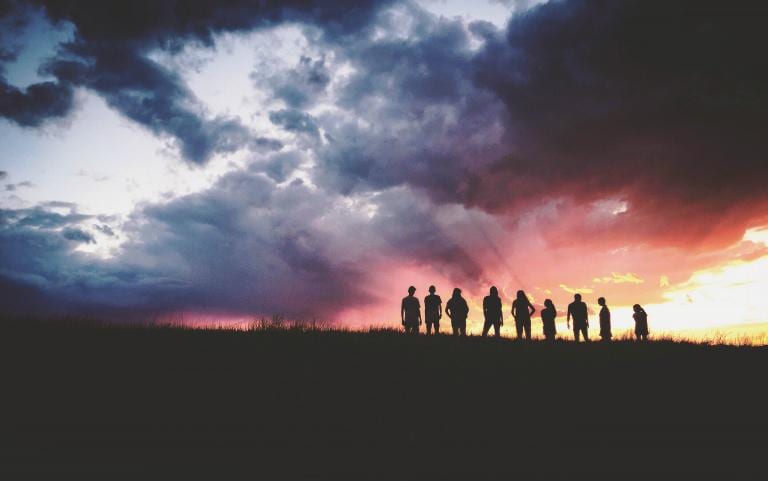
Photo by Hudson Hintze on Unsplash
The short answer to your question, which you have already discovered, is that the perfect religious community does not exist. Finding a church is like finding a spouse. There’s two dimensions, and both are equally important: “Can I truly love this person, and will they love me?” — but just as important: “Can I live with their imperfections (and can they live with mine)?”
Every human being will sooner or later let us down. Every spouse will be, in some way, a less-than-perfect life partner. So part of the spiritual work of a good and healthy marriage is learning to love each other in spite of both of your imperfections.
And often, a person’s imperfections might be somewhat related to their positive qualities. The beautiful person who turns out to be narcissistic. The bon vivant who just can’t manage to be faithful. The artist who can’t figure out how to hold down a steady job. I know these are stereotypes! But I think there’s a principle here.
So now let’s look at faith communities. The church that celebrates intellectual freedom might turn out to be a very cold and emotionally distant group of people. The one that has a great youth program might not know how to educate its adults. The one with a strong emphasis on social justice might feel more like a nonprofit organization than a sacred place where the mysteries are adored.
So… how do we find the community we can love? And the one whose imperfections we can live with?
Clearly, from what you have written, dogmatism is a trigger for you. You don’t need a church that is going to dictate your beliefs to you, thank you very much. And that makes me think you’d be much happier with the Unitarians, the liberal Quakers, the UCC, or the Episcopalians, than with churches that tend to stress a certain manner of believing, like most Catholic or evangelical churches (incidentally, it is possible to find Catholic or evangelical churches where intellectual freedom is respected and celebrated — if you’re in Atlanta, I can point you to a few great communities — but unfortunately, these churches tend to be in the minority so they’re not as easy to come by).
So my first piece of advice would be, to keep doing what you’re doing, which is to “shop around.” It might well be that you are more comfortable in a small community that is less hierarchical, like a house church or a group of monastic associates. But those kinds of communities aren’t easy to find — sometimes you have to know somebody to find a small community like that.
So my second piece of advice: look for a community of practice. Instead of trying to join a church, see if you can find a centering prayer group. Instead of joining a Buddhist sangha, look for a group of people who just like to get together to meditate. It might well be, that a practice circle is all the community you need. I believe contemplatives need community, but you don’t need institutional religion in order to find a meaningful spiritual community.
While you are looking, try to cultivate friendships with likeminded persons online. There are so many Facebook groups, for example, that are organized around a shared interest or belief. If you like Richard Rohr, join a group devoted to his teachings. Or a group devoted to centering prayer, or Celtic spirituality. Once you find a group that feels like home, see if any members live in your vicinity. Meet someplace neutral or safe (a coffee shop, perhaps) and see if there’s potential for friendships to develop. Maybe your spiritual community will be something brand new that you help to create.
Finally — going back to the marriage analogy — if the day comes that you find a community that you truly feel at home with, take the time to try to be as honest and realistic about the community’s shadow side. Can you live with it? If you can, then prayerfully consider joining that community. Recognize that, sooner or later, the community will drive you nuts — just like even a healthy marriage will at times drive both spouses to distraction. That will be part of your spiritual practice: learning to live with, to manage, to make peace with, the limitations of the community. Because every community has its limitations.
Learning With the Imperfect Community
If a community bugs you because it’s dogmatic, is it possible that you need to learn to be flexible both with your beliefs and the beliefs of others? Maybe those “dogmatic” people actually know something you don’t? (but these are only relevant questions to ask once you’ve made your commitment; let’s be real, there are a lot of dogmatic people out there who have nothing to offer, except their own anxiety which gets expressed by, well, being dogmatic!). See, here’s the thing: if you join a truly healthy and creative spiritual community, there will be people in it who have things to teach you. But your triggers might get in the way. What may look to you like dogmatism might actually be an invitation to consider truth from a new perspective.
So part of surviving in a faith community is finding the inner resilience to be able to discern when something triggers me, is the “trigger” a warning sign of other people’s dysfunction, or actually a warning sign of my dysfunction (or limitation)? There’s no easy answer to a question like this: it requires much trust, wisdom, reflection and discernment. This is just one example of the ways in which faith communities can help us to grow.
It’s not easy being a contemplative in today’s spiritual/religious landscape. Too many “spiritual but not religious” people do not appreciate the important lessons that a healthy community can teach us. But too many religionists are clueless when it comes to contemplation and mysticism. So it takes a lot of seeking to find a community that can work. It will never be perfect, and part of your spiritual practice will be learning to grow through the imperfections even as you are nurtured by the positives that the community has to offer you. Plus there are the lessons related to service, relationship-building, and learning to be compassionate to people who are sometimes very different from yourself.
I hope this is helpful! Keep looking, don’t be afraid to seek out alternative forms of community (or consider starting your own), and then learn to love through and with the imperfections. Good luck to you!
Enjoy reading this blog?
Click here to become a patron.



Browse Our Archives
Select a Category Activism Announcements Art Books Catholicism Celtic Christianity Christian mysticism Christianity Contemplation Current events Etc. Family humor interfaith dialogue Interfaith Wisdom Interspirituality Lay Cistercians Living the Faith Meditation movies Mysticism Mystics nature Poetry Reviews Scripture silence Spirituality Uncategorized Writing
Select a Month February 2025 January 2025 November 2024 September 2024 August 2024 July 2024 June 2024 May 2024 March 2024 January 2024 December 2023 November 2023 August 2023 June 2023 April 2023 March 2023 February 2023 January 2023 December 2022 November 2022 October 2022 September 2022 August 2022 July 2022 June 2022 May 2022 April 2022 February 2022 January 2022 December 2021 November 2021 October 2021 September 2021 August 2021 July 2021 June 2021 May 2021 April 2021 March 2021 February 2021 January 2021 December 2020 November 2020 October 2020 September 2020 August 2020 July 2020 June 2020 May 2020 April 2020 March 2020 February 2020 January 2020 December 2019 November 2019 October 2019 September 2019 August 2019 July 2019 June 2019 May 2019 April 2019 March 2019 February 2019 January 2019 December 2018 November 2018 October 2018 September 2018 August 2018 July 2018 June 2018 May 2018 April 2018 March 2018 February 2018 January 2018 December 2017 November 2017 October 2017 September 2017 August 2017 July 2017 June 2017 May 2017 April 2017 March 2017 February 2017 January 2017 December 2016 November 2016 October 2016 September 2016 August 2016 July 2016 June 2016 May 2016 March 2016 February 2016 January 2016 December 2015 November 2015 October 2015 September 2015 August 2015 July 2015 June 2015 May 2015 April 2015 March 2015 February 2015 January 2015 December 2014 November 2014 October 2014 September 2014 August 2014 July 2014 June 2014 May 2014 April 2014 March 2014 February 2014 January 2014 December 2013 October 2013 September 2013 July 2013 May 2013 January 2013 December 2012 November 2012 August 2012 July 2012 June 2012 March 2012 December 2011 September 2011 October 2010 August 2010 March 2010 September 2009 July 2008 January 2008 December 2007 September 2007 February 2007 January 2007 December 2004
Follow Us!
TAKE THE
Religious Wisdom Quiz
What order did the four beasts that rose from the sea in Daniel's vision appear?
Select your answer to see how you score.
Lion with eagle's wings, bear, leopard, terrifying beast with iron teeth Terrifying beast with iron teeth, lion with eagle's wings, leopard, bear Bear, lion with eagle's wings, terrifying beast with iron teeth, leopard Leopard, bear, lion with eagle's wings, terrifying beast with iron teeth
Support this
Column


Related posts from Carl McColman

Join Me for "24 Meditations for 2024"

LSD, Anxiety, and Contemplation: Can Psychedelic Therapy Support...

TRENDING AT PATHEOS Contemplative

Handy Contemplative Practices for Political Spaces
A Spiritually Grounded Presence In order to bring a spiritually grounded presence...

Halloween: The Holiday of Loving Your Neighbor
All Hallows Eve Is Halloween the least Christian holiday in America, or...

Can Love Be Saved? Some Thoughts on the...
Happy Valentine's Day! I recently published a post on Patreon called Can...

"This Loving, Uniting Embrace": the Holy Ordinary
Today's guest post is by Mark Longhurst, author of The Holy Ordinary:...

How Are We Called to Live?: More About...
How Are We Called to Live? Many of us struggle with discerning...

A Spiritual Practice of Reading: Join Us Online
A Spiritual Practice of Reading A healthy spiritual practice of reading is...
view all Contemplative blogs
Ad-Free & Subscriber Log-In Subscription Support
- About Us
- 2026 Calendar
- Videos
- Podcasts
- Library of World Religions
- Faith In Media Tracker
- Advertise With Us
- Write for Us
- Privacy Policy
- Terms of Service
- Do Not Sell My Data
- Contact Us
- Radiant Digital
- Manage Newsletter Subscriptions
- Unsubscribe From Notifications
- Sitemap
Copyright 2008-2026, Patheos. All rights reserved.
Subscription Support Ad-Free & Subscriber Log-In
Follow Patheos