
BuddhistCatholicContemplativeEvangelicalGeneral ChristianHinduJewishLatter-day SaintMuslimNew VisionsProgressive Christian
Beliefs
- Buddhist
- Catholic
- Contemplative
- Evangelical
- General Christian
- Hindu
- Jewish
- Latter-day Saint
- More Voices
- Muslim
- New Visions
- Pagan
- Progressive Christian
Topics
- Religion News
- Food and Religion
- Sports and Religion
- Religious Art
- Religious Music and Entertainment
- Religious Events
- History and Religion
- Style and Religion
- Politics and Religion
- Women in Religion
- Recreation Outdoors and Religion
- Business Finance and Religion
- Careers Workplace and Religion
- Education and Religion
- Family Parenting and Religion
- Health Fitness and Religion
- Home and Religion
- Relationships and Religion
- Technology and Religion
- Travel and Religion
Columnists
- Buddhist Columnists
- Business Finance and Religion Columnists
- Careers Workplace and Religion Columnists
- Catholic Columnists
- Contemplative Columnists
- Education and Religion Columnists
- Evangelists Columnists
- Family Parenting and Religion Columnists
- General Christian Columnists
- Health Fitness and Religion Columnists
- Hindu Columnists
- History and Religion Columnists
- Home and Religion Columnists
- Jewish Columnists
- More Voices Columnists
- Latter Day Columnists
- Muslim Columnists
- New Visions Columnists
- Nonreligious Columnists
- Pagan Columnists
- Politics and Religion Columnists
- Progressive Columnists
- Recreation Outdoors and Religion Columnists
- Relationships and Religion Columnists
- Religion News Columnists
- Religious Art Columnists
- Religious Events Columnists
- Religious Music and Entertainment Columnists
- Sports and Religion Columnists
- Style and Religion Columnists
- Technology and Religion Columnists
- Travel and Religion Columnists
- Women in Religion Columnists
Resource Library
- 2026 Calendar
- Library of World Religions
- The 100 Most Holy Places on Earth
- Patheos Answers
- Podcasts
- Videos
- Faith Leaders Database
- Anglican Episcopalian
- Bahai
- Baptist
- Buddhism
- Christianity
- Confucianism
- Eastern Orthodoxy
- Hinduism
- Holiness and Pentecostal
- ISKCON
- Islam
- Judaism
- Lutheran
- Methodist
- The Church of Jesus Christ of Latter-day Saints
- New Age
- Paganism
- Presbytarian and Reformed
- Protestantism
- Religion Behind the Scenes
- Roman Catholic
- Scientology
- Shia Islam
- Sikhism
- Sufism
- Sunni Islam
- Taoism
- Zen
- See all religions
Research Tools
 Ad-Free & Subscriber Log-In Subscription Support
Ad-Free & Subscriber Log-In Subscription Support
Follow Patheos 

- Trending:
- Forgiveness
- |
- Marriage
- |
- Consciousness
- |
- Death Penalty
- |
- Election
- |
- Halloween

- Home
- Contemplative
- Practice, Practice, Practice
Practice, Practice, Practice
Last updated on: September 27, 2019 at 11:02 am by Guest Contributor
Practice, Practice, Practice 2019-09-24T16:30:23-04:00 Guest Contributor
Patheos Explore the world's faith through different perspectives on religion and spirituality! Patheos has the views of the prevalent religions and spiritualities of the world.
Today’s post is by a guest author, Dr. David Rensberger, author of Johannine Faith and Liberating Community.
I’m a fan of the Atlanta Braves, and one day this summer I watched a pregame interview with two Braves players. They weren’t starters, but guys who sit on the bench and may go two or three games without playing. Nevertheless, they perform at a high level when called on. The interviewer asked them how they manage to be ready to play so well at a moment’s notice. They both said the same thing: routine. They have settled routines of practice, study of other teams, and working out. Doing this day in and day out leaves them prepared mentally and physically when they’re called on to play.
This led me to think about the role of routine in the spiritual life. Christian monks, nuns, and hermits have routines of prayer, work, and reading that build up their spiritual “fitness.” Anything that undermines this routine invariably leads to decline (Kathleen Norris treats this topic superbly in her book Acedia and Me). Ever since the days of the desert fathers and mothers, much of monastic life has simply been keeping up a routine—“grinding out at-bats,” as the ballplayers say. As aspects of monastic or contemplative life are being adopted by people outside the cloister today, we may ask whether the practice of spiritual routine might be taken up as well.
In a recent post here (A Reason Why Liturgy Matters), Carl asked, “Why pray out of a book . . . over time you keep praying the same words over and over. Why do it?” That’s a question that my Mennonite tradition might be more likely to pose than Carl’s Roman Catholic context. By and large, Mennonites have not valued spiritual routine or prayers from books, instead emphasizing worship and prayer that are spontaneous, arising from the heart in the immediate situation. Routine prayers are “dead routine,” rote repetition that does not touch the spirit. I suspect that a lot of people who see themselves as “spiritual” rather than “religious” might agree with that.
I certainly believe in and practice prayer any time, anywhere, in any words that are appropriate. But I’ve come to value spiritual routine as well. Arthur Paul Boers (who has pastored Mennonite churches) suggests in his book Day by Day These Things We Pray that prayer at set times can help focus us on God at all times. it can lead us toward continuous prayer, continuous presence to the presence of God. Regular practices of prayer can reorient our entire lives toward God, so that not only designated moments of prayer but all of life becomes holy.
Boers adds that such rhythms of prayer, anchoring encounter with God in the flow of daily life, can be a way of resisting the inhumane schedules many of us endure at work or school. The oppressive daily grind can be resisted with a counter-structure, one on which authentic life can climb like a rose on a trellis. Our ordinary lives are far from unstructured or spontaneous. That may actually be one thing that draws people toward spiritual seeking in the first place, looking for genuine meaning in the midst of a pointless maze of routine.
So shouldn’t our inner lives be free of routine, creative and unrestricted? Yet there is no creativity without limits. Creativity needs boundaries to push against and give it shape. The potter needs solid clay and a wheel. Even the most stream-of-consciousness writers have a vocabulary and a grammar to work with—and if they’re going to get anywhere, a time of day to sit down and write.
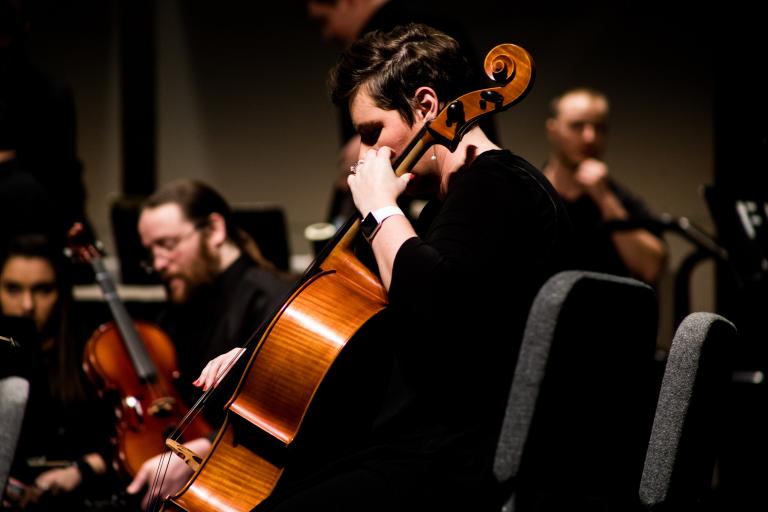
Photo credit: Unsplash
In an old joke, a tourist in Manhattan spots someone with a violin case and asks them how to get to Carnegie Hall. The musician just smiles and says, “Practice, practice, practice.” Frequent practice is also essential in the spiritual quest, where we are often trying to unmake long-ingrained habits of thought and action and create more positive patterns. Of course, the relation of routine to spontaneity in the spiritual life is a matter for personal discernment: different gifts, personalities, circumstances, and callings all come into play.
And spiritual routine can take many forms. It may include short periods of prayer, formal or spontaneous, verbal or silent. It may include reading or walking, music or journaling. A simple turn toward God, toward the Transcendent, a few moments of stillness and awareness once an hour or so, can be enough to keep us connected and directed.
I’ve found it easy to welcome the idea of spiritual routine into my daily life; but promising myself something is not the same as doing it! Old habits die hard, and new ones are difficult to introduce. I’ve long had a practice of morning prayer first thing in the day, followed by a period of centering prayer. I’d like to add noonday and evening prayer to these, and another time of centering. I’ve got a long way to go; but occasional moments of attentive silence are a good start. Having a gentle alarm on my computer or phone helps.
But I still have to respond to the alarm, and open myself to a deeper and more ordered way of living.
Yet I’m convinced that having a routine of spiritual practices woven into my daily activities will help me be ready to “get in the game.” Work, relationships, and social life all present challenges that call for spiritual and ethical preparedness. Having routine practices structured into the day can help us frame these challenges in larger contexts of religious, spiritual, or transcendent values, and respond to them more authentically and lovingly than we might otherwise. Far from being dead, a spiritual routine can in fact be thoroughly life-giving.
Enjoy reading this blog?
Click here to become a patron.

Previous Post

September 24, 2019
Unteachable Hope, or, My Dream for Readers of My Latest Book
Next Post

October 4, 2019 Promises of the Heart: New E-Course Starts on October 28
Browse Our Archives
Select a Category Activism Announcements Art Books Catholicism Celtic Christianity Christian mysticism Christianity Contemplation Current events Etc. Family humor interfaith dialogue Interfaith Wisdom Interspirituality Lay Cistercians Living the Faith Meditation movies Mysticism Mystics nature Poetry Reviews Scripture silence Spirituality Uncategorized Writing
Select a Month February 2025 January 2025 November 2024 September 2024 August 2024 July 2024 June 2024 May 2024 March 2024 January 2024 December 2023 November 2023 August 2023 June 2023 April 2023 March 2023 February 2023 January 2023 December 2022 November 2022 October 2022 September 2022 August 2022 July 2022 June 2022 May 2022 April 2022 February 2022 January 2022 December 2021 November 2021 October 2021 September 2021 August 2021 July 2021 June 2021 May 2021 April 2021 March 2021 February 2021 January 2021 December 2020 November 2020 October 2020 September 2020 August 2020 July 2020 June 2020 May 2020 April 2020 March 2020 February 2020 January 2020 December 2019 November 2019 October 2019 September 2019 August 2019 July 2019 June 2019 May 2019 April 2019 March 2019 February 2019 January 2019 December 2018 November 2018 October 2018 September 2018 August 2018 July 2018 June 2018 May 2018 April 2018 March 2018 February 2018 January 2018 December 2017 November 2017 October 2017 September 2017 August 2017 July 2017 June 2017 May 2017 April 2017 March 2017 February 2017 January 2017 December 2016 November 2016 October 2016 September 2016 August 2016 July 2016 June 2016 May 2016 March 2016 February 2016 January 2016 December 2015 November 2015 October 2015 September 2015 August 2015 July 2015 June 2015 May 2015 April 2015 March 2015 February 2015 January 2015 December 2014 November 2014 October 2014 September 2014 August 2014 July 2014 June 2014 May 2014 April 2014 March 2014 February 2014 January 2014 December 2013 October 2013 September 2013 July 2013 May 2013 January 2013 December 2012 November 2012 August 2012 July 2012 June 2012 March 2012 December 2011 September 2011 October 2010 August 2010 March 2010 September 2009 July 2008 January 2008 December 2007 September 2007 February 2007 January 2007 December 2004
Follow Us!
TAKE THE
Religious Wisdom Quiz
Who was known as a man after God’s own heart?
Select your answer to see how you score.
David Moses Samuel Solomon
Support this
Column


Related posts from Carl McColman

Four Dimensions of Mindfulness and Centering Prayer

I Believe Prayer Changes Things. Here's a Few...
A Contemplative Reflection on the Death of Christ

Join Me for "24 Meditations for 2024"
TRENDING AT PATHEOS Contemplative

Handy Contemplative Practices for Political Spaces
A Spiritually Grounded Presence In order to bring a spiritually grounded presence...

Halloween: The Holiday of Loving Your Neighbor
All Hallows Eve Is Halloween the least Christian holiday in America, or...

Can Love Be Saved? Some Thoughts on the...
Happy Valentine's Day! I recently published a post on Patreon called Can...

"This Loving, Uniting Embrace": the Holy Ordinary
Today's guest post is by Mark Longhurst, author of The Holy Ordinary:...

How Are We Called to Live?: More About...
How Are We Called to Live? Many of us struggle with discerning...

A Spiritual Practice of Reading: Join Us Online
A Spiritual Practice of Reading A healthy spiritual practice of reading is...
view all Contemplative blogs
Ad-Free & Subscriber Log-In Subscription Support
- About Us
- 2026 Calendar
- Videos
- Podcasts
- Library of World Religions
- Faith In Media Tracker
- Advertise With Us
- Write for Us
- Privacy Policy
- Terms of Service
- Do Not Sell My Data
- Contact Us
- Radiant Digital
- Manage Newsletter Subscriptions
- Unsubscribe From Notifications
- Sitemap
Copyright 2008-2026, Patheos. All rights reserved.
Subscription Support Ad-Free & Subscriber Log-In
Follow Patheos