
BuddhistCatholicContemplativeEvangelicalGeneral ChristianHinduJewishLatter-day SaintMuslimNew VisionsProgressive Christian
Beliefs
- Buddhist
- Catholic
- Contemplative
- Evangelical
- General Christian
- Hindu
- Jewish
- Latter-day Saint
- More Voices
- Muslim
- New Visions
- Pagan
- Progressive Christian
Topics
- Religion News
- Food and Religion
- Sports and Religion
- Religious Art
- Religious Music and Entertainment
- Religious Events
- History and Religion
- Style and Religion
- Politics and Religion
- Women in Religion
- Recreation Outdoors and Religion
- Business Finance and Religion
- Careers Workplace and Religion
- Education and Religion
- Family Parenting and Religion
- Health Fitness and Religion
- Home and Religion
- Relationships and Religion
- Technology and Religion
- Travel and Religion
Columnists
- Buddhist Columnists
- Business Finance and Religion Columnists
- Careers Workplace and Religion Columnists
- Catholic Columnists
- Contemplative Columnists
- Education and Religion Columnists
- Evangelists Columnists
- Family Parenting and Religion Columnists
- General Christian Columnists
- Health Fitness and Religion Columnists
- Hindu Columnists
- History and Religion Columnists
- Home and Religion Columnists
- Jewish Columnists
- More Voices Columnists
- Latter Day Columnists
- Muslim Columnists
- New Visions Columnists
- Nonreligious Columnists
- Pagan Columnists
- Politics and Religion Columnists
- Progressive Columnists
- Recreation Outdoors and Religion Columnists
- Relationships and Religion Columnists
- Religion News Columnists
- Religious Art Columnists
- Religious Events Columnists
- Religious Music and Entertainment Columnists
- Sports and Religion Columnists
- Style and Religion Columnists
- Technology and Religion Columnists
- Travel and Religion Columnists
- Women in Religion Columnists
Resource Library
- 2026 Calendar
- Library of World Religions
- The 100 Most Holy Places on Earth
- Patheos Answers
- Podcasts
- Videos
- Faith Leaders Database
- Anglican Episcopalian
- Bahai
- Baptist
- Buddhism
- Christianity
- Confucianism
- Eastern Orthodoxy
- Hinduism
- Holiness and Pentecostal
- ISKCON
- Islam
- Judaism
- Lutheran
- Methodist
- The Church of Jesus Christ of Latter-day Saints
- New Age
- Paganism
- Presbytarian and Reformed
- Protestantism
- Religion Behind the Scenes
- Roman Catholic
- Scientology
- Shia Islam
- Sikhism
- Sufism
- Sunni Islam
- Taoism
- Zen
- See all religions
Research Tools
 Ad-Free & Subscriber Log-In Subscription Support
Follow Patheos 

- Trending:
- Advent
- |
- Forgiveness
- |
- Thanksgiving
- |
- Election
- |
- Seasonal Holidays
- |
- Marriage

- Home
- Contemplative
- The Characteristics of a Mystic
The Characteristics of a Mystic
Last updated on: August 20, 2019 at 11:14 am by Carl "Skye" McColman
The Characteristics of a Mystic 2019-08-16T18:18:41-04:00 Carl "Skye" McColman
Patheos Explore the world's faith through different perspectives on religion and spirituality! Patheos has the views of the prevalent religions and spiritualities of the world.
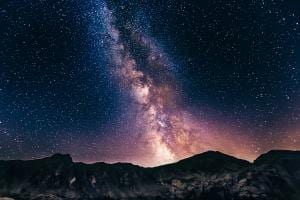 What are the characteristics of a mystic?
I know two elderly monks at the local monastery near where I live, both of whom have reputations as “real mystics.” Indeed, I would agree with this assessment — they both strike me as genuine contemplatives, true living mystics. But they are very different from one another in some key ways. One is something of a theologian, who spent most of his life reading dense, academic works on topics like the Holy Trinity and apophaticism (the spirituality of darkness and unknowing). The other, meanwhile, while no intellectual slouch — he speaks several languages — would rather spend several hours a day meditating than reading. Both have charming personalities, but one is a clear extravert, the other just as obviously an introvert. Both are committed Roman Catholics, but one of them also has a strong interfaith bent and as a young man devoted much time to exploring eastern forms of meditation.
So, using just these two men as a template (but also drawing from the literary sources by recognized mystics like Thomas Merton, Evelyn Underhill, Thomas Keating, Simone Weil, Pierre Teilhard de Chardin, and many others), is it possible to begin to identify what kinds of characteristics mark the life and personality of a true mystic? Especially given the reality that mystics come in many shapes or sizes: like the saying goes: “a mystic is not a special kind of person; each person is a special kind of mystic.”
I think it is possible to make at least some basic statements about the characteristics of a mystic. And while a simple blog post cannot be the final word on the characteristics of mysticism, perhaps this list of seven common (not necessarily universal) marks of a true mystic can be a source of discernment for anyone who is interested in embracing the mystical path.
- Mystics are humble. Kenneth Leech (author of Prayer and Prophecy) once rather playfully told me that true mystics would never presume to call themselvesa mystic — they would humbly trust others to decide whether or not they truly deserved to called as such. I think his point was less about the labels we choose to identify ourselves with, and more about the central role of humility in the contemplative life. Mysticism is not a badge of honor or a point of pride. Having a sense of God’s abiding presence in your life, if it’s authentic and not just your imagination, most likely will impress you with a serene but clear sense of your own littleness and even unworthiness — not in terms of self-denigration (that’s just pride inverted), but rather as a down-to-earth, matter-of-fact acknowledgement of your own limitedness and imperfection. As someone (it’s often credited to C.S. Lewis) once said, a humble person doesn’t think less of himself, but thinks of himself less. Humility is all about being honest and authentic. So too is mysticism.
- Mystics are virtuous. We have so many subtle ways in which we dismiss the idea of basic, down-to-earth goodness in our society. We call a good person a “girl scout” or a “goody-two-shoes.” We sometimes think that truly good people are rather weak or passive — unable to defend themselves or to effectively fight for what they want. These ideas are so pervasive that they might go unquestioned: but they are symptoms of the pervasive cynicism of our culture. We forget that the word virtueis related to virilitywhich implies strength, fecundity, and “manliness” — a gendered term that might better be re-defined as humanliness— the qualities that make a human being reach his or her full potential. True virtue: an unwavering commitment to goodness, fairness, justice, and courage, even when it requires self-sacrifice, was classically understood as an essential part of living a truly good human life. Goodness is not an optional dimension of a mystical life: it is inherent to it. And while no one is perfect, a good person takes responsibility for his or her mistakes.
- Mystics are kind and compassionate; love is central to their identity and consciousness. At least in a Christian context, love is recognized as the greatest of the virtues. If the characteristics of a true mystic begins with humility, the ultimate flowering of the mystical life is love, in its fullest expression. Not just love as passionate feeling or erotic desire, but rather love as a function of the will: an intentional commitment to virtues such as kindness, compassion, caring (and, when necessary, charity), and a grounded sense of brotherhood and sisterhood with all people and indeed all of life. “We love because God first loved us,” proclaims the New Testament, and a mystic embodies this truth. He or she lives immersed in Divine love, and the proof of that immersion is the loving way in which the mystic relates to others, including rivals and enemies, and to the world at large. Mystics bring the presence of God into the lives of others, and they do so by bringing love into all situations and circumstances; even and especially the most troubled situations.
- Mystics recognize spiritual depth regardless of one’s religious label. The first three characteristics could all be expected of any high-functioning, self-actualized person. But mystics are beyond merely human peak performance. A mystic is one who has drunk deep from the waters of eternity, and bathed in the supernal light of Divine consciousness. He or she is infused by God, and so lives from a deep place, a deep center within. One of the qualities of living such a “deeper” life is the capacity of recognizing a similar depth in others. It is said that when the American Catholic mystic Thomas Merton traveled to Asia, a Buddhist (who had never met him before) greeted him by proclaiming, “You are a natural Buddha!” Likewise, the Southern Baptist mystic Howard Thurman in his biography With Head and Heartreports recognizing deep truth in the lives of Hindus and Buddhists and Muslims when he traveled through India. The presence of God cannot be constrained by religious boundaries, and true mystics naturally recognize this.
- **Mystics take their spiritual practice seriously; they don’t take it for granted.**While there is a certain universal quality to mysticism, paradoxically many mystics remain deeply affiliated with one particular path. There are Sufi (Muslim) mystics and Christian mystics; Jewish mystics and Vedantist mystics; Buddhist mystics and nature mystics (found among indigenous spiritual practitioners around the world). Mysticism is universal, but it also seems to be a universal quality of mysticism that it benefits from a healthy ecosystem in which to thrive and flourish. When people say “I’m spiritual but not religious,” presumably this means they reject the constraining, fussily bureaucratic nature of religious institutionalism. That makes sense; meanwhile, so many mystics have pointed the way to spirituality withinreligion that they have wisely maintained at least some ties to the disciplines and practices of their particular faith tradition. Rather than digging a lot of holes, none of which go very deep: most mystics persevere at digging one deep well to access the living water.
- Mystics rely on grace and wonder: they know their spirituality is not entirely under their control. Playing a musical instrument, or improving one’s physical fitness, or many other desirable goals in life require hard work, perseverance, dedicated effort, and the willingness to follow the instruction of a qualified teacher, trainer, or coach. Mysticism is similar: it’s more than just a nice idea or a desirable identity: it is the fruit of dedication, loyalty, hard work, and ongoing training and formation. However, there is much more to mysticism than merely mastering a skill or honing a talent. Mysticism is, at heart, relational— it’s a dance between a finite human and the infinite Spirit. And of course, the Spirit leads the dance. This means that sometimes people enter the deepest chambers of the Interior Castle with seeming little effort; others may toil away for years and have no conscious“mystical experience” to show for it. God is the choreographer of the mystical life, and true mystics always recognize that grace is at the heart of their spirituality.
- Mystics are comfortable with ambiguity, paradox, and unknowing. The challenge of grace is that it is beyond our control. We do not get to decide just how “mystical” we become: do we have supernatural experiences like Teresa of Ávila, an ongoing sense of desolation like Mother Teresa of Calcutta, one single night of visions like Julian of Norwich, or an ongoing sense of darkness and mystery, called by names like The Dark Night of the Souland The Cloud of Unknowing? Ultimately, God decides, and each mystic is a unique expression of what it means to be a human being fully accepting of God’s love at work in their lives. We do not know what the road ahead of us looks like: so true mystics learn to live serenely with the unknowing, the mystery, the sense of ambiguity and paradox that is the mystic’s constant companion on the contemplative path. Mystics are more familiar with wonderingthan with certainty; more comfortable with heavenly questions than with cut-and-dried answers. Mystics live in the heart of paradox and possibility.
*For your own discernment:*which of these characteristics do you embody? Which ones are not familiar to you? Can you think of ways to cultivate all seven of these characteristics in your own life?
Enjoy reading this blog?
Click here to become a patron.

Previous Post

August 14, 2019
Advance Praise for "Unteachable Lessons"
Next Post
September 4, 2019 A Reason Why Liturgy Matters: "Like Staring Out Into Eternity"
Browse Our Archives
Select a Category Activism Announcements Art Books Catholicism Celtic Christianity Christian mysticism Christianity Contemplation Current events Etc. Family humor interfaith dialogue Interfaith Wisdom Interspirituality Lay Cistercians Living the Faith Meditation movies Mysticism Mystics nature Poetry Reviews Scripture silence Spirituality Uncategorized Writing
Select a Month February 2025 January 2025 November 2024 September 2024 August 2024 July 2024 June 2024 May 2024 March 2024 January 2024 December 2023 November 2023 August 2023 June 2023 April 2023 March 2023 February 2023 January 2023 December 2022 November 2022 October 2022 September 2022 August 2022 July 2022 June 2022 May 2022 April 2022 February 2022 January 2022 December 2021 November 2021 October 2021 September 2021 August 2021 July 2021 June 2021 May 2021 April 2021 March 2021 February 2021 January 2021 December 2020 November 2020 October 2020 September 2020 August 2020 July 2020 June 2020 May 2020 April 2020 March 2020 February 2020 January 2020 December 2019 November 2019 October 2019 September 2019 August 2019 July 2019 June 2019 May 2019 April 2019 March 2019 February 2019 January 2019 December 2018 November 2018 October 2018 September 2018 August 2018 July 2018 June 2018 May 2018 April 2018 March 2018 February 2018 January 2018 December 2017 November 2017 October 2017 September 2017 August 2017 July 2017 June 2017 May 2017 April 2017 March 2017 February 2017 January 2017 December 2016 November 2016 October 2016 September 2016 August 2016 July 2016 June 2016 May 2016 March 2016 February 2016 January 2016 December 2015 November 2015 October 2015 September 2015 August 2015 July 2015 June 2015 May 2015 April 2015 March 2015 February 2015 January 2015 December 2014 November 2014 October 2014 September 2014 August 2014 July 2014 June 2014 May 2014 April 2014 March 2014 February 2014 January 2014 December 2013 October 2013 September 2013 July 2013 May 2013 January 2013 December 2012 November 2012 August 2012 July 2012 June 2012 March 2012 December 2011 September 2011 October 2010 August 2010 March 2010 September 2009 July 2008 January 2008 December 2007 September 2007 February 2007 January 2007 December 2004
Follow Us!
TAKE THE
Religious Wisdom Quiz
Which Christian festival celebrates the coming of the Holy Spirit?
Select your answer to see how you score.
Trinity Sunday Advent Pentecost Lent
Support this
Column


Related posts from Carl McColman
You don't have to become a monk to...
LSD, Anxiety, and Contemplation: Can Psychedelic Therapy Support...
Mysticism, Faith, and "Knowing" God's Will
TRENDING AT PATHEOS Contemplative

Handy Contemplative Practices for Political Spaces
A Spiritually Grounded Presence In order to bring a spiritually grounded presence...

Halloween: The Holiday of Loving Your Neighbor
All Hallows Eve Is Halloween the least Christian holiday in America, or...

Can Love Be Saved? Some Thoughts on the...
Happy Valentine's Day! I recently published a post on Patreon called Can...
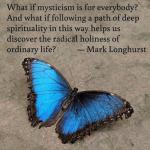
"This Loving, Uniting Embrace": the Holy Ordinary
Today's guest post is by Mark Longhurst, author of The Holy Ordinary:...

How Are We Called to Live?: More About...
How Are We Called to Live? Many of us struggle with discerning...

A Spiritual Practice of Reading: Join Us Online
A Spiritual Practice of Reading A healthy spiritual practice of reading is...
view all Contemplative blogs
Ad-Free & Subscriber Log-In Subscription Support
- About Us
- 2026 Calendar
- Videos
- Podcasts
- Library of World Religions
- Faith In Media Tracker
- Advertise With Us
- Write for Us
- Privacy Policy
- Terms of Service
- Do Not Sell My Data
- Contact Us
- Radiant Digital
- Manage Newsletter Subscriptions
- Unsubscribe From Notifications
- Sitemap
Copyright 2008-2026, Patheos, part of the Radiant Digital network of media brands. All rights reserved.
Subscription Support Ad-Free & Subscriber Log-In
Follow Patheos