
BuddhistCatholicContemplativeEvangelicalGeneral ChristianHinduJewishLatter-day SaintMuslimNew VisionsProgressive Christian
Beliefs
- Buddhist
- Catholic
- Contemplative
- Evangelical
- General Christian
- Hindu
- Jewish
- Latter-day Saint
- More Voices
- Muslim
- New Visions
- Pagan
- Progressive Christian
Topics
- Religion News
- Food and Religion
- Sports and Religion
- Religious Art
- Religious Music and Entertainment
- Religious Events
- History and Religion
- Style and Religion
- Politics and Religion
- Women in Religion
- Recreation Outdoors and Religion
- Business Finance and Religion
- Careers Workplace and Religion
- Education and Religion
- Family Parenting and Religion
- Health Fitness and Religion
- Home and Religion
- Relationships and Religion
- Technology and Religion
- Travel and Religion
Columnists
- Buddhist Columnists
- Business Finance and Religion Columnists
- Careers Workplace and Religion Columnists
- Catholic Columnists
- Contemplative Columnists
- Education and Religion Columnists
- Evangelists Columnists
- Family Parenting and Religion Columnists
- General Christian Columnists
- Health Fitness and Religion Columnists
- Hindu Columnists
- History and Religion Columnists
- Home and Religion Columnists
- Jewish Columnists
- More Voices Columnists
- Latter Day Columnists
- Muslim Columnists
- New Visions Columnists
- Nonreligious Columnists
- Pagan Columnists
- Politics and Religion Columnists
- Progressive Columnists
- Recreation Outdoors and Religion Columnists
- Relationships and Religion Columnists
- Religion News Columnists
- Religious Art Columnists
- Religious Events Columnists
- Religious Music and Entertainment Columnists
- Sports and Religion Columnists
- Style and Religion Columnists
- Technology and Religion Columnists
- Travel and Religion Columnists
- Women in Religion Columnists
Resource Library
- 2026 Calendar
- Library of World Religions
- The 100 Most Holy Places on Earth
- Patheos Answers
- Podcasts
- Videos
- Faith Leaders Database
- Anglican Episcopalian
- Bahai
- Baptist
- Buddhism
- Christianity
- Confucianism
- Eastern Orthodoxy
- Hinduism
- Holiness and Pentecostal
- ISKCON
- Islam
- Judaism
- Lutheran
- Methodist
- The Church of Jesus Christ of Latter-day Saints
- New Age
- Paganism
- Presbytarian and Reformed
- Protestantism
- Religion Behind the Scenes
- Roman Catholic
- Scientology
- Shia Islam
- Sikhism
- Sufism
- Sunni Islam
- Taoism
- Zen
- See all religions
Research Tools
 Ad-Free & Subscriber Log-In Subscription Support
Ad-Free & Subscriber Log-In Subscription Support
Follow Patheos 

- Trending:
- Forgiveness
- |
- Marriage
- |
- Consciousness
- |
- Death Penalty
- |
- Election
- |
- Halloween

- Home
- Contemplative
- Celebrating Evelyn Underhill
Celebrating Evelyn Underhill
Last updated on: July 19, 2019 at 8:00 am by Carl "Skye" McColman
Celebrating Evelyn Underhill 2019-07-03T08:15:57-04:00 Carl "Skye" McColman
Patheos Explore the world's faith through different perspectives on religion and spirituality! Patheos has the views of the prevalent religions and spiritualities of the world.
A note from Carl: It was forty years ago this summer — the summer of 1979 — that I first discovered Evelyn Underhill, the British spiritual author whose writings introduced me to the beauty and splendor of Christian mysticism. To celebrate this personal anniversary, I’m reprinting here a blog post I wrote back in 2007 about her and her writing. I hope you enjoy it.
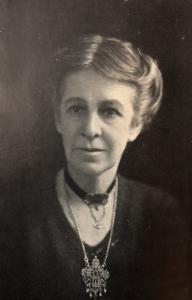
Evelyn Underhill, Ordinary Mystic
It might be a bit controversial for me to include Evelyn Underhill in my list of western mystics. To the best of my knowledge, she never claimed to be a mystic herself, and her work was aimed more at introducing her readers to the history and theory of mysticism than in asserting any spiritual or mystical authority of her own. In other words, Underhill was a great popularizer of mysticism, similar to how Alan Watts was a popularizer of Zen or Michael Harner a popularizer of shamanism.
But her knowledge of the subject was so vast, her work so thorough and wide-ranging, and her interest in the spiritual welfare of those who corresponded with her or who participated in the retreats she led was both so genuine and so wise, that she deserves to be included in the roster of western mystics at least as much as theologians like Bernard of Clairvaux or Thomas Aquinas, whose claim to mystical fame lies as much in their intellectual achievement as in any personal spiritual experience.
A Twentieth Century Mysticism
Hers is truly a twentieth century mysticism, more democratic than aristocratic in its focus: in other words, she champions not so much extraordinary moments of divine union as experienced by an elite few, but rather a more down-to-earth but no less life-transforming encounter with divine grace that is available to, as she put it, “normal people” — in other words, the ordinary person who may or may not be an ordained minister, a consecrated monk or nun, or an erudite scholar. Underhill introduced the average person to extraordinary spirituality, and in doing so, celebrated the idea that anybody — regardless of pedigree, background, education, or religious vocation — just might be able to scale those visionary heights.
She lived from 1875 to 1941, which makes her a contemporary of Thérèse of Lisieux and Pierre Teilhard de Chardin. Born into a well-to-do British family, she married a barrister with whom she bore no children, leaving her free to write — and write she did.
Although not as prolific as Thomas Merton, she wrote three novels, as many volumes of poetry, a collection of medieval tales of the Virgin Mary, and over twenty specifically religious books, including collections of essays and transcripts of radio talks she did on the spiritual life.
She also edited and wrote introductions for a variety of mystical classics, including The Cloud of Unknowing, Walter Hilton’s Scale of Perfection, and an anthology of writings by John Ruysbroeck, her personal favorite of the great mystics. Her masterpiece, Mysticism: A Study in the Nature and Development of Spiritual Consciousness was released in 1911, when she was only in her mid-thirties; other key works include Practical Mysticism, Mystics of the Church, and Worship. Although her later works tend to be more oriented toward ordinary Christian spirituality than toward “mysticism” per se, all of her writing is imbued with a deep sense of the glory and possibility of a spiritual life wholly given to the love of God and the desire for Divine Union.
A Mystic for Everyone
Born into an Anglican family, her love of mysticism and her work with a Catholic spiritual director (Friedrich von Hügel) naturally led her to an interest in entering the Church of Rome, but she felt repelled by the anti-modernist views of Pope Pius X and, once she married her Anglican husband, decided that it was God’s will for her to remain within the Church of England. This she did for the duration of her life, where in addition to writing her numerous books and essays she also delivered lectures (she was the first woman to lecture on religion at Oxford University), led retreats, and engaged in works of mercy, devoting one day a week to charitable work among the London poor.
Underhill’s writing is literary and elegant; clearly the product of a 19th century British education. She does a splendid job at expressing the miraculous reality of the mystical life and how it can transform “ordinary reality” into a life shimmering with the Divine Presence. Her perspective is clearly Christian, but her own Anglican identity never impedes her vision, and consequently hers is a celebration of mysticism that can be appreciated by all branches of the Christian family tree. I think her work is essential for anyone seeking an authentic Christian mysticism that refuses to be confined by its historical boundary of the cloister.
For further reading:
I. Selected works by Evelyn Underhill
- Mysticism: A Study in the Nature and Development of Spiritual Consciousness
- Practical Mysticism: A Little Book For Normal People
- The Essentials of Mysticism
- The Life of the Spirit and the Life of Today
- The Mystics of the Church
- The Golden Sequence
- Worship
- The Spiritual Life
- The Letters of Evelyn Underhill
- The Mount of Purification
- An Anthology of the Love of God
- The Evelyn Underhill Reader
- The Ways of the Spirit
- Evelyn Underhill: Essential Writings
- Radiance: A Spiritual Memoir
II. Books about Underhill:
- Christopher Armstrong, Evelyn Underhill, 1875-1941: An Introduction to Her Life and Writings
- Annice Callahan, Evelyn Underhill: Spirituality for Daily Living
- Margaret Cropper, The Life of Evelyn Underhill: An Intimate Portrait of the Ground-Breaking Author of Mysticism
- Dana Greene, Evelyn Underhill: Artist of the Infinite Life
- Mary Xavier Kirby, The Writings of Evelyn Underhill: A Critical Analysis
- Ann Loades, Evelyn Underhill (Fount Christian Thinkers)
Finally, here’s a bit of personal trivia: her birthday was December 6, a day she shares with Dave Brubeck, Dion Fortune, Henryk Górecki, and… me!
Enjoy reading this blog?
Click here to become a patron.

Previous Post

July 12, 2019
Appreciating the Rosary as a Method for Contemplative Prayer
Next Post

July 26, 2019 What Inspired Me to Write About Christian Mysticism
Browse Our Archives
Select a Category Activism Announcements Art Books Catholicism Celtic Christianity Christian mysticism Christianity Contemplation Current events Etc. Family humor interfaith dialogue Interfaith Wisdom Interspirituality Lay Cistercians Living the Faith Meditation movies Mysticism Mystics nature Poetry Reviews Scripture silence Spirituality Uncategorized Writing
Select a Month February 2025 January 2025 November 2024 September 2024 August 2024 July 2024 June 2024 May 2024 March 2024 January 2024 December 2023 November 2023 August 2023 June 2023 April 2023 March 2023 February 2023 January 2023 December 2022 November 2022 October 2022 September 2022 August 2022 July 2022 June 2022 May 2022 April 2022 February 2022 January 2022 December 2021 November 2021 October 2021 September 2021 August 2021 July 2021 June 2021 May 2021 April 2021 March 2021 February 2021 January 2021 December 2020 November 2020 October 2020 September 2020 August 2020 July 2020 June 2020 May 2020 April 2020 March 2020 February 2020 January 2020 December 2019 November 2019 October 2019 September 2019 August 2019 July 2019 June 2019 May 2019 April 2019 March 2019 February 2019 January 2019 December 2018 November 2018 October 2018 September 2018 August 2018 July 2018 June 2018 May 2018 April 2018 March 2018 February 2018 January 2018 December 2017 November 2017 October 2017 September 2017 August 2017 July 2017 June 2017 May 2017 April 2017 March 2017 February 2017 January 2017 December 2016 November 2016 October 2016 September 2016 August 2016 July 2016 June 2016 May 2016 March 2016 February 2016 January 2016 December 2015 November 2015 October 2015 September 2015 August 2015 July 2015 June 2015 May 2015 April 2015 March 2015 February 2015 January 2015 December 2014 November 2014 October 2014 September 2014 August 2014 July 2014 June 2014 May 2014 April 2014 March 2014 February 2014 January 2014 December 2013 October 2013 September 2013 July 2013 May 2013 January 2013 December 2012 November 2012 August 2012 July 2012 June 2012 March 2012 December 2011 September 2011 October 2010 August 2010 March 2010 September 2009 July 2008 January 2008 December 2007 September 2007 February 2007 January 2007 December 2004
Follow Us!
TAKE THE
Religious Wisdom Quiz
Where did the Pentecostal movement begin in the early 1900s?
Select your answer to see how you score.
Berlin London Azusa Street, Los Angeles Rome
Support this
Column


Related posts from Carl McColman
Discover the Three Forms of Contemplation, according to...

Contemplative Books to Read and Savor During Advent...
New From Encountering Silence: Exploring the Lost History...
Twelve Mystical Anthologies That Belong in Every Contemplative...
TRENDING AT PATHEOS Contemplative

Handy Contemplative Practices for Political Spaces
A Spiritually Grounded Presence In order to bring a spiritually grounded presence...

Halloween: The Holiday of Loving Your Neighbor
All Hallows Eve Is Halloween the least Christian holiday in America, or...

Can Love Be Saved? Some Thoughts on the...
Happy Valentine's Day! I recently published a post on Patreon called Can...

"This Loving, Uniting Embrace": the Holy Ordinary
Today's guest post is by Mark Longhurst, author of The Holy Ordinary:...

How Are We Called to Live?: More About...
How Are We Called to Live? Many of us struggle with discerning...

A Spiritual Practice of Reading: Join Us Online
A Spiritual Practice of Reading A healthy spiritual practice of reading is...
view all Contemplative blogs
Ad-Free & Subscriber Log-In Subscription Support
- About Us
- 2026 Calendar
- Videos
- Podcasts
- Library of World Religions
- Faith In Media Tracker
- Advertise With Us
- Write for Us
- Privacy Policy
- Terms of Service
- Do Not Sell My Data
- Contact Us
- Radiant Digital
- Manage Newsletter Subscriptions
- Unsubscribe From Notifications
- Sitemap
Copyright 2008-2026, Patheos. All rights reserved.
Subscription Support Ad-Free & Subscriber Log-In
Follow Patheos