
BuddhistCatholicContemplativeEvangelicalGeneral ChristianHinduJewishLatter-day SaintMuslimNew VisionsProgressive Christian
Beliefs
- Buddhist
- Catholic
- Contemplative
- Evangelical
- General Christian
- Hindu
- Jewish
- Latter-day Saint
- More Voices
- Muslim
- New Visions
- Pagan
- Progressive Christian
Topics
- Religion News
- Food and Religion
- Sports and Religion
- Religious Art
- Religious Music and Entertainment
- Religious Events
- History and Religion
- Style and Religion
- Politics and Religion
- Women in Religion
- Recreation Outdoors and Religion
- Business Finance and Religion
- Careers Workplace and Religion
- Education and Religion
- Family Parenting and Religion
- Health Fitness and Religion
- Home and Religion
- Relationships and Religion
- Technology and Religion
- Travel and Religion
Columnists
- Buddhist Columnists
- Business Finance and Religion Columnists
- Careers Workplace and Religion Columnists
- Catholic Columnists
- Contemplative Columnists
- Education and Religion Columnists
- Evangelists Columnists
- Family Parenting and Religion Columnists
- General Christian Columnists
- Health Fitness and Religion Columnists
- Hindu Columnists
- History and Religion Columnists
- Home and Religion Columnists
- Jewish Columnists
- More Voices Columnists
- Latter Day Columnists
- Muslim Columnists
- New Visions Columnists
- Nonreligious Columnists
- Pagan Columnists
- Politics and Religion Columnists
- Progressive Columnists
- Recreation Outdoors and Religion Columnists
- Relationships and Religion Columnists
- Religion News Columnists
- Religious Art Columnists
- Religious Events Columnists
- Religious Music and Entertainment Columnists
- Sports and Religion Columnists
- Style and Religion Columnists
- Technology and Religion Columnists
- Travel and Religion Columnists
- Women in Religion Columnists
Resource Library
- 2026 Calendar
- Library of World Religions
- The 100 Most Holy Places on Earth
- Patheos Answers
- Podcasts
- Videos
- Faith Leaders Database
- Anglican Episcopalian
- Bahai
- Baptist
- Buddhism
- Christianity
- Confucianism
- Eastern Orthodoxy
- Hinduism
- Holiness and Pentecostal
- ISKCON
- Islam
- Judaism
- Lutheran
- Methodist
- The Church of Jesus Christ of Latter-day Saints
- New Age
- Paganism
- Presbytarian and Reformed
- Protestantism
- Religion Behind the Scenes
- Roman Catholic
- Scientology
- Shia Islam
- Sikhism
- Sufism
- Sunni Islam
- Taoism
- Zen
- See all religions
Research Tools
 Ad-Free & Subscriber Log-In Subscription Support
Follow Patheos 

- Trending:
- Advent
- |
- Forgiveness
- |
- Thanksgiving
- |
- Election
- |
- Seasonal Holidays
- |
- Marriage

- Home
- Contemplative
- God Listens… Within You
God Listens… Within You
Last updated on: July 26, 2018 at 12:01 am by Guest Contributor
God Listens… Within You 2018-07-08T17:56:58-04:00 Guest Contributor
Patheos Explore the world's faith through different perspectives on religion and spirituality! Patheos has the views of the prevalent religions and spiritualities of the world.
Today’s guest post is by Mark S. Burrows, translator of Rilke’s Prayers of a Young Poet.**
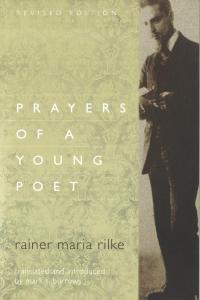 Of Rainer Maria Rilke’s many extraordinary poems collected in Prayers of a Young Poet, #18 beckons us to an extraordinary insight, one startling for those already familiar with his writings or those for whom he is a complete unknown.
To understand its frame of reference, remember that Rilke wrote these poems as if they were penned by an old Russian Orthodox monk and icon painter (or, as the Orthodox would have it, an icon “writer,” since these images were like texts to be “read” with the heart).
In this poem, the painter opens the poem sounding a note of resignation, despairing of his work as being up to capturing the divine—and who, among us, has not faced such a feeling of futility:
Why do my hands go astray with the brushes?
Whenever I paintYou, God, You barely notice.[1]
Granted that this is poetic metaphor and not literal description, what Rilke is admitting is something each of us knows something about: no matter how strong our faith is, there are days—or seasons, perhaps long ones—when God seems distant from us.
Perhaps altogether absent. Far from the reaches of our faith. Perhaps even “unconcerned” with our efforts at communicating.
Prayer that does not teach us this has not yet gone far. And, in such moments, doubling down with our efforts at believing generally has little or no effect.
God May Seem Distant to Us — But We Don’t Seem Distant to God
In the lines that follow, however, we sense a strong shift:
I feel You. You begin to tremble
on the hem of my senses as with many islands—
and to Your eyes that never blink
I am the room.
Now, on the surface of things, this is almost nonsensical: our senses do not have hems. And what is this bit about islands? And: God’s eyes blinking? Really? And, what in the world would it mean to say, “I am the room”?
I can’t answer such questions with absolute certainty, and do not come closer to understanding what the poet is after if I remain on the literal level of language, though I can tell you that Rilke favored this simple “outer” word—“room,” or Raumin the German—to speak of the dynamics of our “inner life.”
To grasp the power of this “doubling,” one has to learn to play with these images. Or, rather, let them begin to play with us.
How do we do this? Try imagining God “trembling,” admittedly a strange image. But at its root, it is one of utter vulnerability—in this case, toward us. I understand this when I think of my now grown daughters, in times when they were struggling.
And the island scene starts to make sense here, too: land separated with water, but still somehow within reach of the eyes. Every parent knows something of this, and we might well remember it—if we are fortunate—in the trusting presence of a loving parent or elder abiding with us through a time of crisis.
And so the poem begins to unfold its wisdom: to imagine God’s eyes never blinking, when I am facing a tough stretch, is a comforting image. But what follows, though as strange, opens me to depths of feeling I would not easily find along a more direct path: *“I am the room.”*I am the place where You, God, seek to find a home.
The poem continues with this imaginative approach, suggesting that God has “chosen” to move apart from the conventional religious “location” of angels in their ranks (and, for Rilke, their “angel-dances”), choosing to dwell in what he calls God’s “outermost house.”
Far from the conventional, from something within easy reach.
God Comes… Not to Speak, But to Listen
 But perhaps we are the ones who have removed ourselves, first of all, from such a “place,” and discover—to our surprise—that God, too, is tired of being domesticated in such religious conventions as angels in their dance.
The last lines move the poem to a poignant place of startlement:
Your whole heaven listens within me,
for in my pondering I didn’t speak myself to You.
Here, the unexpected, given the poem’s starting point, which began with resignation or even despair: he comes to sense that God is “listening” within him.
What a strange, and yet strangely luminous image: God, envisioned in his “wholes heaven,” does not come to speak to us, but draws close to listen within us, who in the midst of our inner turmoil—from God, from ourselves, from others—had lost the capacity to speak, to “open” ourselves to God, to ourselves, to others.
What would it mean, in times of unbelief, of confusion, of inner crisis, to imagine God coming from some “distant” place to dwell within us? Or, more to the point, to listenwithin us?
This is the kind of friend we need in dark times.
And here, Rilke imagines God doing just this, in the midst of the pondering that sometimes renders us mute. God, listening within us? God, listening within you?
 About today’s guest contributor: Mark Burrows is a poet, editor, medievalist, and professor of religion and literature at the Protestant University of Applied Sciences in Bochum, Germany. His poems and translations have appeared in numerous journals. His works include translations of Rainer Maria Rilke’s Prayers of a Young Poet, the German-Iranian poet SAID’s 99 Psalms, and Meister Eckhart’s Book of the Heart (with Jon M. Sweeney). His poetry is collected in The Chance of Home.
[1]See Rainer Maria Rilke, Prayers of a Young Poet, translated by Mark S. Burrows (Brewster, MA: Paraclete Press, 2016) [no. 18].
Enjoy reading this blog?
Click here to become a patron.


Next Post

July 28, 2018 A Miscellaneous List of Books I Like (And Recommend)
Browse Our Archives
Select a Category Activism Announcements Art Books Catholicism Celtic Christianity Christian mysticism Christianity Contemplation Current events Etc. Family humor interfaith dialogue Interfaith Wisdom Interspirituality Lay Cistercians Living the Faith Meditation movies Mysticism Mystics nature Poetry Reviews Scripture silence Spirituality Uncategorized Writing
Select a Month February 2025 January 2025 November 2024 September 2024 August 2024 July 2024 June 2024 May 2024 March 2024 January 2024 December 2023 November 2023 August 2023 June 2023 April 2023 March 2023 February 2023 January 2023 December 2022 November 2022 October 2022 September 2022 August 2022 July 2022 June 2022 May 2022 April 2022 February 2022 January 2022 December 2021 November 2021 October 2021 September 2021 August 2021 July 2021 June 2021 May 2021 April 2021 March 2021 February 2021 January 2021 December 2020 November 2020 October 2020 September 2020 August 2020 July 2020 June 2020 May 2020 April 2020 March 2020 February 2020 January 2020 December 2019 November 2019 October 2019 September 2019 August 2019 July 2019 June 2019 May 2019 April 2019 March 2019 February 2019 January 2019 December 2018 November 2018 October 2018 September 2018 August 2018 July 2018 June 2018 May 2018 April 2018 March 2018 February 2018 January 2018 December 2017 November 2017 October 2017 September 2017 August 2017 July 2017 June 2017 May 2017 April 2017 March 2017 February 2017 January 2017 December 2016 November 2016 October 2016 September 2016 August 2016 July 2016 June 2016 May 2016 March 2016 February 2016 January 2016 December 2015 November 2015 October 2015 September 2015 August 2015 July 2015 June 2015 May 2015 April 2015 March 2015 February 2015 January 2015 December 2014 November 2014 October 2014 September 2014 August 2014 July 2014 June 2014 May 2014 April 2014 March 2014 February 2014 January 2014 December 2013 October 2013 September 2013 July 2013 May 2013 January 2013 December 2012 November 2012 August 2012 July 2012 June 2012 March 2012 December 2011 September 2011 October 2010 August 2010 March 2010 September 2009 July 2008 January 2008 December 2007 September 2007 February 2007 January 2007 December 2004
Follow Us!
TAKE THE
Religious Wisdom Quiz
In 1 John, how do we know what love is?
Select your answer to see how you score.
Jesus Christ laid down his life for us The Holy Spirit teaches us God sent his Son God first loved us
Support this
Column


Related posts from Carl McColman
"This Loving, Uniting Embrace": the Holy Ordinary
Join Me for "24 Meditations for 2024"

LSD, Anxiety, and Contemplation: Can Psychedelic Therapy Support...
TRENDING AT PATHEOS Contemplative

Handy Contemplative Practices for Political Spaces
A Spiritually Grounded Presence In order to bring a spiritually grounded presence...

Halloween: The Holiday of Loving Your Neighbor
All Hallows Eve Is Halloween the least Christian holiday in America, or...

Can Love Be Saved? Some Thoughts on the...
Happy Valentine's Day! I recently published a post on Patreon called Can...
"This Loving, Uniting Embrace": the Holy Ordinary
Today's guest post is by Mark Longhurst, author of The Holy Ordinary:...

How Are We Called to Live?: More About...
How Are We Called to Live? Many of us struggle with discerning...

A Spiritual Practice of Reading: Join Us Online
A Spiritual Practice of Reading A healthy spiritual practice of reading is...
view all Contemplative blogs
Ad-Free & Subscriber Log-In Subscription Support
- About Us
- 2026 Calendar
- Videos
- Podcasts
- Library of World Religions
- Faith In Media Tracker
- Advertise With Us
- Write for Us
- Privacy Policy
- Terms of Service
- Do Not Sell My Data
- Contact Us
- Radiant Digital
- Manage Newsletter Subscriptions
- Unsubscribe From Notifications
- Sitemap
Copyright 2008-2026, Patheos. All rights reserved.
Subscription Support Ad-Free & Subscriber Log-In
Follow Patheos