
BuddhistCatholicContemplativeEvangelicalGeneral ChristianHinduJewishLatter-day SaintMuslimNew VisionsProgressive Christian
Beliefs
- Buddhist
- Catholic
- Contemplative
- Evangelical
- General Christian
- Hindu
- Jewish
- Latter-day Saint
- More Voices
- Muslim
- New Visions
- Pagan
- Progressive Christian
Topics
- Religion News
- Food and Religion
- Sports and Religion
- Religious Art
- Religious Music and Entertainment
- Religious Events
- History and Religion
- Style and Religion
- Politics and Religion
- Women in Religion
- Recreation Outdoors and Religion
- Business Finance and Religion
- Careers Workplace and Religion
- Education and Religion
- Family Parenting and Religion
- Health Fitness and Religion
- Home and Religion
- Relationships and Religion
- Technology and Religion
- Travel and Religion
Columnists
- Buddhist Columnists
- Business Finance and Religion Columnists
- Careers Workplace and Religion Columnists
- Catholic Columnists
- Contemplative Columnists
- Education and Religion Columnists
- Evangelists Columnists
- Family Parenting and Religion Columnists
- General Christian Columnists
- Health Fitness and Religion Columnists
- Hindu Columnists
- History and Religion Columnists
- Home and Religion Columnists
- Jewish Columnists
- More Voices Columnists
- Latter Day Columnists
- Muslim Columnists
- New Visions Columnists
- Nonreligious Columnists
- Pagan Columnists
- Politics and Religion Columnists
- Progressive Columnists
- Recreation Outdoors and Religion Columnists
- Relationships and Religion Columnists
- Religion News Columnists
- Religious Art Columnists
- Religious Events Columnists
- Religious Music and Entertainment Columnists
- Sports and Religion Columnists
- Style and Religion Columnists
- Technology and Religion Columnists
- Travel and Religion Columnists
- Women in Religion Columnists
Resource Library
- 2026 Calendar
- Library of World Religions
- The 100 Most Holy Places on Earth
- Patheos Answers
- Podcasts
- Videos
- Faith Leaders Database
- Anglican Episcopalian
- Bahai
- Baptist
- Buddhism
- Christianity
- Confucianism
- Eastern Orthodoxy
- Hinduism
- Holiness and Pentecostal
- ISKCON
- Islam
- Judaism
- Lutheran
- Methodist
- The Church of Jesus Christ of Latter-day Saints
- New Age
- Paganism
- Presbytarian and Reformed
- Protestantism
- Religion Behind the Scenes
- Roman Catholic
- Scientology
- Shia Islam
- Sikhism
- Sufism
- Sunni Islam
- Taoism
- Zen
- See all religions
Research Tools
 Ad-Free & Subscriber Log-In Subscription Support
Ad-Free & Subscriber Log-In Subscription Support
Follow Patheos 

- Trending:
- Forgiveness
- |
- Marriage
- |
- Consciousness
- |
- Death Penalty
- |
- Election
- |
- Halloween

- Home
- Contemplative
- Three Evelyn Underhill Anthologies To Inspire Your Contemplative Practice
Three Evelyn Underhill Anthologies To Inspire Your Contemplative Practice
Last updated on: March 13, 2018 at 1:36 pm by Carl "Skye" McColman
Three Evelyn Underhill Anthologies To Inspire Your Contemplative Practice 2018-03-13T13:36:18-04:00 Carl "Skye" McColman
Patheos Explore the world's faith through different perspectives on religion and spirituality! Patheos has the views of the prevalent religions and spiritualities of the world.

Evelyn Underhill, Ordinary Mystic
It’s no secret that I consider Evelyn Underhill one of the most important Christian mystics of the twentieth century.
She’s nowhere near as well-known as Thomas Merton or Simone Weil or Pierre Teilhard de Chardin, but her contribution to Christian spirituality is as great as each of those more renowned figures. Evelyn Underhill’s biographer Dana Greene has called her an Artist of the Infinite Life. For Underhill, Christian mysticism is shaped by two key characteristics: artistry and ordinariness.
 She recognized that one of the essential features of the contemplative life is beauty: we are drawn to God not only because God is good, and true, but also because God is beautiful.
If God’s truth inspires philosophy and God’s goodness inspires ethics, then God’s beauty inspires art — and mysticism, therefore, is an adventure into reality (truth), holiness (goodness) and glory (beauty). A true mystic is a true theologian, a true saint, and a true artist — an artist of the inner life.
But if all that sounds rarefied, Underhill also was one of the first important figures to champion the humility, ordinariness, and indeed “normalcy” of the mystical life. I still chuckle over the subtitle of one of her best books, Practical Mysticism — “A Little Book for Normal People.” She worked hard to dispel the notion that mysticism only belonged to the super-holy, the super-religious, the super-pious. On the contrary, the contemplative life is the ordinary state for Christian maturity.
In this sense she anticipated by over a half a century Karl Rahner’s famous warning: “The Christian of the future will be a mystic or will not exist at all.” Underhill provides the hopeful alternative to Rahner’s challenge: Yes, we are all called to be mystics — and it is a life that is within our grasp, for it is meant even for “normal” people like you and me.
 If you’re new to Evelyn Underhill, you might wonder where to begin with reading her books. She was a prolific writer, publishing over 25 books in her lifetime with various reissues, collections, and other editions of her work appearing ever since. What’s the best book (or books) to start with?
So today I’d like to recommend my three favorite anthologies — collections of the best writings by Evelyn Underhill. Any one of these serves as a marvelous introduction to her writing and shows how she is a key figure in twentieth century spirituality. Unfortunately, all three of them are out of print as of 2018 — but used copies can easily be found on Amazon, Ebay, or other sources. I’ve linked the title of each book to its page on Amazon, in case you feel inspired to go shopping.
Evelyn Underhill died in 1941, and only a dozen years would pass before the first anthology of her writings was published: An Anthology of the Love of God. Edited by a Scottish bishop along with one of Underhill’s close friends, the selections in this volume include some of Underhill’s poetry, along with a generous array of excerpts from her prose works, all organized around the central theme of Divine Love. “All her books are variations of this central theme,” writes Bishop Lumsden Barkway in his introduction to the volume.
Over the course of the book we see just how nuanced was Underhill’s understanding of Divine Love. Beginning with “the nature of our love,” subsequent sections explore the love of God, the love of Christ, and of the Holy Spirit; the church and the sacraments as fountains of love; the mystics as exponents of love; prayer as the expression of love, and holiness, penitence, discipline and service as the manifestations of love.
 About a decade later came the publication of The Evelyn Underhill Reader, published in the USA by Abingdon Press. This collection features some helpful introductory material, including a brief biography of Underhill and a list of all her book published during her lifetime and over the first few years following her death.
The anthology itself is arranged topically: the first section deals with Mysticism, followed by sections on the Virtues, Spiritual Disciplines, Prayer, and Christ, Church, and Sacraments. What I like about this anthology is that many of the selections are lengthy, really providing a good snapshot of the author’s mind at work.
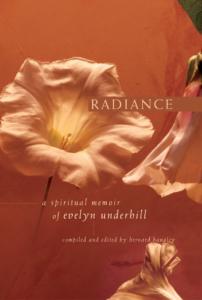
A more recent collection is Radiance: A Spiritual Memoir, published by Paraclete Press in 2004. This book offers a more chronological approach to Underhill’s writing, arranged from “Early Writings” to “Applied Spirituality” to “Understanding Mysticism” to “Mature Insight.” In keeping with its theme of “memoir,” this book offers the most intimate glimpse into Underhill not only as a writer but as a woman of faith, drawing selections not only from her published work but also from her letters and her journals.
So whether you want to understand Evelyn Underhill in the light of one unifying theme, or several topics that were central to her work, or in the light of her own life journey, these three anthologies offer three different but complementary approaches to her work. Get them and read them all. And then you’ll be ready to start tackling her many books themselves, one by one.
Enjoy reading this blog?
Click here to become a patron.

Previous Post
March 12, 2018
The Little Book of Christian Mysticism is Now Available!

Browse Our Archives
Select a Category Activism Announcements Art Books Catholicism Celtic Christianity Christian mysticism Christianity Contemplation Current events Etc. Family humor interfaith dialogue Interfaith Wisdom Interspirituality Lay Cistercians Living the Faith Meditation movies Mysticism Mystics nature Poetry Reviews Scripture silence Spirituality Uncategorized Writing
Select a Month February 2025 January 2025 November 2024 September 2024 August 2024 July 2024 June 2024 May 2024 March 2024 January 2024 December 2023 November 2023 August 2023 June 2023 April 2023 March 2023 February 2023 January 2023 December 2022 November 2022 October 2022 September 2022 August 2022 July 2022 June 2022 May 2022 April 2022 February 2022 January 2022 December 2021 November 2021 October 2021 September 2021 August 2021 July 2021 June 2021 May 2021 April 2021 March 2021 February 2021 January 2021 December 2020 November 2020 October 2020 September 2020 August 2020 July 2020 June 2020 May 2020 April 2020 March 2020 February 2020 January 2020 December 2019 November 2019 October 2019 September 2019 August 2019 July 2019 June 2019 May 2019 April 2019 March 2019 February 2019 January 2019 December 2018 November 2018 October 2018 September 2018 August 2018 July 2018 June 2018 May 2018 April 2018 March 2018 February 2018 January 2018 December 2017 November 2017 October 2017 September 2017 August 2017 July 2017 June 2017 May 2017 April 2017 March 2017 February 2017 January 2017 December 2016 November 2016 October 2016 September 2016 August 2016 July 2016 June 2016 May 2016 March 2016 February 2016 January 2016 December 2015 November 2015 October 2015 September 2015 August 2015 July 2015 June 2015 May 2015 April 2015 March 2015 February 2015 January 2015 December 2014 November 2014 October 2014 September 2014 August 2014 July 2014 June 2014 May 2014 April 2014 March 2014 February 2014 January 2014 December 2013 October 2013 September 2013 July 2013 May 2013 January 2013 December 2012 November 2012 August 2012 July 2012 June 2012 March 2012 December 2011 September 2011 October 2010 August 2010 March 2010 September 2009 July 2008 January 2008 December 2007 September 2007 February 2007 January 2007 December 2004
Follow Us!
TAKE THE
Religious Wisdom Quiz
What does "Messiah" mean?
Select your answer to see how you score.
Anointed One Savior Teacher Sacrifice
Support this
Column


Related posts from Carl McColman

You don't have to become a monk to...

LSD, Anxiety, and Contemplation: Can Psychedelic Therapy Support...

Mysticism, Faith, and "Knowing" God's Will

TRENDING AT PATHEOS Contemplative

Handy Contemplative Practices for Political Spaces
A Spiritually Grounded Presence In order to bring a spiritually grounded presence...

Halloween: The Holiday of Loving Your Neighbor
All Hallows Eve Is Halloween the least Christian holiday in America, or...

Can Love Be Saved? Some Thoughts on the...
Happy Valentine's Day! I recently published a post on Patreon called Can...

"This Loving, Uniting Embrace": the Holy Ordinary
Today's guest post is by Mark Longhurst, author of The Holy Ordinary:...

How Are We Called to Live?: More About...
How Are We Called to Live? Many of us struggle with discerning...

A Spiritual Practice of Reading: Join Us Online
A Spiritual Practice of Reading A healthy spiritual practice of reading is...
view all Contemplative blogs
Ad-Free & Subscriber Log-In Subscription Support
- About Us
- 2026 Calendar
- Videos
- Podcasts
- Library of World Religions
- Faith In Media Tracker
- Advertise With Us
- Write for Us
- Privacy Policy
- Terms of Service
- Do Not Sell My Data
- Contact Us
- Radiant Digital
- Manage Newsletter Subscriptions
- Unsubscribe From Notifications
- Sitemap
Copyright 2008-2026, Patheos. All rights reserved.
Subscription Support Ad-Free & Subscriber Log-In
Follow Patheos