
BuddhistCatholicContemplativeEvangelicalGeneral ChristianHinduJewishLatter-day SaintMuslimNew VisionsProgressive Christian
Beliefs
- Buddhist
- Catholic
- Contemplative
- Evangelical
- General Christian
- Hindu
- Jewish
- Latter-day Saint
- More Voices
- Muslim
- New Visions
- Pagan
- Progressive Christian
Topics
- Religion News
- Food and Religion
- Sports and Religion
- Religious Art
- Religious Music and Entertainment
- Religious Events
- History and Religion
- Style and Religion
- Politics and Religion
- Women in Religion
- Recreation Outdoors and Religion
- Business Finance and Religion
- Careers Workplace and Religion
- Education and Religion
- Family Parenting and Religion
- Health Fitness and Religion
- Home and Religion
- Relationships and Religion
- Technology and Religion
- Travel and Religion
Columnists
- Buddhist Columnists
- Business Finance and Religion Columnists
- Careers Workplace and Religion Columnists
- Catholic Columnists
- Contemplative Columnists
- Education and Religion Columnists
- Evangelists Columnists
- Family Parenting and Religion Columnists
- General Christian Columnists
- Health Fitness and Religion Columnists
- Hindu Columnists
- History and Religion Columnists
- Home and Religion Columnists
- Jewish Columnists
- More Voices Columnists
- Latter Day Columnists
- Muslim Columnists
- New Visions Columnists
- Nonreligious Columnists
- Pagan Columnists
- Politics and Religion Columnists
- Progressive Columnists
- Recreation Outdoors and Religion Columnists
- Relationships and Religion Columnists
- Religion News Columnists
- Religious Art Columnists
- Religious Events Columnists
- Religious Music and Entertainment Columnists
- Sports and Religion Columnists
- Style and Religion Columnists
- Technology and Religion Columnists
- Travel and Religion Columnists
- Women in Religion Columnists
Resource Library
- 2026 Calendar
- Library of World Religions
- The 100 Most Holy Places on Earth
- Patheos Answers
- Podcasts
- Videos
- Faith Leaders Database
- Anglican Episcopalian
- Bahai
- Baptist
- Buddhism
- Christianity
- Confucianism
- Eastern Orthodoxy
- Hinduism
- Holiness and Pentecostal
- ISKCON
- Islam
- Judaism
- Lutheran
- Methodist
- The Church of Jesus Christ of Latter-day Saints
- New Age
- Paganism
- Presbytarian and Reformed
- Protestantism
- Religion Behind the Scenes
- Roman Catholic
- Scientology
- Shia Islam
- Sikhism
- Sufism
- Sunni Islam
- Taoism
- Zen
- See all religions
Research Tools
 Ad-Free & Subscriber Log-In Subscription Support
Ad-Free & Subscriber Log-In Subscription Support
Follow Patheos 

- Trending:
- Forgiveness
- |
- Marriage
- |
- Consciousness
- |
- Death Penalty
- |
- Election
- |
- Halloween

- Home
- Contemplative
- On the Contemplative Role of the Ear… and the Tongue (Lectio Divina Diligens for Palm Sunday)
On the Contemplative Role of the Ear… and the Tongue (Lectio Divina Diligens for Palm Sunday)
Last updated on: March 23, 2018 at 1:14 pm by Carl "Skye" McColman
On the Contemplative Role of the Ear… and the Tongue (Lectio Divina Diligens for Palm Sunday) 2018-03-23T13:14:07-04:00 Carl "Skye" McColman
Patheos Explore the world's faith through different perspectives on religion and spirituality! Patheos has the views of the prevalent religions and spiritualities of the world.
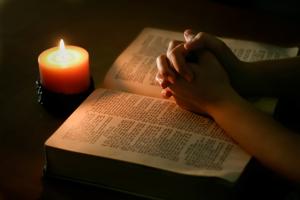 Here is the final installment of my Lenten series on Lectio Divina I’m calling Lectio Divina Diligens. Click on the link to read about this idea, if you’re not familiar with it.
March 25 brings Lent to a close with Palm Sunday, marking the beginning of Holy Week. This week let’s reflect on the first reading, found in Isaiah 50:4-7.
Lectio — reading
4 The Lord God has given me
a well-trained tongue,
That I might know how to answer the weary
a word that will waken them.
Morning after morning
he wakens my ear to hear as disciples do;
5 The Lord God opened my ear;
I did not refuse,
did not turn away.
6 I gave my back to those who beat me,
my cheeks to those who tore out my beard;
My face I did not hide
from insults and spitting.
7 The Lord God is my help,
therefore I am not disgraced;
Therefore I have set my face like flint,
knowing that I shall not be put to shame.
Investigatio — research
Anyone with any sense of Christian liturgy will recognize this passage from Isaiah as one of the prophetic texts in the Old Testament that Christians have interpreted as referring to Christ. Thus, for Christians, it is Christ who has been given a well-trained tongue, an opened ear, whose back was given to those who beat him, and so forth.
I think it’s important to acknowledge that Jews will read this text differently. But since we are reading this in the context of Christian liturgy and prayer, we’ll go with the classic Christian understanding. But right away, we hit a surprise.
What immediately leaps out to me is that the Collegeville Bible Commentary says, “The ‘well-trained tongue’ of verse 4 is literally ‘a disciple’s tongue.’ The notion of disciple may be picked up from Isaiah 8:16, where the prophet’s message is entrusted to his disciples.”
Using Verbum‘s “Exegetical Study Guide,” I see indeed that the Hebrew word לִמֻּד (limmud) does mean not only “well-trained” but “discipled” or even “well-bred.” So it’s a bit ambiguous, but I can see where this can be read as not only the prophet (or, for Christians, Christ) speaking, but also implying that it is a disciple of Christ (or the prophet) whose voice is being recorded here.
So, should we read this as Christ speaking — or, following the idea of it being a “disciple’s” voice — is the disciple of the prophet a symbol of disciples of Christ?
Reading the text devotionally rather than strictly academically, I think the answer to my question is simply “Yes.” In other words, I think some of the power in this passage (and indeed, in all the “servant” passages of Isaiah) is that it invites us into the heart of mind of Christ, but with a recognition that, as Christians, we are called to be one with Christ — so, when Christ says “God gives me a well-trained tongue, and listening ears, and a willingness to suffer” he is simultaneously calling us to be open to the same circumstances in our lives.
To follow Christ means accepting that God wants to give us “a well-trained” tongue, and “ears to hear” — and even a willingness to suffer, when it serves a good or holy purpose.
But I want to zero in on the paradox here of holding a well-trained tongue with an awakened ear. Because it seems to me that the ear represents contemplation, while the tongue represents the power of language and communication.
Meditatio — reflection
People who embrace contemplative prayer — and, for that matter, a meditative devotion like lectio divina — often are very comfortable with silence. We seek silence, we enjoy silence, we find rest and refuge in silence (even when our interior lives, our minds and hearts, seem full of noise). Furthermore, many of us are introverts — which means we’re happier being silent than talking.
But a disciple’s tongue is one that knows both the power of silence and speech. An awakened ear listens for silence, but also for the word that forms the heart of communication. I think perhaps we contemplatives spend so much time chasing after silence that sometimes we forget that language, that “the Word” can be just as essential to the contemplative life as the wordlessness of silent prayer.
Let me repeat that: the Word matters just as much as silence — both are essential to the contemplative path. But this may seem counterintuitive, when we feel so drawn to silent prayer. “I don’t want so many words in my prayer!” seems to be a common complaint, especially for those who are feeling the first tug toward contemplation.
So this passage in Isaiah seems to be saying to us, “you need the awakened ear to listen for God’s still small voice: the voice of silence. But you also need that capacity to listen to God’s Word — and to speak, as necessary, when the Word impels you to do so.”
And sometimes, frankly, this tension between fidelity to language and fidelity to silence will lead to suffering. Maybe not of the “tearing out the beard” variety, but certainly an inner stress as we try to balance the call to silence with the call to communication: both listening and speaking.
Oratio — response
God, you call us to union with you, in Christ. Give us tongues that are disciplined and capable of speaking your word, words of love and mercy and forgiveness, to a world so thirsty for love. And also give us awakened ears, ears that can hear your still small voice — in the silence of our hearts and our prayers, but also in the many ways that you speak your words of life to us as well, not only in silence but also in all things.
Contemplatio — rest
Please join with me at a time that is appropriate for you, to simply rest in the silent presence of God, knowing that God loves you and me and all creation — whether we can feel it or not.
This is the final installment of my series of Lenten devotional posts, written in a spirit of Lectio Divina Diligens — lectio divina (sacred, meditative reading) combined with a contemplative, “diligent” approach to scriptural interpretation. Research into the interpretation of scripture is performed using Verbum.
Were these Lenten posts helpful for you? What did you like about them? What would you have differently? If you have any thoughts, please leave a comment below. Thank you.
Enjoy reading this blog?
Click here to become a patron.

Previous Post

March 20, 2018
What to Do When Prayer Gets Dull
Next Post
March 26, 2018 Meet Julian of Norwich
Browse Our Archives
Select a Category Activism Announcements Art Books Catholicism Celtic Christianity Christian mysticism Christianity Contemplation Current events Etc. Family humor interfaith dialogue Interfaith Wisdom Interspirituality Lay Cistercians Living the Faith Meditation movies Mysticism Mystics nature Poetry Reviews Scripture silence Spirituality Uncategorized Writing
Select a Month February 2025 January 2025 November 2024 September 2024 August 2024 July 2024 June 2024 May 2024 March 2024 January 2024 December 2023 November 2023 August 2023 June 2023 April 2023 March 2023 February 2023 January 2023 December 2022 November 2022 October 2022 September 2022 August 2022 July 2022 June 2022 May 2022 April 2022 February 2022 January 2022 December 2021 November 2021 October 2021 September 2021 August 2021 July 2021 June 2021 May 2021 April 2021 March 2021 February 2021 January 2021 December 2020 November 2020 October 2020 September 2020 August 2020 July 2020 June 2020 May 2020 April 2020 March 2020 February 2020 January 2020 December 2019 November 2019 October 2019 September 2019 August 2019 July 2019 June 2019 May 2019 April 2019 March 2019 February 2019 January 2019 December 2018 November 2018 October 2018 September 2018 August 2018 July 2018 June 2018 May 2018 April 2018 March 2018 February 2018 January 2018 December 2017 November 2017 October 2017 September 2017 August 2017 July 2017 June 2017 May 2017 April 2017 March 2017 February 2017 January 2017 December 2016 November 2016 October 2016 September 2016 August 2016 July 2016 June 2016 May 2016 March 2016 February 2016 January 2016 December 2015 November 2015 October 2015 September 2015 August 2015 July 2015 June 2015 May 2015 April 2015 March 2015 February 2015 January 2015 December 2014 November 2014 October 2014 September 2014 August 2014 July 2014 June 2014 May 2014 April 2014 March 2014 February 2014 January 2014 December 2013 October 2013 September 2013 July 2013 May 2013 January 2013 December 2012 November 2012 August 2012 July 2012 June 2012 March 2012 December 2011 September 2011 October 2010 August 2010 March 2010 September 2009 July 2008 January 2008 December 2007 September 2007 February 2007 January 2007 December 2004
Follow Us!
TAKE THE
Religious Wisdom Quiz
Who was the major prophet during King Hezekiah's reign in Judah?
Select your answer to see how you score.
Isaiah Jeremiah Daniel Ezekiel
Support this
Column


Related posts from Carl McColman

"This Loving, Uniting Embrace": the Holy Ordinary

I Believe Prayer Changes Things. Here's a Few...

If You Worship an Angry God, You'll Be...

The Difference Between Apophatic and Kataphatic Spirituality
TRENDING AT PATHEOS Contemplative

Handy Contemplative Practices for Political Spaces
A Spiritually Grounded Presence In order to bring a spiritually grounded presence...

Halloween: The Holiday of Loving Your Neighbor
All Hallows Eve Is Halloween the least Christian holiday in America, or...

Can Love Be Saved? Some Thoughts on the...
Happy Valentine's Day! I recently published a post on Patreon called Can...

"This Loving, Uniting Embrace": the Holy Ordinary
Today's guest post is by Mark Longhurst, author of The Holy Ordinary:...

How Are We Called to Live?: More About...
How Are We Called to Live? Many of us struggle with discerning...

A Spiritual Practice of Reading: Join Us Online
A Spiritual Practice of Reading A healthy spiritual practice of reading is...
view all Contemplative blogs
Ad-Free & Subscriber Log-In Subscription Support
- About Us
- 2026 Calendar
- Videos
- Podcasts
- Library of World Religions
- Faith In Media Tracker
- Advertise With Us
- Write for Us
- Privacy Policy
- Terms of Service
- Do Not Sell My Data
- Contact Us
- Radiant Digital
- Manage Newsletter Subscriptions
- Unsubscribe From Notifications
- Sitemap
Copyright 2008-2026, Patheos. All rights reserved.
Subscription Support Ad-Free & Subscriber Log-In
Follow Patheos