
BuddhistCatholicContemplativeEvangelicalGeneral ChristianHinduJewishLatter-day SaintMuslimNew VisionsProgressive Christian
Beliefs
- Buddhist
- Catholic
- Contemplative
- Evangelical
- General Christian
- Hindu
- Jewish
- Latter-day Saint
- More Voices
- Muslim
- New Visions
- Pagan
- Progressive Christian
Topics
- Religion News
- Food and Religion
- Sports and Religion
- Religious Art
- Religious Music and Entertainment
- Religious Events
- History and Religion
- Style and Religion
- Politics and Religion
- Women in Religion
- Recreation Outdoors and Religion
- Business Finance and Religion
- Careers Workplace and Religion
- Education and Religion
- Family Parenting and Religion
- Health Fitness and Religion
- Home and Religion
- Relationships and Religion
- Technology and Religion
- Travel and Religion
Columnists
- Buddhist Columnists
- Business Finance and Religion Columnists
- Careers Workplace and Religion Columnists
- Catholic Columnists
- Contemplative Columnists
- Education and Religion Columnists
- Evangelists Columnists
- Family Parenting and Religion Columnists
- General Christian Columnists
- Health Fitness and Religion Columnists
- Hindu Columnists
- History and Religion Columnists
- Home and Religion Columnists
- Jewish Columnists
- More Voices Columnists
- Latter Day Columnists
- Muslim Columnists
- New Visions Columnists
- Nonreligious Columnists
- Pagan Columnists
- Politics and Religion Columnists
- Progressive Columnists
- Recreation Outdoors and Religion Columnists
- Relationships and Religion Columnists
- Religion News Columnists
- Religious Art Columnists
- Religious Events Columnists
- Religious Music and Entertainment Columnists
- Sports and Religion Columnists
- Style and Religion Columnists
- Technology and Religion Columnists
- Travel and Religion Columnists
- Women in Religion Columnists
Resource Library
- 2026 Calendar
- Library of World Religions
- The 100 Most Holy Places on Earth
- Patheos Answers
- Podcasts
- Videos
- Faith Leaders Database
- Anglican Episcopalian
- Bahai
- Baptist
- Buddhism
- Christianity
- Confucianism
- Eastern Orthodoxy
- Hinduism
- Holiness and Pentecostal
- ISKCON
- Islam
- Judaism
- Lutheran
- Methodist
- The Church of Jesus Christ of Latter-day Saints
- New Age
- Paganism
- Presbytarian and Reformed
- Protestantism
- Religion Behind the Scenes
- Roman Catholic
- Scientology
- Shia Islam
- Sikhism
- Sufism
- Sunni Islam
- Taoism
- Zen
- See all religions
Research Tools
 Ad-Free & Subscriber Log-In Subscription Support
Ad-Free & Subscriber Log-In Subscription Support
Follow Patheos 

- Trending:
- Forgiveness
- |
- Marriage
- |
- Consciousness
- |
- Death Penalty
- |
- Election
- |
- Halloween

- Home
- Contemplative
- How to Pray Every Day — Without Confusing Prayer with God
How to Pray Every Day — Without Confusing Prayer with God
Last updated on: January 22, 2018 at 4:16 pm by Carl "Skye" McColman
How to Pray Every Day — Without Confusing Prayer with God 2018-01-22T16:16:25-04:00 Carl "Skye" McColman
Patheos Explore the world's faith through different perspectives on religion and spirituality! Patheos has the views of the prevalent religions and spiritualities of the world.

Keep following the path (Image credit: Shutterstock)
In response to my recent post about Contemplative Prayer and the Holy Trinity, a reader posted the following message to me via Facebook:
I’ve gotten discouraged with the very idea of “spiritual practice”. I’ve found so many practices that are meaningful and helpful but I’ve managed to turn every single one into an idol, treating it like a mechanism that controls my relation to God. I see the need for practice but I don’t understand how to keep from idolizing it.
Thank you for such an honest comment. I suspect that many people get mired in idolatrous relationships to many religious and spiritual practices, from methods of prayer to particular types of religious observance (ways of worshipping or doing liturgy, particular types of music, or particular translations of the Bible), down to forming unhealthy relationships to a particular pastor or spiritual teacher, or a particular church or denomination, or even a particular ministry.
Why is the prohibition against idolatry the first commandment? Because it is human nature to create idols.
We do it in our political life, in how we relate to art and entertainment and sports, to money, to fame, to security, to our reputation, to our spouse or family or nation… the list goes on.
We are homo idololatricus.
Idolatry is basically an addiction. There are addictions and then there are addictions. Some addictions, like to alcohol or tobacco or gambling, require a complete cessation of using the addictive substance. An alcoholic in recovery simply stops drinking — not even communion wine is acceptable. But other addictions, like to food (overeating) or to spending (compulsive shopping) have to be managed while still engaging with the addictive act. You can’t just stop eating altogether: you’ll die. Recovery from an eating addiction means learning how to eat in a healthy and non-addictive way.
Turning prayer into an idol is the second kind of addiction. You have to give up the addiction, while still keeping prayer a central part of your daily walk with God.
So, let me speak directly to my reader, and hopefully this will be helpful to others as well.
My first comment to my reader: could this be a dodge? Are you using the fear of idolatry as an excuse to avoid a serious and sustained practice of prayer?
Maybe you are, and maybe you aren’t. I’ll trust your judgment — but I think that avoiding prayer because it might turn into something idolatrous just has the net effect of not praying. And I don’t think that’s what God wants of us.
G. K. Chesterton said, “Anything worth doing is worth doing badly.” In other words, messy, distracted, self-serving, narcissistic, even idolatrous prayer — well, it’s still prayer! And with God’s grace we can make it better. I’d much rather see someone engage in a practice of prayer, do it poorly, but gradually get better at it, then to see someone get frustrated because their prayer is a mess, and then just give up on it, which leaves them perpetually at the starting line.
But the way the reader posed the question, it sounds like he really is trying. So for anyone who is in the same boat: working at a regular contemplative prayer practice, and then discovering to their dismay that the prayer has begun to matter more to them than God (!), here are my thoughts on what you can do, to keep praying — without your prayer coming between you and God.
- Do not abandon the practice. Set limits with it: no more than once or twice a day, and no more than 20 minutes per session. Keep those limits — but neither abandon the practice. If you find that you are “sneaking in” more prayer time than you agreed to, or else you are abandoning the practice altogether, bring the matter up with a trusted spiritual director (see #4 below).
Remember, contemplative prayer is threatening to the ego/false self/sinful nature — so naturally, the ego will try to undermine the practice. And one way to do that is to make the case that we are failing at the practice: we’re poor at it, too distracted, too obsessed with it, too addicted to it. The ego wants you to abandon the practice, and so it is doing all it can to make you think it’s a waste of time, or spiritually unhealthy, or a dead end. Here’s where it is important to trust the good counsel of generations of spiritual teachers who have gone before us, and who have spoken of the importance of perseverance in prayer, especially at first when we are prone to getting distracted or obsessive. - Begin and/or end your contemplative practice session with a brief time for verbal prayer in which you express sorrow to God for your tendency to be addicted to spiritual practices. Ask for the grace to persevere in prayer without getting obsessive or compulsive. Contemplative prayer, like all authentic prayer, is a source for deep spiritual healing, but this often happens below the threshold of our conscious awareness. So including a few moments of verbal prayer is a way to keep your conscious self “dialed in” with your spiritual intention — including the intention to persevere in prayer, and to ask for God’s grace to pray in a healthy way.
- Continue to surrender all distracting thoughts during prayer. Persevering in prayer is 90% of the battle, but here is the other 10%. My hunch is that your anxiety about addiction or obsessiveness in prayer keeps showing up during your silent prayer time. Once again, this is the ego seeking to assert or maintain control. Gently and non-judgmentally returning your attention to your chosen point of focus: whether a prayer word, Bible verse, or even simply your breath — this will both give you a greater sense of satisfaction with your prayer, but will also shield you from the remonstrations of your inner critic. It’s impossible to shut up the inner critic, but we can learn to avoid paying it any attention. Each time the inner critic squawks, simply return your focus of attention to your prayer word, verse, or breath. It really is that simple!
- Keep in regular contact with a trusted spiritual director or soul friend. Especially if the feeling of being addicted or idolatrous persists, discussing in detail your experience of prayer with a spiritual companion might be the best way to break through your resistance and find some freedom in your practice. Really go deep with your director: for example, my reader reports “I’ve managed to turn every single spiritual practice into an idol, treating it like a mechanism that controls my relation to God.” Take the time to really unpack this sentence with your spiritual companion. Exactly how do you attempt to control God? What do you do? What do you think? How does it feel? Meanwhile, your director will have suggestions for practices or prayer prompts that might be helpful. For example, every time you notice yourself subtly attempting to manipulate God, your spiritual director might instruct you to pray this verse: “Transform me by the renewing of my mind, that I may conform to your good and acceptable and perfect will, o God.” (this is a paraphrase of Romans 12:2) or, “Not my will, but yours be done.” (Luke 22:42). Repeat as often as necessary.
- Be patient. Like any other program of recovery from addiction, it’s a process. You may even want to carefully look at every element of your prayer practice with your spiritual director. What is it that inspires you to feel like you can control God? When do those controlling thoughts arise? What happens if you respond to them with a prayerful Bible verse or simply returning your attention to silence? Reviwing carefully the dynamics of your addictive tendencies will help you to discover where your trigger points are, and what you need to do to stop giving in to the triggers when they arise.
 Finally, if all else fails, try a different approach to prayer — but with the guidance of your spiritual director. It sounds like you have tried different types of prayer, but I think this is still something to consider. It is possible that at this point in your life journey, contemplation is not the best way for you to pray. But if that’s the case, then it is incumbent upon you to find another way of daily prayer. I would recommend a Liturgical form of prayer, such as Common Prayer by Shane Claiborne & Jonathan Wilson-Hartgrove, or Celtic Daily Prayer by the Northumbria Community. Usually persons who are not ready for deep silent prayer need the structure of a regular form of liturgical (scripted) prayer. It takes great discipline and humility and patience to persevere in liturgical prayer, but it can be very nourishing spiritually — and can be a great foundation for a future return to contemplative practice, should you discern yourself being called in that direction.
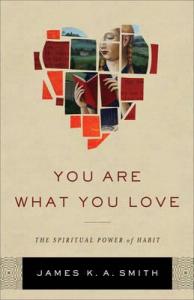
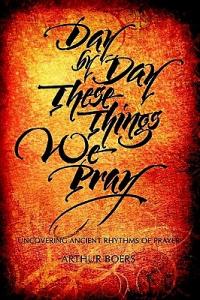 I know many Christians today find liturgical or scripted prayers difficult — we live in a culture that idolizes novelty and spontaneity, so we tend to chafe against prayer that is structured, predictable, and routine. But for centuries Christians have been deeply blessed by this way of praying. If you’d like to understand the theology of liturgy and daily prayer a bit better, read Day By Day These Things We Pray by Arthur Boers and You Are What You Love by James K. A. Smith. Both of these authors are evangelicals, so they provide a grounded Protestant/Reformed appreciation of liturgy and daily prayer.
So here’s the bottom line:
- Even if you tend to turn prayer itself into an idol, keep praying. “Anything worth doing is worth doing badly.” — G. K. Chesterton
- Pray to God for the grace to be freed from your addictive/idolatrous tendencies.
- Discuss all this with your spiritual director (if you don’t have a spiritual director, get one: it’s really essential for anyone with a commitment to daily prayer)
- Be patient and persevere.
- Remember that silence is your best friend. Scripture can also be a profound way to pray your way out of your idolizing.
- If all else fails, take refuge in fixed, liturgical daily prayer. It will nurture your relationship with God and help you grow beyond your desires to always be in control.
Hope this is helpful — sorry it’s such a long post, but it really is a complicated (and important) question. God bless you. Keep praying!
Enjoy reading this blog?
Click here to become a patron.

Previous Post

January 11, 2018
Everyone is Called to Union with God
Next Post

January 24, 2018 Help Me To Make This a Better Blog — Take My Short Reader Survey
Browse Our Archives
Select a Category Activism Announcements Art Books Catholicism Celtic Christianity Christian mysticism Christianity Contemplation Current events Etc. Family humor interfaith dialogue Interfaith Wisdom Interspirituality Lay Cistercians Living the Faith Meditation movies Mysticism Mystics nature Poetry Reviews Scripture silence Spirituality Uncategorized Writing
Select a Month February 2025 January 2025 November 2024 September 2024 August 2024 July 2024 June 2024 May 2024 March 2024 January 2024 December 2023 November 2023 August 2023 June 2023 April 2023 March 2023 February 2023 January 2023 December 2022 November 2022 October 2022 September 2022 August 2022 July 2022 June 2022 May 2022 April 2022 February 2022 January 2022 December 2021 November 2021 October 2021 September 2021 August 2021 July 2021 June 2021 May 2021 April 2021 March 2021 February 2021 January 2021 December 2020 November 2020 October 2020 September 2020 August 2020 July 2020 June 2020 May 2020 April 2020 March 2020 February 2020 January 2020 December 2019 November 2019 October 2019 September 2019 August 2019 July 2019 June 2019 May 2019 April 2019 March 2019 February 2019 January 2019 December 2018 November 2018 October 2018 September 2018 August 2018 July 2018 June 2018 May 2018 April 2018 March 2018 February 2018 January 2018 December 2017 November 2017 October 2017 September 2017 August 2017 July 2017 June 2017 May 2017 April 2017 March 2017 February 2017 January 2017 December 2016 November 2016 October 2016 September 2016 August 2016 July 2016 June 2016 May 2016 March 2016 February 2016 January 2016 December 2015 November 2015 October 2015 September 2015 August 2015 July 2015 June 2015 May 2015 April 2015 March 2015 February 2015 January 2015 December 2014 November 2014 October 2014 September 2014 August 2014 July 2014 June 2014 May 2014 April 2014 March 2014 February 2014 January 2014 December 2013 October 2013 September 2013 July 2013 May 2013 January 2013 December 2012 November 2012 August 2012 July 2012 June 2012 March 2012 December 2011 September 2011 October 2010 August 2010 March 2010 September 2009 July 2008 January 2008 December 2007 September 2007 February 2007 January 2007 December 2004
Follow Us!
TAKE THE
Religious Wisdom Quiz
My hair held my strength, but a woman's betrayal led to my capture and blindness. Who am I?
Select your answer to see how you score.
Absalom Saul Gideon Samson
Support this
Column


Related posts from Carl McColman

Four Dimensions of Mindfulness and Centering Prayer

I Believe Prayer Changes Things. Here's a Few...
A Contemplative Reflection on the Death of Christ

Join Me for "24 Meditations for 2024"
TRENDING AT PATHEOS Contemplative

Handy Contemplative Practices for Political Spaces
A Spiritually Grounded Presence In order to bring a spiritually grounded presence...

Halloween: The Holiday of Loving Your Neighbor
All Hallows Eve Is Halloween the least Christian holiday in America, or...

Can Love Be Saved? Some Thoughts on the...
Happy Valentine's Day! I recently published a post on Patreon called Can...

"This Loving, Uniting Embrace": the Holy Ordinary
Today's guest post is by Mark Longhurst, author of The Holy Ordinary:...

How Are We Called to Live?: More About...
How Are We Called to Live? Many of us struggle with discerning...

A Spiritual Practice of Reading: Join Us Online
A Spiritual Practice of Reading A healthy spiritual practice of reading is...
view all Contemplative blogs
Ad-Free & Subscriber Log-In Subscription Support
- About Us
- 2026 Calendar
- Videos
- Podcasts
- Library of World Religions
- Faith In Media Tracker
- Advertise With Us
- Write for Us
- Privacy Policy
- Terms of Service
- Do Not Sell My Data
- Contact Us
- Radiant Digital
- Manage Newsletter Subscriptions
- Unsubscribe From Notifications
- Sitemap
Copyright 2008-2026, Patheos. All rights reserved.
Subscription Support Ad-Free & Subscriber Log-In
Follow Patheos